

Here’s the question every culinary student in India eventually asks: “Will a diploma actually get me hired at a five-star hotel?” The short answer is yes — but only if you hold the right credential and understand exactly what hotel HR departments and Executive Chefs are testing for. The THSC Skill Gap Study found that only 1% of India’s estimated 5.8 million hospitality-interested youth have received formal culinary training. That statistic changes your odds dramatically if you’re one of the 1%.
This guide breaks down the full hiring picture: what the screening process looks like, which certifications hotel chains specifically recognise, how salary compares across roles, and what the realistic career progression looks like from your first day as a Commis to Chef de Partie and beyond. If you’re deciding whether a culinary diploma is worth it for a hotel career in India, this is the post to read.
You can browse Florence Academy’s diploma and certification programmes alongside this guide to see which qualifications match your target employer.
Key Takeaways
– Only 1% of India’s 5.8 million hospitality-interested youth have formal culinary training — creating a direct structural advantage for diploma holders (THSC, 2024)
– AHLEI and NSDC certifications are specifically recognised by international hotel chains like Marriott, Hyatt, and ITC Hotels operating in India
– Hotel interviews assess knife technique, mise en place discipline, food safety knowledge, and brigade culture — not just cooking ability
– The Commis-to-Chef de Partie arc takes 3–5 years; a diploma holder enters at Grade 1 and moves through it faster
– Gujarat’s hospitality sector is growing steadily, with Ahmedabad emerging as a real placement destination alongside metro cities
Why Do Hotels Care So Much About a Culinary Diploma?
India’s hospitality market was valued at USD 24.36 billion in 2025 and is projected to reach USD 55.67 billion by 2031 at a 14.76% CAGR, according to Mordor Intelligence (Mordor Intelligence, India Hospitality Market, 2025). With that growth, brand-name hotel groups face a consistent talent problem: high volume of applicants, but a small fraction who are genuinely ready for a professional kitchen from day one.
A diploma isn’t just a piece of paper to hotel HR. It’s a filter. When ITC Hotels or Marriott receives applications for a Commis Chef role, the first pass through the stack is credential-based. Does the candidate hold a qualification from an NSDC or THSC-affiliated institute? If the answer is no, most five-star properties don’t move to the next stage. That filter exists because unaccredited candidates, however talented, require far more on-the-job foundational training. Hotels at the luxury level don’t want to build that training into their kitchen operations. Florence Academy’s culinary diploma programmes are accredited by NSDC, AHLEI, and THSC to satisfy this exact filter.
The deeper reason is standards alignment. An accredited diploma means the candidate has been assessed against a national benchmark. NSDC-affiliated courses follow verified skill standards. Hotel kitchens run on standards: HACCP compliance, portion consistency, temperature protocols. A candidate trained to national standards arrives with baseline compliance baked in. That’s genuinely valuable to a hotel’s food safety and quality record.
What the credential filter looks like in practice
At Florence Academy, we’ve tracked placement outcomes across multiple cohorts. The pattern is consistent: students who hold the two-year Diploma in Food and Beverages with NSDC, AHLEI, and THSC accreditation receive interview calls from hotel HR departments significantly faster than students applying with shorter certificate programmes. The credential filter isn’t subtle — it’s the first sorting mechanism in most structured hotel recruitment pipelines.
Which Certifications Do International Hotel Chains in India Actually Recognise?
Not all culinary credentials carry the same weight with international hotel chains. The certifications that matter most in 2026 are NSDC (National Skill Development Corporation), THSC (Tourism and Hospitality Skill Council), and AHLEI (American Hotel and Lodging Educational Institute). These three are not interchangeable — each opens a different set of doors.
NSDC / Skill India is the base requirement for most domestic hotel groups and mid-scale international brands. It signals national skills verification and is the minimum credential for Commis Chef entry at most branded properties. THSC operates 243 affiliated training centres nationwide (THSC, 2024–2025) and is the sector-specific arm of NSDC for hospitality. Between them, NSDC and THSC cover the Indian hotel market comprehensively.
AHLEI is the differentiator for international chains. Marriott, Hyatt, Hilton, and IHG all reference AHLEI standards in their global training programmes. An AHLEI certification on a candidate’s CV signals immediate familiarity with international hospitality service standards. HR teams at these brands recognise it across borders, which matters especially if the candidate eventually wants to work abroad.
The combination of all three — NSDC, AHLEI, and THSC — is genuinely rare. Most Indian culinary institutes carry one, occasionally two. Holding all three means a candidate satisfies both the domestic government skills framework and the international hospitality industry standard simultaneously. In Ahmedabad, the Diploma in Food and Beverages at Florence Academy is the only programme that carries this triple accreditation.
Citation Capsule: India’s tourism and hospitality sector, growing at 14.76% CAGR toward USD 55.67 billion by 2031, draws on an international hotel chain presence — Marriott, Hyatt, ITC, Oberoi, and Taj — that specifically recognises NSDC, THSC, and AHLEI credentials when screening culinary candidates. THSC alone operates 243 affiliated training centres in India, making it the primary domestic credential filter for hotel kitchen hiring. Candidates holding all three accreditations occupy the top tier of what hotel HR departments recognise as verified culinary training. In Ahmedabad and Gujarat specifically, this credentialling advantage is compounded by the vegetarian and Jain dietary specialism that top hotel employers actively seek in locally-trained graduates, giving Florence Academy diploma holders a dual advantage that metro-trained candidates rarely possess (Mordor Intelligence, 2025; THSC, 2025).
Train where hotels hire from. Explore Florence Academy Diploma Programs →
What Happens During a Hotel Culinary Interview? (The Real Assessment)
Most culinary students expect a question-and-answer format. Hotel kitchens don’t work that way. The hiring process at a five-star property for a kitchen role typically involves two or three stages, and the final one — the practical assessment — is where most candidates are actually evaluated.

Here’s what the practical assessment at a major hotel typically involves:
The live knife test
Speed, consistency, and safety are assessed simultaneously. Interviewers watch whether the candidate’s cuts are uniform (important for even cooking), whether the knife grip is correct under pressure, and whether the candidate cleans the board between tasks without being told. Self-taught cooks often have speed but inconsistent form. Diploma-trained candidates who’ve practiced on commercial prep volumes have both.
Mise en place demonstration
Mise en place — having every component prepared, portioned, and in place before service begins — is the single most important discipline in a professional kitchen. The hotel will give a candidate a preparation task and watch whether they set up their station methodically, check for gaps before starting, and work clean throughout. This is the behaviour that separates trained candidates from untrained ones most visibly.
Food safety and hygiene knowledge
A direct verbal or written assessment of HACCP principles, temperature control, allergen protocols, cross-contamination prevention, and labelling standards. Five-star hotels run regular food safety audits. They will not hire a candidate who treats hygiene as optional or approximate. The questions aren’t difficult — but they require that the candidate has actually studied and internalised food safety, not just read about it casually.
Tasting and sensory evaluation
Some properties ask candidates to taste a dish and identify what’s missing: seasoning, acid, texture, balance. This tests whether the candidate has developed a calibrated palate alongside technical skills. It’s a soft screen for culinary intuition, which you either train or don’t.
Brigade culture and communication
In our experience placing graduates from Florence Academy’s programmes, the behaviour that most distinguishes hired candidates in the practical assessment is how they handle a task change mid-preparation. Hotel kitchens change requirements constantly during service. A candidate who asks a clear, specific question before proceeding — rather than either freezing or proceeding incorrectly — signals brigade-trained behaviour. Interviewers notice it immediately.
What Do Hotel HR Departments Screen for Before the Interview?
The practical interview is the final gate. Before a candidate reaches it, HR departments at structured hotel groups run a document and background screen that follows a consistent pattern.
The first filter is qualification verification: does the institute exist, is it accredited, and does the listed programme match what’s described? Hotels at five-star level cross-check credentials. Fabricated or inflated qualifications are caught here. After qualification, most hotel HR teams look at three more things: food safety certification (FSSAI or HACCP awareness, separate from the diploma), any evidence of live kitchen exposure (internship record, industrial training, hotel attachment), and a reference that can speak to professional kitchen behaviour rather than academic performance.
A photograph in chef whites and evidence of kitchen cleanliness during an internship might seem small. At five-star hotel level, these details signal whether a candidate understands kitchen culture at a visual and behavioural level before they walk through the door.
The Culinary Foundation Programme at Florence Academy builds all of this into the curriculum: HACCP and food safety training alongside practical kitchen sessions. The MFBBA programme is a structured one-year option for candidates who want broader culinary and bakery coverage before applying to hotel programmes.
Which Five-Star Hotel Chains Hire Culinary Diploma Graduates in India?
India’s premium hotel landscape in 2026 includes both domestic luxury groups and international brands, all of which actively recruit culinary diploma graduates. Here’s a working picture of who hires, and what they specifically look for:
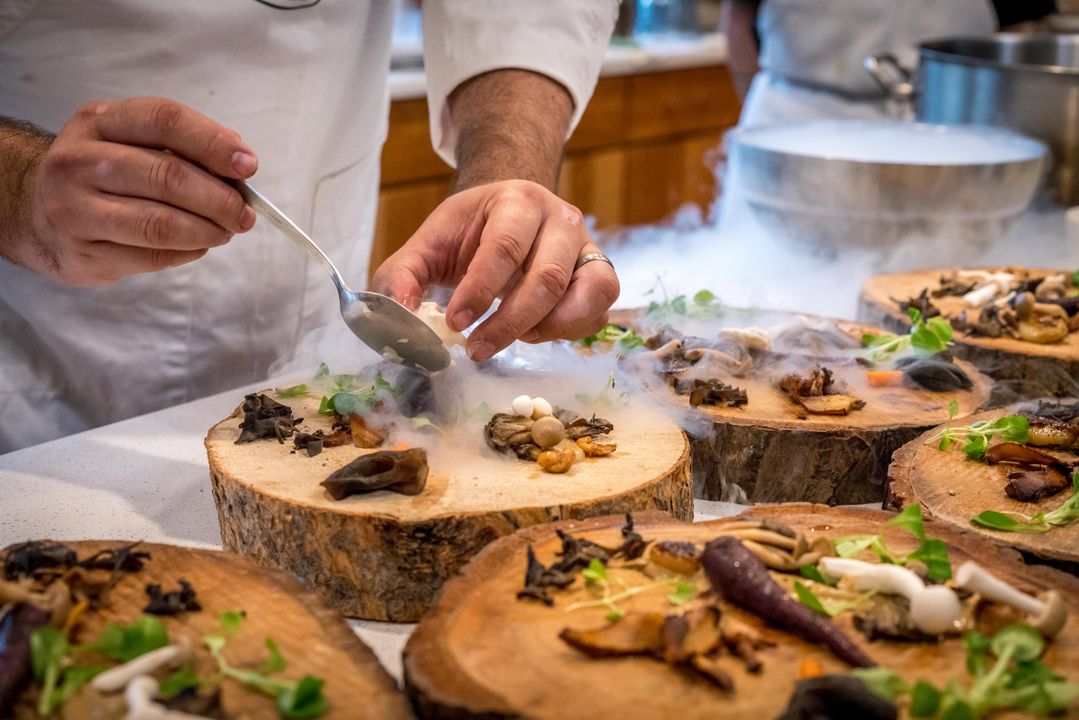
ITC Hotels is one of India’s most structured hospitality employers for culinary talent. ITC runs formal induction programmes, and entry-level kitchen hires from accredited institutes are placed into a defined training rotation across sections. Florence Academy has active placement partnerships with ITC Hotels, including ITC Narmada in Ahmedabad.
Marriott International (including Courtyard, JW, and Westin properties) recruits consistently at diploma level across India. AHLEI certification is a direct signal of alignment with Marriott’s global training standards. The brand’s local HR teams in Gujarat actively engage with accredited culinary institutes for pipeline hiring.
Hyatt (Park Hyatt, Grand Hyatt, Hyatt Regency properties) looks for NSDC affiliation as a minimum credential filter. Hyatt’s culinary programme places heavy emphasis on food safety protocols and mise en place discipline during practical assessment — consistent with what well-structured culinary training programmes develop.
The Oberoi Group has some of the most exacting culinary hiring standards in India. Oberoi’s training programme, OCLD (Oberoi Centre of Learning and Development), is widely regarded as the country’s most intensive hotel culinary school. Candidates who apply as Commis Chef from outside OCLD need strong NSDC or equivalent credentials and an excellent practical assessment result.
Taj Hotels (IHCL) recruits at both entry diploma and degree levels across their portfolio. Taj properties in Gujarat, including the Taj Skyline in Ahmedabad, are active local placement destinations for diploma graduates from the city’s hospitality institutes.
Florence Academy’s placement record includes graduates placed at ITC Hotels, Marriott properties, and Patang Restaurant — a landmark fine dining venue in Ahmedabad. Our graduates entering these properties consistently hold the two-year NSDC/AHLEI/THSC diploma, and the triple accreditation has been directly cited by hiring managers as the differentiating credential in candidate selection.
Diploma vs Degree: Which Gets You Into a Hotel Kitchen Faster?
This is a genuine decision point, and the answer depends entirely on what role you’re targeting. For kitchen line work — Commis, Chef de Partie, working toward Sous Chef — a diploma is faster, more direct, and equally respected by hotel employers. For management roles: Food and Beverage Manager, Executive Chef overseeing multiple properties, or the GM track — a degree in Hotel Management (BHM) builds the broader business foundation needed.
The confusion usually comes from conflating two different career tracks. A diploma holder who works their way up from Commis to Executive Chef over 12–15 years often outearns their BHM peer who took the management track to an F&B Manager role. Both tracks have strong outcomes; they just reach different destinations. The question to ask yourself isn’t “which is better” but “which kitchen do I want to be running in 15 years?”
| Path | Duration | Entry Role | 5-Year Destination | Best For |
|---|---|---|---|---|
| Culinary Diploma (NSDC/AHLEI) | 1–2 years | Commis Chef G1 | Chef de Partie or Demi Chef | Kitchen ladder to Executive Chef |
| BHM Degree | 3–4 years | Management Trainee | Asst. F&B Manager | Management and GM track |
| Certificate (6 months) | 6 months | Commis Chef G3 | Commis Chef G1 | Skill-building, not hotel HR filter |
For Gujarat specifically, the diploma route has a practical advantage. The local market — Ahmedabad’s growing number of five-star and premium midscale hotels, standalone fine dining restaurants, and the expanded convention and events sector — is actively hiring trained Commis and CDP-level chefs. You don’t need a four-year degree to find excellent work in this market. You need the right credential and the right skills.
You can explore the full range of diploma and foundation programmes to compare duration and outcome before making a decision.
What Does the Chef Career Progression Timeline Look Like in India?
The kitchen brigade moves in defined stages. Understanding the typical timeline — and where diplomas accelerate it — is important for setting realistic expectations. According to the Tourism and Hospitality Skill Council (THSC), the typical Indian kitchen brigade arc from Commis to Chef de Partie spans 3–5 years, and reaching Sous Chef typically adds another 4–7 years on top (THSC, 2025).
Chef Career Progression Ladder with Salary Ranges
India, 2026 — Diploma entrant arc · Source: THSC; Shiksha
| Role | Typical Timeline | Monthly Salary |
|---|---|---|
| Commis Chef III | Entry (no diploma) | ₹10K–₹13K/mo |
| Commis Chef I | Entry (diploma holder) | ₹15K–₹18K/mo |
| CDCP / Demi Chef | Year 1–2 | ₹18K–₹25K/mo |
| Chef de Partie (CDP) | Year 3–5 | ₹20K–₹40K/mo |
| Sous Chef | Year 5–9 | ₹45K–₹90K/mo |
| Head Chef | Year 9–14 | ₹80K–₹1.8L/mo |
| Executive Chef | Year 14+ | ₹1.5L–₹4L+/mo |
What the stages actually involve
Commis I–III (Entry): You’re learning the kitchen’s systems, rhythm, and culture. Diploma holders start at Commis I and skip the two lowest grades entirely. The salary difference is ₹3,000–₹8,000/month from day one. More importantly, you start building CDP-level skills immediately, rather than spending 12–18 months in foundational prep work.
CDCP / Demi Chef (Year 1–2): A transition grade between Commis and full Chef de Partie. You’re demonstrating readiness to run a section independently. This is where mise en place discipline, speed under service pressure, and communication become your visible performance metrics.
Chef de Partie (Year 3–5): You own a section. The hot line, pastry, larder, saucier — the hotel assigns you a defined station and holds you accountable for output quality and team support. This is the most formative stage of a kitchen career.
Sous Chef (Year 5–9): Management begins here. You’re scheduling junior staff, contributing to menu development, managing food cost at section level, and covering the Head Chef during absences. A Sous Chef at a five-star property adds ₹10,000–₹25,000/month in service charge on top of base salary. The total package at this level consistently exceeds the headline figure.
Citation Capsule: The standard Indian hotel kitchen career ladder follows a defined sequence: Commis Chef (Year 1–4), Chef de Partie (Year 4–8), Sous Chef (Year 8–13), Head Chef (Year 12–18), and Executive Chef at Year 15+. THSC’s affiliated training programmes specifically calibrate their curricula to accelerate this progression for diploma graduates (THSC, 2025). Diploma holders from accredited programmes enter at Commis Grade 1 and reach Chef de Partie rank 18–24 months faster than non-diploma peers, arriving at the ₹45,000–₹90,000/month Sous Chef salary band significantly earlier. In Ahmedabad specifically, this acceleration matters because Gujarat’s hospitality market grew alongside a wave of new five-star openings, where promotion to CDP and Sous Chef level is directly tied to credentialled entry (Shiksha, 2025).
Does Gujarat’s Hospitality Sector Create Real Placement Opportunities?
Yes, and more than most candidates realise. Gujarat’s hospitality sector has grown steadily alongside the state’s industrial and business expansion. Ahmedabad, as Gujarat’s commercial capital, has seen a consistent stream of new hotel openings, premium restaurant launches, and convention-scale hospitality infrastructure development over the past five years.
India’s foodservice market was valued at USD 85.19 billion in 2025 and is projected to grow at 10.3% CAGR to reach USD 153.37 billion by 2031, according to Fortune Business Insights (Fortune Business Insights, India Foodservice Market, 2025). Gujarat’s contribution to that growth is meaningful: the state is home to major hospitality brands, a large MICE (Meetings, Incentives, Conferences, and Exhibitions) market, and a growing luxury travel segment tied to the state’s industrial investor summits and cultural tourism.
For culinary diploma graduates specifically, the local market offers something that metro cities don’t: lower competition for quality positions. A five-star hotel kitchen in Mumbai receives hundreds of applications for every Commis opening. The same property tier in Ahmedabad receives far fewer, with a smaller pool of formally trained candidates. That arithmetic favours a diploma holder in Gujarat who understands how to position their credential.
The vegetarian and Jain-adapted dimension adds another layer. Gujarat is predominantly vegetarian, with roughly 25% of the population following Jain dietary practices. A culinary professional trained in Jain-compliant fine dining technique is genuinely rare in the market — and commands premium rates at events, hotel banquets, and private catering where Jain compliance is a hard requirement.
The Bakery Foundation Programme and the Diploma in Artisanal Bakery and Patisserie both build eggless and Jain-adapted techniques into their core curriculum — not as optional modules. For candidates planning to work in Gujarat’s hospitality sector, that’s a direct market advantage.
Frequently Asked Questions
Does a culinary diploma actually get you hired at a five-star hotel in India?
Yes, provided it carries NSDC or THSC accreditation. In 2026, most five-star hotel chains use accreditation as the first credential filter in their recruitment pipeline. Non-accredited diplomas and short certificates typically do not pass this filter. AHLEI certification additionally signals alignment with international hotel standards, and is specifically recognised by Marriott, Hyatt, and similar global brands. (THSC, 2025)
Explore Florence Academy’s NSDC, AHLEI, and THSC-accredited diploma
What does a hotel kitchen practical assessment actually involve?
The standard practical assessment at a five-star hotel for a Commis Chef role includes: a live knife test (speed, consistency, and safety), a mise en place demonstration, verbal or written food safety questions (HACCP, temperature control, allergen handling), and sometimes a tasting component. Interviewers watch brigade behaviour throughout — how you clean, communicate, and handle mid-task changes — as closely as they watch technique. (Florence Academy placement experience, 2026)
What is the salary of a Commis Chef at a five-star hotel in India in 2026?
A Commis Chef Grade 1 (diploma entry) earns ₹15,000–₹18,000/month in 2026. A Commis Grade 3 (no diploma) earns ₹10,000–₹13,000/month. At five-star properties, Commis-level staff also receive accommodation or transport allowances that add ₹3,000–₹7,000/month equivalent value. The real income advantage of a diploma appears most sharply at Sous Chef level, where base salary reaches ₹45,000–₹90,000/month. (Shiksha, 2025)
Explore the Culinary Foundation Programme at Florence Academy
Why is AHLEI certification recognised by international hotel chains in India?
AHLEI (American Hotel and Lodging Educational Institute) sets global hospitality training standards referenced by major international chains in their internal staff development frameworks. When Marriott, Hyatt, or IHG HR staff see an AHLEI certification on a candidate’s CV, it signals familiarity with the quality and service language those brands operate in. It’s the difference between requiring an employer to explain their culture from scratch, and hiring someone who already understands the framework. (AHLEI, 2025)
How is Gujarat’s hospitality market different for culinary graduates compared to Mumbai?
Competition for entry-level hotel positions in Gujarat is structurally lower than in Mumbai or Delhi, where every opening receives hundreds of applications. Ahmedabad’s growing premium hospitality sector — new five-star openings, convention hotels, and fine dining — creates demand for trained culinary graduates. Gujarat’s predominantly vegetarian and Jain market adds a further specialisation advantage for candidates trained in eggless and Jain-compliant culinary techniques, a skill set that most metro-trained graduates don’t hold. (Fortune Business Insights, 2025)
Learn about Florence Academy’s Jain-adapted culinary programmes
Conclusion
A culinary diploma is a concrete hiring advantage for five-star hotel kitchen careers in India — but only when it carries the right accreditation. NSDC satisfies the domestic filter. THSC covers the hospitality sector specifically. AHLEI opens international hotel chain doors. Together, those three credentials represent the strongest possible credential position for a Commis Chef applicant in the current Indian hospitality market.
The practical skills that hotels actually test — knife consistency, mise en place discipline, food safety knowledge, and brigade culture — are teachable. They’re built through structured kitchen training, not self-study. The candidates who move through the Commis-to-CDP arc in 3–5 years, and reach Sous Chef salary (₹45,000–₹90,000/month) in the 5–9 year window, are almost always the ones who entered with a genuine diploma and chose their first hotel placement deliberately.
Gujarat’s hospitality growth gives Ahmedabad-trained graduates a specific market window. The competition for quality positions is lower here than in the metros. The demand for Jain and vegetarian culinary expertise is higher. That combination makes a diploma from a well-accredited, locally-grounded culinary institute a sound investment for anyone targeting a hotel kitchen career in western India.
Join 2,000+ students who’ve trained with expert chefs at Florence Academy, Ahmedabad.
Explore Diploma Programs at Florence Academy →
Have questions about placement? Chat with us on WhatsApp — we respond fast.
Phone: +91 6351665305 | +91 8320715588


