
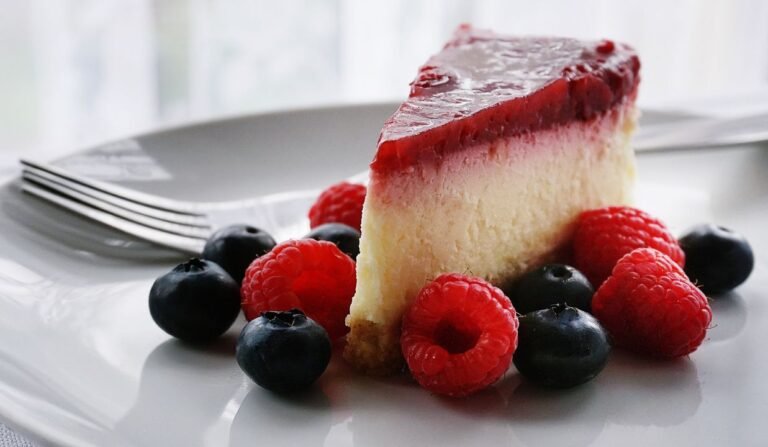
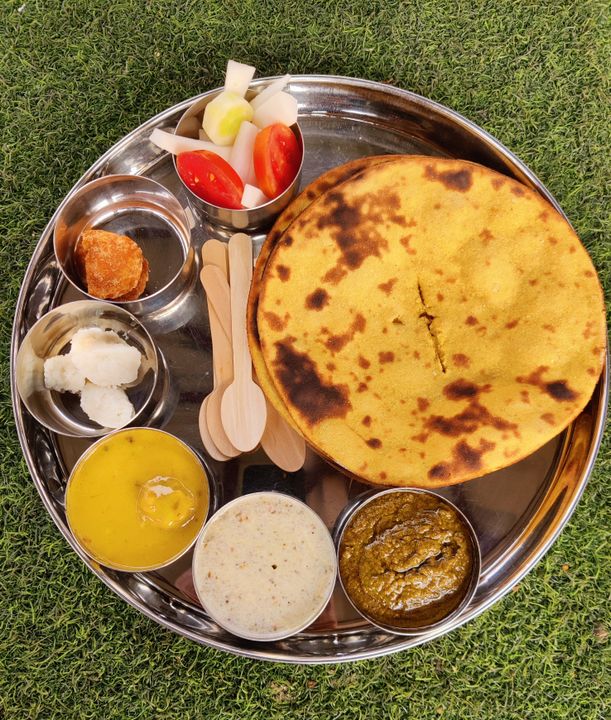
Most meals in the world are designed to fill you up. A Gujarati thali is designed to complete you. Across Gujarat — one of India’s most food-proud states, where roughly 50% of men and 61% of women eat no meat at all (NFHS-5, 2019-21) — the thali is not just a way of serving food. It’s an architectural system: 12 to 15 dishes, every one with a specific role, arranged so that no two adjacent components repeat a flavour or a technique. Nothing lands on that plate by accident.
This guide decodes the Gujarati thali component by component — what each dish is, what it contributes to the overall balance, how it’s cooked, and why it’s irreplaceable. Whether you’re a curious home cook, a food traveller visiting Gujarat Tourism destinations, or an aspiring chef trying to understand one of India’s most sophisticated regional cuisines, you’ll leave this post knowing why a Gujarati thali is the most complete expression of Indian vegetarian cooking in a single sitting.
Gujarat’s vegetarian food heritage →
Key Takeaways
– A Gujarati thali typically contains 12-15 dishes, each serving a distinct flavour, textural, or nutritional function.
– The thali is the only regional Indian meal format deliberately designed around shadrasa — all six Ayurvedic tastes in one sitting.
– The global Gujarati thali restaurant market was valued at USD 1.2 billion in 2024, with vegetarian thalis holding over 70% share (MarketIntelo, 2025).
– Jain families adapt the thali without onion, garlic, or root vegetables — replacing each with above-ground substitutes that preserve the dish’s flavour role.
– Gujarat’s sweet-sour-salty-spicy flavour balance in a single meal is unique across all of India’s regional cuisines.
What Makes a Gujarati Thali Complete?
The Gujarati thali is the only regional Indian meal format designed explicitly around shadrasa — the Ayurvedic principle of six simultaneous tastes: sweet (meetha), salty (namkeen), sour (khatta), pungent (teekha), bitter (kadwa), and astringent (kasaila). According to the Ministry of Ayush’s foundational texts on classical Indian nutrition, a meal containing all six tastes supports complete metabolic function. No other state’s thali applies this principle as deliberately as Gujarat’s does.
Each dish on the plate covers one or more of these six tastes. The dal brings sweetness and a gentle savouriness. The kadhi covers sour and umami. A dry sabzi with bitter leafy greens handles the bitter note. The spiced pickle and chhaas handle pungent and astringent. The mithai closes the loop on sweetness. Remove any one element and the thali loses a taste entirely — which is why a proper Gujarati thali is not a buffet selection, but a designed system.
Citation Capsule: The Gujarati thali is the most complete application of the Ayurvedic shadrasa (six-taste) principle in Indian regional cuisine. Each of the 12-15 dishes serves a distinct flavour function: sweet from dal and mithai, sour from kadhi, bitter from methi sabzi, pungent from pickle and chilli, astringent from certain lentils and raw salad, and salt distributed across every component. This six-fold flavour balance is unique to Gujarat’s meal architecture within India.
This balance also has a practical nutritional logic. Gujarati food is high in plant-based protein from lentils and dairy, rich in fermented preparations that support gut health, and built around seasonal produce. India’s plant-based food market reached USD 1.62 billion in 2024, growing at 10-11.5% CAGR (IMARC Group, 2024). The Gujarati thali was applying plant-forward nutrition logic centuries before the phrase existed.

What Makes Gujarati Dal Different from Any Other Dal in India?
Gujarati dal surprises most people from other Indian states. It’s thinner than North Indian dal, slightly sweet (a pinch of sugar or jaggery is standard), and brightened with a squeeze of lemon or tamarind. According to food historian Colleen Taylor Sen’s research in Feasts and Fasts: A History of Food in India (Reaktion Books, 2015), the sweet-sour profile in Gujarati cooking traces back to the state’s historical spice trade routes, where tamarind and jaggery were handled simultaneously by the same merchant communities.
The technique is straightforward but specific. Toor dal (split pigeon peas) is pressure-cooked until very soft, then tempered in a separate pan with ghee, mustard seeds, cumin, dried red chilli, asafoetida, curry leaves, and sometimes a small cinnamon stick. The temper goes into the dal, which is then thinned to a near-soup consistency, sweetened, and soured. It’s served hot, often poured directly over rice at the start of the meal.
Why does it taste different from dal in other states? Three reasons: the sweetening, the thinness (designed to hydrate the rotli or soak into rice), and the use of vagharnu — the Gujarati word for the dry-spice tempering technique where every spice is added to the hot fat in a specific sequence, each releasing its flavour before the next one goes in.
What Is Kadhi and Why Does the Thali Need Both Kadhi and Dal?
Kadhi and dal look similar to an untrained eye — both are served as liquids. They play completely different roles. Dal is protein-led, grain-based, sweetened, and poured. Kadhi is yoghurt-led, fermented, sour-forward, and sipped.
Gujarati kadhi is one of India’s most technically precise yoghurt dishes. It uses full-fat sour yoghurt whisked with besan (chickpea flour) to prevent splitting, then cooked slowly over medium heat while being stirred constantly. The tempering includes ghee, mustard seeds, cumin, fenugreek seeds (for a gentle bitterness), dried red chilli, curry leaves, and fresh ginger. Some Gujarati families add small pakora dumplings to make kadhi-pakora; others keep it pure and clean.
The reason the thali needs both: dal covers protein and sweetness; kadhi covers sour fermented flavour and the probiotic/digestive function of yoghurt. They’re also structurally different in how they’re consumed. Dal pours over bhaat (rice) or rotli. Kadhi is typically sipped between bites as a palate cleanser. The thali’s architecture relies on both being present simultaneously.
| Aspect | Gujarati Dal | Gujarati Kadhi |
|---|---|---|
| Base Ingredient | Toor dal (split pigeon peas) | Dahi (yoghurt) + besan (chickpea flour) |
| Flavour Profile | Sweet, lightly tangy — jaggery-forward | Tangy, mildly spiced with ginger |
| Cooking Technique | Pressure cooked, then tempered with mustard | Slow cooked, constant stirring to prevent curdling |
| Thali Role | Primary protein & carbohydrate source | Digestive, cooling, aids meal balance |
| Jain-Adaptable | Yes — omit onion-garlic tempering | Yes — naturally root-vegetable free |
Source: Florence Academy culinary analysis
The Two Sabzis: Dry and Gravy, Always Together
A complete Gujarati thali always includes at least two vegetable preparations: one dry (shaak) and one in gravy (rasawala shaak). This isn’t doubling up. It’s textural design.
The Dry Sabzi
The dry sabzi provides crunch, char, and concentrated spice. Classic choices include methi thepla (fenugreek flatbread used as a vehicle), ringan bateta nu shaak (brinjal and potato, though Jain versions swap in raw banana), valor papdi (flat beans with sesame), or dudhi muthia (steamed bottle gourd dumplings with mustard-seed tempering). The technique involves cooking on high heat with minimal water, letting the edges caramelise, and finishing with a squeeze of lemon and fresh coriander.
The Gravy Sabzi
The gravy sabzi provides the thali’s main sauce element — the component that ties together the dry items and gives you something to scoop with a rotli. Common examples include undhiyu (Gujarat’s celebrated winter slow-cook of mixed vegetables in an earthen pot), sev tameta (tomato curry with crispy chickpea-flour noodles on top), or matar paneer adapted to Gujarati spicing with less cream and more green chilli.
The flavour architecture differs from the dry sabzi. Where the dry version is spice-forward and concentrated, the gravy version balances tang from tomato or tamarind against the sweetness of onion-free bases (in Jain versions) or a gentle jaggery addition.
What Is Farsan and Why Does It Appear in a Main Meal?
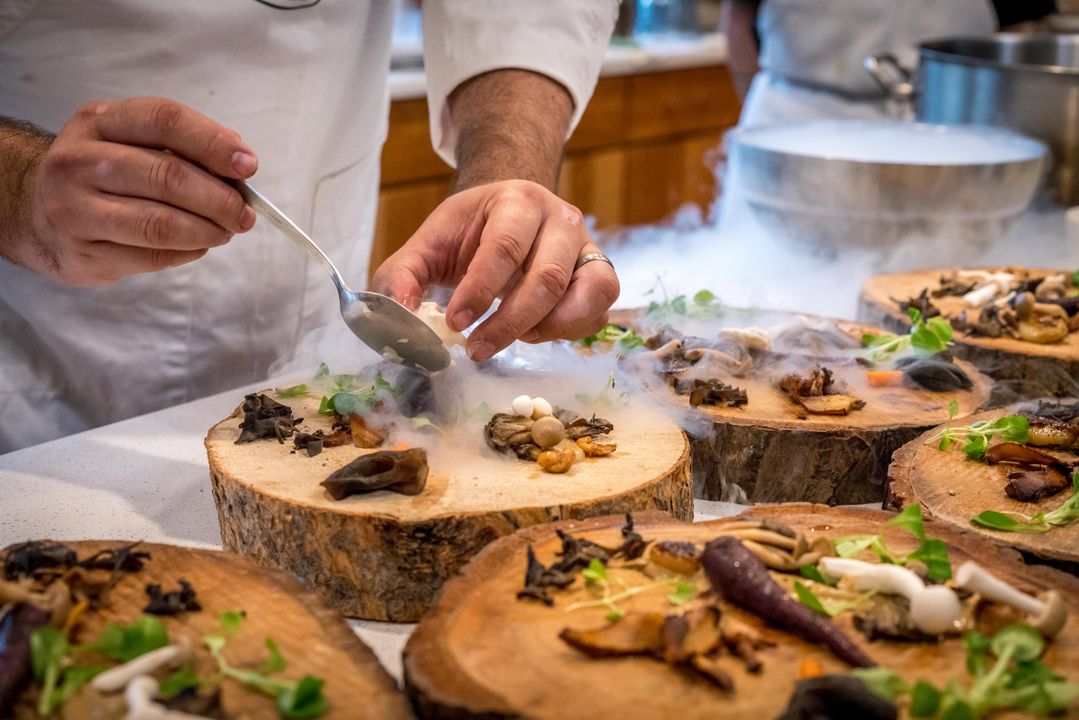
Farsan stumps most non-Gujarati diners. It’s a snack item — dhokla, khandvi, gathiya, chakli, fafda, or sev — served as part of the main thali, not as an appetiser or a side. According to food culture researchers at the India Brand Equity Foundation (IBEF, 2025), Gujarat’s snack culture is inseparable from its meal culture. The state produces roughly 80% of India’s commercially manufactured farsan and namkeen snacks, which says something about how central these preparations are to Gujarati food identity.
The farsan’s role in the thali is textural and caloric. It provides crunch (fafda, gathiya), soft sponginess (dhokla), or delicate thin layers (khandvi) against the predominantly moist, sauce-heavy main dishes. It also extends the protein content of the meal through besan (chickpea flour) — the base of most farsan preparations. Dhokla in particular is fermented, adding a probiotic dimension that mirrors kadhi’s gut-health function from a different angle.
Farsan technique is a discipline on its own. Dhokla requires a perfectly calibrated batter (yoghurt-to-semolina ratio), a steam temperature that holds at exactly the right level, and a tempering of mustard seeds, green chilli, and sugar water poured over the surface immediately after steaming to create the characteristic glaze. It’s one of the most technically demanding preparations in the thali, despite its unassuming appearance.
Farsan and fast food course at Florence Academy →
Ready to learn from expert chefs? Explore Courses at Florence Academy →
Rotli, Puri, and Bhakri: Why the Thali Uses Multiple Breads
Most regional Indian meals feature one bread type. A proper Gujarati thali often has two — thin, soft rotli (whole wheat flatbread) and a puffed puri, or in some settings, a thick bajra bhakri (millet flatbread) alongside the softer rotli.
Rotli is made from fine Gujarati wheat flour (gehun no lot) rolled paper-thin and cooked on a dry tawa until it puffs, then finished directly on the flame for a faint char. It’s lighter and thinner than North Indian chapati. The thinness is intentional: it tears easily into small pieces for scooping, and it has enough surface area to absorb dal without going soggy.
Puri serves a different function. It’s deep-fried and puffed, which gives it a crisp exterior that holds up to thicker gravies without disintegrating. Many Gujarati families serve puri specifically with aamras (mango pulp) in summer — the oil-fried puri and the sweet cooling mango forming one of the cuisine’s most beloved combinations.
Bhakri, made from bajra or jowar, introduces a coarser texture and a mineral earthiness that contrasts with the refined smoothness of rotli. It’s more common in the Saurashtra region of Gujarat and in winter, when heavier flours align with the season’s caloric demands.
Bhaat, Khichdi, and Why Rice Takes Two Forms
Rice appears in the Gujarati thali in two distinct preparations. Plain steamed bhaat (white rice) is the vehicle for dal. Khichdi — rice and moong dal cooked together with ghee, turmeric, and mild spicing — is a complete dish in its own right, functioning as both a grain and a protein source simultaneously.
The distinction matters. Bhaat is neutral, a carrier. It exists to receive the flavour of the dal poured over it, or of the kadhi sipped alongside it. Khichdi is self-contained. Gujarati khichdi uses a softer cook ratio than North Indian versions (more water, lower heat, longer time), producing a texture closer to risotto than pilaf. A generous ladle of ghee goes on top before serving — the fat carrying the aroma of the grain upward before the first bite.
In Jain households, khichdi is often prepared during fasting periods or when someone is unwell, because it combines complete protein (rice and dal together form a complete amino acid profile) with easy digestibility. This isn’t incidental — it reflects a centuries-old understanding of how cooking technique and nutrition intersect.
Why Does a Gujarati Thali Always Include Something Sweet?
The inclusion of mithai — a sweet preparation — within the main meal (not as a dessert after) is the most distinctive feature of Gujarati eating culture compared to every other Indian regional cuisine. According to Gujarat Tourism’s cultural food guides, the presence of sweetness in every meal reflects the Vaishnava devotional principle that food offered to the divine must include all qualities, including sweetness (madhurya).
The most common mithai on a daily Gujarati thali is mohanthal (dense besan fudge with ghee and cardamom), lapsi (broken wheat halwa with jaggery), basundi (reduced milk with saffron and cardamom), or simply a small portion of shrikhand (strained yoghurt with saffron). Seasonal options include puran poli (flatbread stuffed with jaggery-chana dal filling) during festivals, and aamras in mango season.
“I’ve been teaching the Gujarati thali systematically for over a decade,” says Chef Monila Surana of Florence Academy. “The moment that changed how I understood it was when I laid all 14 components of a thali out on a table, one by one, and mapped each to a taste, a texture, and a nutritional function. Not a single dish was redundant. Every one covered something the others didn’t. A mohanthal isn’t dessert — it’s the sweetness that the shadrasa system requires, delivered in a 40-gram portion. Once you see the thali as an architecture rather than a menu, everything makes sense — and you understand immediately why removing any component breaks the whole.”
Citation Capsule: The Gujarati thali’s inclusion of mithai (sweet preparation) within the main meal — not as a post-meal dessert — reflects the Vaishnava devotional principle of madhurya (sweetness as divine quality) embedded in everyday eating. This practice, combined with the shadrasa six-taste principle from Ayurvedic nutritional philosophy, makes the Gujarati thali the only regional Indian meal deliberately architected to deliver complete taste and nutritional range in a single simultaneous sitting.
Chhaas, Papad, Pickle, and Salad: The Finishing Elements
These four components are often overlooked in food writing about Gujarati thali. Each one is functional, not decorative.
Chhaas (spiced buttermilk) is whisked yoghurt diluted with water and tempered with cumin, green chilli, ginger, coriander, and a pinch of black salt. It serves as a digestive across the meal — the lactic acid in the yoghurt and the aromatic spices working together to settle a meal that covers 12+ dishes. In Gujarat’s heat, it also functions as a thermoregulator. Unlike kadhi, chhaas is not cooked — it’s served cold and refreshed throughout the meal.
Papad provides the crunch and the sharp, roasted flavour note that cuts through the creamier elements — dal, khichdi, kadhi. Most Gujarati thalis use moong dal papad or urad dal papad, roasted dry (not fried), which gives a lighter texture and a cleaner finish than oil-fried versions.
Pickle (athanu) brings intense concentrated sour-hot-salty flavour in a very small portion. Gujarati pickles are oil-based and spice-heavy — raw mango, lime, or green chilli pickles aged in ceramic jars. Even a teaspoon changes the palate between dishes.
Salad is typically a simple cucumber-tomato-carrot assembly with lemon, salt, and cumin — raw, crunchy, and cold. Its function is textural contrast and a brief neutral moment between the complex spiced dishes. In a Jain thali, carrot is replaced by radish or cucumber only.
How Does the Jain Version of a Gujarati Thali Differ?
A Jain Gujarati thali contains the same 12-15 components as a standard thali. The structure, the balance, and the shadrasa principle are all preserved. What changes is the ingredient logic within each dish.
Jain dietary law (rooted in the ahimsa principle of non-harm) removes onion, garlic, and all root and underground vegetables — potato, carrot, beetroot, radish, sweet potato, and turnips. Digging them up kills the entire plant and disturbs soil microorganisms. In a Jain thali, these substitutions are standard:
- Dry sabzi: Raw banana (kela) replaces potato in dry preparations; suran (elephant foot yam, though technically underground, is permitted in many traditions) or raw papaya replaces aloo in curries.
- Gravy sabzi: Bottle gourd, ridge gourd, tinda (Indian round gourd), and cluster beans replace carrot-based gravies.
- Dal tempering: Hing (asafoetida) in higher quantity replaces the sharpness that garlic would have provided. Ginger increases proportionally.
- Salad: Cucumber and tomato remain; carrot is removed.
- Farsan: Dhokla, khandvi, and fafda are all naturally Jain-compliant. No substitutions needed.
The Jain thali is not a restricted version of the Gujarati thali. It is a parallel tradition that developed simultaneously. Many of Gujarat’s most technically demanding dishes — khandvi, the perfect khichdi, moong dal halwa — were developed in Jain households, precisely because the constraint of working without onion, garlic, and roots forced cooks to build flavour from spice work, tempering technique, and grain manipulation alone. The standard Gujarati thali and the Jain thali are cousins, not parent and child.
Jain cooking and flavour substitution techniques →
Frequently Asked Questions
How many dishes are in a Gujarati thali?
A traditional Gujarati thali contains 12 to 15 components: dal, kadhi, one dry sabzi, one gravy sabzi, farsan, rotli, puri or bhakri, bhaat or khichdi, chhaas, mithai, papad, pickle, and a small fresh salad. Festive and restaurant thalis — particularly during wedding season or at establishments like those featured in Gujarat Tourism food festivals — can include 18 or more items.
Why is a Gujarati thali both sweet and spicy?
Gujarati thali is designed around the Ayurvedic shadrasa principle — all six tastes (sweet, salty, sour, pungent, bitter, astringent) present simultaneously in one meal. The sweetness in dal and mithai balances the sourness of kadhi and the heat of spiced sabzis. This deliberate four-way balance of sweet-sour-salty-spicy is unique to Gujarat across all of India’s regional cuisines. No other state applies this principle as consistently in everyday eating.
What is the difference between a regular Gujarati thali and a Jain Gujarati thali?
A Jain Gujarati thali removes onion, garlic, and all root vegetables — potato, carrot, beetroot, and radish. Raw banana replaces potato in dry sabzis; bottle gourd or raw papaya fills gravy dishes; hing (asafoetida) replaces garlic’s pungency in tempering. Every component of the thali remains present. The dish count stays the same. Only the ingredient logic within each dish changes to comply with Jain ahimsa dietary principles.
What is chhaas and why is it always part of a Gujarati thali?
Chhaas is thin, spiced buttermilk: yoghurt whisked with water and tempered with cumin, green chilli, ginger, and curry leaves. It serves as a digestive aid and thermoregulator in Gujarat’s hot climate. Unlike kadhi (thick, cooked yoghurt served as a dish), chhaas is served cold and consumed throughout the meal as a palate cleanser. Both kadhi and chhaas appear in the same thali because they serve completely different functional roles.
The Gujarati Thali Is a System, Not a Collection
A Gujarati thali that’s served correctly isn’t 14 dishes that happen to arrive together. It’s a single meal that has been engineered over centuries to deliver complete flavour, complete nutrition, and complete cultural meaning in one sitting. Every component has a role that no other component duplicates. The shadrasa balance, the structural pairing of dry and wet, the simultaneous presence of fermented and fresh, the integration of mithai into the main meal — these aren’t traditions preserved out of habit. They’re design decisions that still make nutritional and culinary sense.
Understanding this architecture is what separates a cook who can replicate a Gujarati thali from one who can create it. And creating it — building the tempering sequences, calibrating the sweet-sour balance in the dal, achieving the perfect consistency in the kadhi, knowing when the farsan’s texture is right — is a learnable, teachable skill set.
Culinary Foundation Program covering Gujarati regional cuisine →
Join 2,000+ students who’ve trained with expert chefs at Florence Academy, Ahmedabad. Explore Courses →
Have questions? Chat with us on WhatsApp — we respond fast.
Call us at +91 6351665305 | +91 8320715588
About the Author
Chef Monila Surana is the Managing Partner of Florence Academy of World Cuisines in Ahmedabad, with 18 years of culinary education experience. She leads curriculum design and day-to-day teaching across 50+ courses — all 100% vegetarian and Jain-adapted. Florence Academy’s teaching team brings 48+ years of combined culinary experience, including Chef Hina Gautam (30+ years, founder of JustCook culinary institute, cooking show personality and competition judge). The academy has trained 2,000+ students since founding.


