
Janmashtami 2026 falls today, August 16. If you’re celebrating and want sweets ready before the midnight puja, this list was put together with exactly that in mind. All 7 recipes use ingredients from any Indian grocery store, require no special equipment, and every single one comes together in 45 minutes or less. They are strictly vegetarian, eggless, and contain no onion or garlic. traditional Janmashtami prasad recipes →
According to Drik Panchang, the ashtami tithi and Rohini nakshatra alignment on August 16, 2026 makes it the primary Janmashtami date observed across most of India. The recipes here work whether you’re making prasad for the temple tray, breaking your fast at midnight, or sharing sweets with family after the puja.
Key Takeaways
– All 7 recipes are ready in 45 minutes or less, with no special equipment required.
– Makhan Mishri (10 min, 2 ingredients) is the most sacred offering connected to Krishna’s mythology.
– Makhana Kheer is the most-requested recipe in Florence Academy’s annual Janmashtami workshops since 2015. > – Four recipes (Makhan Mishri, Makhana Kheer, Charnamrit, Sabudana Kheer) are fasting-compliant for upvas.
– All recipes are strictly vegetarian, eggless, and free of onion and garlic.
What Sweets Are Associated with Janmashtami and Why?
Krishna is inseparable from dairy. Milk, makhan (white butter), and curd run through every story in the Bhagavata Purana about his childhood in Vrindavan. The sweets of Janmashtami follow directly from that association: most are milk-based, butter-based, or curd-based. (ISKCON, Vaishnava festival traditions)
Makhana holds a special place in this tradition. Foxnuts appear as prasad in temple offerings throughout Mathura and Vrindavan, and they are one of the few foods permitted during the Janmashtami fast. Their association with Krishna is both devotional and practical: they are light, nourishing, and require no grain.
The midnight timing matters too. Devotees who observe a full fast break it at the moment of Krishna’s birth. The sweets in this list were chosen to work as that first offering and first meal together. They’re nourishing without being heavy, and all can be made in the hours before midnight.
Gujarat’s vegetarian food heritage →
What Are the 7 Quick Janmashtami Sweets to Make at Home?
Florence Academy has run Janmashtami cooking workshops since 2015. The most requested recipe across every session is Makhana Kheer. Students come having eaten it in temples for years, then discover it’s essentially milk, makhana, and sugar. That moment of recognition is one of the most consistent reactions in the workshop room.
Here are all 7, ordered from fastest to slowest.

1. Makhan Mishri – 10 Minutes
Makhan Mishri is two ingredients: fresh white butter and mishri (rock candy crystals). Churn 400g full-fat curd with a hand blender until the butter separates from the buttermilk. Drain, rinse in cold water, and mix with 2-3 tbsp crushed mishri. Serve immediately in a small clay pot or katori. No heat, no waiting.
This is the prasad most directly connected to Krishna’s mythology. He didn’t reach for elaborate sweets. He reached for makhan. The simplicity is the point.
The fastest and most meaningful Janmashtami sweet is Makhan Mishri. It takes 10 minutes, uses two ingredients, and is the closest thing to what Krishna himself is described as loving. When in doubt, simplest is most sacred.
2. Charnamrit – 5 Minutes
Mix equal parts (2 tbsp each) of milk, curd, honey, mishri, and ghee in a small bowl. Stir gently. Add 4-5 fresh tulsi leaves before serving. Charnamrit is a ritual drink, not a dessert: it is served in small portions, usually in a spoon or tiny cup, as part of the abhishek and puja. The five elements have symbolic meaning; measure them with intention.
Chef Monila’s Janmashtami practice starts here. She prepares the Charnamrit before any other cooking begins. The act of measuring equal portions of each element before the morning prayers sets a specific quality of attention for the rest of the day’s work. The cooking that follows feels different when it starts this way.
3. Choco Makhana – 15 Minutes
Pan-roast 100g makhana in 1 tsp ghee over medium heat for 5 minutes until crisp and lightly golden. Remove from heat and let them cool completely on a flat plate, about 5 minutes. Melt 80g dark couverture or compound chocolate in a microwave in 30-second bursts, stirring between each. Drizzle over the cooled makhana and let the chocolate set at room temperature.
This is a contemporary prasad, and it works. Makhana’s earthiness pairs well with dark chocolate. Children ask for it specifically. It doubles as a snacking tray item for guests who arrive for the puja.
4. Panjiri – 20 Minutes
Roast 200g whole wheat atta in 4 tbsp ghee over a low flame for 10-12 minutes, stirring continuously, until the flour turns golden and smells nutty. Take the pan off the heat. Add 150g powdered jaggery, 1 tsp cardamom powder, and a handful of chopped cashews and almonds. Mix quickly while the heat from the pan binds everything together. Serve loose or press into small laddoos.
Panjiri is traditionally made for the fast-breaking meal and also given to new mothers for its warming, nourishing properties. The low flame and constant stirring are the only technique you need to get right.
5. Coconut Laddoo – 30 Minutes
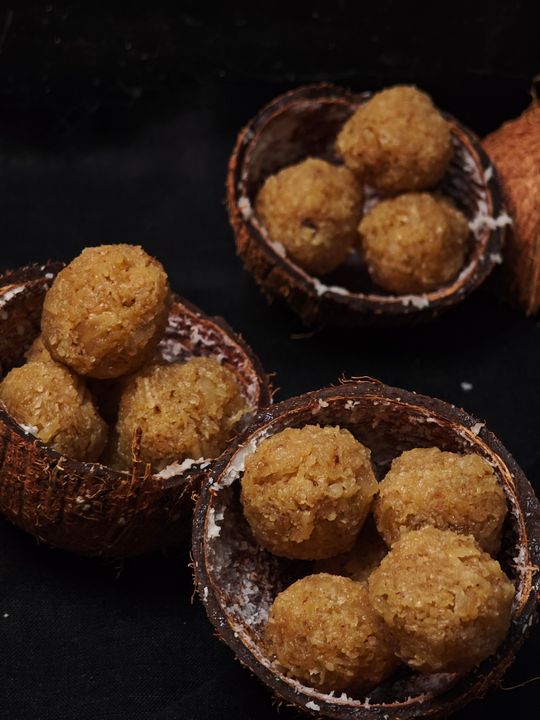
Combine 200g desiccated coconut and 200ml condensed milk in a non-stick pan over low heat. Stir continuously for 5-7 minutes until the mixture pulls away from the sides and becomes a single cohesive mass. Remove from heat. Let the mixture cool for 15-20 minutes until it’s cool enough to handle. Roll into small balls and optionally roll each laddoo in extra desiccated coconut to coat. Makes approximately 12-14 laddoos.
These set at room temperature within the hour. They’re stable enough to place on the deity’s tray without risk of melting or spreading.
6. Sabudana Kheer – 35 Minutes (Fasting Compliant)
Soak 150g sabudana in water for 30 minutes until the pearls are swollen and soft. Drain completely. Bring 500ml full-fat milk to a boil in a heavy-bottomed pan, then add the drained sabudana. Simmer on a low flame for 20-25 minutes, stirring regularly, until the pearls turn fully translucent and the milk thickens. Add 4 tbsp sugar, 1/2 tsp cardamom powder, a pinch of saffron soaked in warm milk, and chopped cashews. Serve warm.
This is the upvas (fasting) kheer. It’s substantial enough to break a full-day fast without being difficult to digest late at night.
7. Makhana Kheer – 35 Minutes
Across Florence Academy’s Janmashtami workshops since 2015, Makhana Kheer is requested more than any other recipe. Students describe eating it at ISKCON temples and at family celebrations for years before realizing how simple it actually is.
Dry-roast 150g makhana in a pan for 3-4 minutes until lightly crisp. Bring 500ml full-fat milk to a boil in a heavy-bottomed pan. Add the roasted makhana, reduce heat to a simmer, and cook for 25-30 minutes. The makhana softens and breaks down slightly, absorbing the milk and thickening it naturally. Add 4 tbsp sugar, a pinch of saffron, and 1/2 tsp cardamom powder. Stir well and serve warm.
According to USDA FoodData Central, 100g of makhana contains approximately 9.7g of protein and 14.5mg of calcium per 100g serving, making it one of the more nutritionally significant fasting foods available.
What Are the Janmashtami Fasting Rules for Food?
The Janmashtami fast is an upvas, a devotional fast, and it follows specific food rules that differ from regular cooking. (Drik Panchang, Janmashtami 2026 fasting guidelines) Permitted foods include sabudana, makhana, samak rice, singhara atta (water chestnut flour), fruits, milk, curd, and sendha namak (rock salt). Regular grains, wheat, maida, table salt, onion, and garlic are all off the list.
Of the 7 recipes above, four are fully fasting-compliant:
- Makhan Mishri – fasting compliant (curd + mishri)
- Charnamrit – fasting compliant (milk, curd, honey, mishri, ghee)
- Makhana Kheer – fasting compliant (makhana, milk, sugar)
- Sabudana Kheer – fasting compliant (sabudana, milk, sugar, sendha namak optional)
Three are not fasting-compliant for strict upvas observers:
- Panjiri – contains wheat atta
- Coconut Laddoo – condensed milk typically contains small additives; check the label if observing a strict fast
- Choco Makhana – compound chocolate may contain grain-based additives; use pure dark couverture if adapting for fasting
Navratri fasting recipes for Gujarat →
Ready to learn from expert chefs? Explore Courses at Florence Academy and cook these recipes properly, with technique that lasts beyond one festival.
FAQ
What time do you break the Janmashtami fast in 2026?
The fast is traditionally broken at midnight, at the exact moment of Krishna’s birth. In 2026, the specific muhurat depends on when the ashtami tithi and Rohini nakshatra align in your timezone. According to Drik Panchang, Janmashtami 2026 falls on August 16. Most households break the fast between 12:00am and 1:00am on August 17. Confirm the precise time with your local temple or a current panchang.
Can children keep the Janmashtami fast?
Children are not expected to observe a strict upvas. Many families encourage children to eat sabudana kheer, makhana, and fruit through the day, which naturally falls within the fasting food rules, while still participating fully in the celebration. The midnight puja, the aarti, and the prasad distribution are all open to everyone, regardless of whether a full fast is being kept.
Is makhana the same as foxnuts?
Yes, makhana and foxnuts are the same ingredient. They are the popped seeds of the Euryale ferox plant, sometimes called lotus seeds (though technically from a related water lily species). In India, makhana is closely associated with Vaishnava festival cooking and upvas traditions. Per USDA FoodData Central, they are high in protein, calcium, and magnesium, and they are permitted in all Janmashtami and Navratri fasting traditions.
What is the simplest Janmashtami sweet to make?
Makhan Mishri: two ingredients, 10 minutes, no cooking. Churn 400g full-fat curd with a hand blender until the butter separates, drain, rinse in cold water, and mix with crushed mishri crystals. Serve in a clay pot. It’s the most direct edible connection to Krishna’s mythology, and it’s what you’d offer if time ran out and you only had one option.
Make These Tonight
These 7 recipes cover the full range of what a Janmashtami kitchen produces: the ritual (Charnamrit, Makhan Mishri), the fasting meal (Sabudana Kheer, Makhana Kheer), the classic (Panjiri, Coconut Laddoo), and something for the children at the midnight celebration (Choco Makhana). None require special equipment. All are done in under 45 minutes.
Start with Charnamrit. It takes 5 minutes and it sets the tone for the rest of the cooking. Then work your way down the list based on how much time you have before the evening puja begins.
If you’d like to go deeper into vegetarian festival cooking with structured technique, the Florence Academy culinary foundation course covers traditional Indian sweets and prasad as part of a broader curriculum taught by chefs with a combined 48 years of experience.
Shubh Janmashtami.
Have questions? Chat with us on WhatsApp — we respond fast.


