

Every Independence Day, India asks where it has been and where it is going. In food, the answer has never been clearer. India is the world’s largest producer and exporter of spices, shipping $4 billion worth annually (Spices Board of India, 2024). Turmeric is in health products from London to Seoul. Indian-origin chefs hold Michelin stars on multiple continents. The world has already decided that Indian cuisine is sophisticated, complex, and deeply relevant. The question worth asking in 2026 is whether India’s culinary education is keeping pace with that verdict.
Indian culinary heritage and identity →
Key Takeaways
– India exports $4 billion in spices annually and supplies 75-80% of the world’s turmeric (Spices Board of India, 2024).
– Indian techniques like tempering (tadka), tandoor cooking, and fermentation are now standard in global professional kitchens.
– Indian-origin chefs hold Michelin stars in London, Bangkok, and Singapore, proving Indian cuisine competes at the highest fine-dining level.
– India’s vegetarian culinary tradition is a competitive advantage in a world moving rapidly toward plant-based eating.
– Dual NSDC and AHLEI certifications open pathways to both domestic hotel chains and international hospitality employers.
How Have Indian Ingredients Changed Global Cooking in the Last 20 Years?
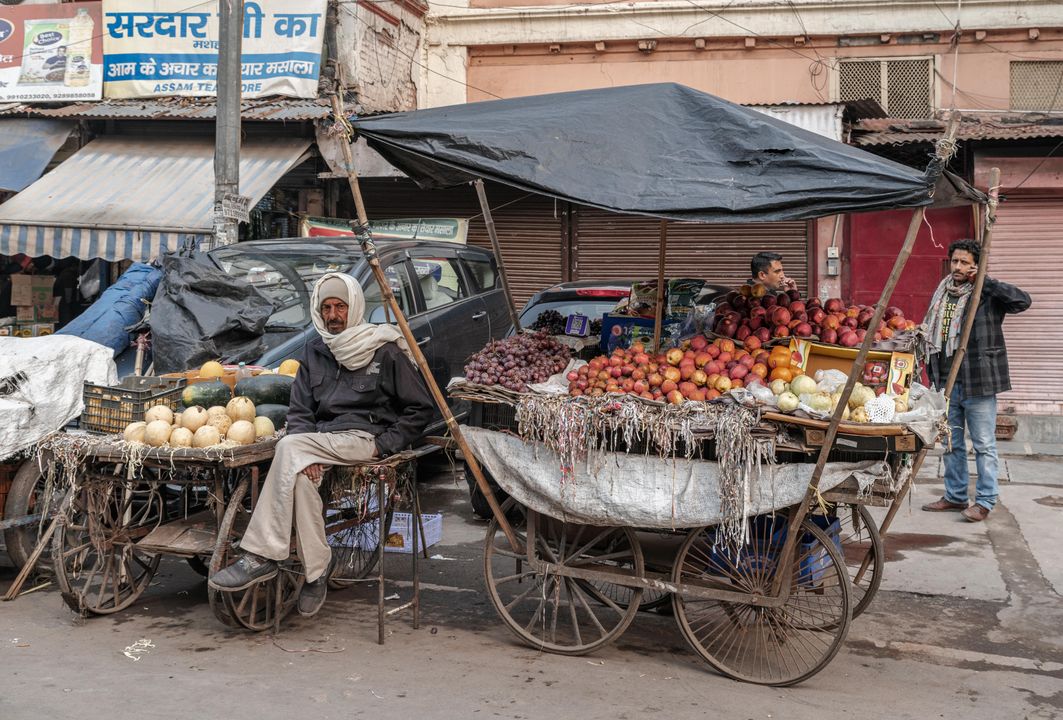
India supplies 75-80% of the world’s turmeric, and that single fact reshaped an entire category of global health retail (Spices Board of India, 2024). From cafes in London to grocery shelves in Seoul, Indian ingredients that were once regional pantry staples are now global commodities. The shift happened ingredient by ingredient, and it’s still accelerating.
Turmeric: From Regional Spice to Global Wellness Product
Turmeric made the most dramatic crossing. Turmeric lattes now appear on menus from London to Tokyo. Curcumin supplements have become a billion-dollar global market, driven by research into turmeric’s anti-inflammatory properties. The ingredient that Indian home kitchens have used daily for centuries is now a premium wellness product. India grows most of the world’s supply, making this a direct extension of Indian agricultural identity into global commerce.
Cardamom, Ghee, and Tamarind Go Mainstream
Cardamom is now the world’s second most expensive spice after saffron (Ministry of Food Processing Industries). Scandinavian bakers use it in kardemummabullar buns. Middle Eastern coffee houses have always prized it. Western craft cocktail bars now source it deliberately. Ghee crossed from Indian grocery stores into Whole Foods and mainstream Western health retail, marketed as “clarified butter” for the paleo and keto segments. Tamarind has entered global restaurant kitchens as a souring agent in sauces and desserts. These aren’t fringe adoptions. They’re mainstream.
Fenugreek Enters Health Science
Fenugreek (methi) has moved beyond Indian kitchens into international food science. Research into its role in blood sugar regulation has generated dozens of peer-reviewed publications, pulling the ingredient into global health food product development. An ingredient that Gujarati cooking has used for centuries is now being studied in laboratories worldwide.
- India’s top 5 spice exports by value
Source: Spices Board of India 2024
Citation Capsule: India is the world’s largest producer and exporter of spices, with annual export value reaching $4 billion as of 2024, according to the Spices Board of India. The country supplies 75-80% of global turmeric demand, making Indian agriculture the backbone of the global wellness ingredient market.
Gujarat’s role in India’s food identity →
What Indian Cooking Techniques Have Gone Global?
Indian cooking techniques are now being taught in culinary schools and used in professional kitchens worldwide. The tandoor oven, which reaches temperatures of 480°C, has been adopted by high-end restaurants from New York to Dubai (Michelin Guide). Tandoori cooking isn’t a curiosity anymore. It’s a recognised technique in the global culinary canon.
Tempering, Dry Roasting, and Pressure Cooking
Tempering, known as tadka or chaunk, involves blooming whole spices in hot fat to extract and concentrate flavour compounds before adding other ingredients. International chefs now use this technique independently of Indian cuisine as a foundational flavour-building method. Dry-roasting whole spices before grinding is another Indian technique that has entered global spice preparation. It intensifies essential oils and deepens flavour in a way no other method replicates.
Pressure cooking is embedded globally in professional kitchens. India has been one of the world’s largest pressure cooker markets for decades. The Instant Pot phenomenon in Western home cooking is, at its core, a modernised version of what Indian kitchens have done for generations. The technique migrated westward through practical necessity and only recently received a cultural rebranding.
Fermentation: India’s Oldest Food Trend
The West treated fermentation as a food trend from roughly 2015 to 2020. Kombucha, kimchi, kefir, and sauerkraut received enormous media attention, cookbook deals, and premium retail positioning. What that narrative missed was that India’s fermentation tradition, covering idli and dosa batter, kanji, achar (regional pickles), lassi, and chaas, is among the world’s oldest and most diverse. These techniques predate the Western fermentation “discovery” by centuries. The trend arrived in India’s direction decades late. Indian fermentation isn’t a wellness fad. It’s an unbroken culinary science.
Citation Capsule: India’s culinary fermentation tradition spans idli and dosa batter fermentation, kanji (fermented grain drink), achar (lacto-fermented pickles), lassi, and chaas, all produced through microbial processes that predate modern food science. These techniques represent one of the world’s most geographically diverse fermentation cultures, predating the Western kombucha and kefir trend by several centuries.

Which Indian Chefs Are Representing India on the Global Stage?
Indian-origin chefs are earning Michelin recognition with specifically Indian culinary concepts, not despite their cuisine but because of it (Michelin Guide). This is a shift from a generation ago, when Indian chefs winning international recognition typically worked within European frameworks. The current generation has changed that completely.
Gaggan Anand’s Bangkok restaurant held the top spot on the Asia’s 50 Best Restaurants list for four consecutive years and has carried multiple Michelin stars. His entire culinary identity is built on Indian flavour logic, not European. Atul Kochhar was the first Indian chef to receive a Michelin star in the United Kingdom. Vineet Bhatia has built a multi-property Michelin-starred career on explicitly Indian culinary concepts. These aren’t exceptions. They’re the leading edge of a broader shift in how the world evaluates Indian cooking.
Chef Hina Gautam, who has taught professional cookery for more than 30 years, watched the global perception of Indian food change in real time. When she started her career, Indian food was understood internationally as a category of inexpensive takeaway. It was accessible, familiar, and underestimated. Today, a well-executed Indian tasting menu commands between Rs 15,000 and Rs 20,000 per head at top-tier restaurants. The craft was always there. The global palate needed time to catch up. That gap is now closing fast.
Career paths in Indian professional cooking →
Citation Capsule: Gaggan Anand’s Bangkok restaurant ranked #1 in Asia’s 50 Best Restaurants for four consecutive years while building its identity entirely around Indian culinary concepts and flavour logic, according to the Michelin Guide. Indian-origin chefs currently hold Michelin stars in London, Bangkok, and Singapore, demonstrating that Indian cuisine competes at the highest level of global fine dining.
- 2001 — Vineet Bhatia — First Indian-born chef to earn a Michelin star (Zaika, London)
- 2006 — Atul Kochhar — Two Michelin stars at Benares, London
- 2008 — Hemant Oberoi (The Table context) — Recognised Indian fine dining emergence globally
- 2016 — Mumbai & Delhi restaurants begin global ranking entries (50 Best Asia list)
- 2023 — Gaggan Anand (Bangkok) — Multiple stars, Best Restaurant Asia recognition
- 2024 — Growing cohort of Indian-origin chefs in Singapore, Dubai, and UK earning stars
Source: Michelin Guide; World’s 50 Best Restaurants
What Does Food Independence Mean for Indian Culinary Education?
India has produced extraordinary culinary talent for generations, but historically sent students abroad for formal training and internationally recognised credentials. That pattern is shifting. NSDC (National Skill Development Corporation), AHLEI (American Hotel and Lodging Educational Institute), and THSC certifications are now creating credentials that international hospitality employers recognise and actively seek. The infrastructure for world-class culinary education exists in India. The question is whether students know to look for it.
The Vegetarian Advantage Is Now a Career Advantage
In a world moving rapidly toward plant-based eating, India’s vegetarian culinary tradition is not a dietary constraint. It’s a competitive advantage. The challenge of building deep, satisfying flavour without meat is something Indian cuisine solved centuries ago. Chefs who understand dal, sabzi, and fermented preparations at a professional level possess skills that international restaurants are actively seeking. This is particularly true in London, New York, and Singapore, where plant-forward fine dining is growing faster than any other restaurant category.
Foundation and diploma culinary courses →
Dual Credentials Open International Doors
Graduates of Florence Academy of World Cuisines in Ahmedabad have been placed at ITC Hotels and Marriott International, two of India’s largest hotel employers with global operations. Both hotel groups operate internationally, meaning a credential strong enough to enter these employers domestically is a credential that opens international placement pathways. The dual NSDC and AHLEI certification combination, which Florence Academy’s diploma programmes carry, creates exactly this kind of portable professional identity.
Diploma in Food and Beverages →
India’s culinary education sector is maturing to match the global reputation its cuisine and chefs have already earned. The gap between India’s culinary standing internationally and the formal credentials its students carry is closing. For students choosing where to train in 2026, the key question isn’t whether to take culinary education seriously. It’s whether the programme they choose prepares them for the world that Indian food has already entered.
Ready to learn from expert chefs? Explore Courses at Florence Academy

Frequently Asked Questions
What is India’s most exported spice?
Chilli (red and green pepper) is India’s most exported spice by volume, followed by cumin, turmeric, and cardamom. India supplies 75-80% of global turmeric demand and is the world’s largest spice producer overall (Spices Board of India, 2024). Annual spice export value reached $4 billion, making spices one of India’s most significant agricultural export categories.
Which Indian dishes appear on Michelin-starred restaurant menus internationally?
Indian-origin chefs at Michelin-starred properties serve modernised interpretations: chaat elements as amuse-bouche, dal as a plated course with luxury garnishes, and full Indian-concept tasting menus. Gaggan Anand’s Bangkok restaurant, formerly ranked #1 in Asia, is built entirely on Indian flavour logic (Michelin Guide). In London, Atul Kochhar and Vineet Bhatia have each earned Michelin recognition for explicitly Indian culinary concepts.
Indian food heritage and culinary culture →
Is Indian culinary education internationally recognised?
Yes, and increasingly so. NSDC certification carries weight with India’s major hotel chains, many of which operate internationally. AHLEI certification is a US-origin credential that international hospitality employers actively recognise. Graduates holding both credentials are competitive for roles in hotel chains with global properties. The key is choosing a programme that carries both certifications (Ministry of Food Processing Industries).
How is the global plant-based trend affecting Indian culinary careers?
The global plant-based movement has created direct demand for Indian culinary expertise. Indian vegetarian cuisine solved the challenge of building rich, complex flavour without meat centuries before plant-based eating became a global conversation. Restaurants in London, New York, and Singapore are specifically seeking chefs with deep vegetarian technique knowledge. India’s culinary tradition provides exactly that expertise, making it a genuine competitive advantage in global hiring.
India’s culinary identity has always been strong. What has changed in the last two decades is that the rest of the world now sees it clearly. The $4 billion spice export figure, the Michelin stars in Bangkok and London, the turmeric lattes in Seoul, and the fermentation revival that traced its roots back to Indian kitchens: these are not coincidences. They’re the result of a culinary tradition so deep and so technically sophisticated that it was always going to reshape global cooking eventually.
For students considering culinary careers in 2026, this moment is significant. Indian cuisine is not playing catch-up internationally. It’s setting direction. The chefs who understand both Indian technique and international cuisine, who hold credentials that open doors in Mumbai and in Singapore, are positioned for the careers that this shift is creating. That’s what food independence looks like in practice: not just exporting spices, but exporting expertise, credibility, and craft.
Have questions? Chat with us on WhatsApp — we respond fast.


