

Here’s a number that should stop you before you search “cooking class near me”: only 1% of India’s hospitality workforce has received any formal culinary training (THSC / MSDE, Sub-Sector-Wise Demand and Skill Gap Study, 2024). One percent. That stat reframes the question most people ask.
The real question isn’t “cooking class or culinary institute?” It’s simpler: what outcome do you actually need? A cooking class and a culinary diploma are not competing versions of the same thing. They serve completely different goals. Choosing the wrong one wastes time, money, or both. This post lays out what each option actually delivers, who each genuinely suits, and the honest answer for each type of person asking.
Check chef salary in India by role if you want the full earnings picture alongside the qualification choices below.
By Chef Monila Surana, Florence Academy of World Cuisines
Key Takeaways – Only 1% of India’s hospitality workforce has formal culinary training (THSC, 2024), making a diploma a genuine differentiator in hotel hiring – Cooking classes (1 day to 8 weeks) deliver a skill; culinary institutes (1-2 years) deliver a career credential and placement pathway – Diploma graduates enter hotel kitchens at Commis Grade 1 (₹15,000-18,000/month), roughly ₹5,000/month above non-diploma peers from day one – A short cooking class is the right choice for hobbyists, explorers, and home bakers testing the waters — not everyone needs a diploma, and that’s okay
What Is a Cooking Class — and Who Is It Actually For?
A cooking class is a short, focused session built around one skill, dish, or cuisine. Duration ranges from a single afternoon to an 8-week programme. Costs typically run ₹600 to ₹2,000 per session at most studios. You leave with a recipe, a new technique, and a participation certificate. You do not leave with a career qualification. That’s not a flaw in the format — it’s exactly what these classes are designed to deliver.
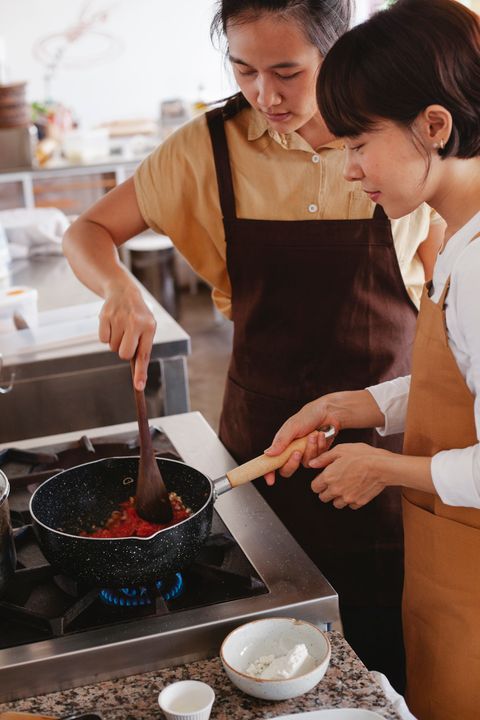
Cooking classes attract a wide range of people. A homemaker in Ahmedabad who wants to add Thai food to her repertoire. A college student exploring whether professional cooking is genuinely appealing before committing to a diploma. A home baker who wants to master one specific technique — croissant lamination, say, or mirror-glaze finishes. A tourist who wants an authentic Gujarati cooking experience on a weekend. All of these are legitimate reasons to attend a short class.
You can read the full breakdown in our cooking classes in Ahmedabad guide to compare studios, formats, and what to expect on your first day.
What Is a Culinary Institute — and How Is It Different?
A culinary institute is a structured 1-2 year programme built around a national competency framework — specifically India’s NSDC (National Skill Development Corporation) and THSC (Tourism and Hospitality Skill Council) Qualification Packs. The programme isn’t a collection of recipes. It’s a structured progression through knife skills, kitchen safety, food costing, brigade protocols, live service pressure, and eventually career placement. The certificate at the end carries weight with hotel HR departments because it maps directly to the standards those departments use to screen candidates.
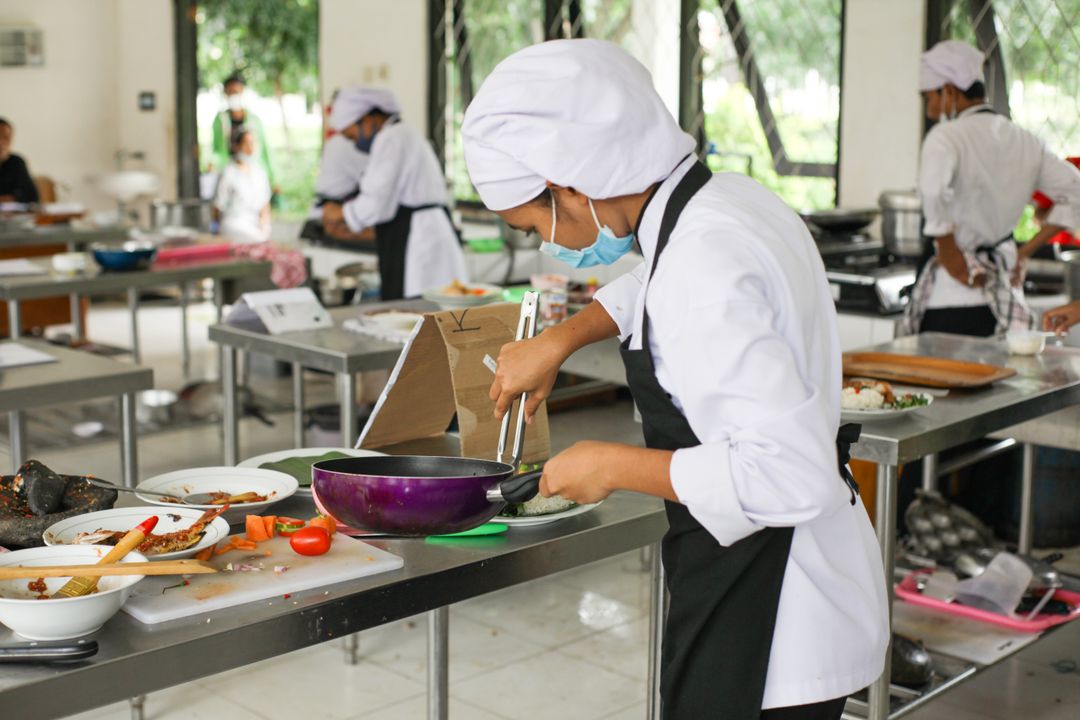
The THSC Qualification Pack most relevant to aspiring hotel chefs is THC/Q2708, which covers commis-level competencies: mise en place, cooking methods, food hygiene, portion control, and kitchen communication. When a culinary institute says its programme is “NSDC/THSC aligned,” that means their curriculum maps to these specific competency units. An HR manager at ITC Hotels or Marriott can pick up a graduate’s transcript and immediately see that it matches the national standard. That’s the structural difference.
What does “NSDC-aligned” actually mean in practice?
It means the institute has been assessed against national competency benchmarks and its graduates can be recognised under the Skill India framework. For you, it means your qualification isn’t just a piece of paper from one school — it’s a nationally recognised credential. Most 4-star and 5-star hotel chains in India filter entry-level applicants against NSDC/THSC alignment. A diploma without that alignment may not pass the first HR screen.
Read our dedicated explainer on what NSDC certification means for chef jobs for the full technical breakdown.
Citation Capsule: The THSC Skill Gap Study 2024 found that only 1% of India’s approximately 5.8 million hospitality-interested youth have received formal training, and the sector will need an additional 3 million skilled workers by 2028 (THSC / MSDE, 2024). A culinary diploma places you in a separate category from the 99% without credentials.
Cooking Class vs Culinary Institute: Side-by-Side Comparison
Does the Diploma Actually Affect Your Salary and Career Speed in India?
Culinary diploma graduates in India enter hotel kitchens at Commis Grade 1, earning ₹15,000–₹18,000 per month from day one. Non-diploma hires typically start at Commis Grade 3, earning ₹10,000–₹13,000 per month — a gap of roughly ₹5,000/month at entry level (florenceawc.com/chef-salary-india-by-role/ + ChefAnandHub India Chef Salary Report 2026). That difference compounds quickly over a career.

The more significant advantage isn’t the entry salary. It’s the speed of progression. We’ve tracked our graduates at Florence Academy, and diploma holders consistently reach Sous Chef rank 18–24 months earlier than non-diploma peers who entered the same hotel cohort. That acceleration happens because diploma graduates arrive already familiar with brigade protocols, food costing, and plating standards — the gaps that hold back most non-diploma Commis chefs during their first 18 months.
What does NSDC Level 5 mean for your negotiating position?
NSDC Level 5 corresponds to Sous Chef and above on the National Qualifications Framework. Once you’re operating at that level, a recognised Level 5 credential adds an estimated ₹8,000–₹12,000 per month to your negotiation position when moving between hotels or cities. It doesn’t guarantee a raise. But it gives you a documented reference point when asking for one. The credential is particularly effective at 5-star chains that run structured HR processes rather than informal salary discussions.
Citation Capsule: According to Florence Academy graduate tracking data and the ChefAnandHub India Chef Salary Report 2026, diploma graduates enter at Commis Grade 1 (₹15,000–₹18,000/month) while non-diploma peers enter at Grade 3 (₹10,000–₹13,000/month). Diploma holders reach Sous Chef rank 18–24 months earlier — a compounding advantage worth several lakh rupees over a 10-year career arc.
See how those figures translate to actual placement outcomes in our guide on how to get placed at ITC Hotels and Marriott.
When a Cooking Class Is the Right Choice (and When It Isn’t)
A cooking class is the right choice when your goal is skill acquisition, exploration, or hobby improvement — not a career credential or commercial licence. In 2024, the THSC Skill Gap Study confirmed that 99% of India’s hospitality-interested youth have no formal culinary training (THSC / MSDE, 2024). The boundary between who needs a diploma and who doesn’t is straightforward once you focus on the outcome you need.
Most content on this topic exists to sell you something. So let’s be direct. Here are the four situations where a short class is the better call:
- You’re exploring. You’ve never cooked professionally and want to test whether you actually enjoy it under some structure. Spending ₹1,500 on a day class is sensible before committing to a 1-year diploma.
- You have a specific, narrow skill gap. You bake well but want to master French macaron shells, or you cook confidently but want to add Szechuan technique. One focused class closes that gap faster than a full programme.
- Cooking is a hobby, not a career. You cook for family, for pleasure, for guests. That’s a completely valid reason to learn. A diploma curriculum is overkill.
- You’re a corporate professional adding a weekend skill. No HR department cares if you have an NSDC credential for your personal kitchen.
Now, the four situations where a cooking class will leave you under-prepared:
- You’re applying to a hotel kitchen. Five-star and four-star hotel HR departments in India filter against NSDC/THSC Qualification Pack alignment. A participation certificate won’t pass that screen.
- You’re opening a food business that requires FSSAI registration. The FoSTaC food safety training required under FSSAI Basic Hygiene is a minimum (FSSAI, Government of India). But beyond compliance, commercial food production requires food costing, portion control, menu engineering, and kitchen operations knowledge that no short class covers in sufficient depth.
- You want career acceleration, not just skill acquisition. Diplomas compress the entry-level learning curve because they front-load the foundational knowledge hotels assume you already have.
- You’re planning to scale a home baking business beyond domestic supply. The jump from home kitchen to commercial commissary is about operations, not just recipes — and that requires structured training.
What About Home Bakers and Food Entrepreneurs?
India’s bakery market reached USD 15.05 billion in 2025 and is growing at 8.76% CAGR, projected to hit USD 32.05 billion by 2034 (IMARC Group, Indian Bakery Market Report, 2025). Gujarat sits in one of the highest-demand regions for premium baked goods, driven by a strong vegetarian and Jain consumer base that actively seeks eggless, additive-free options. The market opportunity is genuine. But the path from home baker to food entrepreneur is not as simple as taking more baking classes.
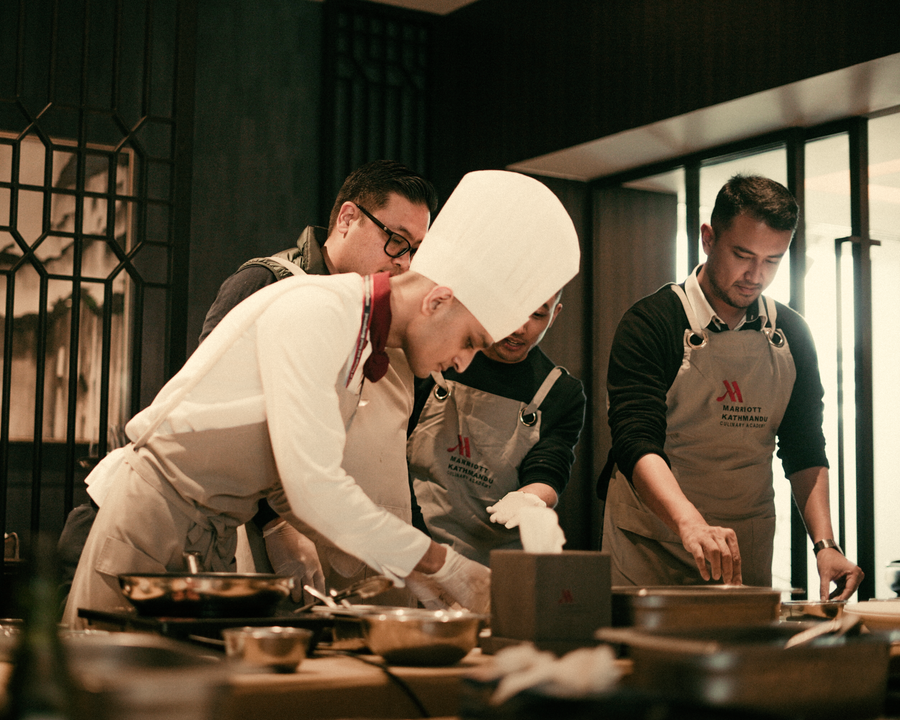
Here’s what we’ve observed consistently at Florence Academy: home bakers who join our diploma programmes already know how to bake. What they need isn’t more recipes. It’s the commercial layer — food costing, FSSAI compliance documentation, portion standardisation, and the ability to produce consistently at volume. A short class gives you a technique. A diploma gives you a business framework.
If you’re at the early stage — testing recipes, building your first customer base — short classes are the right move. Start there. Read our guide on getting your first 10 home bakery customers in Ahmedabad to build momentum before committing to a longer programme.
Once you’re taking regular orders and want to scale, the 1-Year Artisanal Bakery and Patisserie Diploma becomes relevant. It covers the commercial production, costing, and compliance knowledge that home bakers consistently say they wish they’d had earlier.
Florence Academy’s Programmes: What We Offer (and What Fits Each Path)
Ready to learn from expert chefs? Explore Courses at Florence Academy
Florence Academy has trained 2,000+ students in Ahmedabad since opening. The curriculum is 100% vegetarian and Jain-adapted — every recipe has a Jain version, and no meat or eggs are used in the core curriculum. Here’s how the programmes map to the decision you’re making:
For career-focused students targeting hotel placements: The 2-Year Diploma in Food and Beverages carries NSDC, AHLEI, and THSC triple accreditation. It covers 350+ recipes, full brigade training, live service rotations, and placement support with ITC Hotels and Marriott. This is the right choice if you’re aiming for a Commis Grade 1 entry into a hotel kitchen.
For baking specialists and food entrepreneurs: The 1-Year Artisanal Bakery and Patisserie Diploma is NSDC and THSC aligned. It covers artisanal breads, patisserie, eggless baking, chocolate work, and the commercial production skills needed to run a bakery or cloud kitchen. Students often use this programme to formalise an existing home-based business.
For students who want to test the waters before committing: The 6-Month Culinary Foundation Programme gives you a structured entry point without the full 1-2 year commitment. Many students use this as a stepping stone, upgrading to the diploma after completing the foundation.
Have questions? Chat with us on WhatsApp — we respond fast.
Join 2,000+ students who’ve trained with expert chefs at Florence Academy, Ahmedabad. Call us at +91 6351665305 or +91 8320715588.
Frequently Asked Questions
What is the difference between a culinary institute and a cooking class in India?
A cooking class is a short, skill-focused session (1 day to 8 weeks) covering a single cuisine or technique — suitable for hobbyists and home cooks. A culinary institute offers a structured 1–2 year diploma aligned with NSDC and THSC national competency standards, with career placement support and industry certification. Only 1% of India’s hospitality workforce has formal training (THSC / MSDE, 2024), so diploma holders enter a significantly less crowded talent pool.
Does a culinary diploma affect salary in India?
Yes. Culinary diploma graduates in India enter hotel kitchens at Commis Grade 1 (₹15,000–₹18,000/month), bypassing the lower entry grades (₹10,000–₹13,000/month) that non-diploma hires start at. Diploma holders also reach Sous Chef rank approximately 18–24 months earlier than non-diploma peers, according to Florence Academy graduate tracking data and ChefAnandHub 2026 salary research. See the full breakdown on the pastry chef career path India page.
When is a short cooking class enough — and when do you need a culinary institute?
A short cooking class is enough if your goal is a specific technique, a hobby, or exploring whether you enjoy cooking professionally. You need a culinary institute diploma if you’re targeting a hotel kitchen, hospitality management career, or a food business that requires FSSAI licensing and commercial-scale production knowledge. The key question: do you need a career outcome, or a skill?
Is NSDC certification from a culinary institute worth it in India?
Yes, for hotel employment. India’s hospitality sector needs an additional 3 million skilled workers by 2028 (THSC Skill Gap Study, 2024), and 4-star and 5-star hotel HR departments screen applicants against NSDC/THSC Qualification Pack alignment at entry level. An NSDC-recognised diploma is the minimum filter for Commis-level positions at ITC Hotels, Marriott, Hyatt, and similar employers. Read more about culinary diploma vs hotel management degree India to see how the credentials compare across career paths.
Which culinary institute in Ahmedabad offers NSDC-recognised diplomas?
Florence Academy of World Cuisines in Ahmedabad offers two NSDC-recognised diploma programmes: the 1-Year Artisanal Bakery and Patisserie Diploma (NSDC/THSC aligned) and the 2-Year Diploma in Food and Beverages (NSDC + AHLEI + THSC triple-certified). Both include placement support with ITC Hotels and Marriott. The academy has trained 2,000+ students with a 100% vegetarian and Jain-specialist curriculum.
The Bottom Line: Match the Qualification to the Outcome
The answer to “culinary institute or cooking class?” isn’t a hierarchy. It’s a match. Short classes are excellent for what they’re designed to do: skill transfer in a focused, affordable format. Culinary diplomas are built for a different job: credential-based career entry, accelerated progression, and commercial operations knowledge.
Most of the confusion comes from people treating these as interchangeable. They’re not. The useful question is what you need to do next month, next year, and in five years. If the answer involves a hotel kitchen, a catering licence, or a bakery business you want to scale, the diploma is the more efficient path — even accounting for the longer time commitment.
India’s hospitality sector is adding 6.1 million new jobs by 2036-37, according to a CII-EY Report (2024). Gujarat’s tourism investment rose 31% to Rs. 6,505 crore in 2025 (IBEF Gujarat, 2025). The demand for trained culinary professionals in this region is not theoretical. But “trained” is doing the critical work in that sentence. A participation certificate from a weekend class and an NSDC diploma are not the same thing to a hotel HR manager.
Choose the option that matches your actual goal. Then commit to it fully.
About the Author
Chef Monila Surana is the Managing Partner and lead culinary educator at Florence Academy of World Cuisines, Ahmedabad, with 18 years of experience in culinary training and curriculum design. She oversees the Academy’s NSDC, AHLEI, and THSC-aligned diploma programmes and is the architect of Florence Academy’s 100% vegetarian and Jain-adapted curriculum. Florence Academy has trained 2,000+ students across diploma and short-course programmes since its founding.
Sources
- THSC / MSDE — Tourism & Hospitality Sub-Sector Skill Gap Study, 2024 (Tier 1): https://www.skillreporter.com/news/skilldevelopment/tourism-hospitality-wedding-msde-thsc-skilled-workforce-study/
- IBEF / WTTC — Tourism & Hospitality Industry in India, 2025 (Tier 1): https://www.ibef.org/industry/tourism-hospitality-india
- CII-EY Report — Tourism and Hospitality Sector Job Creation by 2036-37, 2024 (Tier 1/2): https://ddnews.gov.in/en/tourism-and-hospitality-sector-to-create-over-61-lakh-jobs-by-2036-37-cii-ey-report/
- IMARC Group — Indian Bakery Market Report, 2025 (Tier 2): https://www.imarcgroup.com/indian-bakery-market
- IBEF Gujarat — Gujarat State Report, Investment Data, 2025 (Tier 1): https://www.ibef.org/states/gujarat
- FSSAI — FoSTaC Food Safety Training Programme, Government of India (Tier 1): https://www.fssai.gov.in/
- Florence Academy / ChefAnandHub — India Chef Salary Report 2026 (Tier 3): https://www.florenceawc.com/chef-salary-india-by-role/ + https://chefanandhub.com/blog/chef-salary-india-2026/


