
Everyone knows Manek Chowk. Law Garden at night, Bhatiyar Gali’s historic lanes — these are the landmarks that show up in every Ahmedabad food guide. They’re worth visiting. But they’re also the performative layer of a city whose real food culture operates in a completely different register: early morning, neighbourhood-scale, vendor-led, and largely invisible to anyone who isn’t a local.
Ahmedabad has been a UNESCO World Heritage City since 2017 — one of only three Indian cities with this status. That heritage isn’t just architecture. The city’s food culture is 600 years in the making, shaped by Jain philosophy, Hindu seasonal tradition, and the practical demands of a trading community that valued flavour, economy, and freshness in equal measure. Gujarat’s tourism sector welcomed 5.3 crore visitors in 2022-23 (Gujarat Tourism), yet most of those visitors eat only what’s visible. This guide covers what isn’t.
Ahmedabad’s famous street foods explained →
Key Takeaways
– Ahmedabad’s best street food operates in a narrow 6-10am window, after which most neighbourhood vendors sell out completely.
– Gujarat is India’s most vegetarian state, with 65-70% of the population vegetarian (Census 2011) — the food reflects this as an elaborate culinary system, not a limitation.
– Eight specific food streets and pockets offer experiences unavailable in restaurants or tourist-facing venues.
– Gomtipur’s workers’ thali (₹60-80) consistently outperforms restaurant versions at 5x the price — and Florence Academy food culture students rate it the most educational food experience in the programme.
– The hidden food culture of Ahmedabad is concentrated in the old city, industrial suburbs, and neighbourhood bazaar fringes.

Why Is Ahmedabad One of India’s Most Underrated Food Cities?
Gujarat is India’s most vegetarian state, with roughly 65-70% of the population vegetarian according to Census 2011 data. That statistic alone doesn’t capture what it means for the food. Ahmedabad’s culinary tradition isn’t vegetarian by default or constraint — it’s vegetarian by centuries of philosophy, Jain and Hindu practice, and a technical sophistication that developed precisely because there were no shortcuts.
The city’s food identity is entirely its own category. It sits apart from North India’s Mughlai tradition and from South India’s rice-based cuisines. Ahmedabad food is textural, layered, often simultaneously sweet and spiced, built around fermented batters, sun-dried legumes, and seasonal produce windows that locals track with real precision. Dal dhokli, khichu, undhiyo, tuvar lilva nu shaak: these dishes have no close equivalents elsewhere.
The deep history of Gujarat’s vegetarian food tradition →
The UNESCO World Heritage designation in 2017 recognised Ahmedabad’s built fabric. But the food culture that sustains those old city lanes is equally remarkable — and considerably less documented. Gujarat’s tourism figures show millions visiting every year, but the eating most worth experiencing happens at hours and in locations that standard tourism itineraries never reach.
- Percentage vegetarian population by Indian state
- highlight Gujarat at top
Source: Census 2011, NSSO data – highlight Gujarat at top
What Are the 8 Hidden Food Streets Worth Visiting?
Ahmedabad’s real food streets operate on schedules that reward early risers. Most of the locations below are not signposted, don’t appear on food delivery apps, and have no Instagram presence. They persist because they serve a local community that returns daily. That’s a stronger quality signal than any review platform.
1. Shahpur Ki Gali: The Morning Khakhra Circuit
Shahpur, near the Shahpur crossroads in the old city, has a stretch of vendors that operates almost entirely before 10am. The anchor is khakhra: thin, crisp wheat discs roasted on iron tavas, available here in 15 or more masala varieties including methi, jeera, palak, and the less common lasun (garlic, for non-Jain buyers). The vendor on the left corner near the crossroads has been making the same recipe for what locals estimate is over two decades.
The more specific discovery here is the dal dhokli stall. It only opens on Sundays. Dal dhokli — wheat dough strips simmered in a sweet-spiced toor dal — is comfort food in the deepest sense, and finding it freshly made on the street (rather than reheated) is genuinely rare. Arrive before 8am on a Sunday. Freshly made chevda in newspaper cones is available from a second vendor along the same stretch, made on-site rather than pre-packaged.
Best time: 7-10am daily. Sunday only for dal dhokli.
2. Paldi’s Morning Stall Row: The Idli That Isn’t Quite South Indian
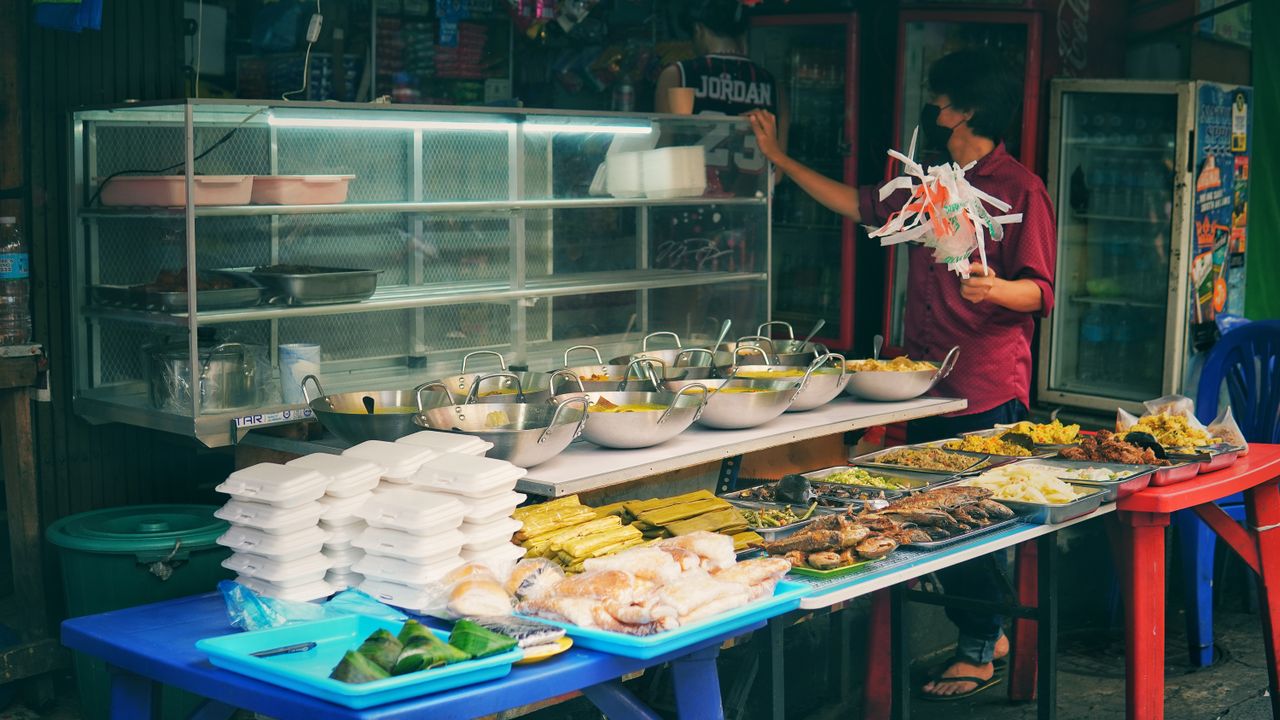
Paldi is a residential area that most food guides associate with its restaurants. The more interesting eating is not in any restaurant. Along the bridge road in Paldi, six to eight vendors set up between 6am and 9am and are completely gone by 10. The setup is minimal. The food is precise.
The standout is idli-sambar with a distinctly Gujarati character. The sambar is thinner than the Tamil version, less tamarind-forward, and the chutney uses coriander seed rather than coconut — a substitution that reflects local ingredient availability and produces a completely different flavour profile. It’s not a worse version of South Indian food. It’s an Ahmedabadi interpretation, and the distinction matters.
Best time: 6:30-8am. Not all vendors appear every day.
Gujarati fast food recipes you can make at home →
3. Raikhad Bazaar Food Pocket: 400 Years of Daily Market
Raikhad has functioned as a daily bazaar for over 400 years. The food activity adjacent to the market is layered by time of day. Morning brings fafda-jalebi from a vendor who fries to order rather than in bulk, which makes a material difference to the crispness. In season (roughly November through February), one stall specialises in undhiyo — the mixed vegetable and fenugreek dumpling dish — from what appears to be a family operation running for at least 30 years based on vendor accounts.
The most specific find here is fresh tuvar lilva: green pigeon peas sold by weight, shelled, to home cooks and professional kitchens alike. Buying from this market and cooking the same day produces results that frozen or dried tuvar simply cannot replicate. The peas have a sweetness and bite that disappears within 24 hours of harvest.
Best time: 7-9am for breakfast items; seasonal visits for undhiyo and tuvar lilva.
Chef Monila Surana, who has taught culinary arts for 18 years, traces a specific shift in how she teaches tuvar lilva cooking to a visit to Raikhad market during a seasonal sourcing trip. The peas she bought that morning — direct from the vendor, shelled fresh — produced a shaak with a sweetness and texture that her students had never encountered in the classroom, because the classroom had always used the frozen variety. She now sources from Raikhad for every batch of the food culture curriculum that runs during the November-February window. The experience changed not just the sourcing practice but the teaching point: freshness in this ingredient is not incremental. It’s categorical.
4. Kalupur Station Road: The Pre-Dawn Window
The area around Kalupur railway station has a food culture that exists specifically to serve railway workers, early-shift staff, and overnight passengers. It’s accessible only in a narrow window: roughly 4am to 8am. After that, the vendors close and the street becomes indistinguishable from any other busy road in the city.
The item to eat here is dal vada: ground urad dal fritters fried to order, served hot with green chutney and a small bowl of kadhi. The kadhi at Kalupur is thinner than restaurant versions and more sharply spiced — this is food calibrated for people who’ve been working since 3am, not for leisure eating. The flavour is direct and satisfying in a way that’s hard to replicate in any controlled kitchen environment.
Best time: 4-8am only. This window is strict.
- 4:00 am – 7:00 am — Lal Darwaja & old city — chai tapris, bun maska, fresh rotli vendors
- 7:00 am – 10:00 am — Navrangpura & Satellite — nashta stalls, poha, upma, thepla
- 10:00 am – 1:00 pm — Manek Chowk & CG Road — farsan shops, sev khamni, gathiya fresh out
- 2:00 pm – 5:00 pm — Drive-In Road & Bodakdev — bhelpuri, sandwich, corn bhutta (monsoon)
- 6:00 pm – 9:00 pm — Manek Chowk night market — pav bhaji, dabeli, sev puri, dosas
- 9:00 pm – 10:00 pm — Gheekanta & Relief Road — late sweets: jalebi, fafda, mawa cake
Source: Florence Academy food culture curriculum field notes, Ahmedabad 2025
5. Gomtipur Street Food Lane: The Workers’ Thali
Florence Academy culinary tours have included Gomtipur in 6 of 8 food culture curriculum batches. In post-visit student feedback across three cohorts, the Gomtipur thali experience was rated the single most educational food moment in the entire programme, consistently placing above chef demonstrations, market tours, and recipe sessions.
Gomtipur is an industrial suburb with a functional, unglamorous food culture. The thali vendors here serve unlimited roti, dal, shaak, papad, and chaas for between ₹60 and ₹80. This is the actual daily diet of a significant portion of Ahmedabad’s working population. It’s not adapted for outside tastes. It’s not presented for anyone’s approval.
The dal here is what makes this worth the trip. Bulk cooking develops a flavour depth that small-batch kitchen dal rarely achieves. The masala integration is more complete. The body is richer. A ₹70 thali in Gomtipur regularly outperforms a ₹350 dal-roti combination at a mid-range restaurant in the same city, and the comparison is instructive rather than promotional. This is what consistent, high-volume cooking with good base ingredients actually produces.
Best time: 12pm-2pm for lunch thali service.
Understanding the structure of a Gujarati thali →

6. Teen Darwaja Side Lanes: The Evening Sweet Spot
Teen Darwaja — the historic triple-arched gateway — is one of Ahmedabad’s most photographed landmarks. The lanes running south from it are not famous. They should be. Evening vendors here, operating from roughly 6pm to 10pm, sell a specific category of Ahmedabad sweets and snacks that are hard to find outside the old city.
Khaja is the item to know: a deep-fried flaky pastry layered like a rough puff and soaked in sugar syrup. It’s texturally unique, simultaneously crisp and saturated, and it appears almost nowhere in food writing about Ahmedabad. The stall opposite a small mosque on the south lane is a reliable source. The same area has the most interesting sev khamani available outside a home kitchen: less sweet than restaurant versions, with a sharper mustard seed temper and visible fresh coriander.
The lemon-soda cart with kala namak is worth a stop regardless. It’s not unique to Ahmedabad, but the ratio here is different — more kala namak, less sugar syrup — and it’s the right way to end a hot evening walk through the old city.
Best time: 6-10pm.
7. Maninagar’s Wednesday Market Fringe: One Day Only
The Wednesday market in Maninagar is busy, commercial, and crowded. The streets immediately around it — the fringe zone that only activates on Wednesdays because of the overflow foot traffic — are where the more specific food finds are.
Chevdo fried on-site is available here in a way it isn’t on other days. The texture difference between fresh-fried and pre-packaged chevdo is significant: the rice flakes are crispier, the oil is lighter, and the spice coating is more even because it’s applied hot. Seasonal farsan varies by time of year. In winter, fresh methi-based snacks appear. In summer, the emphasis shifts to lighter, dry-spiced items.
The chaas from this market fringe deserves specific mention. A small dairy operation three streets from the main Wednesday market sends supply to a stall that serves unfiltered, unsweetened chaas in clay cups. The clay alters the temperature and slightly the mineral character of the drink. It’s not nostalgia. It’s a genuinely better vessel for this specific liquid.
Best time: Wednesdays only, 9am-1pm.

8. Odhav Industrial Area’s Dhaba Row: The Long Detour Worth Taking
Odhav is 45 minutes from the old city. There is no reason a food tourist would go there. That’s precisely the point.
The dhaba row near Odhav GIDC serves lorry drivers and factory workers on long shifts. Ask locally for the “lorry dhaba road” near Odhav GIDC — there are three or four operations along this stretch, and they’re identifiable by the trucks parked outside. The food is rich, properly spiced, and enormous in portion. These kitchens cook for people doing physical work. The calibration is accordingly different from anything aimed at desk workers or leisure diners.
Dal maharani from these dhabas consistently outperforms restaurant versions costing five times as much. The slow cooking is longer, the cream or dairy addition is more restrained, and the lentil character comes through rather than being masked. There’s also a kadhi here with a sourness level that most restaurants would consider aggressive — and it’s correct. This is how it’s supposed to taste.
Best time: 12-3pm for lunch service, 7-10pm for dinner.
The hidden logic of Ahmedabad’s food geography is timing, not location. The best food in this city concentrates in the 6-10am window. By 10am, the vendors who cook for the real community have sold out — not because their portions are small, but because the community is large and the food is genuinely in demand. The “tourist food street” experience (Manek Chowk at midnight) is real and valuable, but it shows the city’s food culture operating in performance mode. The morning eating is the daily-life mode. Both are worth experiencing. They are not the same experience.
Ready to learn from expert chefs? Explore Courses at Florence Academy
Practical Details: How Do You Navigate These Streets?
Getting to these locations requires some preparation. Most don’t have Google Maps listings. Kalupur and Shahpur are accessible by auto-rickshaw from the old city. Gomtipur and Odhav require either a rented vehicle or a shared cab, and both are best visited with a local contact or a guide who knows the area.
A few practical notes that apply across all eight locations:
Carry small denominations. Most vendors don’t use UPI and prefer cash in amounts they can make change for easily. ₹10, ₹20, and ₹50 notes are more useful than ₹500 notes at a dhaba.
Don’t photograph without asking. Several of these vendors serve a tight-knit local community and are not interested in social media exposure. A quick gesture and eye contact before raising a phone is both polite and practical — vendors who feel comfortable are also more likely to offer the better items.
Go early. For every single location with a morning window, the phrase “I’ll get there by 9am” usually means missing the best items. Aim for 30 minutes earlier than you think you need.
How Do These Streets Connect to Ahmedabad’s Culinary Identity?
These eight locations aren’t quirks or anachronisms. They’re the operating base of a food tradition that has fed this city continuously for centuries. The Jain influence means almost none of these vendors use root vegetables like onion or garlic in their core preparations, and yet the flavour complexity is not diminished. That’s a technical achievement worth understanding. The philosophy behind Gujarat’s vegetarian culinary heritage →
The economics are also notable. A full breakfast at Shahpur Ki Gali — khakhra, dal dhokli, chai — costs less than ₹50 in most cases. A workers’ thali in Gomtipur runs ₹60-80 with unlimited refills. Odhav’s dhaba dinner is unlikely to exceed ₹120 for a full meal. These prices reflect food that is priced for its actual community, not for its perceived scarcity or cultural cachet.
What makes Ahmedabad’s food culture durable isn’t a marketing campaign or a heritage tourism programme. It’s the fact that this food feeds real people, every day, at prices real people can afford. The streets in this guide aren’t hidden because they’re secret. They’re hidden because they’re not performing for an audience. They’re just working.
Frequently Asked Questions
When Is the Best Time to Eat Street Food in Ahmedabad?
Between 6am and 10am is the primary window for Ahmedabad’s most authentic street food. Vendors serving the daily-life layer of the city sell out by mid-morning. The secondary window runs from 7-10pm, when evening street food activates across the old city. Gujarat Tourism data shows peak visitor activity in the 10am-6pm range, meaning the best eating windows see the fewest tourists (Gujarat Tourism, 2023).
Is Ahmedabad Street Food Safe to Eat?
Ahmedabad has one of India’s stronger municipal food safety inspection programmes. FSSAI compliance in the formal street food sector improved markedly after 2021 reforms. Stick to freshly cooked items with visible cooking activity — avoid anything pre-made and sitting uncovered. Morning vendors typically have the freshest produce. Choosing stalls with high local turnover is a reliable indicator of both freshness and quality control.
What Are the Must-Try Dishes in Ahmedabad Besides the Famous Ones?
Beyond fafda-jalebi and dal vada: khaja (flaky deep-fried pastry from the Teen Darwaja lanes), dal dhokli from Sunday old-city vendors, tuvar lilva nu shaak in its November-February window, sev khamani in its less-commercial variants, and dal maharani from industrial area dhabas. These are the dishes Ahmedabadis eat at home. They appear on few restaurant menus and even fewer food blogs. More underrated Ahmedabad street food dishes →
Does Florence Academy Offer Food Tours of Ahmedabad?
Florence Academy includes guided food culture walks as part of its culinary curriculum. Students in the Culinary Foundation Course and Diploma programmes visit several Ahmedabad food locations as structured coursework. These are not public tours. They’re part of a curriculum designed to show that the city’s food heritage is a living daily practice, not a museum exhibit or a performance for visitors.
The Point of All of This
Ahmedabad’s hidden food streets are not hard to find if you know what you’re looking for. They’re hidden in the sense that they don’t advertise, don’t court attention, and don’t adapt to outside preferences. They cook what they cook, at the hour they cook it, for the people who’ve been coming for years.
That is the most reliable quality signal available in any food culture: consistent return from a community that has other options. Every location in this guide passes that test.
Go early. Bring cash. Ask before photographing. And eat the dal maharani in Odhav at least once in your life.
Build the culinary skills to understand what you’re tasting →
Have questions? Chat with us on WhatsApp — we respond fast.


