
Ask most people outside Gujarat to describe Gujarati food and you’ll hear one word: sweet. Spend a week in Rajkot or Junagadh — or an afternoon at a Kathiyawadi dhaba on the highway out of Ahmedabad — and you’ll wonder what they were talking about.
Kathiyawadi cuisine, also spelled Kathiawadi, is the cooking of Saurashtra — the peninsula Gujaratis still call Kathiawar. It runs on groundnut oil, raw garlic and a lot of red chilli. In 2025, Gujarat was projected to produce more than half of India’s entire groundnut crop (DeshGujarat, September 2025). That single fact explains more about this food than any recipe will.
Key Takeaways
– Kathiyawadi cuisine comes from Saurashtra and is the hottest, least sweet of Gujarat’s regional styles.
– In 2025 Gujarat was projected to grow 66 lakh metric tonnes of groundnut, over half of India’s output — which is why groundnut oil, not ghee alone, is the base fat.
– It is also Gujarat’s most garlic-forward style, so Jain adaptation needs real substitution rather than deletion.
– Bajra rotla, not wheat roti, is the everyday bread, because pearl millet suits a dry region.
– Gujarat ranks fourth in India for milk at 172.80 lakh metric tonnes a year, which is where the ghee comes from.
What Makes Kathiyawadi Cuisine Different From the Rest of Gujarat?
Geography, mostly. Saurashtra is dry, and dry land grows groundnut, cotton, bajra and jowar rather than the sugarcane and irrigated crops of central Gujarat. District crop profiles across Rajkot, Jamnagar, Amreli and Bhavnagar are dominated by groundnut and cotton, with bajra and jowar as secondary grains (AgriFarming district crop guide, a secondary agricultural reference). Cuisines follow their fields.
The sweetness people associate with Gujarat is real, but it’s largely a north Gujarati and Surti habit. Jaggery goes into dal, into shaak, sometimes into the flour. Kathiyawadi kitchens mostly skip it.
What goes in instead is heat, and a particular kind of heat. Not the layered warmth of a slow-built masala, but the direct hit of red chilli powder bloomed in hot oil, plus raw garlic pounded rather than fried.
So why does the sweet reputation stick? Largely because of what travels. Dhokla, khandvi and the restaurant thali circuit all come from the sweeter end of the state, and those are the dishes that opened Gujarati restaurants across India and abroad. Saurashtra’s food mostly stayed home, cooked in farmhouse kitchens rather than exported to menus.
There’s a second reason, and it’s climatic. Chilli-heavy food suits a hot, dry region — it drives sweating and it preserves. The same logic runs through Rajasthani and Andhra cooking, both of which sit in similarly punishing landscapes.
| Kathiyawadi (Saurashtra) | North Gujarati / Surti | |
|---|---|---|
| Base fat | Groundnut oil, finished with ghee | Ghee, often with oil |
| Sweetness | Rare, usually absent | Jaggery common in dal and shaak |
| Heat level | High, chilli-forward | Mild to moderate |
| Staple grain | Bajra (pearl millet) rotla | Wheat rotli, rice |
| Aromatics | Raw and roasted garlic, green chilli | Ginger, green chilli, milder |
| Signature dishes | Sev tameta, ringan no odo, lasaniya bataka | Undhiyu, dal dhokli, sweet kadhi |
So is one better than the other? That’s the wrong question. They’re two answers to two different landscapes, and Gujarat is unusual in holding both. For the wider picture, see our guide to Gujarat’s contribution to India’s food identity.
Why Is Groundnut Oil the Kathiyawadi Cooking Medium?
Because Saurashtra sits on top of the crop. In 2025, Gujarat’s groundnut production was projected at 66 lakh metric tonnes — more than half of India’s total output, from a record sowing of 22 lakh hectares (DeshGujarat, September 2025). When a fat is that local, it stops being a choice and becomes the default.
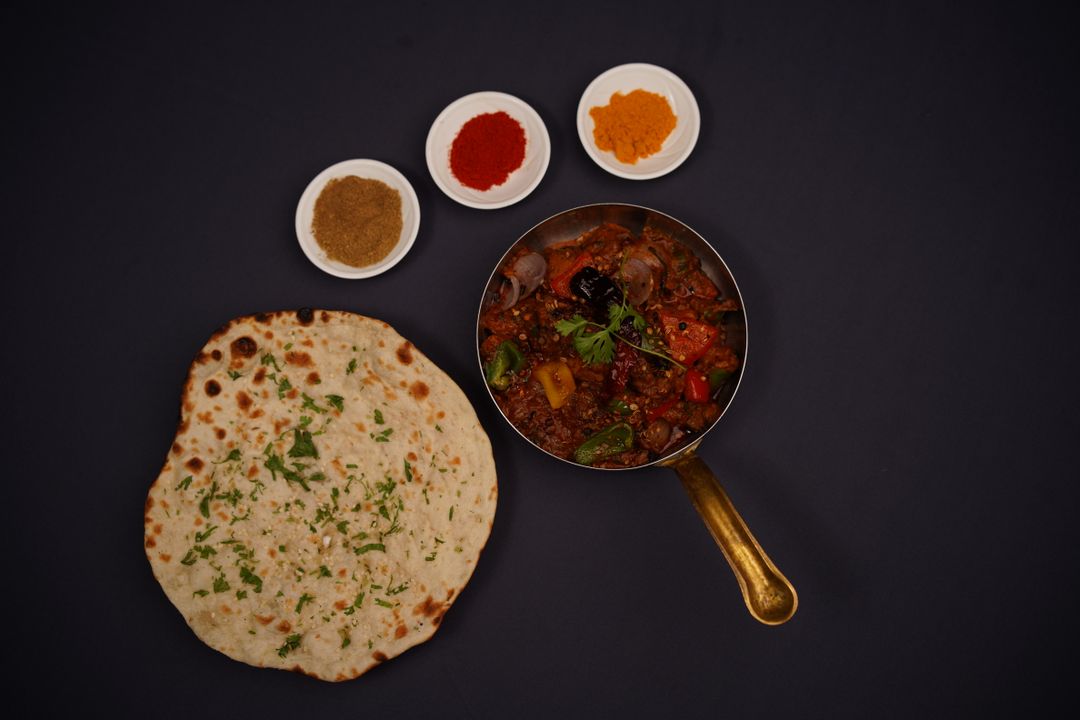
Groundnut oil also tastes the way this food needs it to. Traditional kachi ghani groundnut oil is filtered rather than refined, so it keeps a pronounced nuttiness that refined sunflower simply doesn’t — and it’s that flavour, not a high smoke point, that matters here. Filtered oils actually run lower on smoke point than refined ones, which is why the chilli goes in off the heat rather than into a smoking pan.
Our finding: Students who learn Kathiyawadi dishes with refined oil and then repeat them with groundnut oil almost always describe the second attempt as “closer” without being able to say why. The fat is carrying flavour they’d assumed came from the spice.
Two cautions on the figure above. It’s a state projection reported in regional press, not an audited final harvest number, so treat it as the scale of the crop rather than a precise total. And note the coincidence: the same report gives 2018-19 production as 22 lakh MT and 2025 sowing area as 22 lakh hectares. Those are two different measures that happen to share a number.
What Is Bajra Rotla, and Why Does It Anchor Every Meal?
Bajra rotla is a thick, hand-patted flatbread of pearl millet, and it’s the everyday bread of Saurashtra rather than an occasional novelty. Pearl millet tolerates dry, hot conditions that wheat struggles with, which is exactly the Saurashtra climate, and it sits alongside groundnut and cotton in the region’s cropping pattern.
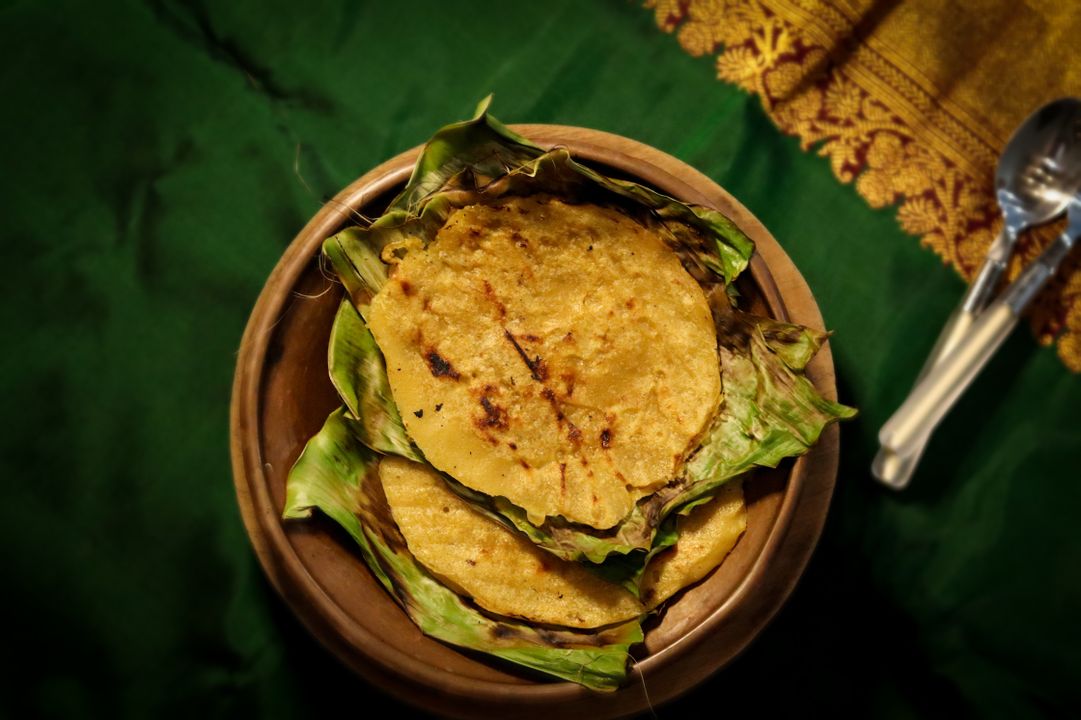
Here’s what makes it technically interesting. Bajra has no gluten, so there’s no network to trap gas or give the dough elasticity. You can’t roll it thin with a pin — it cracks and falls apart.
Instead you pat it between wet palms, turning and flattening, building a disc thick enough to hold together. It’s a skill that takes most students a full session to get right, and the failure mode is obvious: the rotla breaks the moment it’s lifted.
Why thick rather than thin? Because thickness is the only structure available. A wheat roti gets its integrity from gluten; a rotla gets it from mass. Roll one thin and there’s nothing holding the middle together.
The flour matters too. Bajra flour goes rancid faster than wheat because of its higher fat content, which is why Saurashtra households traditionally ground it in small quantities rather than storing sacks of it. Buy it fresh, keep it cold, and use it within a few weeks.
Served hot with a well of ghee in the centre and garlic chutney alongside, it’s the dish that anchors a Kathiyawadi plate. Our guide to monsoon comfort food in Gujarat covers where bajra fits seasonally.
Where Does All That Ghee Come From?
From one of India’s largest dairy economies. As of the 2024 figures, Gujarat produced 172.80 lakh metric tonnes of milk annually, ranking fourth in India and contributing 7.49% of national output (DeshGujarat, November 2024). Ghee isn’t a luxury finish in Saurashtra. It’s an everyday ingredient in a state that has milk to spare.
That same report puts Gujarat’s growth over 22 years at 119.63 lakh metric tonnes, an average annual rise of 10.23% against a national 8.46%. The cooperative dairy structure the state is known for is the reason that milk reaches kitchens cheaply.
In practice ghee does two jobs in this cuisine. It finishes — poured over rotla, spooned onto khichdi — and it tempers, carrying spice in the final tadka where groundnut oil did the earlier heavy lifting.
The combination is what people actually mean when they call Kathiyawadi food rich. It isn’t creamy in the north Indian sense. There’s very little dairy in the gravies themselves; the richness sits on top and in the bread.
Does that distinction matter in practice? Very much, if you’re cooking it. Add cream to a Kathiyawadi gravy and you’ll flatten exactly the sharpness the dish is built around. The fat belongs at the finish, not stirred through the middle.
The Kathiyawadi Table: Sev Tameta, Ringan no Odo, and Lasaniya Bataka
Every Kathiyawadi meal ends with chaas, and the state has the milk to pour it freely — 172.80 lakh metric tonnes a year, fourth in India (DeshGujarat, November 2024). Around that constant sit three dishes that carry the style, each showing a different technique. None is complicated, which is rather the point — this is farm cooking that happens to be delicious.
| Dish | What it is | Jain adaptation |
|---|---|---|
| Sev tameta | Tomato gravy finished with crisp gram-flour sev, which softens into the sauce | Straightforward — skip the onion base, build on tomato and chilli |
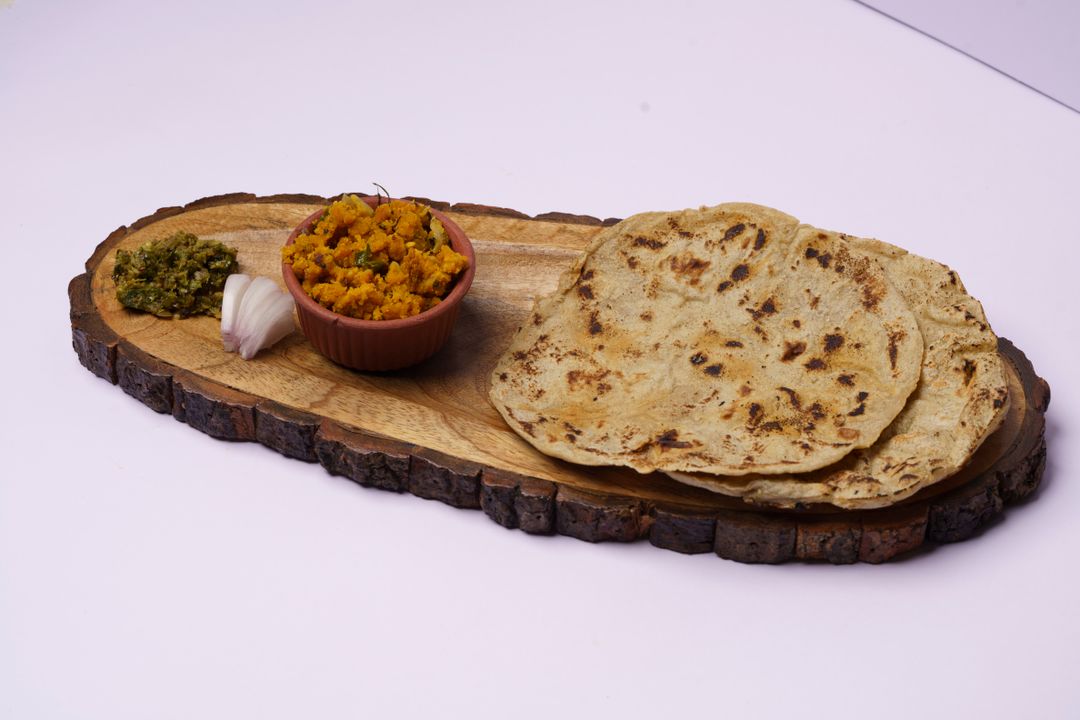
| Ringan no odo | Whole aubergine roasted over flame, mashed with garlic and green chilli | Replace garlic with green chilli and coriander stems; keep the smoke |
| Lasaniya bataka | Baby potatoes in a heavy garlic-and-chilli paste | Not adaptable as written — both garlic and potato are excluded. Substitute raw banana and rebuild the paste |
| Bajra rotla | Hand-patted pearl millet bread, served with ghee | Already suitable |
| Chaas | Thin spiced buttermilk, served at every meal | Already suitable |
Sev tameta is the one most people meet first, and it’s a lesson in texture. The sev goes in at the very end and is meant to be caught halfway between crisp and dissolved.
Our finding: The most common mistake we see with sev tameta isn’t seasoning — it’s timing. Sev added even two minutes early turns the whole dish into a paste, and no amount of correction brings the texture back.
Ready to learn from expert chefs? Explore Courses at Florence Academy →
How Do You Cook Kathiyawadi Food Without Onion and Garlic?
Carefully, and with honest substitution rather than simple deletion. Notice first that Saurashtra’s actual crop base — groundnut and cotton, with bajra and jowar alongside — is entirely Jain-compatible. The staples were never the problem. The aromatics are.
That distinction matters, because Kathiyawadi is the most garlic-forward regional style in a state with one of India’s largest Jain populations — a genuine tension, not a technicality. Lasaniya bataka is literally named for garlic (lasan) and built on potato, so for a strict Jain kitchen it needs rebuilding rather than adjusting.
The workable approach has three parts. First, replace the aromatic base: where garlic and onion gave depth, use a longer bloom of coriander and cumin in hot groundnut oil, so the spice itself carries more of the load.
Second, raise the green chilli and keep the smoke. Ringan no odo adapts well on the garlic question, because its defining flavour is char from open-flame roasting rather than lasan. One caveat matters though: stricter Jain households avoid brinjal altogether for its seed count, and for them the same smoke technique transfers cleanly to bottle gourd or capsicum.
Third, accept that some dishes don’t convert. A Jain lasaniya bataka made with raw banana is a good dish, but it isn’t lasaniya bataka, and pretending otherwise does the tradition no favours.
Is that an unsatisfying answer? Perhaps, but it’s the honest one. A cuisine built on a specific aromatic can’t have that aromatic removed for free, and the respectful move is to say so rather than to serve a hollowed-out version under the original name.
Our finding: Chef Monila Surana notes that in Florence Academy’s teaching kitchen, the Jain adaptations that work best are the ones that change the target rather than chase the original. Students who set out to make “a smoky aubergine dish in the Kathiyawadi idiom” consistently produce something better than those trying to make ringan no odo minus the garlic.
Asafoetida deserves a note of its own, because practice genuinely varies. Most Gujarati Jain kitchens use hing as the standard onion-and-garlic stand-in; stricter households leave it out, on the grounds that it’s a resin tapped from a taproot. Know which kitchen you’re cooking for before you reach for it. Our guide to Jain food culture in Gujarat covers those boundaries in detail, and Gujarati wedding food traditions shows how caterers handle both audiences at one event.
Frequently Asked Questions
What is Kathiyawadi food?
Kathiyawadi food is the regional cuisine of Saurashtra, the peninsula in western Gujarat also called Kathiawar. It is built on groundnut oil, ghee, bajra rotla, raw garlic and heavy red chilli, and it is markedly hotter and less sweet than the Gujarati food most people encounter elsewhere.
Is Kathiyawadi food the same as Gujarati food?
No. Gujarat has several distinct regional styles. North Gujarati and Surti cooking often carry a deliberate sweetness from jaggery, while Kathiyawadi cooking from Saurashtra leans on chilli, garlic and groundnut oil. Treating them as one cuisine misses the sharpest contrast in the state.
Why is groundnut oil used in Kathiyawadi cooking?
Because Saurashtra grows it. Gujarat produces more than half of India’s groundnut crop, with a projected 66 lakh metric tonnes in 2025 according to state figures reported by DeshGujarat. Groundnut oil is simply the local fat, and traditional kachi ghani pressing keeps a nuttiness that refined oils lose.
What is bajra rotla?
Bajra rotla is a thick unleavened flatbread made from pearl millet flour, patted by hand rather than rolled. It has no gluten to build structure, so it is shaped with wet palms and cooked slowly. It is the everyday staple bread of Saurashtra, usually served with ghee and garlic chutney.
Can Kathiyawadi food be made Jain?
Yes, but it needs real substitution rather than simple omission. Kathiyawadi cooking is the most garlic-forward style in Gujarat, so removing garlic and onion leaves a real gap. Fill it with a longer bloom of coriander and cumin in hot groundnut oil, and more green chilli. Accept too that some dishes, like lasaniya bataka, do not convert at all.
Conclusion
Kathiyawadi cuisine makes sense the moment you look at the land it comes from:
- Groundnut oil because Gujarat, and Saurashtra above all, is projected to grow over half of India’s groundnut crop.
- Bajra rotla because pearl millet handles a dry region where wheat struggles.
- Ghee because the state has milk to spare, and ghee is an everyday ingredient rather than a luxury.
- Chilli and garlic because nothing here needed sweetening to be worth eating.
If your idea of Gujarati food is dal with jaggery in it, Saurashtra is the correction. Start with sev tameta and a properly patted rotla, and the rest of the style follows.
Want to learn these techniques hands-on, alongside the wider vegetarian repertoire they belong to? Our Culinary Foundation Program covers regional Gujarati cooking, spice handling and bread technique with expert chefs in Ahmedabad. For more of the state’s food, read our guides to the Gujarati thali and Ahmedabad’s must-try street foods.
Have questions? Chat with us on WhatsApp — we respond fast.


