

Ahmedabad doesn’t need a food festival — it is one. Every street corner runs its own menu, and the city’s relationship with food runs deeper than hunger. It’s ritual. Fafda on Sunday morning isn’t just breakfast; it’s a cultural institution. Manek Chowk at midnight isn’t just a food street; it’s where the city exhales.
India’s culinary tourism market reached USD 98.10 billion in 2024 and is projected to reach USD 310.30 billion by 2033, growing at a CAGR of 12.20%, according to IMARC Group. India Brand Equity Foundation (IBEF) independently identifies food tourism as one of India’s highest-growth service sectors, with culinary heritage destinations driving the majority of experiential travel. Ahmedabad sits at the centre of that growth — a city with one of India’s most distinctive, consistent, and deeply rooted street food cultures, shaped by centuries of Jain philosophy, Gujarati hospitality, and a sweet-sour flavour preference found nowhere else in the country.
This is the insider’s guide — 15 dishes you must eat, and where to find the best versions.
Key Takeaways
– India’s culinary tourism market is projected to reach USD 310.30 billion by 2033 at 12.20% CAGR (IMARC Group, 2024), with regional street food culture as a primary demand driver
– Ahmedabad’s street food is almost entirely vegetarian with strong Jain influence — most dishes are already onion-and-garlic-free
– Manek Chowk, Bhadra, and Law Garden are the three essential food streets for visitors
– The city’s flavour signature is sweet-sour-spicy (in that order), unlike the heat-first profile of northern Indian street food
What Makes Ahmedabad’s Street Food Unlike Anywhere Else in India?
Ahmedabad’s food culture has a governing philosophy that most people don’t consciously notice until they’ve eaten their way across the city: sweetness is always present. Even in savoury dishes. Even in chaat that’s designed to be sour and spicy. A touch of sugar in green chutney, jaggery in tamarind sauce, sugar in khaman dhokla — it’s everywhere, and it’s deliberate.
This is the Jain and Gujarati influence made edible. The belief that balanced food — not just in nutrition but in taste — reflects a balanced mind runs deep in Gujarat’s food culture. The result is a street food landscape that’s distinctly different from Mumbai, Delhi, or Kolkata.
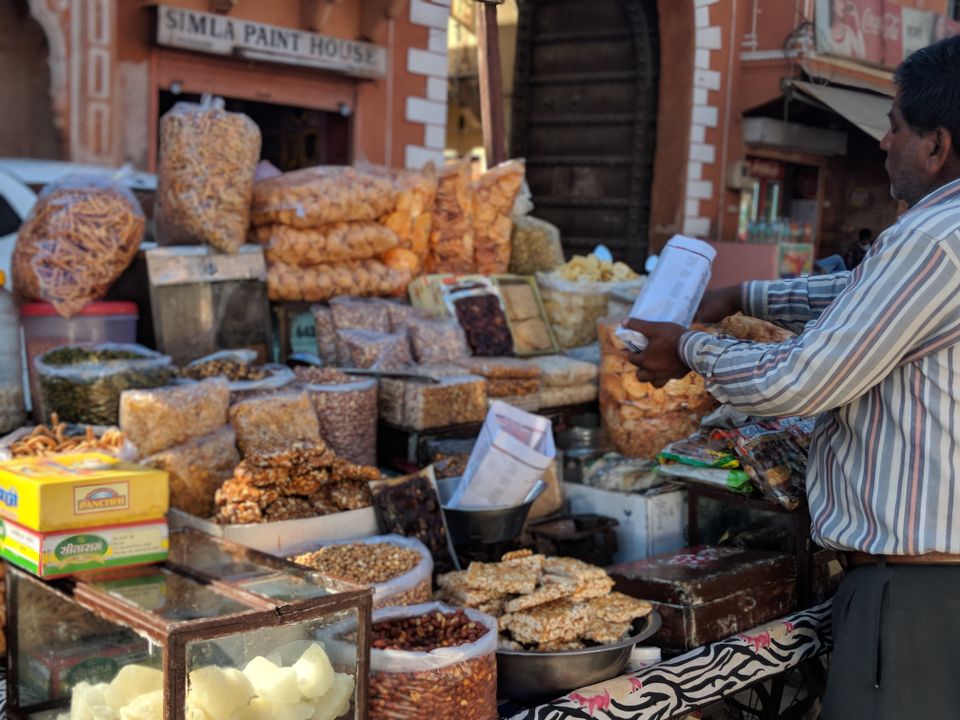
At Florence Academy, we study Ahmedabad’s street food as a culinary system — not just a list of dishes. The city’s best street food vendors have been making the same 3–4 dishes for 20–30 years. The consistency comes from precision, not variety. That’s a culinary lesson worth carrying into any professional kitchen.
Citation Capsule — India Culinary Tourism
India’s culinary tourism market reached USD 98.10 billion in 2024 and is projected to reach USD 310.30 billion by 2033, growing at 12.20% CAGR, according to IMARC Group’s India Culinary Tourism Market Report. Ahmedabad’s street food culture — rooted in vegetarian and Jain culinary traditions — represents the kind of authentic, regionally distinctive food experience that drives this sector’s growth nationally. (IMARC Group, 2024–2025)
The 15 Best Street Foods in Ahmedabad
1. Fafda-Jalebi
The undisputed icon. Fafda is a crispy, savoury strip made from besan (gram flour) seasoned with turmeric and black pepper. Jalebi is a hot, coiled deep-fried confection soaked in sugar syrup. Together, they create one of India’s great flavour contradictions: salty and sweet, crispy and syrupy, hot and just barely cooling.
Best time to eat: Sunday morning, before 10am. Many stalls run out by noon.
Where: Bhadra area, near the Sidi Saiyyed mosque. Any long-running vendor with a queue.
Jain note: Naturally Jain-friendly — no onion, no garlic.
2. Khaman Dhokla
Not the steamed square you’ve seen everywhere — Ahmedabad’s khaman is different. It’s soft, light, and spongy, steamed from a fermented chickpea batter and finished with a tempering of mustard seeds, curry leaves, green chillies, and a thin sugar-water syrup that keeps it moist. The surface is garnished with coconut, coriander, and sev.
Where: Any traditional Gujarati farsan shop. Manek Chowk area and Ratan Pol have excellent options.
3. Dabeli
Originally from Kutch but entirely claimed by Ahmedabad’s street food culture, dabeli is a pav (bun) filled with a spiced mashed potato mixture cooked in dabeli masala, topped with pomegranate seeds, roasted peanuts, two chutneys, and thick sev. The bun is lightly pressed on a butter-greased tava.
Where: Law Garden area, evening vendors. Navrangpura.
Jain swap: Most dabeli vendors now offer no-potato versions with raw mango or mixed vegetable filling.
4. Sev Tameta (Sev Tamatar)
A dry stir-fry of tomatoes, tempered with mustard seeds, curry leaves, and turmeric, topped with a mountain of thick sev. It’s eaten with rotli or puri, and is one of those dishes that sounds unremarkable until you taste it. The sev absorbs moisture from the tomatoes as it sits, creating a texture that’s simultaneously saucy and crunchy.
Where: Traditional Gujarati restaurants and farsan shops. Not primarily a street stall dish — find it at local lunch spots.
5. Kachori
Ahmedabad’s kachori is a large, flaky, deep-fried pastry shell filled with spiced moong dal or urad dal. It’s denser and crunchier than the north Indian version. Served with tamarind chutney and sometimes with curry on the side.
Where: Bhadra area and traditional farsan shops near Kalupur.
6. Pani Puri
Ahmedabad’s version of this national snack uses a distinctively sweet-sour pani — jaggery and tamarind in the water, alongside the standard green spicy version. The filling is typically soaked kala chana (black chickpeas) rather than potato.
Where: Virtually every street corner. For the authentic Ahmedabad version, avoid stalls serving only the spicy pani — look for vendors offering both sweet and spicy options simultaneously.
7. Handvo
A savoury cake made from fermented rice and lentil batter, baked or pan-cooked with vegetables (usually bottle gourd or mixed vegetables), sesame seeds, and a tempering of mustard and carom seeds. It’s dense, mildly sour from fermentation, and surprisingly filling for its size.
Where: Traditional Gujarati tiffin services and farsan shops. Less common as a street stall item — more often found at local restaurants for lunch.
8. Muthia
Steamed or fried dumplings made from besan and whole wheat flour, mixed with vegetables (bottle gourd, fenugreek leaves, or spinach), spiced with ginger, green chilli, and turmeric. Finished with a tempering of mustard seeds and sesame. A daily food for many Ahmedabad households, available at most Gujarati snack shops.
Where: Farsan shops across the city. Manek Chowk area.
9. Bhel Puri
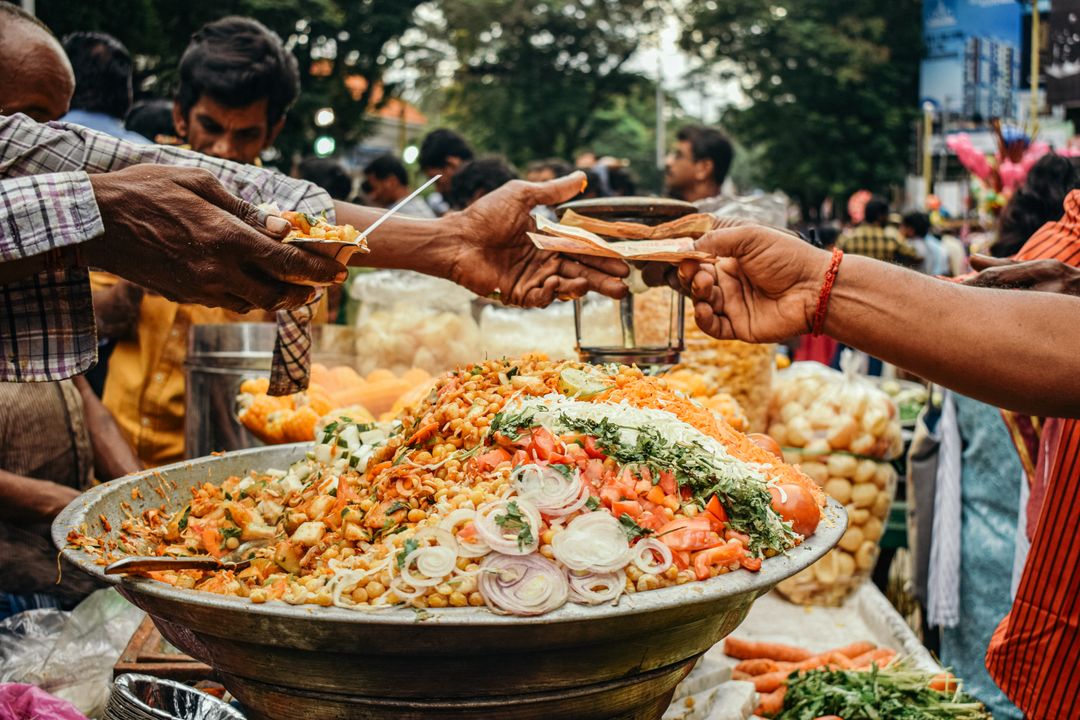
Ahmedabad’s bhel is drier than Mumbai’s version and relies more heavily on sev for texture. It’s assembled at speed — the vendor tosses puffed rice, sev, chopped tomato, raw mango, both chutneys, and chaat masala in a single rhythmic motion and hands it over in a paper cone.
Where: Any chaat stall. Manek Chowk, Law Garden, and Navrangpura are the main clusters.
10. Locho
This Surat-origin snack has firmly settled into Ahmedabad’s food culture. Soft, spongy, and slightly sticky, locho is made from fermented chana dal batter that’s steamed until just barely cooked. It’s served with a tempering of ghee and topped with onion (optional), sev, and green chutney. The texture is unlike any other Gujarati snack — somewhere between idli and khaman.
Where: Dedicated locho stalls and Gujarati farsan shops. Satellite area has several good options.
11. Undhiyu
Technically a winter dish (the traditional version is made with fresh tuvar and fresh lilva in the cold months), but Ahmedabad’s farsan shops serve a year-round version using preserved or dried vegetables. A mixed vegetable curry cooked underground in the traditional preparation — though today almost always made in a sealed pot.
Where: Full-service Gujarati restaurants and high-quality farsan shops. Best in season (November–January).
12. Ghughra
A half-moon shaped deep-fried pastry with a sweet filling of dry fruits, coconut, and mawa (khoya). A festive food that’s become a year-round street snack in Ahmedabad. The outer shell is short-crust crispy, the filling is rich and lightly sweetened.
Where: Halwai (mithai) shops and farsan stalls. Common during festivals, increasingly available year-round.
13. Thandai
A cold spiced milk drink made with almonds, pistachios, rose petals, fennel, cardamom, and black pepper — blended into a paste and mixed with chilled full-fat milk. Not food exactly, but Ahmedabad’s thandai culture is strong enough to warrant a place on this list. Often found at mithai shops and during Holi and summer months.
Where: Traditional mithai shops across the city. Premium versions at shops near the old city.
14. Sev Puri
Flat papdi crackers topped with potato or chana, two chutneys, sev, and spices. Ahmedabad’s sev puri is assembled to order, eaten immediately, and never plated in advance. The best vendors have their own proprietary chaat masala blend.
Where: Chaat stalls everywhere. Law Garden, Navrangpura, and CG Road are reliable.
15. Mithai (Mohanthal, Basundi, Sutarfeni)
Ahmedabad’s mithai culture deserves its own guide — but the three to know are mohanthal (a rich besan-based fudge flavoured with ghee and cardamom), basundi (reduced sweetened milk with dry fruits), and sutarfeni (thread-like crispy sweet made from rice flour). These aren’t street snacks in the fast-food sense — they’re how Ahmedabad marks celebration, hospitality, and respect.
Where: Established mithai shops in the old city, particularly around Kalupur and Ratan Pol.
How Do You Explore Ahmedabad’s Best Food Streets?
Manek Chowk: Open from late evening to past midnight. Best for chaat, bhel, and mithai. The market functions as a jewellery market during the day and transforms completely after dark.
Bhadra area: Morning food is the draw here — specifically fafda, kachori, and jalebi. Go before 10am on weekdays, before 9am on Sundays.
Law Garden: Evening snacks from 5pm onwards. Dabeli, chaat, and roasted corn are particularly good here.
Navrangpura and Satellite: These residential-commercial areas have excellent everyday street food — less touristy, more what locals actually eat for evening snacks.
Gujarat Tourism documents Ahmedabad’s walled city food heritage as a key part of the city’s UNESCO World Heritage City designation — the first in India — making food exploration inseparable from any heritage visit.
Ready to learn the culinary techniques behind these dishes? Explore Courses at Florence Academy →
Frequently Asked Questions
Is all Ahmedabad street food vegetarian?
Almost entirely. Ahmedabad has one of India’s highest concentrations of vegetarian eaters, shaped by both its large Jain population and broader Gujarati food culture. Eggs, meat, and fish are essentially absent from traditional street food. Most vendors also offer Jain adaptations on request.
What is the best time to visit Ahmedabad’s food streets?
Sunday morning (6–10am) for the full fafda-jalebi ritual. Evenings from 6–10pm for chaat, dabeli, and bhel. Manek Chowk runs from evening until past midnight and is particularly good after 9pm when the full range of vendors is active.
How spicy is Ahmedabad street food?
Less spicy than you might expect compared to northern or southern Indian street food. The city’s preference is sweet-sour first, with heat as a secondary flavour. Most dishes can be adjusted — ask for “kam tikhu” (less spicy) and vendors will accommodate.
Can I learn to cook these dishes professionally?
Yes. Florence Academy teaches Gujarati and Indian culinary techniques as part of its cooking courses and culinary foundation program in Ahmedabad. The Culinary Foundation Program covers Indian regional cooking in a structured, hands-on format.
What should I drink with Ahmedabad street food?
Chaas (spiced buttermilk) is the classic pairing for street food in Gujarat — it cools the palate and aids digestion. Freshly pressed sugarcane juice with lemon and ginger is also widely available and excellent with fried snacks. Avoid cold drinks with chaat — chaas is always the right call.
Eat Your Way Through Ahmedabad
At Florence Academy, we take students to Ahmedabad’s food streets as part of their culinary education — not as tourists but as observers. The consistent finding: the best vendors make one or two things, nothing more. A fafda maker who has worked the same corner for 25 years hasn’t expanded his menu. He’s refined two dishes to a degree of precision most professional kitchens never achieve. That consistency is the culinary lesson worth taking back to the kitchen.
Ahmedabad’s street food isn’t just a list of dishes — it’s a live food education. Every vendor is a specialist. The fafda maker who’s been frying at the same corner for 25 years knows something about gram flour, heat, and timing that no textbook fully captures.
If you want to bring professional technique to the dishes you love, Florence Academy’s cooking courses give you the foundation.
Join 2,000+ students who’ve trained with expert chefs at Florence Academy, Ahmedabad.
Explore Courses at Florence Academy →
Chat with us on WhatsApp — we respond fast.
See also: Gujarat’s Vegetarian Food Heritage: Why It Leads India | How to Make Chaat at Home: Street Food Recipes from Ahmedabad | Jain Food Culture in Gujarat


