

Roti is arguably India’s most-cooked food — made in millions of homes every single day, by people who’ve been watching it being made since they were children. And yet the question of why some rotis stay soft for an hour while others turn hard in 10 minutes remains genuinely unclear for most home cooks. It feels random. It isn’t.
Peer-reviewed research published in Food Chemistry Advances in 2024 found that higher moisture retention and starch gelatinization from gluten film-forming in wheat flour is the primary determinant of chapati softness — and that soft-to-medium-hard wheat genotypes with higher water absorption produce the highest quality roti (ScienceDirect / Food Chemistry Advances, 2024). In plain terms: the wheat you use, the water you add, the resting time, the cooking temperature, and the storage method all interact. Change one variable and the softness changes.
This guide explains exactly what’s happening inside your roti from the moment you mix the dough to the moment it cools on the plate — and what you can control at each step.
Key Takeaways
– Peer-reviewed research (Food Chemistry Advances, 2024) confirms soft wheat genotypes with higher water absorption produce the softest roti
– Three variables control roti softness: dough hydration, gluten development (kneading + resting), and moisture retention after cooking
– Covering hot rotis in a cloth immediately after cooking is the single most impactful storage step
– Adding 1 tsp fat (oil or ghee) per cup of atta slows moisture loss and keeps roti pliable longer
What Happens When You Add Water to Atta?
Everything begins with the flour-water interaction. Wheat flour contains two proteins — glutenin and gliadin. When water is added and the dough is worked, these proteins bond to form gluten, a stretchy, elastic network that gives dough its structure.
The amount of gluten that forms, and how tight the network becomes, determines how the roti behaves during rolling, cooking, and storage.
High gluten content → Dough is elastic and springs back when you roll it. Roti is chewy and holds its shape well. Stays soft longer because the protein network retains moisture.
Low gluten content → Dough is soft and doesn’t spring back much. Roti is tender but may tear during rolling if too thin. Can become hard faster if the protein network is too weak to hold moisture.
Most chakki-ground (stone-ground) whole wheat atta falls in the ideal range for roti — enough protein to form a moderate gluten network, but not so much that the dough becomes difficult to roll thin. The Indian Council of Agricultural Research (ICAR) tracks wheat variety performance for chapati quality, identifying soft-to-medium hard cultivars as the benchmark for home and commercial roti production.
At Florence Academy, we demonstrate this with a simple exercise: make two batches of identical dough but rest one for 5 minutes and one for 30 minutes. The difference in rolling ease and final texture is visible and dramatic. The 30-minute rested dough rolls 30–40% thinner with the same pressure — because the gluten has relaxed. The roti produced from it puffs better and stays soft longer.
What Role Does Starch Gelatinization Play in Roti Texture?
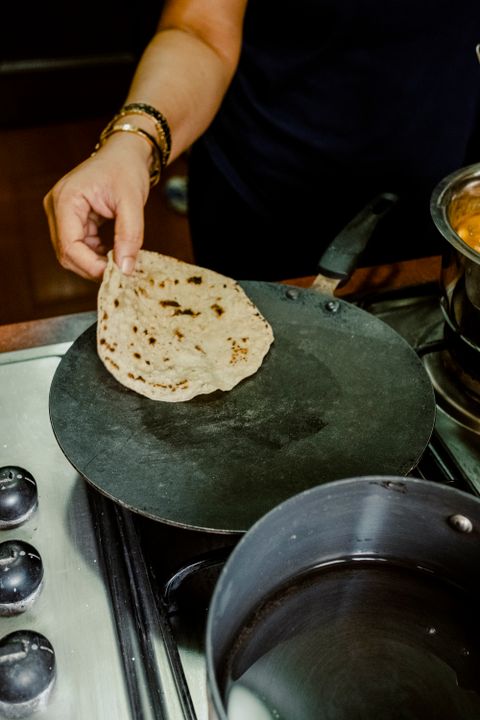
Gluten isn’t the only thing happening inside roti. As the roti cooks on a hot tava, the starch granules in the flour absorb water and swell — this is gelatinization. When starch gelatinizes, it creates a soft, gel-like interior that gives the roti its characteristic light, slightly moist texture inside the crust.
Here’s what the research confirms: higher starch gelatinization (which requires adequate water in the dough and sufficient heat during cooking) produces a softer, more pliable chapati. Under-hydrated dough or cooking at too low a temperature doesn’t allow complete starch gelatinization — the interior stays starchy and dense rather than light and soft.
What this means practically:
– Your dough needs enough water. Under-hydrated dough produces hard roti regardless of how well you cook it.
– Your tava needs to be properly hot. A tava that isn’t hot enough when you place the roti means longer cooking time, more moisture loss, and a harder result.
Citation Capsule — Chapati Science
Peer-reviewed research published in Food Chemistry Advances (2024) found that higher moisture retention and starch gelatinization from gluten film-forming in hard wheat flour results in pliable, soft-textured chapati. The study, covering multiple wheat genotypes, confirmed that soft-to-medium-hard wheat varieties with higher water absorption capacity produce the highest quality roti — establishing that wheat selection and hydration are the two most controllable variables determining roti softness at home. (ScienceDirect / Food Chemistry Advances, 2024)
The Step-by-Step Science of Perfect Roti Dough
Understanding the science lets you make deliberate choices at each step.
Step 1: Water temperature
Use warm water (not hot, not cold). Warm water (35–40°C) activates the gluten-forming proteins faster and produces a more pliable dough in less kneading time. Cold water slows gluten development; boiling water denatures the proteins and prevents proper gluten formation.
Step 2: Hydration ratio
A starting ratio of 60–65% water by weight of flour works for most atta. In practice: for 2 cups (approximately 240g) of atta, start with ½ cup (120ml) water and add more as needed. The dough should be soft — soft enough that it leaves a slight impression when pressed with a finger but doesn’t stick to your palm.
Step 3: Fat addition
Add 1 tsp oil or ghee per cup of atta. Fat coats some of the gluten strands, creating a more tender network. It also acts as a moisture barrier inside the cooked roti, slowing the rate at which water evaporates from the surface. This is the single fastest change most home cooks can make to improve roti softness.
Step 4: Kneading
Knead for 8–10 minutes by hand (4–5 minutes with a stand mixer). Sufficient kneading aligns and strengthens the gluten network, producing a dough that rolls evenly and holds together without tearing.
Step 5: Resting
Cover with a damp cloth and rest for 20–30 minutes. During rest, the gluten strands relax (they’re under tension from kneading), water distributes more evenly through the flour, and the dough becomes more extensible. You’ll notice the dough feels noticeably softer after resting than it did right after kneading.
Ready to learn professional Indian cooking techniques? Explore Courses at Florence Academy →
Cooking Roti: What Temperature Does to Texture
The tava (griddle) temperature is a critical, underappreciated variable.
Too low (below 180°C): The roti cooks slowly, losing moisture over a longer period. By the time it’s done, it’s dry inside. It won’t puff, because the steam can’t build pressure fast enough. It will be hard almost immediately after removing from heat.
Too high (above 230°C): The surface chars before the interior cooks. Produces dark spots and uneven cooking.
Ideal range (190–220°C): The roti cooks quickly (30–40 seconds per side), steam builds pressure, the roti puffs, and the interior remains moist. You can test with a pinch of flour — it should brown in 3–4 seconds on the correct tava.
The puff: When roti puffs (either on the tava or held over a direct flame), steam is creating a pocket between the layers of dough. This is the starch gelatinization and gluten network working together — the steam can’t escape because the surface has set, so it inflates the interior. A properly puffed roti has a light, soft, layered interior rather than a dense, uniform crumb.
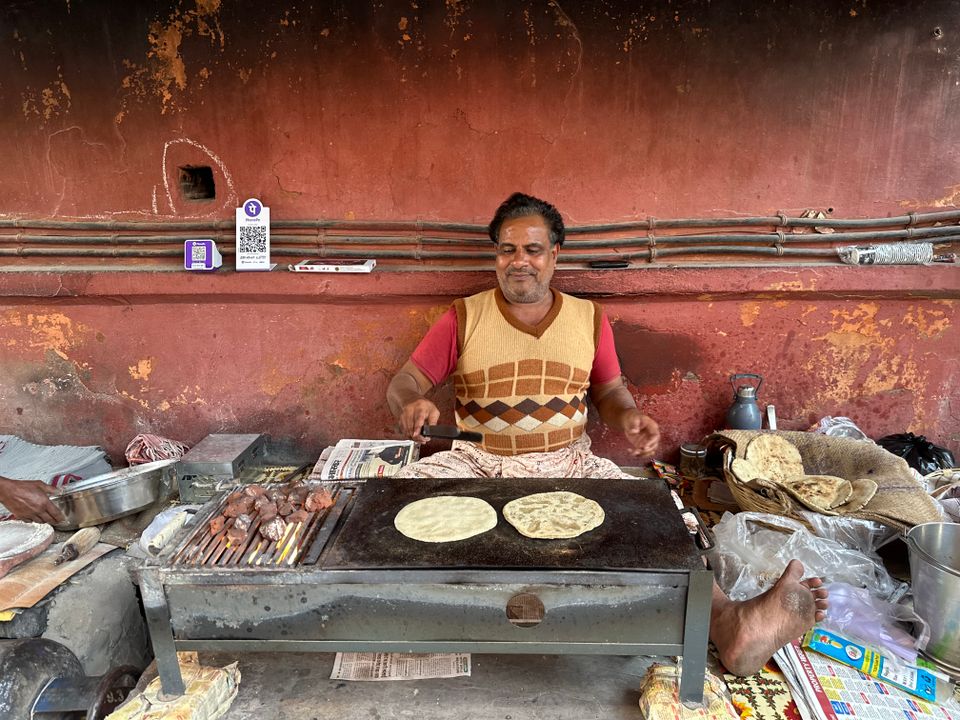
In our culinary foundation classes, we ask students to cook the same dough on three tava temperatures: low, medium, and high. The difference in the final texture is immediately apparent when you taste all three side by side. The medium-high roti is consistently preferred: puffed, soft interior, lightly spotted exterior. The low-heat roti is pale, flat, and noticeably harder. Most students who’ve been making “hard roti” at home discover they’ve simply been cooking on too-low heat.
Why Does Roti Go Hard After Cooking — and How Do You Prevent It?
The hardening of roti after cooking is starch retrogradation — the gelatinized starch molecules re-align and crystallize as the roti cools, forming a firmer, drier structure. This is the same process that makes bread stale.
You can’t stop retrogradation entirely, but you can significantly slow it:
Immediate coverage: As each roti comes off the tava, place it in a clean cotton cloth. The cloth captures steam and creates a humid microenvironment around the roti. Don’t fold the cloth until you have 2–3 rotis stacked — stacking traps heat and moisture more effectively.
Casserole storage: Transfer the cloth-wrapped bundle to a casserole or airtight container within 5 minutes of finishing cooking. This dramatically extends softness — rotis stored this way can stay soft for 3–4 hours.
Apply ghee or butter immediately: Applying a thin coat of ghee to the hot roti surface creates a fat barrier that slows moisture evaporation. FSSAI classifies ghee under its dairy product standards — using FSSAI-certified ghee ensures both safety and consistent fat content for cooking applications. This is why restaurant rotis are often softer than home versions — they’re brushed with ghee the moment they come off heat.
Don’t stack too many: More than 6–8 rotis stacked together creates a weight that compresses the bottom rotis, pressing out the steam pocket and accelerating hardening.
Frequently Asked Questions
Why does roti become hard after a few minutes?
Roti turns hard when moisture evaporates from the surface faster than the interior can compensate. This happens when: dough wasn’t rested long enough (gluten tightened), the tava temperature was too low (roti sat too long cooking), the roti wasn’t covered after making, or too much dry atta was used in rolling. Covering hot rotis in a cloth immediately after cooking traps steam and keeps them soft.
What type of atta makes the softest roti?
Soft-to-medium hard wheat atta with higher water absorption capacity makes the softest roti. Peer-reviewed research published in Food Chemistry Advances (2024) confirms that soft wheat genotypes with higher water absorption produce higher quality chapati with better softness and pliability. Look for atta labeled ‘chakki-ground’ (stone-ground) — this preserves more bran oil, which contributes to a softer texture.
How long should roti dough rest before rolling?
Rest roti dough for a minimum of 20 minutes, covered with a damp cloth. During resting, gluten strands relax, water distributes more evenly through the flour, and the dough becomes more pliable and easier to roll thin without springing back. Dough rested for 30 minutes rolls visibly easier and produces a softer finished roti than dough used immediately.
Does adding oil or ghee to roti dough make it softer?
Yes — 1 tsp of oil or ghee per cup of atta acts as a fat barrier between gluten strands, reducing the density of the gluten network. This produces a more tender, pliable roti that stays soft longer. The fat also slows moisture evaporation from the surface after cooking. Most professional roti makers include a small amount of fat in their dough.
How do I keep roti soft for the whole day?
Stack hot rotis on a clean cotton cloth, wrapping each layer as you go. The cloth absorbs excess steam while retaining enough moisture. Then place the wrapped bundle in a casserole or airtight container. This method keeps rotis soft for 3–4 hours. For longer storage, wrap in foil and refrigerate — reheat individually on a hot tava for 30 seconds per side.
Cook with Understanding, Not Just Instinct
Every cooking problem has a scientific explanation — and once you understand it, you can solve it deliberately rather than hoping for the best. Roti making is a perfect example: the same dough, treated differently at five points in the process, produces results that range from dry and hard to perfectly soft and pliable.
If you want to build that kind of deeper cooking understanding — across Indian and international cuisines — Florence Academy’s culinary courses in Ahmedabad give you the technique and the reasoning behind it.
Join 2,000+ students who’ve trained with expert chefs at Florence Academy, Ahmedabad.
Explore Courses at Florence Academy →
Chat with us on WhatsApp — we respond fast.
See also: How to Make Chaat at Home: Street Food Recipes from Ahmedabad | Cooking Classes in Ahmedabad for Beginners | Culinary Foundation Program at Florence Academy


