
Ganeshotsav runs all the way to September 25 this year, which is nine more days of modak after the festival’s opening night. Not every one of those batches needs a steamer and the hand-pleating skill behind traditional ukadiche modak. These three modern modak recipes, chocolate, mawa, and a no-cook dry fruit option, use equipment already sitting in an Ahmedabad kitchen.
Key Takeaways
– Chocolate and mawa modak cook in 15 minutes or less, no steamer needed.
– Dry fruit modak needs no heat: a food processor, dates, nuts, 10 minutes.
– All three skip the rice-flour dough and hand-pleating real ukadiche modak requires.
– None use onion, garlic, or root vegetables, so all three suit a Jain table as-is.
Why Make a No-Steam Modak This Ganeshotsav?
Because nine days is a lot of modak, and not every night allows for a steamer setup. Florence Academy’s guide to Ganesh Chaturthi and traditional modak covers the full ukadiche technique in detail, the rice-flour dough, the hand-pleated shell, the 6th-century history behind it. That version belongs on the festival’s opening day.
For the rest of Ganeshotsav, a faster recipe that still lands on the same plate makes more sense. Chocolate and mawa modak both cook on a stovetop in a single pan, no steamer basket or muslin cloth involved. Dry fruit modak skips cooking altogether.
There’s also a practical ingredient reason these versions travel well through a nine-day festival. Fresh khoya needs to be bought close to the day it’s used, since it doesn’t keep well. Milk powder sits in the pantry indefinitely and works just as well in a pinch. A household that’s already stretched thin planning nine nights of food doesn’t need one more short-shelf-life ingredient to track.
How to Make Chocolate Modak
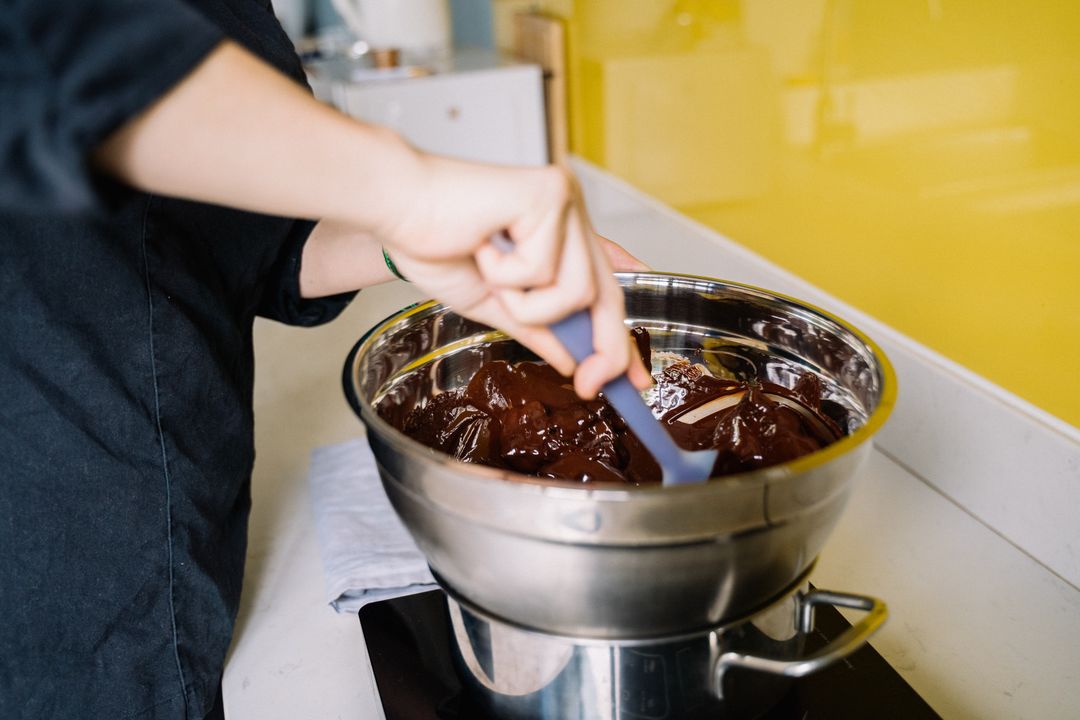
Grated khoya, chocolate, and sugar, cooked together for about 15 minutes total. The ratio that works reliably is 1 cup grated or crumbled khoya to roughly a third of a cup of chocolate chips. Add sugar to taste rather than a fixed amount, since khoya brands vary in sweetness (Dassana’s Veg Recipes, retrieved 2026-09-08).
- Melt the khoya. Heat it in a pan on low, stirring, until it softens and starts to melt.
- Add sugar and chocolate. Stir both in, then keep cooking on low heat, stirring continuously.
- Cook to the ball stage. After roughly 15 minutes, the mixture pulls away from the sides of the pan and comes together as a single mass. That’s the signal to stop, not a guess.
- Shape and chill. Press small portions into a greased modak mould, or, without one, roll into balls or flatten into discs. Refrigerate before serving.
Good-quality chocolate matters more here than in most recipes, since there’s nowhere for a poor one to hide. Semi-sweet or dark chocolate chips both work. The texture and flavour hold up better cold, and a batch keeps for 5 to 6 days in an airtight container in the fridge.
Working chocolate into a khoya base like this is a small taste of a much deeper craft. Florence Academy’s Couverture Chocolate course covers real tempering and ganache work, not just a stovetop melt.
What Is Mawa Modak, and Why Is It the Fastest Version?
The quickest of the three, and the one with the fewest ingredients. Mawa modak substitutes milk powder for fresh khoya entirely, which skips the advance dairy-reduction step other khoya recipes need. The working ratio is one and a half cups of milk powder to half a cup of powdered sugar and half a teaspoon of cardamom powder. All of it binds together with ghee and milk (Hebbar’s Kitchen, retrieved 2026-09-08).
Heat the ghee and milk together first, then stir in the milk powder, sugar, and cardamom. Keep the flame low and stir continuously for roughly 13 minutes, until the mixture starts to separate cleanly from the pan rather than clinging to it.
No steaming happens at any stage. That also means no risk of a burn from hot steam, a real consideration when more than one cook is working the kitchen at once during festival week. Shape the mixture in a greased mould while it’s still warm and pliable.
Ready to learn from expert chefs? Explore Courses at Florence Academy →
Does No-Cook Dry Fruit Modak Really Need No Stove at All?
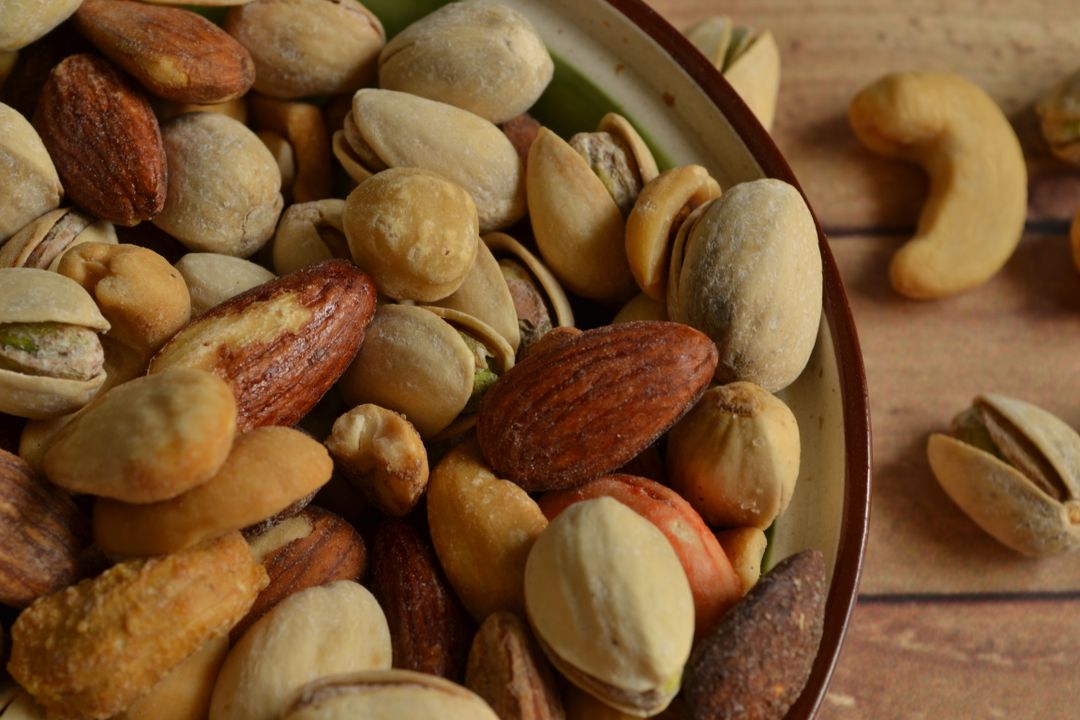
None at all, and that’s the entire appeal. Pulse almonds and cashews in a food processor or Indian-style mixer grinder into a coarse powder, then add dates, raisins, and desiccated coconut, pulsing again until everything binds. A spoonful of ghee helps the mixture come together into a workable dough, pressed into a greased mould or simply rolled into ladoo-style balls (Spice Up The Curry, retrieved 2026-09-08).
There’s no added sugar anywhere in this version. Dates and raisins carry all the sweetness on their own, which makes this the modak to offer a guest who’s specifically avoiding refined sugar this festival season. High-powered blenders can turn the nuts to paste instead of coarse powder, so a standard mixer grinder or food processor gives a better texture here.
What Are the Most Common Mistakes With These Modak Versions?
Rushing the pan stage, on both cooked versions. Chocolate and mawa modak both need the mixture to actually pull away from the pan before it comes off the heat. Stopping early leaves a batch too soft to hold its shape once cooled, and it never firms up properly even in the fridge.
Our finding: Florence Academy’s chefs see the same rushed-pan mistake in class every festival season. Students judge doneness by time on the clock instead of watching the mixture actually separate from the pan. The clock is a guide, not the signal to stop.
The second mistake is skipping the mould grease. All three versions stick without it, and chocolate modak in particular is difficult to release cleanly from a dry mould once it’s set. A thin layer of ghee brushed into every groove before filling solves this every time.
The third is specific to the no-cook version: over-processing the nuts into paste rather than coarse powder. Once that happens, the texture turns closer to a nut butter than a workable dough, and there’s no way to reverse it in the same batch.
A fourth, smaller mistake shows up with mawa modak specifically: using cold milk powder straight from a fridge or a cool pantry. It clumps instead of dissolving smoothly into the hot ghee and milk, leaving small hard lumps in the finished sweet. Letting it come to room temperature first, or sifting it before adding, avoids the problem entirely.
| What to compare | Chocolate modak | Mawa modak | Dry fruit modak |
|---|---|---|---|
| Heat required | Stovetop, ~15 min | Stovetop, ~13 min | None |
| Core ingredient | Khoya and chocolate | Milk powder | Dates, nuts, coconut |
| Added sugar | Yes | Yes | None |
| Equipment | Pan, mould | Pan, mould | Food processor, mould |
| Shelf life | 5-6 days, refrigerated | A few days, refrigerated | 3-4 days room temp, 2 weeks chilled |
Which of the Three Should You Actually Make This Week?
It depends on who’s eating and how much time you have, more than which recipe sounds most appealing. For a weeknight batch after work, mawa modak wins on pure speed: fewer ingredients, one pan, 13 minutes.
For a gathering with kids or guests who’ll compare it to bakery-bought sweets, chocolate modak reads as the most indulgent and travels well as a gift box. If even one guest has asked for something without added sugar, dry fruit modak is the answer. It’s the only one of the three built for that request from the start, not adapted for it afterward.
None of the three is a downgrade from the others; they’re built for different nights of a nine-day festival, not ranked against each other.
Are These Modern Modak Recipes Jain- and Vegetarian-Friendly?
Yes, all three, without any substitution. None involve onion, garlic, or root vegetables, the same clean profile that defines Florence Academy’s broader Jain-adapted vegetarian food traditions. Chocolate and mawa modak both use dairy, standard in Jain vegetarian cooking, and the dry fruit version is naturally free of dairy apart from its ghee binder.
Frequently Asked Questions
Do any of these modak recipes need a modak mould?
A mould makes the shaping faster and more uniform for all three, but none strictly require one. Chocolate and dry fruit modak can be hand-rolled into balls or flattened discs, and mawa modak also shapes reasonably well by hand once it’s cooled enough to hold together.
How long do chocolate and mawa modak stay fresh?
Chocolate modak keeps for 5 to 6 days refrigerated in an airtight container. Mawa modak, made fresh, is best within a similar window. Both taste better cold or lightly chilled rather than at room temperature.
Is no-cook dry fruit modak a healthier option?
It uses no added sugar, relying on dates and raisins for sweetness, which makes it a lower-sugar option than the other two versions. It isn’t necessarily low-calorie, since nuts and dates are calorie-dense, but it’s a reasonable choice for guests avoiding refined sugar specifically.
Are these modern modak versions Jain- and vegetarian-friendly?
Yes. None of the three use onion, garlic, root vegetables, or eggs. Chocolate and mawa modak use dairy (khoya and milk), which is standard in Jain vegetarian cooking, and the dry fruit version is naturally dairy-free aside from the ghee binder.
Can beginners make these without any prior modak experience?
Yes, more easily than the traditional steamed version. None of the three require the rice-flour dough or hand-pleating technique that makes ukadiche modak a genuine skill to learn; they’re closer to fudge-making and no-bake ladoo assembly, both familiar territory for most home cooks.
Conclusion
Nine days of Ganeshotsav don’t call for nine days of the same technique. These three modern modak recipes cover the rest of the week:
- Chocolate modak: stovetop, 15 minutes, khoya and chocolate.
- Mawa modak: the fastest cooked version, milk powder instead of fresh khoya.
- Dry fruit modak: no heat, no added sugar, just a food processor.
Save the rice-flour dough and hand-pleating for the festival’s opening night, and let these three carry the rest of the week.
About the author: Chef Monila Surana is Managing Partner and lead culinary educator at Florence Academy of World Cuisines, Ahmedabad, with 18 years of experience running professional kitchens and designing culinary curriculum.
Want real technique behind desserts like these? Our Culinary Foundation Program covers Indian sweet-making alongside broader kitchen fundamentals with expert chefs in Ahmedabad. Join 2,000+ students who’ve trained with us.
Call us at +91 6351665305 | +91 8320715588
Have questions? Chat with us on WhatsApp — we respond fast.


