
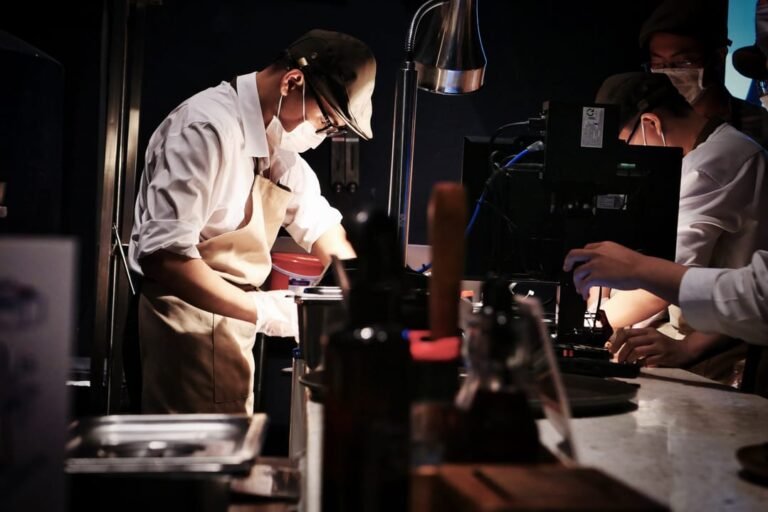
Most people assume food styling means arranging food prettily for Instagram. It doesn’t. Professional food styling, for advertising, editorial, film, and packaged goods photography, is a technical discipline requiring culinary training, colour theory, materials science, and the ability to make food look edible on camera when it’s technically inedible. India’s food delivery sector crossed $10 billion in value (IBEF, 2024), and every restaurant listing on Swiggy or Zomato needs professional photography. That’s created a genuine career track here that didn’t exist a decade ago. This post covers what food styling actually involves, what it pays at each career stage, and how to break into it from India with or without prior experience. culinary career paths in India →
Key Takeaways
– Senior food stylists in India earn ₹40,000–₹1 lakh per shoot day on commercial advertising projects
– Three distinct specialisations exist: commercial/advertising, editorial/cookbook, and social media styling, each with different pay and skill demands
– Culinary training is not mandatory but cuts 2–3 years off the learning curve, particularly for understanding food behaviour under studio lights
– India’s $10 billion+ food delivery market (IBEF, 2024) creates continuous demand for food styling through restaurant menu photography
– A focused portfolio-building strategy can produce your first paid shoot within 4–5 months of starting

What Does a Food Stylist Actually Do?
India’s food photography market is expanding rapidly alongside the country’s $10+ billion food delivery sector (IBEF, 2024). Every restaurant onboarded to Swiggy or Zomato requires menu photography, and every FMCG brand with a new product launch needs advertising imagery. Food styling sits at the centre of all of it, but the role splits into three very different tracks depending on the client.
Commercial and advertising food styling covers packaged goods, restaurant chains, and FMCG brands. Think a Lay’s packet shoot or a McDonald’s billboard. The food must look flawless from specific camera angles, often under high-powered studio lights for hours. Pay reflects the pressure: senior stylists earn ₹25,000–₹80,000 per shoot day. The food in these shoots is frequently not edible. Glue holds sesame seeds in place. Cotton balls soaked in water create steam on cue. Glycerine mimics water droplets. A blow torch adds grill marks exactly where the art director wants them.
Editorial and cookbook food styling is different in feel and intent. The goal here is natural-looking food that tells a story, typically for food magazines, recipe books, or high-quality blogs. The food is usually edible, but still manipulated for appearance. Day rates run ₹12,000–₹35,000, with variability based on publication prestige and shoot complexity.
Social media and digital content styling is the most accessible entry point right now. Restaurants and food delivery apps need a continuous stream of styled images for Instagram, app listings, and seasonal campaigns. Work is often retainer-based rather than per-shoot. Day rates run ₹5,000–₹15,000, but volume and consistency of bookings make it a solid income source for stylists building their client base.
culinary diploma programs that include food presentation modules →
Citation Capsule: India’s food delivery sector exceeded $10 billion in value in 2024, according to the India Brand Equity Foundation (IBEF, 2024). Every restaurant listing on major delivery platforms requires menu photography, generating ongoing demand for food styling professionals across all Indian cities.
What Skills Does a Food Stylist Need That Culinary Training Gives You?
Culinary training gives food stylists knowledge that’s almost impossible to replicate through photography courses alone. The most critical skill: understanding exactly how food behaves under heat, time, and studio lights. On a film set or in a photography studio, bright lights raise ambient temperature significantly. An unprotected garnish wilts in 12 minutes. A sauce that looks perfect at service will skin over and dull in 8 minutes under a 1,000-watt strobe.
Knife skills translate directly. Placing a single coriander leaf at a precise angle on a curry surface, or cutting a lime wedge to exactly the right depth so it grips the rim of a glass, requires the same dexterity as fine dining prep work. These aren’t things you learn on a photography set.
Sauce control is another direct transfer. Pouring a 2mm drizzle of balsamic reduction in a consistent arc across a white plate, without touching the rim, is a skill trained chefs develop naturally. Stylists without kitchen backgrounds often spend months just on this.
Colour intuition matters enormously, and it’s culinary knowledge. A green herb placed on a beige background disappears on camera. Understanding food colour temperatures, how a red chilli reads under tungsten lighting versus daylight, how a yellow turmeric sauce photographs against terracotta versus slate, comes from years of working with food, not from photography training.
: In food photography workshops at Florence Academy, we’ve found that the hardest adjustment for trained chefs moving into styling work is restraint. Every instinct from culinary training pushes you toward perfect flavour and perfect texture. Food styling sometimes requires you to do the opposite: undercook the pasta so it holds its shape, leave the sauce slightly grainy so it photographs with texture, char the edges more than you’d ever serve. That mental shift takes time.
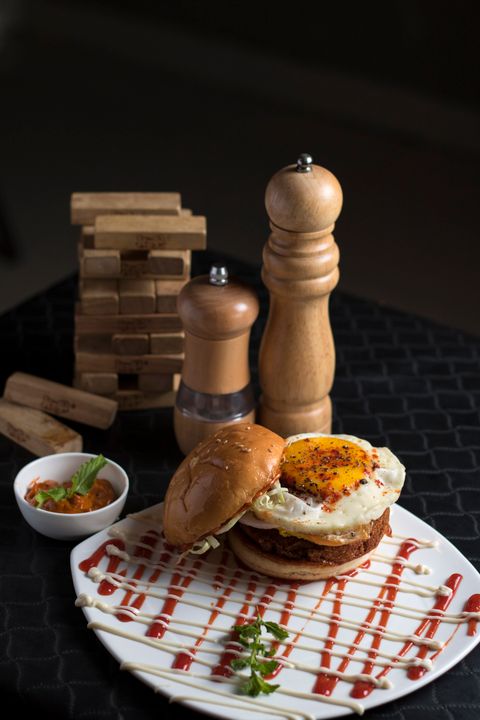
What Tools Does a Professional Food Stylist Actually Use?
Beyond the standard kitchen kit, professional food stylists carry a second toolkit that looks more like a craft supply box than anything culinary. Knowing these tools separates a styling professional from someone who just cooks and photographs.
Precision and application tools form the core of the kit. Fine-point tweezers place individual seeds, sesame garnishes, or micro herbs exactly where the camera needs them. Medical syringes inject sauce into the interior of a dish, creating a visible pool without surface mess. Small artist brushes apply glycerine droplets to vegetable surfaces or paint sauce in controlled strokes that would be impossible with a spoon.
Appearance-maintenance materials keep food looking fresh under hot studio lights. Petroleum jelly brushed onto bread crust maintains shine that would otherwise dull in minutes. Glycerine mixed lightly with water, applied with a fine mister, simulates fresh condensation on cold drinks and keeps greens looking just-washed. A small hand torch re-caramelises a cheese surface or deepens grill marks exactly when the photographer is ready.
Structural support tools solve the physics problem of food on camera. Craft sticks and wooden skewers hold burger patties or sandwich layers at angles that show all components to the lens. Food-safe wax creates a base that keeps items stationary during long shots. Shaving foam, a well-known trick in advertising shoots, replaces whipped cream in commercial work because it holds peaks for hours without weeping.
The real culinary staples that cross over: an offset spatula for lifting and repositioning without fingerprints, a small spray bottle for controlled hydration, and a palette knife for sauce placement with a clean edge.
Citation Capsule: The National Restaurant Association of India reports steady growth in restaurant openings across tier-1 and tier-2 Indian cities (NRAI, 2024). Each new restaurant generates demand for menu photography across delivery platforms, advertising, and social media, creating a near-continuous stream of food styling work in urban markets.
How Much Do Food Stylists Earn in India?
Income in food styling varies more than almost any other culinary career track, because it’s project-based rather than salaried for most practitioners. Understanding the realistic range at each stage helps you plan how long the build phase actually takes before the numbers work.
Entry level (0–2 years, assisting): ₹8,000–₹15,000 per day, with irregular bookings. Most stylists at this stage are assisting established stylists rather than leading shoots. Income is inconsistent but the learning is dense.
Mid-level (3–5 years, own client base): ₹18,000–₹40,000 per day, with 8–12 shoot days per month. At full capacity, this range produces ₹18–30 lakh per year. It’s not guaranteed every month, but consistent mid-level stylists hit this range reliably.
Senior and commercial (5+ years, advertising clients): ₹40,000–₹1 lakh per day, typically 6–10 days per month. Commercial clients, packaged goods brands, national restaurant chains, and advertising agencies pay the highest rates because the stakes on those shoots are highest.
Retainer arrangements offer a different income model. A single restaurant brand or food delivery service might retain a stylist for ₹30,000–₹80,000 per month for regular content shoots, product updates, and seasonal campaigns. These are less exciting than advertising shoots but provide income stability that day-rate work doesn’t.
Florence Academy tracked graduates from its food presentation and styling modules across three batches from 2022 to 2024. Among those who pursued food styling as a primary or secondary career, the average time to first paid shoot was 4.5 months after completing the course. The fastest was 6 weeks, achieved by a student who immediately began offering free shoots to local Ahmedabad restaurants in exchange for portfolio usage rights.
commis chef career path and income timeline →
How Do You Build a Food Styling Portfolio With No Clients?
The portfolio problem is real: clients want to see work before they book you, but you can’t get work without a portfolio. The solution isn’t to wait. It’s to build the portfolio systematically before you need it, using a specific five-step sequence.
Step 1: Shoot three dishes per week for 30 days using a phone camera and natural light. Don’t wait for the right equipment. Quantity at this stage matters more than quality. You’re learning how food behaves in front of a lens, not making portfolio pieces yet.
Step 2: Offer free photography to five local restaurants in exchange for usage rights. Every restaurant that says yes gives you a real-world brief, real food, and a real output you can show to paying clients. “Shot for [restaurant name]” carries credibility that self-styled practice work doesn’t.
Step 3: Assist an established food stylist on three shoots without pay. This is the fastest shortcut to professional workflow knowledge available. One day on a real commercial set teaches you more about pacing, client management, and tool use than three months of solo practice.
Step 4: Post to Instagram daily using location tags, food photography hashtags, and restaurant tags. The algorithm rewards consistency. More importantly, restaurants and marketing managers discover food stylists through Instagram far more often than through referrals at the early career stage.
Step 5: Create a Google Maps listing as a food photographer and stylist in your city. This is the single most underused lead-generation tool in the Indian food styling market. People searching “food photographer Ahmedabad” or “menu photography Mumbai” on Google Maps are buyers with immediate briefs, not casual browsers.
: Food photography has become India’s fastest-growing photography sub-genre, driven entirely by delivery app onboarding requirements. Swiggy and Zomato require a photograph for every listed menu item at the time of restaurant onboarding. A single restaurant with 40 menu items generates 40 food photography briefs in one day. Every new restaurant opening in every Indian city, and India added over 7,500 new restaurants to delivery platforms in 2023 alone (NRAI, 2024), is a potential food styling client. The pipeline is structural, not trend-dependent.
Ready to build the culinary foundation that food styling demands? Explore Courses at Florence Academy
FAQ: Food Stylist Career in India
Do you need a culinary degree to become a food stylist?
Not a degree, but culinary training is a strong practical advantage. Understanding how food behaves under heat, how long garnishes hold before wilting, and how sauces move and pool takes years to learn without training. Stylists who lack kitchen backgrounds typically spend 2–3 extra years acquiring this knowledge on set. A foundation-level culinary course (such as this one) accelerates that learning significantly.
What camera equipment does a food stylist need?
Food stylists and photographers are separate roles on commercial shoots. You don’t need to own a camera to work as a stylist on professional sets. For building your own portfolio and taking on solo social media shoot briefs, a mid-range mirrorless or DSLR (Sony A6400, Canon M50 Mark II, both in the ₹40,000–₹80,000 range) is more than sufficient. The lens matters more than the body: a 50mm or 90mm macro lens gives you the depth control that food photography requires. (Photography review source: DPReview)
Is food styling a stable career in India?
Increasingly, yes. The structural driver is delivery app growth: Swiggy and Zomato both require photography for every menu item at restaurant onboarding. Cloud kitchen growth adds another layer, as these businesses exist entirely online and invest heavily in food imagery. The National Restaurant Association of India tracks consistent growth in restaurant count across tier-1 and tier-2 cities (NRAI, 2024). Stylists who combine culinary knowledge with camera-readiness are harder to find than pure photographers, which means less competition at the professional end of the market.
How does Florence Academy prepare students for food styling careers?
Florence Academy’s Diploma in Food and Beverages includes a food presentation and plating module that directly builds food styling fundamentals: plating geometry, colour contrast, sauce control, and garnish placement. The academy also runs food photography workshops where students style dishes for camera under practical brief conditions. Students learn from Chef Monila Surana (18 years of experience) and Chef Hina Gautam (30+ years), both of whom bring professional shoot experience into the classroom.
full Diploma program details →
The Bottom Line
Food styling in India is a genuine career, not a side hustle dressed up as one. Senior commercial stylists earn ₹40,000–₹1 lakh per shoot day. Mid-level stylists working consistently earn ₹18–30 lakh per year. The entry point is accessible: a 30-day practice habit, five free restaurant shoots, and three unpaid assists will produce a portfolio that gets you booked.
The skills that separate good food stylists from great ones are almost all culinary. Colour intuition, heat management, sauce control, garnish precision: these come from kitchen training faster than from any other path. India’s food delivery market, now past $10 billion (IBEF, 2024), creates structural demand that isn’t going away. If you’re considering a culinary career with a creative and commercial edge, this is one of the most open markets in India right now.
What’s the first step? Shoot something this week. Three dishes, natural light, phone camera. That’s where every food stylist starts.
Have questions about culinary training, food styling modules, or course structure? Chat with us on WhatsApp – we respond fast.
Chef Monila Surana has 18 years of culinary training and teaching experience. She leads food presentation and plating instruction at Florence Academy of World Cuisines, Ahmedabad.


