
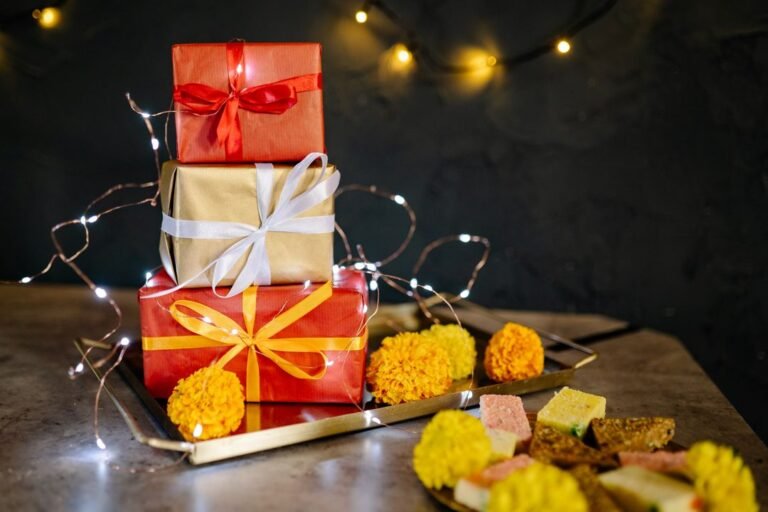
Eggless nankhatai is a traditional Indian cookie that popular accounts trace to a bakery in Surat, Gujarat. If you bake from a home kitchen in Ahmedabad, it is also one of the easiest gifts you can make before Diwali on November 8. A handful of pantry ingredients, no kneading, and a jar of cookies you can bake ahead.
One published base formula makes 12 cookies from 75 grams of flour, 25 grams of besan, 65 grams of powdered sugar and 75 grams of ghee, baked at 180°C (Indian Healthy Recipes, Nankhatai Recipe, updated 2022). This guide walks through that formula, shows where other published recipes differ, and adds variations and gifting advice. It is a published formula, not one we baked and measured ourselves, so treat your first batch as a test.
For general cookie science, see our guide to cookie textures. For piped and rolled butter cookies, see our butter cookie guide. This post stays with nankhatai.
Key Takeaways
– Two popular accounts trace nankhatai to a Dutch-run bakery in Surat. Neither cites documents, so treat it as tradition.
– One published base formula bakes 12 cookies at 180°C from 75 g flour, 25 g besan, 65 g sugar and 75 g ghee.
– Recipe sources differ on ghee ratio, bake time, resting and cooling, so bake a test tray first.
– Sources give shelf lives from 10 days to 3 weeks, so check a cookie before you gift a batch.
What Is Nankhatai, and Where Does It Come From?
A popular account says a Dutch couple set up a bakery in Surat, and that a local employee named Dotivala later took it over and dropped the toddy and eggs from the recipe (Outlook Traveller, The Nankhatai’s History Is As Rich As Its Taste, 2023). A second account tells much the same story (Homegrown, India’s Beloved Biscuits: The Origins Of Nankhatai & More, 2022). Neither of the two accounts we read cites a documented source, so treat the story as tradition rather than record.
They also disagree on a detail. Outlook calls Dotivala Iranian, while Homegrown calls him a Parsi. For the wider story of that community in Gujarat, see our guide to Parsi cuisine in Surat and Ahmedabad.
Outlook also explains the name as Persian “nan” for flatbread plus “khatai”, which it describes as an Afghan word for biscuit. That explanation comes from a single article.
What matters in your kitchen is simpler. Nankhatai is a ghee-rich cookie, and the recipes we read use no egg.
What Goes Into Eggless Nankhatai?
Published recipes agree on the family of ingredients and disagree on proportions. Indian Healthy Recipes uses a lean formula. Nisha Madhulika uses a far richer one, with 200 grams each of flour, sugar and ghee (Nisha Madhulika, Nankhatai Recipe, undated).
| Ingredient | Indian Healthy Recipes (12 cookies) | Nisha Madhulika |
|---|---|---|
| Flour | 75 g wheat or all-purpose | 200 g maida |
| Besan (gram flour) | 25 g | 50 g |
| Semolina (sooji) | 1 tbsp, optional | 50 g |
| Ghee | 75 g, “use only as needed” | 200 g, melted |
| Sugar | 65 g powdered | 200 g, ground |
| Leavening | ¼ tsp baking powder, skippable with maida | 1 tsp baking powder |
| Cardamom | 3 green cardamoms, powdered | 8 to 10 |
| Resting | None | Dough 4 to 5 hours, shaped cookies 15 to 20 minutes |
The ingredient notes below come from Indian Healthy Recipes, which explains what each one does in its formula:
- Besan: the recipe says it “lends a good aroma”. You can substitute maida, atta or nut meal.
- Semolina: it “gives a light crunch”. You can skip it and reduce the ghee by a tablespoon.
- Baking powder or soda: skippable with maida. With atta, the cookies turn out too dense without it.
- Cardamom: the usual flavouring, with saffron as another option.
On ghee, the sources pull in different directions. Nisha Madhulika’s equal-weight formula is rich, while Ruchi’s Kitchen says in a reply to a reader that too much ghee keeps nankhatai flat like a biscuit (Ruchi’s Kitchen, Nankhatai Recipe, 2021). Start lean, as Indian Healthy Recipes does, and add ghee only until the dough holds together.

How Do You Bake Nankhatai at Home?
You mix, shape, bake and cool. The card below follows Indian Healthy Recipes step by step, so you have every quantity in one place.
Base recipe: 12 nankhatai (Indian Healthy Recipes)
- 75 g wheat flour or all-purpose flour
- 25 g besan
- 1 tablespoon semolina (optional)
- ¼ teaspoon baking powder (skippable with maida)
- 3 green cardamoms, powdered
- 65 g powdered sugar
- 75 g ghee, added only as needed
- Chopped pistachios to garnish (optional)
- Preheat the oven to 180°C for at least 15 minutes, and line a tray with parchment.
- Mix the dry ingredients: flour, besan, semolina, baking powder, cardamom and sugar. Make sure the baking powder is well mixed in.
- Add the ghee in three parts, and bring the flour together into a stiff dough. Do not knead. Add a teaspoon more ghee if the mixture is dry and crumbly.
- Shape: divide into 12 portions, roll into smooth balls, flatten slightly and press lightly with a fork.
- Garnish with chopped pistachios if you like. The recipe notes that they usually brown, so you can skip them.
- Bake at 180°C for about 10 minutes, until the cookies are light golden and almost dry on top. Time varies with your oven and tray.
- Cool: move the cookies to a wire rack straight away, and cool them completely. On a hot tray the bases keep browning.
Expect disagreement between sources. Bake times in the recipes we read run from about 10 to 20 minutes. Ruchi’s Kitchen chills the dough for 30 to 60 minutes, Bake with Shivesh freezes the shaped balls while the oven heats (Bake with Shivesh, Eggless Nankhatai, 2022), and Nisha Madhulika rests the dough for hours. Indian Healthy Recipes skips resting entirely.
Cooling advice differs too. Ruchi’s Kitchen leaves cookies on the tray for a few minutes because they crumble if moved too early, while Indian Healthy Recipes moves them at once. Bake one test tray and note what works in your oven.
What do the sources say about cracks? Ruchi’s Kitchen says a small indent on top helps the cookies crack as they bake. None of the recipes we read explain why they crack, so we will not guess at a mechanism.
Bake with Shivesh warns that hand-kneading makes the cookies “super hard”. That matches the “do not knead” advice in the card above.
What Variations Can You Try?
Change one thing at a time, and keep the base formula as your control. Each variation below comes from the published recipes, so you can compare your result with a documented one.
Besan-heavy nankhatai. Indian Healthy Recipes shows a version made with three-quarters of a cup of besan and a quarter cup of atta. The flour mix changes the colour and texture, so expect a different cookie from the base recipe.
Nut-meal nankhatai. The same recipe says you can replace besan with nut meal, and that the same amount of almond meal works well.
Without semolina. Skip the sooji and reduce the ghee by a tablespoon, as Indian Healthy Recipes advises. It also notes that chiroti rava gives a good result.
Saffron nankhatai. Bake with Shivesh uses saffron in the eggless version, and Indian Healthy Recipes lists saffron as a common flavouring alongside cardamom. Check the source recipe for how to add it.
Keep notes on what you change. Weighing each ingredient helps you repeat a batch you liked.
Ready to learn from expert chefs? Explore Courses at Florence Academy →
How Do You Store and Gift Nankhatai for Diwali?
Cool the cookies completely, then store them airtight. The published sources give different shelf lives. Indian Healthy Recipes says two to three weeks at room temperature in an airtight steel or glass jar, and Ruchi’s Kitchen gives two to three weeks in a cool place. Bake with Shivesh says 10 to 15 days.
None of these recipes address Gujarat’s heat or humidity. Check one cookie for softness before you gift a batch, and treat a recipe blog’s shelf life as a guide, not a label claim.
According to Drik Panchang, Dhanteras falls on Friday, November 6, 2026, and Lakshmi Puja on Sunday, November 8 (Drik Panchang, Diwali 2026 Puja Calendar, 2026). Those dates are for New Delhi, so confirm timings for Ahmedabad before you set delivery dates.
A simple gifting plan works well:
- Bake a test batch this week and note your oven’s timing.
- Bake the gift batch close to delivery, given the shorter shelf lives above.
- Cool completely, then pack in a clean, dry airtight jar or box.
- Add a card with the ingredients and the bake date.
For boxes and labels, see our packaging guide for home bakers. If you plan to sell gift boxes to offices, read our guide to corporate Diwali gifting. For festive gifts that need no oven, our guide to homemade mithai is a good companion.

What Should You Check Before Gifting to Jain or Mixed Households?
Ask what the household follows, and list every ingredient on the card. Households follow different rules, and every item on the ingredient list needs a check against them. Nankhatai contains no onion or garlic, but nuts, saffron, cardamom and ghee all belong on that list.
We found no authoritative source on how Jain households treat specific ingredients such as ghee or cardamom, so we make no claim. A written ingredient list lets the family decide, and it also helps guests who avoid nuts.
Use a clean tray and clean tools for every batch. If your kitchen also bakes products that contain egg, say so on the card.

Frequently Asked Questions
Is nankhatai really eggless?
Yes, in the recipes we read. The Indian publishers’ recipes use flour, ghee, sugar and flavourings with no egg. One account says a Surat employee removed the eggs from the original bakery recipe. For other eggless bakes, see our guide to egg substitutes for Indian bakers.
Why do my nankhatai spread flat?
Too much ghee may be the cause. Ruchi’s Kitchen says in a reply to a reader that too much ghee keeps nankhatai flat like biscuits. Add ghee gradually until the dough just holds together, as Indian Healthy Recipes does. Chilling is another approach some recipes take, such as chilling for 30 to 60 minutes.
Can I make nankhatai without besan?
Yes. Indian Healthy Recipes says you can replace besan with maida, atta or any nut meal, though it prefers besan for its aroma. The same recipe says the traditional version is made with just refined flour, sugar and ghee or butter. Expect a paler cookie, and bake a half batch to compare.
How long does nankhatai stay fresh?
Sources differ. Indian Healthy Recipes and Ruchi’s Kitchen say two to three weeks, and Bake with Shivesh says 10 to 15 days. Cool the cookies fully before boxing and keep them dry. Gujarat’s heat and humidity are not covered by these recipes, so check a cookie for softness before you gift.
Can I sell nankhatai from my home kitchen?
Selling food from home in India involves FSSAI registration, and that is separate from any recipe blog’s storage advice. Our FSSAI registration guide for home bakers explains the steps. Do not use a recipe site’s shelf life as the date on a label.
Conclusion
Eggless nankhatai rewards a baker who is willing to test. Published recipes agree on the ingredients and differ on ghee, bake time, resting and cooling, so the best formula is the one you refine in your own oven.
- Start with a lean base: flour, besan, sugar and ghee, added gradually.
- Do not knead: bring the dough together and shape by hand.
- Test your oven: bake one tray before the gift batch.
- Check freshness: shelf life in the sources ranges from 10 days to 3 weeks.
- List the ingredients: a card on every box helps Jain, vegetarian and nut-free guests.
About the author: Chef Monila Surana is Managing Partner and lead culinary educator at Florence Academy of World Cuisines, Ahmedabad, with 18 years of experience in professional kitchens and culinary education.
Want to bake with professional technique? Our Artisanal Cookies course and Butter Cookies course cover dough, shaping and baking with expert chefs in Ahmedabad. Join 2,000+ students who’ve trained with expert chefs at Florence Academy, Ahmedabad.
Ready to learn from expert chefs? Explore Courses at Florence Academy →
Call us at +91 6351665305 | +91 8320715588
Have questions? Chat with us on WhatsApp — we respond fast.


