

Butter cookies are where professional baking technique becomes most visible. Two people can follow the same ingredient list and produce cookies that taste completely different — one crumbly and melting, the other dense and tough — because of decisions made at the creaming stage, the temperature of the butter, the baking time, and whether the shaped dough was chilled before baking.
India’s cookies market was valued at USD 1.4 billion in 2025 and is projected to reach USD 2.4 billion by 2034 at a CAGR of 5.52%, with plain and butter-based cookies identified as the fastest-growing segment, according to IMARC Group (IMARC Group, India Cookies Market Report, 2025). That growth is driven partly by the rise of home bakers and artisan bakeries across India — particularly in cities like Ahmedabad where gifting culture drives demand for high-quality, packaged cookies for festivals and corporate orders.
This guide gives you the professional recipe and technique — including a fully eggless version for Indian kitchens — with explanations of why each step matters.
Key Takeaways
– India’s cookies market is valued at USD 1.4 billion in 2025, growing to USD 2.4 billion by 2034 at 5.52% CAGR (IMARC Group, 2025) — butter cookies are the fastest-growing segment
– The creaming stage is the most critical: under-creamed butter produces dense cookies; over-creamed butter produces flat, greasy ones
– Chill shaped/piped cookies for 15–20 minutes before baking to prevent spreading
– Eggless butter cookies are excellent — condensed milk replacement adds a caramel depth that enhances the flavour
Why Does Butter Cookie Quality Come Down to Three Variables?
Butter cookies seem simple — butter, sugar, flour, and something to bind. But three variables control everything: butter temperature, the creaming stage, and post-shaping chilling.
Get these three right and the recipe almost doesn’t matter. Get them wrong and no recipe will save you. King Arthur Baking identifies butter temperature as the single most impactful variable in cookie texture — ahead of ingredient ratios or baking time.
Variable 1: Butter temperature. Professional bakers cream butter at 18–20°C — firm enough that it holds tiny air bubbles, but pliable enough that it mixes without resistance. Too cold (below 15°C) and the butter won’t cream properly; the mixture stays dense and doesn’t trap air. Too warm (above 23°C) and the butter is soft enough to melt in the oven before the cookies set, causing excessive spread.
Variable 2: Creaming time. Creaming butter and sugar together creates tiny air pockets in the fat. These air pockets expand in the oven, giving the cookie its light, crumbly texture. Under-creaming (less than 3 minutes) doesn’t create enough air. Over-creaming (more than 6–7 minutes) can warm the butter past its ideal temperature.
Variable 3: Pre-baking chill. Cold dough holds its shape in the first critical minutes of oven heat while the structure begins to set. If the dough is warm when it goes into the oven, the fat melts before the flour can absorb it, causing the cookie to spread flat. 15–20 minutes in the refrigerator after shaping or piping makes a visible difference.
Citation Capsule — India Cookies Market
India’s cookies market was valued at USD 1.4 billion in 2025 and is projected to reach USD 2.4 billion by 2034 at a CAGR of 5.52%, according to IMARC Group’s India Cookies Market Report. Plain and butter-based cookies are identified as the fastest-growing segment — driven by gifting culture, artisan home bakery growth, and rising consumer preference for premium, nostalgic baked goods over mass-produced alternatives. (IMARC Group, 2025)
The Professional Butter Cookie Recipe (with Eggless Version)
Standard recipe (makes 40–45 cookies):
– 200g unsalted butter (at 18–20°C — firm but pliable)
– 120g icing sugar, sifted
– 30g cornflour (cornstarch)
– 1 egg (or eggless substitute — see below)
– 1 tsp vanilla extract
– ½ tsp salt
– 280g plain flour (maida), sifted
Eggless version: Replace the egg with 2 tbsp condensed milk + 1 tbsp fresh cream. The condensed milk adds binding, moisture, and a slight caramel note that pairs beautifully with butter. This is the standard version taught at Florence Academy.
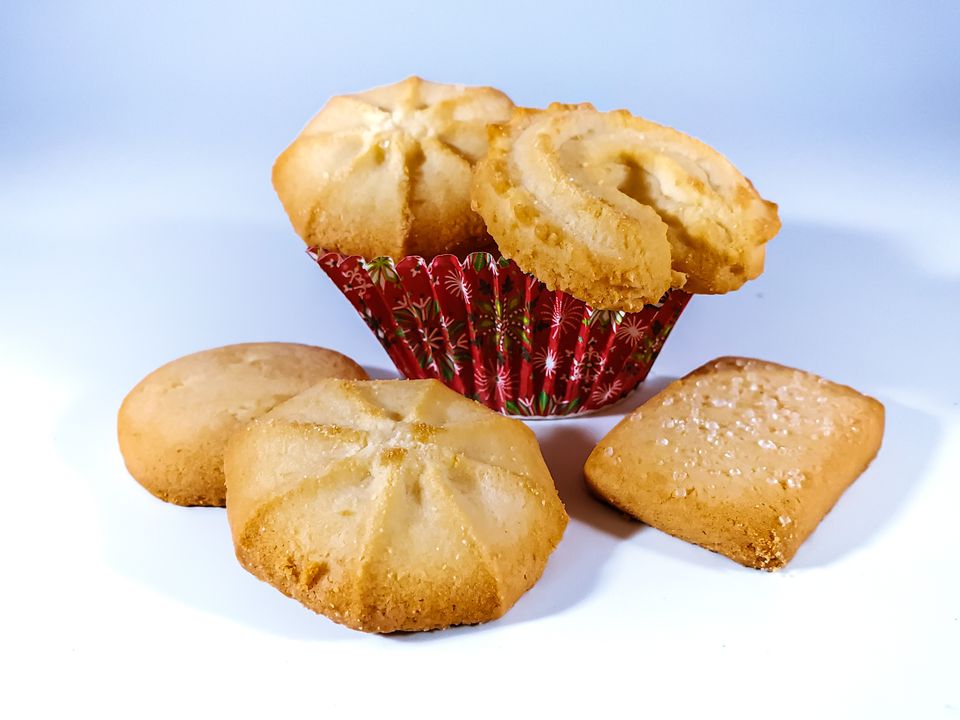
Method:
1. Cream butter and sugar (3–4 minutes). Beat butter alone for 1 minute. Add sifted icing sugar and cornflour together. Beat on medium-high speed for 3–4 minutes until pale, fluffy, and noticeably increased in volume. The mixture should be almost white. If it looks yellow and dense, cream for 2 more minutes.
2. Add egg or eggless substitute. Add the egg (or condensed milk + cream) and vanilla. Beat on medium speed for 1 minute until fully incorporated.
3. Add flour on low speed. Add sifted flour in two batches. Mix on the lowest speed until just combined — approximately 30–45 seconds total. Overmixing develops gluten and produces tough cookies.
4. Check consistency. The dough should be soft enough to pipe through a star tip but firm enough to hold its shape. If too stiff, add 1 tsp cream. If too soft, refrigerate for 15 minutes.
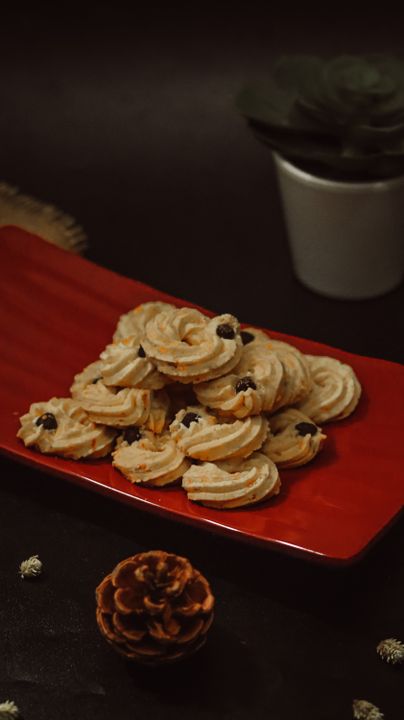
5. Pipe or roll. For piped cookies: fit a piping bag with a 1M or 2D star tip. Pipe rosettes, swirls, or lines onto a lined baking tray. For rolled cookies: roll between two sheets of parchment to 6–7mm thickness and cut with your preferred cutters.
6. Chill. Refrigerate shaped cookies for 15–20 minutes. This step is non-negotiable for sharp edges and minimal spreading.
7. Bake. Preheat oven to 160°C (conventional) or 150°C (fan). Bake for 14–18 minutes until the edges are light golden and the centre appears set. Don’t wait for the centre to look fully golden — cookies firm as they cool.
8. Cool completely. Leave on the tray for 5 minutes, then transfer to a wire rack. Cookies are fragile when hot; they firm significantly as they cool.
At Florence Academy, we’ve observed that 80% of student butter cookie failures occur at one of two points: creaming too little (the most common) or not chilling before baking (the second most common). Adding a simple rule — cream until the mixture is visibly pale, and always chill before baking — corrects most butter cookie problems without changing anything else in the recipe.
Why Does Dough Consistency Matter When Piping vs Rolling Butter Cookies?
Piped and rolled cookies need different dough consistencies, and the same recipe produces different results depending on which method you use.
For piped cookies:
– Dough should flow slowly through a star tip under firm pressure — not too stiff, not too soft
– Too stiff = tired hands, broken piping bag, ugly shapes
– Too soft = cookies spread and lose definition in the oven
– Ideal test: Pipe one rosette. If it holds its spiral shape and the edges stay defined, proceed. If it slumps, refrigerate the dough for 10 minutes.
For rolled and cut cookies:
– Dough should be slightly firmer — firm enough to roll without cracking and hold the cut shape cleanly
– If dough cracks when rolling, it’s too cold — let it warm for 5 minutes
– If dough sticks to the rolling pin, it’s too warm — refrigerate for 10 minutes
– Roll between two sheets of baking parchment to avoid sticking and maintain even thickness
What Flavour Variations Work Best in Butter Cookies?
The base butter cookie is a neutral canvas. Professional bakeries build flavour variations from the same dough:
Vanilla bean: Scrape 1 vanilla pod into the butter before creaming. More aromatic and complex than extract.
Cardamom: Add 1 tsp ground cardamom to the flour. A classic Indian flavour pairing with butter — works beautifully for festival gifting.
Saffron: Dissolve a pinch of saffron in 1 tbsp warm milk. Add with the vanilla. Produces a distinctive yellow colour and aromatic flavour.
Rose: Replace vanilla extract with 1 tsp rose water. Reduce to ½ tsp if the flavour seems strong in the dough — rose intensifies during baking.
Chocolate chip: Add 80g mini chocolate chips after the flour is incorporated. Stir by hand with a spatula to avoid crushing the chips.
Citrus: Add 1 tsp orange or lemon zest to the butter before creaming. The oils in the zest infuse the fat and distribute flavour through every bite.
Interested in learning professional baking technique for your home bakery or café? Explore Courses at Florence Academy →
Troubleshooting: Common Butter Cookie Problems
| Problem | Cause | Fix |
|---|---|---|
| Cookies spread flat | Butter too warm / no pre-bake chill | Butter at 18–20°C; chill 15 min before baking |
| Cookies too hard | Overbaked / too much flour | Remove at light golden edge; weigh flour |
| Dough too stiff to pipe | Too much flour / butter too cold | Add 1 tsp cream; let butter warm slightly |
| No defined piping edges | Dough too warm | Chill piped cookies 20 min before baking |
| Cookies crumble apart | Underbaked / too little binding | Bake 2 min longer; ensure proper creaming |
| Dense, heavy texture | Under-creamed butter | Cream 4–5 min until pale and fluffy |
Frequently Asked Questions
Why do my butter cookies spread too much in the oven?
Butter cookies spread because the butter is too warm or too soft when you start creaming. If butter reaches room temperature before creaming, it melts in the oven before the structure sets. Use butter at 18–20°C (firm but pliable). After shaping or piping, refrigerate cookies for 15–20 minutes before baking. Cold dough spreads significantly less.
What is the correct butter-to-flour ratio for butter cookies?
The professional ratio for piped butter cookies is 1:1.5 butter-to-flour by weight (e.g., 200g butter : 300g flour). For rolled and cut cookies, 1:2 (100g butter : 200g flour) gives a firmer dough that holds its shape during baking. Higher butter ratio = more spread, more delicate texture. Lower ratio = less spread, firmer bite.
Can I make butter cookies without eggs (eggless)?
Yes — eggless butter cookies are excellent and are the standard version at Florence Academy. Replace the egg with 2 tbsp milk, 1 tbsp cream, or 1 tbsp condensed milk per egg. Condensed milk adds a slight caramel note that works beautifully with butter. The texture is slightly more crumbly than egg-based cookies but the flavour is richer.
How do I get clear, defined edges on piped butter cookies?
Clear piped edges require: (1) dough at the right consistency — stiff enough to hold shape, fluid enough to pipe smoothly; (2) a star tip with at least 6 teeth (Wilton 1M or 2D work well); and (3) chilling piped cookies for 20 minutes before baking. Warm dough relaxes at the edges as it bakes. Cold dough holds definition.
How long do homemade butter cookies last?
Properly stored butter cookies last 2–3 weeks at room temperature in an airtight tin. For food business operators, FSSAI packaging and labelling standards for baked goods apply once you sell commercially — including shelf life declaration and ingredient listing. The key is allowing them to cool completely before storing — residual heat creates steam, which softens the cookies. Don’t mix soft cookies with crispy ones in the same container. Unbaked cookie dough freezes for up to 3 months without quality loss.
From Home Kitchen to Professional Standard
Butter cookies sit at an interesting point in baking — simple enough for a beginner to attempt, demanding enough that the difference between a mediocre and exceptional result is clearly visible and immediately tasted. Understanding why each step matters turns a recipe follower into a baker who can troubleshoot, adapt, and create.
Florence Academy’s baking courses in Ahmedabad cover cookies, pastry, and professional technique in hands-on, practical sessions with experienced chef instructors.
Join 2,000+ students who’ve trained with expert chefs at Florence Academy, Ahmedabad.
Explore Courses at Florence Academy →
Chat with us on WhatsApp — we respond fast.
See also: Butter Cookies Course at Florence Academy | Artisanal Cookies Course | French Macaron Troubleshooting: Cracking, Hollow & Weeping Fixed


