

Most home bakers who never move past cakes and cookies give the same reason: bread feels technical, and kneading looks like a skill you either have or don’t. Focaccia quietly removes that barrier. There’s no kneading step at all, and in Ahmedabad and across India, demand for baked goods keeps climbing: the bakery market is expected to grow from USD 12.12 billion in 2025 to USD 30.04 billion by 2035, a 9.5% CAGR (Expert Market Research, 2025). Home baking is a real part of that growth, and no-knead bread is the easiest place to start.
Key Takeaways
– No-knead bread needs no starter and no kneading: a wet dough and a long, slow rest do the gluten development instead (Jim Lahey and Mark Bittman, New York Times, 2006).
– India’s bakery market is projected to grow from USD 12.12 billion in 2025 to USD 30.04 billion by 2035, a 9.5% CAGR (Expert Market Research, 2025).
– Focaccia dough is deliberately wet: “quite a lot of water” is what creates its signature airy bubbles (America’s Test Kitchen, 2026).
– Dimpling and olive oil, not kneading skill, are what give focaccia its signature holes and crisp base.
What Makes Bread “No-Knead”?
A wet dough and a long, slow fermentation replace kneading entirely. That’s the whole method. Jim Lahey, owner of Sullivan Street Bakery in New York, developed the technique, and Mark Bittman published it in the New York Times in 2006, describing a loaf with “next to no hands-on time” (The Bittman Project, 2006). The recipe kicked off a home-baking wave precisely because it removed the one step people found intimidating.
Kneading exists to develop gluten quickly. Given enough water and enough time, gluten develops on its own: no pushing, folding, or arm strength required. That’s the entire mechanism behind every no-knead formula since, focaccia included.
This is a different route to a familiar destination than Florence Academy’s sourdough starter guide, which uses the same wet-dough, minimal-handling logic but leavens with a week-old wild starter instead of ordinary yeast. Focaccia typically takes the simpler path: commercial yeast, no starter to maintain.
Why Are Home Bakers in India Turning to No-Knead Techniques Right Now?
Because the demand for baked goods is real and growing, and no-knead bread is the lowest-effort way to meet it at home. India’s bakery products market was valued at USD 12.12 billion in 2025 and is projected to reach USD 30.04 billion by 2035 at a 9.5% CAGR (Expert Market Research, 2025), driven partly by premium and artisanal products gaining ground in metro kitchens, not just bakery shelves.
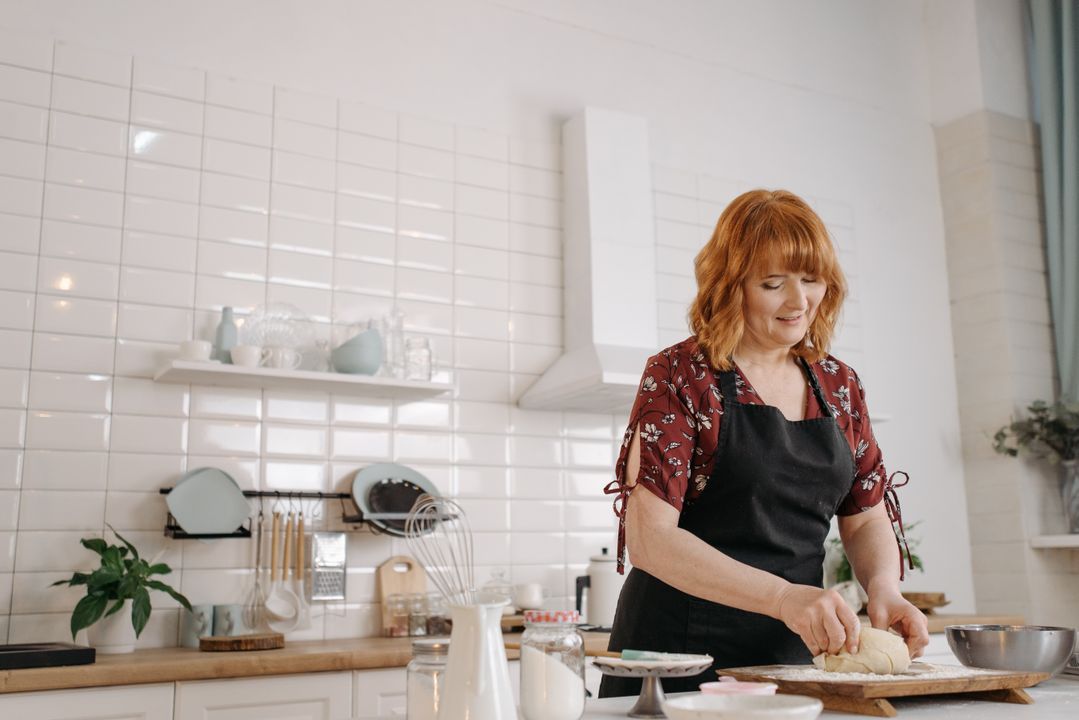
Most Indian home cooks already have strong dough instincts from years of making roti and paratha, but that instinct can work against a first focaccia attempt. Roti dough is stiff enough to roll; focaccia dough is deliberately loose, sticky, and closer to a thick batter than a rollable dough. Expecting it to behave like roti dough is the single most common reason first attempts go wrong.
Is that a bad thing? Not once you know to expect it. A dough that looks “too wet to be right” is usually exactly right for focaccia.
How Much Water Does Focaccia Actually Need?
A lot more than any dough an Indian home kitchen normally handles. “The high hydration level (lots of water is one of the keys to the bread’s archetypal bubbles) makes the dough slack and easy to knead by hand,” and at that water ratio, “not all of the gluten-forming proteins can bond to each other,” which is exactly what produces the large, irregular holes (America’s Test Kitchen, 2026). A firmer, lower-hydration dough simply can’t do this. It bakes into something closer to a dense flatbread instead.
Olive oil does real work here too, not just flavour. It coats the pan for a fried-crisp bottom crust, and a further layer gets worked into the surface during dimpling, pooling in the finger marks it leaves behind.
| What changes | Traditional kneaded bread | No-knead focaccia |
|---|---|---|
| Hands-on time | 10–15 minutes of active kneading | A few minutes of mixing and folding, total |
| Gluten development | Mechanical: pushing and stretching | Time and hydration: the dough develops on its own |
| Dough consistency | Firm enough to knead and shape by hand | Wet and slack: poured and stretched, not shaped |
| Equipment | Stand mixer or strong hands | A bowl, a spoon, and a pan |
| Texture result | Tight, even crumb | Large, irregular holes; airy and open |
| Failure mode | Over-kneading toughens the dough | Skipping the rest leaves it dense |
Step-by-Step: How Do You Make No-Knead Focaccia at Home?
- Mix. Combine flour, water, yeast, and salt until no dry patches remain. Plain all-purpose flour (maida) or bread flour both work; no specialty flour is required. The dough will look shaggy and wet: that’s correct, not a mistake.
- Autolyse. Let the mixed dough rest, covered, for 20–30 minutes. This hydrates the flour and starts gluten development before any folding begins, the same foundational technique taught across bread formats in Florence Academy’s Bakery Foundation Program.
- Stretch-and-fold, twice. Wet your hand, pick up one edge of the dough, stretch it upward, and fold it over the centre. Rotate the bowl and repeat three or four times. Do this twice, 30 minutes apart. This replaces kneading entirely.
- Bulk ferment. Cover and rest at room temperature for 12–18 hours, or overnight. This long rest is where almost all the gluten development and flavour actually happen.
- Transfer and stretch. Pour the risen dough into a heavily oiled pan and gently stretch it toward the edges with oiled fingertips. Don’t force it. It will relax and spread further during the next rest.
- Dimple. Press oiled fingertips firmly into the puffy dough, going deep, to create divots in rows across the surface. Those divots are where the olive oil pools and crisps as it bakes (America’s Test Kitchen, 2026).
- Second rise, then bake. Rest 30–45 minutes uncovered, then bake at 220–230°C (425–450°F) until deeply golden, 20–25 minutes. In an Indian OTG, check at the 18-minute mark, since these run less consistently than a calibrated oven.

Our finding: In Florence Academy’s baking classes, the moment a student’s confidence actually shifts isn’t when the bread comes out of the oven. It’s earlier, at the mixing bowl, the first time they commit to a dough too wet and sticky to touch comfortably. Once that hesitation passes, the rest of the method is straightforward.
Ready to learn from expert chefs? Explore Courses at Florence Academy →
What Are the Most Common Focaccia Mistakes?
Under-oiling the pan is the most frequent one. Focaccia depends on a genuinely generous layer of olive oil across the base, closer to a pool than a brushing, to fry the bottom crust crisp. Skimping here is the difference between a bakery-style base and a bread that just sticks.
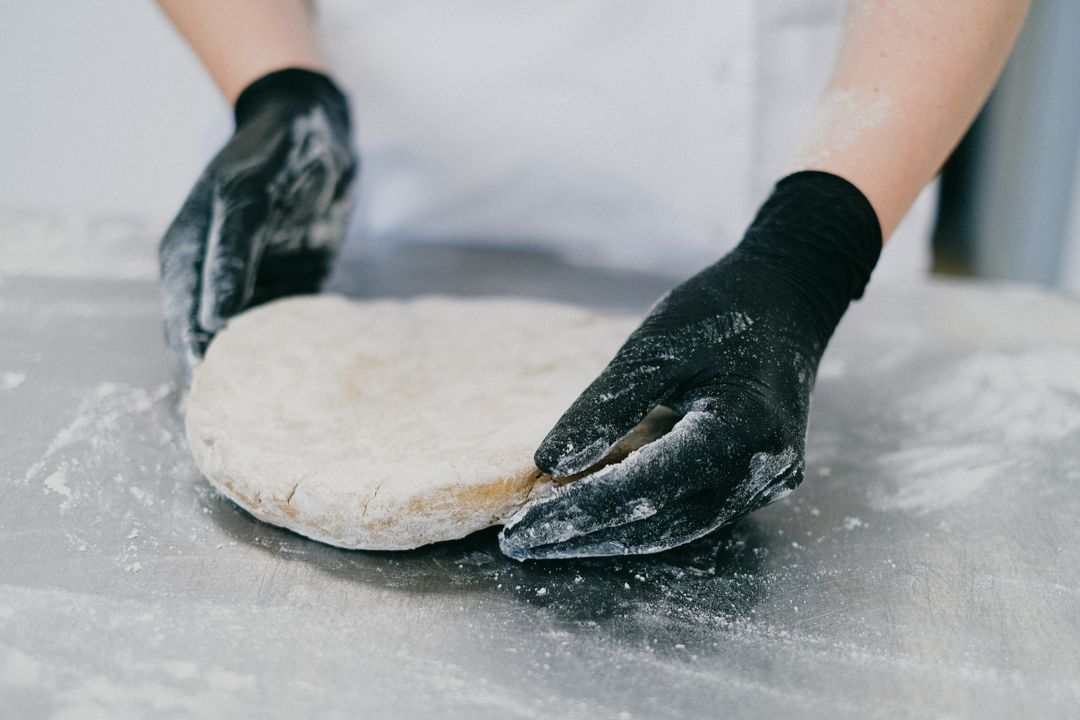
Skipping the second rise is the next one: the dough needs that final 30–45 minutes uncovered after dimpling, or the crumb bakes dense instead of open. Dimpling too aggressively can also collapse the dough’s structure; light, confident presses work better than hard jabs. And measuring flour and water by volume (cups) rather than weight is a quiet source of failed attempts. Hydration percentage only means anything against a real weight ratio.
Is Focaccia Jain- and Vegetarian-Friendly?
The base dough always is: flour, water, yeast, salt, and olive oil, nothing else. It’s the toppings where classic Italian focaccia recipes reach for garlic and onion, which won’t work for a Jain kitchen or table. The fix is simple: skip them entirely rather than hunting for a substitute. Rosemary, coarse sea salt, cherry tomatoes, and olives all sit directly on the dough before baking and deliver plenty of flavour without touching either ingredient.
This matters more in Gujarat than most places, since a home baker here is often making one tray to share across a genuinely mixed table: Jain, vegetarian, and non-vegetarian guests alike. A garlic-and-onion-free focaccia is the one version everyone at that table can eat without a second batch.
You Don’t Need a Sourdough Starter for This
That’s a separate, older technique. No-knead is a method, not a leavening system, and the original Lahey/Bittman formula uses ordinary commercial yeast, not a wild starter (The Bittman Project, 2006). Focaccia follows the yeasted version almost universally, which is exactly why it’s a faster entry point than sourdough.
If you later want the deeper science of what fermentation is actually doing to the dough, Florence Academy’s sourdough vs. yeast comparison breaks down the difference in detail. It’s useful once focaccia has you hooked on bread baking generally.
Frequently Asked Questions
Is no-knead bread the same as sourdough?
No. No-knead is a mixing method, not a leavening agent. The original NYT no-knead recipe uses ordinary commercial yeast; sourdough uses a wild-fermented starter instead. You can make no-knead bread with either, and focaccia is almost always made with commercial yeast, not sourdough.
Why is focaccia dough so much wetter than roti or naan dough?
Focaccia dough carries far more water than a roti or naan dough, enough that it’s slack and pourable rather than firm enough to roll. That extra water is what creates the large, irregular holes and airy crumb focaccia is known for; a firmer dough bakes into something closer to a thick, dense flatbread.
What happens if I skip dimpling the dough?
The bread will still bake, but it loses its signature texture. Dimpling stops large air pockets from forming during baking and creates pools where olive oil collects and crisps, which is what gives focaccia its dimpled surface and richer crust.
How long does no-knead dough actually need to rest?
Most no-knead formulas rest the dough 12 to 18 hours at room temperature before shaping. That long, slow fermentation is doing the gluten-development work that kneading normally does, so cutting the rest short is the single most common reason a first attempt turns out dense.
Can beginners really make focaccia without any bread-baking experience?
Yes, this is one of the reasons it’s a common first bread for home bakers. There’s no shaping skill to learn, no kneading technique to get wrong, and a wet dough is naturally forgiving of small measurement errors in a way a stiff, kneaded dough is not.
Conclusion
Focaccia earns its place as a first bread on three counts:
- No kneading required: a wet dough and a long rest do the work instead.
- No starter to maintain: ordinary commercial yeast, unlike sourdough.
- Forgiving of small mistakes: high hydration masks measurement errors that would ruin a stiffer dough.
If a stand mixer and kneading technique have been the thing standing between you and your first loaf, focaccia was designed to remove exactly that obstacle. Mix it tonight, and you’ll have bread tomorrow.
About the author: Chef Monila Surana is Managing Partner and lead culinary educator at Florence Academy of World Cuisines, Ahmedabad, with 18 years of experience running professional kitchens and designing culinary curriculum.
Want to build these skills hands-on? Our Basic Bread course covers dough hydration, fermentation, and shaping technique with expert chefs in Ahmedabad. Join 2,000+ students who’ve trained with us.
Call us at +91 6351665305 | +91 8320715588
Have questions? Chat with us on WhatsApp — we respond fast.


