
In 2024, PETA India named Ahmedabad the country’s most vegan-friendly city — recognition that reflects what Gujaratis have known for generations. Ahmedabad runs on a culinary tradition where Jain dietary principles don’t restrict the menu; they define it. Over half a million Jains live in Gujarat, and their influence on local food culture — from wedding banquets to daily home cooking — shapes what every serious cook here eventually needs to know. Jain cooking classes in Ahmedabad teach this cuisine as its own discipline, not as a constraint on something else.
But Jain cooking isn’t simply “cooking without onion and garlic.” It’s a distinct culinary grammar with its own flavour logic, ingredient substitutions, and techniques. A Jain cooking class in Ahmedabad teaches you that grammar — and opens doors in catering, hospitality, and home cooking that generalist training doesn’t.
If you’re wondering what these classes actually cover, who they’re for, and where to find the right one, this guide answers all of it.
See also: cooking classes in Ahmedabad for beginners.
Key Takeaways
– In 2024, PETA India named Ahmedabad India’s most vegan-friendly city — the country’s strongest local market for Jain and vegetarian culinary education.
– 92% of India’s 4.5 million Jains identify as vegetarian, the highest rate of any religious group in India (Pew Research Center, 2021).
– Jain cooking is not vegetarian cooking minus a few ingredients — it’s a distinct flavour system built on hing, cumin, ginger, and above-ground vegetables.
– Jain cooking specialists in Ahmedabad command a 20–30% premium over generalist caterers in the wedding and corporate event market.
– Florence Academy’s entire curriculum — 50+ courses — is 100% vegetarian and Jain-adapted, taught by a team with 48+ years of combined experience.
What Is Jain Cooking? The 5 Rules Every Cook in Ahmedabad Should Know
According to the Census of India 2011, India is home to 4.5 million Jains — and in 2021, Pew Research Center’s Religion in India survey (29,999 face-to-face interviews) found that 92% of Indian Jains identify as vegetarian, the highest rate of any religious community in the country. In Ahmedabad, where Jains make up nearly 1% of Gujarat’s population and hold significant social and economic influence, understanding Jain dietary principles isn’t optional for a serious cook.

Jain dietary principles follow the concept of ahimsa — non-violence toward all living beings. In the kitchen, this translates to five practical prohibitions:
The 5 Jain Food Prohibitions
1. No meat, fish, or eggs. All animal flesh is prohibited. This is the foundation, shared with vegetarianism.
2. No onion or garlic. Both are classified as anantha kay (multi-sense organisms) in Jain philosophy. Uprooting them destroys the entire plant and, Jains believe, disturbs microorganisms in the soil. In cooking, this is the prohibition that most changes flavour — onion and garlic form the base of most Indian dishes.
3. No root and underground vegetables. Potatoes, carrots, beetroot, radish, turnips, and sweet potatoes are all excluded. Digging them up kills the plant and disrupts soil life. This rules out most standard sabzi bases and the entire “potato as filler” default of everyday Indian cooking.
4. No multi-seed fruits on paryushana days. During the 8–10 day Paryushana festival, strict Jains also avoid brinjal, certain leafy greens, and multi-seeded vegetables. This applies to a subset of the year but is critical for caterers working Jain events during this period.
5. No eating after sunset (for strict observers). Some Jains follow ratri bhojana tyaga — abstaining from food after dark. This doesn’t affect recipes but matters for event caterers scheduling service windows.
Here is what most generic cooking guides miss: these five prohibitions produce a different cuisine, not a restricted one. Jain cooks have spent centuries developing dishes specifically designed around what’s available — not dishes with things taken out. A Jain dal doesn’t taste like regular dal without the tadka. It tastes like Jain dal. Learning the difference is the entire point of a proper Jain cooking class.
What Do You Actually Learn in a Jain Cooking Class?
In 2025, India’s food service market reached USD 56.24 billion, growing at 9.98% CAGR through 2034 according to IMARC Group’s India Food Service Market Report — and the fastest-growing segment within it is premium vegetarian and plant-based cuisine. A Jain cooking class teaches you to work at the highest end of that segment.
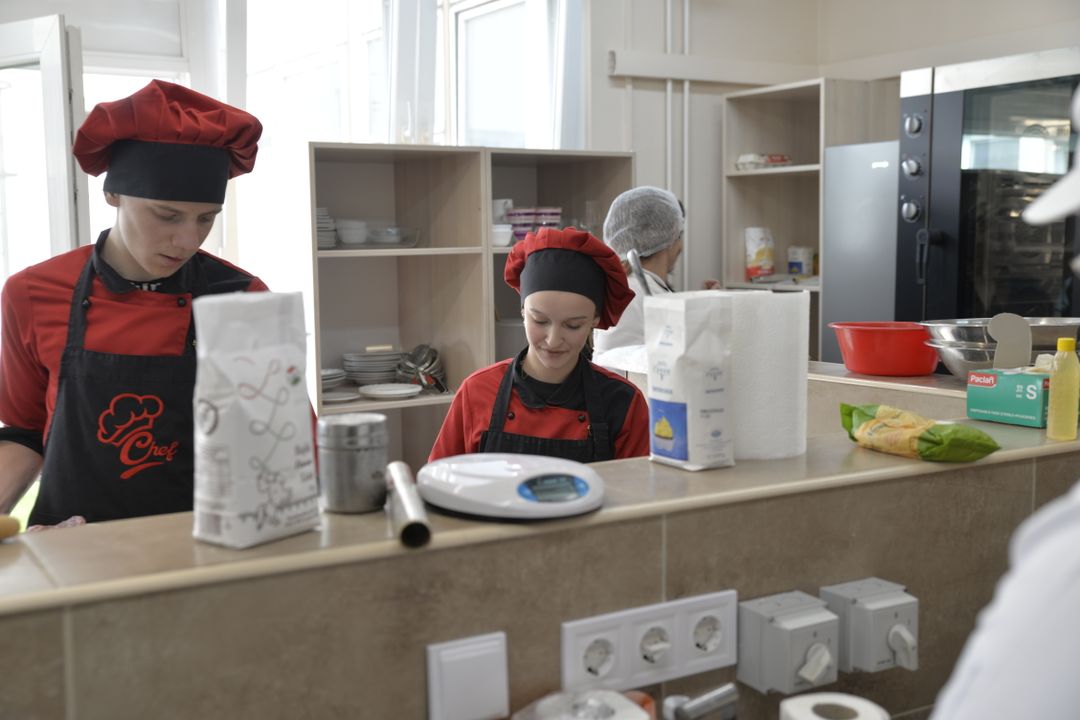
A structured Jain cooking class in Ahmedabad covers five core skill areas:
1. Ingredient Substitution — The Foundation Skill
This is what separates a trained Jain cook from someone who just skips prohibited ingredients. The substitutions are specific:
- Instead of onion: Hing (asafoetida) in the first tempering, with additional cumin and coriander to build depth. The flavour profile shifts from sweet-pungent to earthy-aromatic.
- Instead of garlic: Omitted entirely, with ginger increasing in proportion. Some dishes use dried ginger (soonth) for a warmer, rounded heat.
- Instead of potato: Raw banana (kela) for curries and dry sabzis; arbi (colocasia) where the texture needs to be creamier; raw papaya as a filler in gravies.
- Instead of carrot: Lauki (bottle gourd), tinda (Indian round gourd), or parwal (pointed gourd) — all above-ground vegetables with similar absorbent cooking properties.
At Florence Academy, we’ve found that students who struggle most with Jain cooking are the ones who approach it as subtraction — they remove the prohibited ingredients and wonder why the dish tastes flat. The shift comes when they start building from the Jain pantry: hing as the first flavour, cumin and mustard seeds as the aromatic backbone, dry spices used with more precision than in standard tadka cooking.
2. Jain-Native Dal and Sabzi Repertoire
Beyond substitutions, a Jain cooking class builds a distinct recipe library:
- Moong dal with hing and ginger (no onion-garlic tadka)
- Turai sabzi (ridge gourd cooked with cumin, coriander, and soonth)
- Lauki kofta (bottle gourd dumplings in a tomato-cashew gravy)
- Panchkuti dal (five-lentil blend — a Jain festival staple)
- Raw banana cutlets with flattened rice (poha) as binder
3. Navratri Farali Cooking
Navratri brings nine nights of high-volume events across Ahmedabad — and the cooking requirements shift entirely. Farali menus exclude all grains, replacing them with kuttu (buckwheat), singhada (water chestnut flour), and samo rice (barnyard millet). Mastering this sub-genre opens access to the city’s most concentrated annual catering season.
4. Jain Sweets and Mithai
Jain sweets avoid certain root-based thickeners and all non-vegetarian stabilisers (like gelatin). The repertoire includes moong dal halwa, churma ladoo, and dry fruit barfi — all made with Jain-compliant ingredients and relevant to both home festive cooking and commercial sweet production.
5. Portion Control and Batch Cooking for Events
For students who want to apply Jain cooking professionally — in catering, cloud kitchens, or restaurants — the class includes how to scale Jain recipes to 50–200 portions without losing consistency. This is the skill most home cooks never learn and the reason formally trained Jain cooks are hired over self-taught ones for events.
Explore Florence Academy’s Culinary Foundation Program → — all 50+ courses are 100% vegetarian and Jain-adapted from day one.
Why Ahmedabad Is the Best City in India to Study Jain Cooking
In 2024, PETA India awarded Ahmedabad the title of India’s Most Vegan-Friendly City (PETA India, November 2024) — a recognition driven by the city’s density of pure-veg restaurants, Jain dietary options, and community demand for plant-based food. No other city in India provides the same learning environment for Jain culinary education.
Three factors make Ahmedabad uniquely suited for Jain culinary education:
1. The Ingredient Environment. Ahmedabad’s wholesale vegetable markets — Jamalpur Mandi, Kalupur — stock above-ground vegetables, fresh gourds, and seasonal produce specifically because local demand is built around Jain-compatible cooking. You can source raw banana, tinda, parwal, and suran within five minutes of the city centre. In most other Indian cities, these are niche purchases.
2. The Social Context. Learning Jain cooking in Ahmedabad means cooking alongside people who grew up eating this food. Classmates, instructors, and the broader social environment give you instant feedback on whether a dish tastes authentically Jain or like a compromised version of something else. That real-time reference is irreplaceable.
3. The Commercial Demand. Ahmedabad’s wedding industry, Navratri event calendar, and corporate catering sector all have active, year-round demand for Jain-compliant food. The skills you learn aren’t theoretical — they translate directly to paid work within weeks of completing a class.
In 2025, according to IBEF’s report ‘Organised Sector to Drive India’s Food Services Market 60% Higher by 2030’ (IBEF, 2025) — which cites the Kearney-Swiggy How India Eats study — India’s organised food service sector is projected to reach 55% market share by 2030, up from roughly 45–50% today. In Ahmedabad, a disproportionate share of that growth flows through Jain and premium vegetarian dining.
Jain Cooking as a Career and Business Skill
In 2024, the Tourism and Hospitality Skill Council’s Skill Gap Study (under NSDC) projected that India’s hospitality sector will need 3 million additional skilled professionals by 2028 (THSC Skill Gap Study, 2024). Jain cooking specialists sit at the premium end of that demand curve.
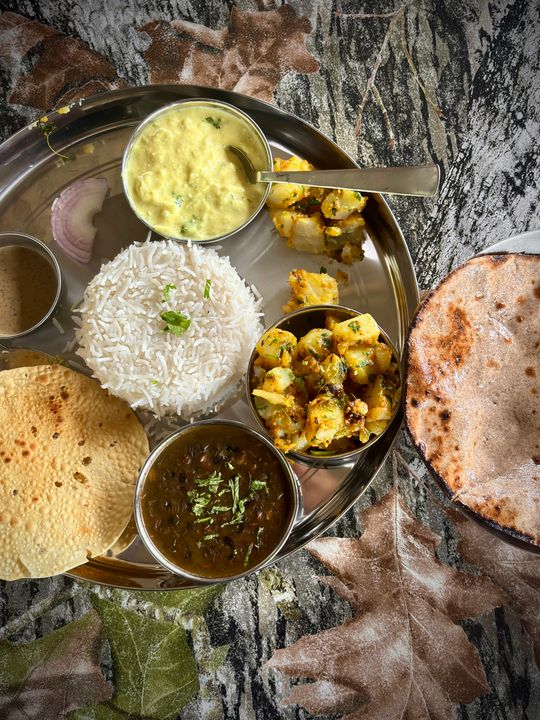
Here are three direct career paths that Jain cooking training opens in Ahmedabad:
Jain Event Catering
As covered in our guide to starting a catering business in Ahmedabad, Jain-compliant caterers consistently earn 20–30% higher per-head rates than generalist caterers. Florence Academy’s catering program specifically prepares graduates for Jain event menus. The reason is simple: demand is predictable and concentrated (weddings, corporate lunches, festive events), but qualified supply is thin. Most caterers who take Jain contracts either lack the cooking depth to execute them well, or decline outright.
At Florence Academy, students who complete the Jain cooking modules and then move into catering typically receive their first Jain event booking through word-of-mouth within 4–8 weeks — faster than any other catering niche. The Jain community in Ahmedabad is tightly connected, and a well-executed Jain thali at one family’s event generates multiple referrals automatically.
Restaurant and Hotel Kitchens
Major hotel chains in Ahmedabad — ITC Narmada, Marriott, Courtyard — all maintain dedicated Jain menu sections. A cook who can execute Jain cuisine correctly is an asset in any kitchen serving Gujarat’s business community. See our guide on how to get placed at ITC Hotels and Marriott in Gujarat for placement context.
Home Cooking for the Jain Family Market
Not everyone learning Jain cooking wants a commercial career. Many students — particularly women in Jain households — want to expand their cooking repertoire for family, guests, and festivals. A structured Jain cooking class gives them the full recipe system, not just a handful of dishes they already know.
How to Choose the Right Jain Cooking Class in Ahmedabad
The right Jain cooking class depends on your starting point and goal. Here are five criteria worth checking before you enrol:
1. Is the entire curriculum vegetarian? This sounds obvious, but some cooking institutes teach vegetarian modules as an add-on to a broader programme. For Jain cooking, you want an institute where the entire kitchen culture is vegetarian — so you never share equipment, oil, or prep space with non-veg cooking.
2. Does the instructor have real Jain cooking experience? Ask whether the faculty regularly cooks Jain meals, not just teaches them theoretically. The ingredient substitutions — and more importantly, the flavour instincts that make Jain food taste right — come from repeated practice, not recipe cards.
3. Does the class cover Navratri farali cooking? If you want to cater Ahmedabad events, this is non-negotiable. Navratri farali cooking (kuttu, singhada, samo rice, sabudana) is a separate discipline within Jain cuisine, and most generic vegetarian classes skip it entirely.
4. Are certifications available? If you’re using this training professionally, NSDC Skill India certification adds credibility to your portfolio when approaching hotels, restaurants, or corporate clients.
5. What’s the batch size? Jain cooking requires hands-on technique development — particularly around managing hing quantities, timing dry spice additions, and executing raw banana preparations. Large batch classes (20+ students) don’t give you enough time at the stove.
Frequently Asked Questions
What foods are avoided in Jain cooking?
Jain cooking avoids five main categories: all meat, fish, and eggs; onion and garlic (believed to disturb microorganisms when uprooted); root and underground vegetables including potatoes, carrots, beetroot, radish, and turnips; certain leafy greens on Paryushana days; and, for strict observers, eating after sunset. In a Jain cooking class, you learn to build complete flavour without any of these.
What is the difference between Jain food and regular vegetarian food?
Regular vegetarian food avoids meat but freely uses onion, garlic, and root vegetables. Jain food removes all of these, requiring a completely different approach to flavour. In 2021, Pew Research Center found that 92% of India’s Jains identify as vegetarian — but Jain cooking goes considerably further than standard vegetarian cuisine in its restrictions and its substitution techniques.
What do you learn in a Jain cooking class in Ahmedabad?
A structured Jain cooking class covers ingredient substitution (raw banana for potato, hing for garlic flavour, lauki for carrot), Jain-native dal and sabzi repertoire, Navratri farali cooking (kuttu, singhada, samo rice), Jain sweets, and — for those with commercial ambitions — batch cooking for events. Florence Academy’s curriculum covers 50+ Jain-adapted recipes across all these categories.
Is Jain cooking a viable career skill in Ahmedabad?
Yes — it’s one of the highest-demand, most underserved culinary specialisations in the city. India’s hospitality sector needs 3 million additional skilled professionals by 2028 (THSC Skill Gap Study, NSDC, 2024). In Ahmedabad specifically, Jain-compliant caterers and cooks consistently command 20–30% premium rates in the wedding and corporate event market because qualified supply is genuinely limited.
Which institute offers Jain cooking classes in Ahmedabad?
Florence Academy of World Cuisines offers Ahmedabad’s most comprehensive Jain-adapted culinary curriculum — 50+ courses, all 100% vegetarian and Jain-compliant. Located at Judges Bunglow Road opposite ITC Narmada, the academy is NSDC, THSC, and AHLEI certified, with a teaching team that brings 48+ years of combined culinary experience. Call +91 6351665305 or view all Florence Academy courses.
Jain Cooking Is a Distinct Skill — and Ahmedabad Is Where You Learn It Right
Ahmedabad didn’t become India’s most vegan-friendly city by accident. Generations of Jain cooks refined a cuisine that’s complete, flavourful, and built on its own terms — not on what other cuisines have minus a few ingredients. Learning to cook that way takes instruction, practice, and access to the right environment.
If you want to cook Jain food with the same confidence you’d bring to any other cuisine — for your family, for clients, or for a professional kitchen — start with a structured class where the curriculum is built around these principles, not retrofitted to them.
Florence Academy’s cooking programs are open to complete beginners and experienced home cooks alike. Send us a WhatsApp message and we’ll help you find the right starting point. Or contact us directly if you’d prefer to call or email first.
About the Author
Chef Monila Surana is the Managing Partner of Florence Academy of World Cuisines in Ahmedabad, with 18 years of culinary education experience. She has trained 2,000+ students in professional cooking, vegetarian cuisine, and food entrepreneurship. Florence Academy’s teaching team brings 48+ years of combined culinary experience — including Chef Hina Gautam (30+ years, founder of JustCook culinary institute, cooking show personality and competition judge). The academy’s 50+ courses are 100% vegetarian and Jain-adapted throughout.


