

India’s catering industry crossed USD 5.3 billion in 2025 — and Ahmedabad sits at the centre of its fastest-growing segment. Gujarat’s wedding season alone accounts for hundreds of crores in annual catering spend. Yet most people who want to start a catering business in Ahmedabad don’t know where to begin: which licence to get, what to charge, or how to land their first client without undercutting themselves.
This guide gives you a six-step roadmap covering FSSAI registration, realistic startup costs, menu strategy for Gujarat’s pure-veg market, and client acquisition — built for Ahmedabad’s specific catering landscape, not a generic India template.
At Florence Academy, we’ve helped dozens of food entrepreneurs launch catering businesses from a single home kitchen and a set of chafing dishes. The steps below reflect what they actually did — not what looks good in a business plan.
See also: how to open a cloud kitchen in Ahmedabad and how to price your food business offerings.
Key Takeaways
– India’s catering services market reached USD 5.3 billion in 2025, growing at 4.26% CAGR through 2034 (IMARC Group).
– A small Ahmedabad catering startup needs just ₹30,000–₹55,000 to launch — far less than most people assume.
– FSSAI State License costs ₹2,000–₹5,000/year and is legally required before your first paid event.
– Jain and pure-veg specialist caterers earn 15%+ profit margins — double the 7–8% industry average.
– The single biggest mistake: underpricing the first 10 events, then being unable to raise rates with returning clients.
Step 1: Choose Your Catering Niche (Ahmedabad Rewards Specialists)
In 2025, according to IMARC Group’s India Catering Services Market Report, the most profitable catering businesses are those serving a defined event type or dietary requirement — not generalists trying to do everything. In Ahmedabad, three niches are consistently underserved and high-margin: Jain-compliant events, Navratri Garba catering, and corporate tiffin services for the Satellite and Prahlad Nagar office clusters.
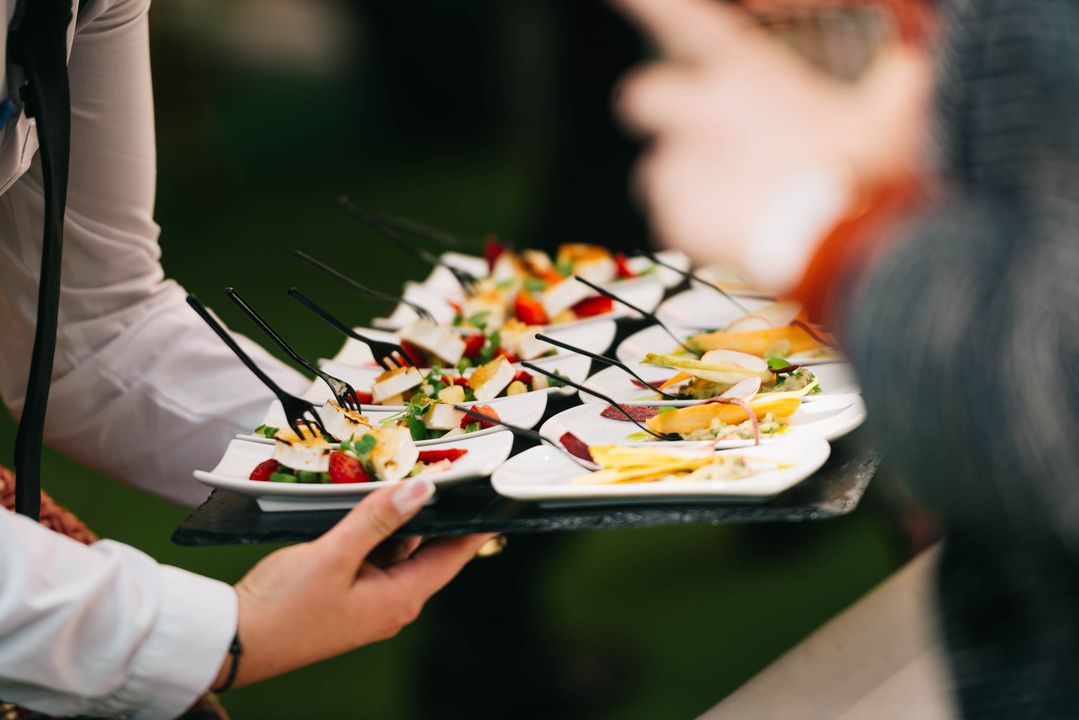
Here are the five main catering niches active in Ahmedabad’s event market:
| Niche | Event Type | Typical Pax | Key Ahmedabad Advantage |
|---|---|---|---|
| Wedding catering | Sangeet, reception, lunch | 150–500+ | High ticket; one family = years of referrals |
| Jain-compliant events | All event types | 25–200 | Premium pricing; intensely loyal community |
| Corporate catering | Daily tiffin, board lunches | 10–100 | Recurring monthly revenue |
| Navratri / festive | Garba nights, Diwali events | 100–500 | Seasonal volume spike |
| Social / birthday events | Birthdays, anniversaries | 25–75 | Low barrier to enter; good for first clients |
Start with one niche and master it before adding others. Jain-compliant catering, in particular, requires cooking without onion, garlic, potatoes, carrots, and other root vegetables — a discipline that takes dedicated practice, not improvisation. If you can execute Jain cuisine consistently at 100+ pax, you’ll earn referrals that generalist caterers can’t touch.
Ahmedabad’s event calendar has a predictable rhythm: wedding season peaks October–February and April–May. Navratri brings nine consecutive nights of high-volume events. Corporate contracts run year-round and smooth out seasonal cash-flow gaps. Understanding this cycle before you launch helps you plan staffing, equipment purchases, and working capital needs without being caught short.
In 2025, India’s catering services market grew at 4.26% CAGR (IMARC Group, India Catering Services Market, 2025). In Ahmedabad specifically, most of that growth is concentrated in premium pure-veg and Jain events — the same segments that have the highest margins.
Step 2: Register Your Business and Get FSSAI Licensed
In 2025, FSSAI’s FoSCoS portal recorded approximately 6.2 million formally licensed food businesses across India — roughly 40% of an estimated 15 million food operators (FSSAI Annual Report 2024-25, foscos.fssai.gov.in). That means the majority of Indian caterers operate without a licence. Don’t join that group: penalties under the Food Safety and Standards Act, 2006 reach up to ₹5 lakh, and a single complaint can shut your business on the day of a wedding.
Here’s the full registration path for a new catering business in Ahmedabad.
2a. Choose a Business Structure
Most new caterers start as sole proprietors — the simplest and cheapest structure. All you need is a PAN card, a current bank account in your business name, and an address proof. Register your trading name at your local municipality. If you plan to bring in partners or raise investment later, register as a Partnership Firm or Private Limited Company through the MCA portal.
2b. Enrol on Udyam (MSME Portal)
Udyam registration is free, takes under 30 minutes online at udyamregistration.gov.in, and gives you access to government startup schemes, priority banking, and lower-rate business loans. There’s no reason to skip this step.
2c. Apply for Your FSSAI Licence on FoSCoS
FSSAI has three licence tiers. As a new caterer, you’ll start with Basic Registration or a State License depending on your projected revenue:
| Licence Type | Annual Turnover | Fee (per year) | Processing Time |
|---|---|---|---|
| Basic Registration | Under ₹12 lakh | ₹100 | 7 working days |
| State License | ₹12 lakh – ₹20 crore | ₹2,000–₹5,000 | 30–60 days |
| Central License | Over ₹20 crore | ₹7,500 | 60 days |
Source: FSSAI, Food Safety and Standards (Licensing and Registration of Food Businesses) Regulations, 2011 (as amended). Retrieved June 2026. foscos.fssai.gov.in
Apply at foscos.fssai.gov.in. The portal also issues a Food Safety Display Board certificate, which sophisticated clients — particularly corporate HR teams and wedding planners — now ask to see before signing a contract.
The most common mistake here: waiting until after your first paid event to start the FSSAI application. Basic Registration takes just 7 working days, so there’s no reason to delay.
Step 3: Calculate Your Startup Costs and Set Your Prices
In 2025, IMARC Group reported India’s food service market at USD 56.24 billion — but that scale doesn’t make starting a catering business expensive. The minimum viable kit for Ahmedabad is smaller than most people assume.
What You Actually Need to Start
Based on how Florence Academy’s food entrepreneur students have launched catering businesses over the past three years, here’s a realistic cost breakdown for Ahmedabad:
| Item | Small Setup (up to 50 pax) | Mid-Scale (25–100 pax) |
|---|---|---|
| Chafing dishes (8–12 units) | ₹8,000–₹15,000 | ₹15,000–₹28,000 |
| Serving equipment (ladles, tongs, spoons) | ₹3,000–₹5,000 | ₹5,000–₹8,000 |
| Transport containers / hot boxes | ₹5,000–₹8,000 | ₹12,000–₹20,000 |
| Commercial gas burners (1–2) | ₹4,000–₹8,000 | ₹8,000–₹15,000 |
| FSSAI licence | ₹100–₹5,000 | ₹2,000–₹5,000 |
| Business registration + Udyam | ₹0–₹2,000 | ₹0–₹2,000 |
| Marketing (cards, banner, food photos) | ₹2,000–₹3,000 | ₹5,000–₹10,000 |
| Working capital (first order ingredients) | ₹10,000–₹20,000 | ₹25,000–₹50,000 |
| Total | ₹32,000–₹56,000 | ₹72,000–₹1,38,000 |
Kitchen space isn’t in this table. Most small caterers in Ahmedabad start from a home kitchen or rent shared commercial kitchen space by the hour. Dedicated kitchen premises only make financial sense once you’re crossing ₹5 lakh monthly revenue.
How to Price Your Catering
Ahmedabad catering typically follows a per-head model. A standard vegetarian meal — four curries, dal, rice, roti, salad, and dessert — costs ₹80–₹120 to produce at scale. Most caterers charge ₹250–₹450 per head for social events and ₹500–₹900 for weddings and premium functions.
In 2024, CaterSource reported that average catering businesses run at 7–8% pretax margins, while specialist caterers — wedding, Jain, corporate — reach 15% or higher, and top performers hit 25%+. That gap comes down almost entirely to niche focus, pricing confidence, and repeat business. See our guide to food business pricing and break-even calculations for the underlying formula.
Step 4: Build a Menu That Wins in Ahmedabad
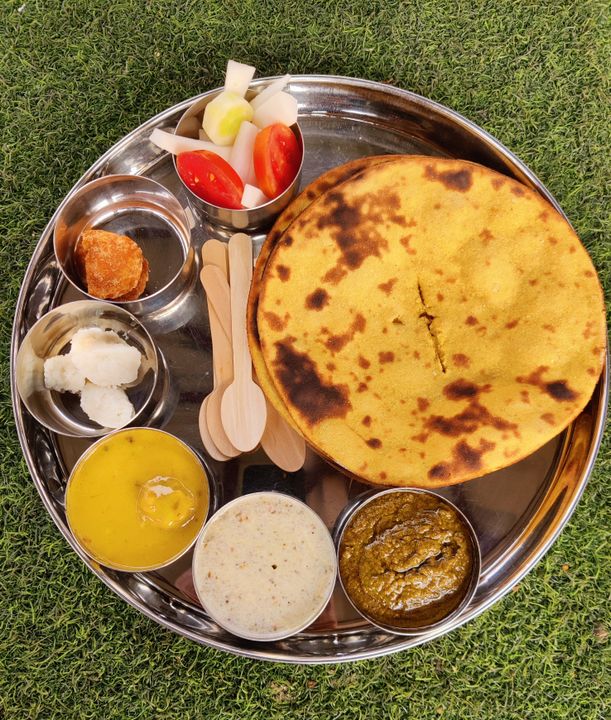
In 2025, India Brand Equity Foundation’s India Wedding Industry Report estimated that India’s wedding industry generates USD 130 billion per year — the fourth-largest industry in the country (IBEF, 2024). A significant share of that spend flows through Gujarat, where weddings are multi-day, multi-event affairs with elaborate vegetarian spreads.
This is Ahmedabad’s structural advantage for caterers: the market is almost entirely pure-veg. You don’t need meat-handling experience. You don’t need separate kitchen lines for non-veg. What you need is genuine depth in vegetarian cooking — and the confidence to execute Jain-compliant menus without improvising.
Jain catering is the highest-margin, most underserved niche in Ahmedabad. A Jain event requires food prepared without onion, garlic, potatoes, carrots, beetroot, and all root or underground vegetables. Most generalist caterers decline these contracts — or execute them badly by simply removing those ingredients from standard dishes. The caterers who win Jain contracts build Jain-native menus: dishes designed from scratch without those ingredients, not recipes with things taken out. A Jain dal that’s actually built around it tastes completely different from a standard dal with the tadka modified on the spot.
What an Ahmedabad Menu Should Include
Wedding and Social Events:
– Kathiyawadi dal bati churma (signals regional authenticity)
– 4–6 seasonal sabzis (avoid root vegetables to keep Jain crossover open)
– Shrikhand or basundi for dessert
– Puri or thepla for bread instead of naan (Jain-compatible)
– Live chaat counter: sev puri, bhel, dahi puri
Corporate Catering:
– Rotating weekly thali (prevents menu fatigue for daily orders)
– Jain-compliant variant available across all dishes
– Portion-controlled packaging for desk delivery
Navratri Catering (9-night events):
– Farali-only menus: kuttu, singhada, sama rice — no regular grains
– Sabudana vada, farali sabzi, rajgira roti
– Sweets: makhana kheer, fruit custard
Ready to build the culinary depth behind these menus? Explore Florence Academy’s Culinary Foundation Program → — covering batch cooking, food costing, and professional kitchen management.
Step 5: Find Your First 10 Clients in Ahmedabad
Your first 10 clients are closer than a marketing campaign. What they want, before they trust your food at their event, is a reference — someone who’s seen you execute.
In 2025, IMARC Group’s India MICE Market Report placed India’s events industry at USD 116 billion — but your first catering contract won’t come from a conference RFP. It’ll come from someone who tasted your food at a family function and asked for your number.
Here’s a practical acquisition sequence for Ahmedabad:
Clients 1–3: Family and community events. Offer to cater a relative’s birthday, a housing society function, or a local temple event at cost — or free if the audience is large and influential. Hire a photographer for two hours to document every dish. These photos are your entire portfolio for the next 6 months.
Clients 4–6: Wedding planner partnerships. Ahmedabad has a dense network of wedding planners in Jodhpur Tekra, Satellite, and Bopal. Visit 10 planners with a printed menu card, a box of sample sweets, and your FSSAI certificate. One active planner partnership generates 15–20 events per year.
Clients 7–10: Corporate HR contacts. Prahlad Nagar and Bodakdev house hundreds of mid-size companies that order office lunches daily. Walk in with a weekly tiffin proposal: ₹120–₹180 per person per meal, minimum 10 people, Monday–Friday. Corporate contracts are the most stable revenue stream in catering — once you have one, it runs itself.
WhatsApp Business and Instagram are the two most effective marketing channels for Ahmedabad caterers right now. Post behind-the-scenes prep reels, before-and-after event spreads, and client reactions. Use Ahmedabad-specific location tags — Satellite, Bopal, Prahlad Nagar — on every post. Potential clients search these tags when planning events locally.
Step 6: Build the Operational Systems That Let You Scale
Your catering business becomes a real business — rather than a series of exhausting events — when it can run without you managing every detail personally.
In 2025, MarkNtel Advisors projected India’s catering market to grow at 6.1% CAGR from 2025 to 2030 (MarkNtel Advisors, India Catering Market Analysis, 2025). The operators who capture that growth are those with repeatable systems: standardised recipes, reliable staff pools, and vendor relationships that hold quality steady across 50 events a year.
The Four Systems Every Ahmedabad Caterer Needs
1. Standardised Recipe Cards. Write down exact quantities for every dish you serve — not just ingredients but cooking sequence, batch sizes, and plating time per tray. When you hire kitchen assistants, they must replicate your food without you standing over them. Recipes in your head don’t scale.
2. A Freelance Staff Pool. Build relationships with 8–10 trained freelance catering staff you can call event by event. Culinary graduates are reliable, food-safety-aware, and already know how to work in a professional kitchen. In Ahmedabad, trained catering day-labour costs ₹600–₹1,200 per shift — far cheaper than permanent hires when you’re still building volume.
3. Vendor Contracts. Negotiate fixed-rate agreements with 2–3 wholesale vegetable suppliers and a dry goods merchant. If you’re building toward a full diploma in food business management, Florence Academy’s MFBBA (Management of Food and Beverage Business Administration) program covers vendor negotiation, food costing, and commercial kitchen systems in a structured one-year format. Price consistency from your vendors is the only way to hold your per-plate cost steady across a full year of ingredient price swings. One bad monsoon season can destroy your margins if you’re buying retail.
4. Written Event Agreements. Every catering contract — even for family — should specify the menu, confirmed pax count, event timing, advance payment (typically 30–50% of total), and cancellation terms. Verbal agreements collapse under the social pressure of a wedding dispute. A one-page agreement protects you and signals professionalism to clients who’ve been burned before.
Three Mistakes to Avoid
Underpricing the first events and locking clients in at that rate. This is the most common error among caterers who train with us. If you offer ₹250/head to a client for their first event, they’ll expect ₹250/head for every event that follows. Offer a time-limited “launch offer” only — and say so explicitly in writing.
Taking on 200-pax events before you’ve executed 50-pax events well. Two badly run large events will damage your reputation more than ten perfectly executed small ones will build it. Build your systems and staff at smaller events, then scale the guest count.
Ignoring Jain requirements at a Jain event. If you advertise Jain-compliant catering, your entire kitchen operation — storage, prep, cooking — must be Jain-compliant. One dish cross-contaminated with onion or garlic ends your relationship with that community permanently.
Frequently Asked Questions
How much does it cost to start a catering business in Ahmedabad?
A small-scale catering startup in Ahmedabad needs ₹30,000–₹55,000 to launch — covering chafing dishes, serving equipment, FSSAI State License (₹2,000–₹5,000/year), and first-order working capital. A mid-scale setup serving 25–100 guests costs ₹72,000–₹1,38,000. Kitchen space can be rented hourly or operated from home until monthly revenue exceeds ₹5 lakh.
Do I need an FSSAI licence to start a catering business in India?
Yes — it’s legally required. Any caterer charging for food must register under the Food Safety and Standards Act, 2006. Caterers below ₹12 lakh annual turnover need Basic Registration (₹100/year, processed in 7 working days). Those above ₹12 lakh need a State License (₹2,000–₹5,000/year, 30–60 days). Apply at foscos.fssai.gov.in before your first paid event.
What is the most profitable catering niche in Ahmedabad?
Jain-compliant and wedding catering are the highest-margin niches. Specialist caterers earn 15%+ pretax margins versus 7–8% for generalists (CaterSource, 2024). In Ahmedabad, Jain clients pay a 20–30% premium for food prepared without onion, garlic, and root vegetables — making this the most underserved and most loyal niche in the city’s event market.
How many staff do I need to cater for 100 guests?
For 100 guests at a sit-down Indian event: 1 head chef, 2–3 kitchen assistants, 4–5 serving staff, and 1 event coordinator — 8–10 people total. For buffet service, 2–3 serving staff is sufficient. Trained catering freelancers in Ahmedabad are available through culinary networks at ₹600–₹1,200 per shift.
How long does it take to get an FSSAI licence in India?
FSSAI Basic Registration is issued within 7 working days of application via FoSCoS. State License takes 30–60 days, including a premises inspection. Apply before you book your first paid event — penalties for operating without registration reach ₹5 lakh under the Food Safety and Standards Act, 2006. The application itself takes under an hour on the FoSCoS portal.
Start With the Skills, Not Just the Equipment
Ahmedabad’s catering market rewards depth. A ₹32,000 equipment kit gets you in the door. What keeps you there — and moves your margin from 7% to 25% — is the ability to cook consistently at 100+ pax, execute Jain menus without improvising, and manage food costs under the pressure of a wedding season.
If you want to build those skills alongside your business plan, Florence Academy’s culinary programs cover commercial cooking technique, food costing, and menu engineering for food entrepreneurs. Our teaching team has trained 2,000+ students who’ve launched home bakeries, cloud kitchens, and catering services across Gujarat.
Ready to begin? Explore our courses or message us on WhatsApp — we’ll help you match the right program to your catering goals.
About the Author
Chef Monila Surana is the Managing Partner of Florence Academy of World Cuisines in Ahmedabad, with 18 years of culinary education experience. She has trained 2,000+ students in professional cooking, food entrepreneurship, and kitchen management. Florence Academy’s teaching team brings 48+ years of combined culinary experience — including Chef Hina Gautam (30+ years, founder of JustCook culinary institute, cooking show personality and competition judge). The academy’s 50+ courses are 100% vegetarian and Jain-adapted.


