
The single biggest reason home bakers in India undercharge isn’t a lack of confidence. It’s a missing line in their spreadsheet. In 2026, 73% of Indian home bakers don’t include their own labour cost when pricing products, leaving them with an effective hourly wage of just ₹60–₹80 per hour (Truffle Nation India, Bakery Pricing Strategy 2026). That’s not a profit margin. That’s a hobby masquerading as a business. At Florence Academy, we see this directly in our intake data: the overwhelming majority of home baker enrollees cite underpricing — specifically, not accounting for their own time — as the primary business problem that prompted them to seek formal training. If you’re serious about how to start a home bakery in Gujarat and make it financially sustainable, the formula in this post is where you start. A proven pricing formula, real rupee numbers, and zero vague advice.
Key Takeaways
– 73% of Indian home bakers omit labour from their pricing, earning as little as ₹60-80/hour (Truffle Nation, 2026)
– The correct formula is: Selling Price = (Ingredients + Packaging + Overhead + Labour) divided by (1 minus Target Margin%)
– GST on cakes and pastries is 5% (HSN 1905), but applies only above ₹40 lakh annual turnover
– Direct WhatsApp orders return ₹340 more per ₹1,500 cake compared to Zomato after a 28% platform commission
– At ₹1,500/kg mid-range pricing, break-even is just 4 orders per month — at underpriced ₹900/kg it jumps to 13 orders
Step 1: Know Your Raw Material Cost (the Only Number Most Bakers Get Right)
In a healthy pricing model, raw ingredients represent 30-35% of your selling price, according to Truffle Nation India’s 2026 Bakery Pricing Strategy analysis. That’s the benchmark. If your ingredients cost more than 40% of what you charge, your formula has a problem somewhere else — either your selling price is too low, or your recipe yield is off.
Here’s how to calculate batch cost properly. Don’t guess.
Process:
1. List every ingredient in the recipe.
2. Record the weight used (in grams).
3. Find the cost per gram (buy price ÷ total weight of the pack).
4. Multiply weight used by cost per gram.
5. Sum all ingredient lines.
Example: 1 kg eggless vanilla cake (Ahmedabad, 2026 prices)
| Ingredient | Quantity | Cost/gram | Line Cost |
|---|---|---|---|
| Maida (all-purpose flour) | 250g | ₹0.05 | ₹12.50 |
| Fine sugar | 200g | ₹0.05 | ₹10.00 |
| Butter | 150g | ₹0.55 | ₹82.50 |
| Milk | 200ml | ₹0.06 | ₹12.00 |
| Curd (yoghurt, as egg replacer) | 100g | ₹0.08 | ₹8.00 |
| Vanilla essence | 5ml | ₹0.80 | ₹4.00 |
| Baking powder + soda | 8g | ₹0.30 | ₹2.40 |
| Frosting (whipped cream, basic) | 200g | ₹0.65 | ₹130.00 |
| Total ingredient cost | ₹261.40 |
Round up to ₹270 for minor spillage and wastage (a standard 3-5% waste factor). That is your raw material cost for this batch.
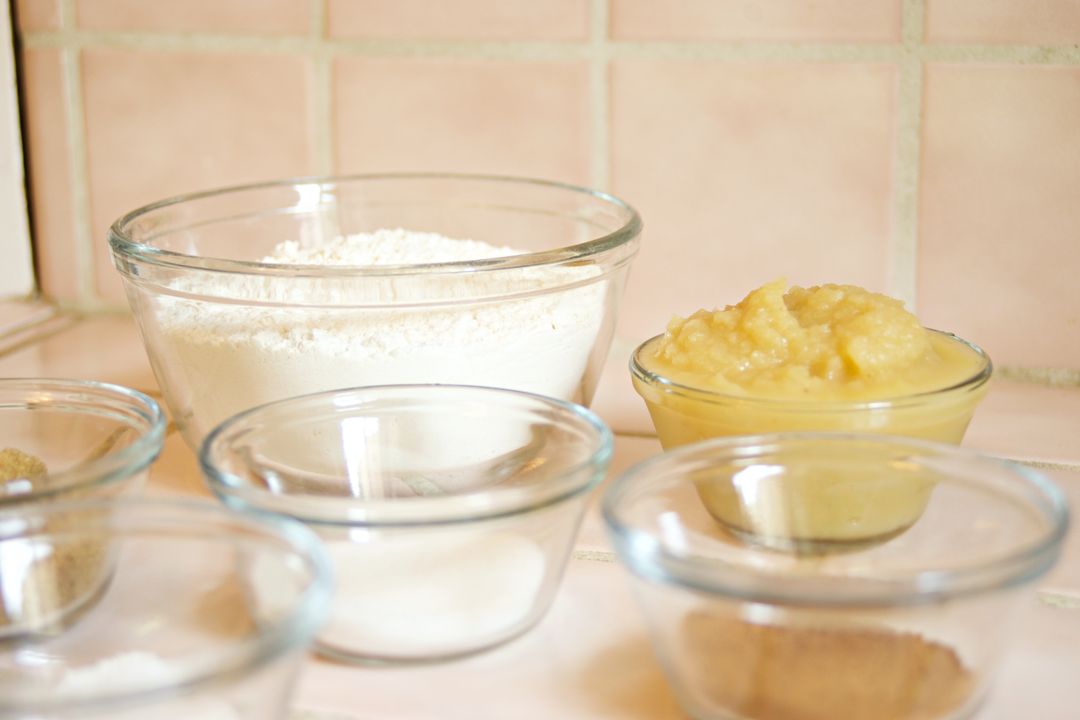
One more note for Gujarat bakers specifically: eggless baking commands a premium in this market. Ingredients like aquafaba, flax eggs, and commercial egg replacers add ₹20-40 per batch. Price that in. Don’t absorb it. Customers in Ahmedabad who specifically request eggless understand and accept a ₹100-₹200/kg premium over standard recipes. Capture it.
Citation Capsule: India’s bakery market reached USD 15.05 billion in 2025 and is projected to grow to USD 32.05 billion by 2034 at an 8.76% CAGR (IMARC Group, Indian Bakery Market Report, 2025). The cakes and pastries segment is flagged for highest growth nationally. For home bakers in Gujarat, this market expansion means customer willingness to pay at mid-range and premium tiers is increasing year-on-year, making accurate cost-based pricing more important than ever. Undercharging in a growing market leaves real money behind.
Step 2: Add Packaging, Overheads, and the Costs You’re Forgetting
Packaging (8-12%) and overheads (10-15%) together add 18-27% to your cost base, according to Truffle Nation’s 2026 benchmarks. Most bakers track neither. They buy a box, consider it “included”, and move on. That’s how your actual margin quietly disappears.
What counts as packaging cost:
– Cake box or base board
– Ribbon, window film, or sticker
– Tissue lining
– Carry bag or outer wrap
For a 1 kg cake in Ahmedabad, decent packaging runs ₹80-₹120 per order depending on the finish. Use ₹100 as your baseline.
What counts as overhead cost:
- Electricity: Running a standard 1,200W oven for 45 minutes costs roughly ₹10-15 at Gujarat’s domestic tariff rates. Add mixer, lighting, and refrigeration and you’re at ₹25-35 per baking session.
- Equipment depreciation: A good stand mixer costs ₹8,000-₹15,000. Spread it over 500 uses and that’s ₹16-30 per batch. Don’t ignore this.
- FSSAI basic registration: As of April 1, 2026, FSSAI licences for home food businesses now carry perpetual validity, with no annual renewal required (FSSAI FoSCoS, fssai.gov.in). The one-time fee for turnover below ₹12 lakh is ₹100. Amortised over 12 orders, that’s less than ₹1 per order. Negligible, but it’s still a real cost that belongs in the model.
- Platform or marketing cost: Instagram boosts, Canva Pro subscriptions, packaging tape, and printer ink are all overheads. Estimate ₹500-₹1,000/month and divide by your monthly order volume.
Overhead cost per 1 kg cake batch (realistic estimate):
– Electricity: ₹30
– Equipment depreciation: ₹25
– Allocated marketing: ₹25 (at 20 orders/month with ₹500 monthly spend)
– FSSAI amortised: ₹1
– Total overhead per order: ₹81 (round to ₹85 for safety)
- Healthy vs Underpriced
- see SVG chart specification below
Source: Florence Academy
Step 3: Price Your Own Labour (the Number 73% of Bakers Skip)
In 2026, 73% of Indian home bakers exclude their own labour from their pricing calculation, resulting in an effective hourly earning of just ₹60-₹80 (Truffle Nation India, Bakery Pricing Strategy 2026). That figure sits below MGNREGA minimum wage in most states. You’re running a business, not volunteering.
Here’s how to set your hourly rate.
Compare your skill to equivalent trained work in your city. A trained tailor in Ahmedabad charges ₹200-₹350/hour. A mehendi artist at a wedding earns ₹300-₹500/hour. A baker with professional training, consistent product quality, and food-safe production is worth at minimum ₹150-₹250/hour. That’s your floor.
Time your products. Seriously.
Stop estimating. Set a timer. Here’s a realistic time breakdown for a 1 kg custom fondant cake:
| Task | Time |
|---|---|
| Grocery sourcing and prep | 30 min |
| Baking (mixing, baking, cooling) | 90 min |
| Crumb coat + refrigeration wait | 45 min |
| Fondant work and decoration | 60 min |
| Packaging, labelling, delivery coordination | 15 min |
| Total | 4 hours |
At ₹200/hour, that’s ₹800 in labour cost for one custom fondant cake. At a “cheap” ₹150/hour, it’s still ₹600. If you’re charging ₹900 for a 1 kg fondant cake and your ingredients alone cost ₹350, you’re paying yourself ₹150 total for four hours of skilled work. That’s ₹37.50/hour.
At Florence Academy, we’ve observed this pattern consistently: bakers with no formal training tend to anchor their prices to what they see other home bakers charge on Instagram, not to what their actual cost structure requires. This is a market-following mistake. Your price should be built from the bottom up, starting with your CoP. What competitors charge is a reality check at the end, not a starting point.
Citation Capsule: In 2026, 73% of Indian home bakers do not include their own labour cost in their pricing calculations, leaving their effective hourly wage at ₹60-₹80 (Truffle Nation India, Bakery Pricing Strategy 2026, trufflenationonline.com). A 1 kg custom fondant cake typically requires 4 hours of skilled labour. At ₹200/hour, that represents ₹800 in labour cost alone. Home bakers who omit this figure are, by definition, subsidising their customers with their own unpaid time.
Also check out getting your first 10 home bakery customers in Ahmedabad — because once your pricing is right, the customer acquisition strategy changes too.
The Full Home Baker Pricing Formula: Putting Steps 1-3 Together
The pricing formula every home baker needs is straightforward. Cost of Production (CoP) divided by (1 minus your target margin percentage) gives you the minimum selling price. Every component has a place.
The formula:
Selling Price = (Ingredients + Packaging + Overhead + Labour) ÷ (1 – Target Margin%)
Worked example: 1 kg eggless vanilla cake with basic fondant decoration
| Cost Component | Amount |
|---|---|
| Raw ingredients | ₹270 |
| Eggless premium (aquafaba + extra curd) | ₹30 |
| Packaging (box, board, ribbon, bag) | ₹100 |
| Overhead (electricity, equipment, marketing) | ₹85 |
| Labour (3 hours at ₹200/hour) | ₹600 |
| Total CoP | ₹1,085 |
Apply a 30% target margin:
₹1,085 ÷ (1 – 0.30) = ₹1,085 ÷ 0.70 = ₹1,550 per kg
Now check that against market reality. Mid-range home baker pricing for a 1 kg custom eggless cake in Ahmedabad runs ₹900-₹1,500/kg, based on 2025-26 data from VenueLook, Homebakers.co.in, and YummyCake.in. Your formula gives ₹1,550. You’re at the top of the mid-range tier.
That means one of two things: either you position this product as premium (justify the price with better presentation, delivery packaging, or a custom flavour option), or you find ways to reduce CoP. Can you buy maida in bulk at ₹40/kg instead of ₹50? Can you reduce decoration time by 20 minutes? Small changes matter.
What you should not do is cut your labour rate to make the number look smaller. That’s the trap.
- see SVG chart specification below
Source: Florence Academy
One pricing reality for Ahmedabad: You are not competing with Mumbai premium bakers on price expectations. Tier-2 city buyers expect to pay less, but they’re not price-inelastic. A well-presented ₹1,400/kg custom cake with professional packaging, a personalised message card, and timely delivery absolutely sells in Ahmedabad. Don’t pre-discount yourself based on city assumptions.
Does GST Apply to Your Home Bakery in 2026?
As of September 22, 2025, GST on cakes, pastries, muffins, and brownies was unified at 5% under HSN 1905, per ClearTax citing CBIC notifications. But here’s the critical threshold: you are required to register for GST only when your annual turnover from goods exceeds ₹40 lakh. Most home bakers in India operate comfortably below this. You don’t collect GST, and you don’t pay GST on sales. Simple.
What does change below ₹40 lakh: you also can’t claim input tax credits on the flour, butter, and packaging you buy (since GST is embedded in those purchase prices). That GST cost is already absorbed in the ingredient prices you’re paying. So your pricing formula already reflects it.
When you cross ₹40 lakh turnover:
– Register under GST (Composition Scheme at 1% tax may be available)
– Add 5% GST to your selling price on invoices
– File quarterly returns
– You can then claim input tax credits on your ingredient purchases
For the complete compliance picture, read the FSSAI registration guide for home bakers in Gujarat, which covers both FSSAI and GST obligations together.
How Platform Commissions Cut Into Your Baked Goods Revenue
The India social commerce market hit USD 8.9 billion in 2025, growing at 22.31% CAGR, with West and Central India (Gujarat’s region) holding a 30% regional share (IMARC Group, 2025). Swiggy and Zomato want a piece of every home baker’s order. Here’s what that actually costs you.
| Channel | ₹1,500 cake | Commission | Delivery | You keep |
|---|---|---|---|---|
| Direct (WhatsApp/Instagram) | ₹1,500 | ₹0 | ₹80 (own arrangement) | ₹1,420 |
| Zomato (28% commission) | ₹1,500 | ₹420 | Zomato handles | ₹1,080 |
| Swiggy (25% commission) | ₹1,500 | ₹375 | Swiggy handles | ₹1,125 |
The difference between direct and Zomato is ₹340 per order. At 20 orders per month, that’s ₹6,800 per month you’re handing to a platform.
At Florence Academy, we’ve tracked the platform decisions of our home baker graduates over 24 months. The pattern is consistent: bakers who launch exclusively on Zomato or Swiggy initially tend to undercut their own prices to stay competitive on the platform’s price-sorted listings, then struggle to raise prices when they try to migrate to direct ordering. Bakers who build their WhatsApp customer base first have more pricing control and better margins from month 3 onward.
In 2025, 70% of Indian social media users prefer Instagram for social commerce purchases (Statista/Rakuten Insight, 2025). That’s your acquisition channel. Instagram for discovery, WhatsApp for orders and payment. This combination keeps 100% of your selling price in your account.
Citation Capsule: India’s social commerce market reached USD 8.9 billion in 2025, growing at 22.31% CAGR, with West and Central India leading at a 30% regional share (IMARC Group, 2025). On a ₹1,500 home baker cake, a 28% Zomato platform commission removes ₹420 per order. Over 20 monthly orders, that is ₹6,800 per month in margin foregone — the net difference between what you keep on direct WhatsApp orders versus Zomato at 28% commission. Before accounting for the price compression platforms create, a baker doing 20 monthly orders through Zomato leaves ₹6,800 on the table every single month. Direct-to-customer channels via Instagram and WhatsApp retain this margin entirely.
How Many Orders Do You Actually Need to Break Even?
Break-even is where your monthly revenue covers all your fixed costs, before a single rupee of profit. The formula is: Fixed Monthly Costs divided by Contribution Margin per order. Your contribution margin is your selling price minus your variable costs per order.
At Florence Academy, home baker graduates who apply systematic cost-based pricing from launch typically reach positive contribution within 6–8 weeks of their first sale. Bakers who price reactively — matching competitor prices without a formula — routinely delay profitability by 3–6 months while they work backward to find why margins don’t add up. Know your number before you take your first order.
Worked example for an Ahmedabad home baker:
Fixed monthly costs:
| Cost | Monthly Amount |
|—|—|
| FSSAI registration amortised (₹100 ÷ 12 months) | ₹9 |
| Packaging supplies (minimum stock reorder) | ₹2,000 |
| Utility overhead allocation | ₹1,500 |
| Instagram boost / marketing | ₹500 |
| Total fixed costs | ₹4,009/month |
Variable costs per 1 kg cake:
– Ingredients: ₹300
– Per-order packaging: ₹100
– Per-order overhead: ₹85
Total variable cost per order: ₹485
Selling price: ₹1,500
Contribution margin = ₹1,500 – ₹485 = ₹1,015 per order
Break-even orders = ₹4,009 ÷ ₹1,015 = 3.95, round up to 4 orders/month
Wait, that seems low. It is. At ₹1,500/kg pricing, your break-even is just 4 orders per month. Every order from number 5 onward is pure contribution to profit and your labour recovery. This is why pricing matters so much: at ₹900/kg (a common underpricing scenario), your contribution margin shrinks to ₹315/order and break-even jumps to 13 orders per month just to cover fixed costs, before you pay yourself anything.
Does that make the math visual? Good. Here’s what Gujarat seasonality does to this picture.
Festival pricing windows (20-30% premium opportunity):
- Navratri: Custom garba and dandiya-themed cakes, mithai-inspired flavours. 9 days of peak demand.
- Diwali: Gifting boxes, barfi-flavoured brownies, mithai hybrids. Orders typically start 3 weeks in advance.
- Uttarayan (Makar Sankranti): Till (sesame) and jaggery-based baked goods; kite-themed cakes for kids.
- New Year / Valentine’s Day: Standard peak period for custom cakes across India.
During these windows, raise your prices by 20-30% above your formula price. The market bears it. You’re providing a seasonal, custom product with high demand and limited supply. That’s basic economics, not greed.
For a broader look at what a full food business setup involves, the cloud kitchen business guide for Ahmedabad covers fixed and variable cost management at a larger scale, which becomes relevant as your home bakery grows.
Students at Florence Academy who apply the break-even formula in their first month of selling typically reach positive contribution within their second month of active orders. The bakers who struggle longest are those who keep adjusting their price downward in response to customer pushback, rather than holding their formula price and improving their product presentation to justify it.
Ready to Bake This Into a Real Business?
Knowing the formula is step 1. Executing it consistently across every product, every order, and every season is a skill that takes training. Home bakers who produce at commercial consistency, with professional-grade technique and presentation, can charge at the premium tier. Those who produce at home-hobby consistency are stuck competing on price.

Florence Academy’s structured programmes teach both: the technical skill to bake at professional consistency and the business fundamentals (pricing, FSSAI, customer acquisition) to run a food business that’s actually profitable.
Two routes:
- Start structured: The 6-Month Bakery Foundation Programme covers core baking technique, eggless methods, presentation, and business basics. Right for bakers who want a solid foundation before scaling.
- Go deeper: The 1-Year Artisanal Bakery and Patisserie Diploma covers advanced pastry, bread, chocolate work, and menu development. Right for bakers who want to operate at premium or luxury tier pricing.
Ready to turn your home bakery into a properly priced food business? Explore all Florence Academy courses and find the right starting point.
Have questions about which programme fits your stage? Chat with us on WhatsApp – we respond fast.
Frequently Asked Questions
How do I calculate the price of a cake in India?
Use the pricing formula: total your raw material cost, then add packaging, overhead, and your own labour. Divide that total Cost of Production by (1 minus your target margin percentage). For a 35% margin, divide by 0.65. In 2026, mid-range custom cakes sell for ₹900-₹1,500/kg in Tier-2 cities like Ahmedabad. Use that as your market reality check after the formula gives you a number.
What profit margin should a home baker target in India?
A healthy home baker net margin in India runs 25–40% of selling price — consistent with food business profitability benchmarks tracked across PMFME micro food enterprise data (Ministry of Food Processing Industries, PMFME Scheme Progress Report, 2024-25). New bakers usually run at 10% or less because they skip labour in their formula. Once you price labour correctly at ₹150-₹250/hour, margins of 30-35% are achievable within 6 months. Check chef and baker salary benchmarks in India to anchor your labour rate to market data.
Does GST apply to home bakers in India in 2026?
As of September 22, 2025, GST on cakes, pastries, muffins, and brownies is 5% under HSN 1905 (ClearTax, citing CBIC, 2025). You only register for GST when annual turnover from goods exceeds ₹40 lakh. Below that threshold, you don’t collect or remit GST, but you also can’t claim input tax credits on your ingredient purchases. Most home bakers in India operate below ₹40 lakh and are GST-exempt.
Should I sell through Swiggy or Zomato, or take direct orders?
Direct orders via WhatsApp and Instagram return 100% of the selling price. Swiggy and Zomato charge 25-30% commission, which removes ₹375-₹420 from a ₹1,500 cake. Over 20 orders per month, that’s ₹6,800-₹8,400 per month in platform fees. Build your direct customer base first using Instagram for discovery and WhatsApp for orders. Add delivery platforms only after you’ve stabilised your pricing and customer volume.
How many orders do I need to break even as a home baker in India?
Break-even = Fixed Monthly Costs divided by Contribution Margin per order. If your fixed costs total ₹4,009/month and your contribution margin per ₹1,500 cake is ₹1,015, you need just 4 orders to break even. At underpriced ₹900/kg, the same fixed costs require 13 orders to break even. Pricing correctly at market rates cuts your break-even volume by more than half.
About the Author
Chef Monila Surana is the Managing Partner and Lead Culinary Educator at Florence Academy of World Cuisines, Ahmedabad. With 18 years in culinary education and certifications from NSDC (Skill India) and AHLEI, Chef Monila leads curriculum design across Florence Academy’s 50+ courses. Her focus areas include artisanal baking, eggless and Jain-adapted pastry technique, and food business development for home bakers and food entrepreneurs in Gujarat.


