
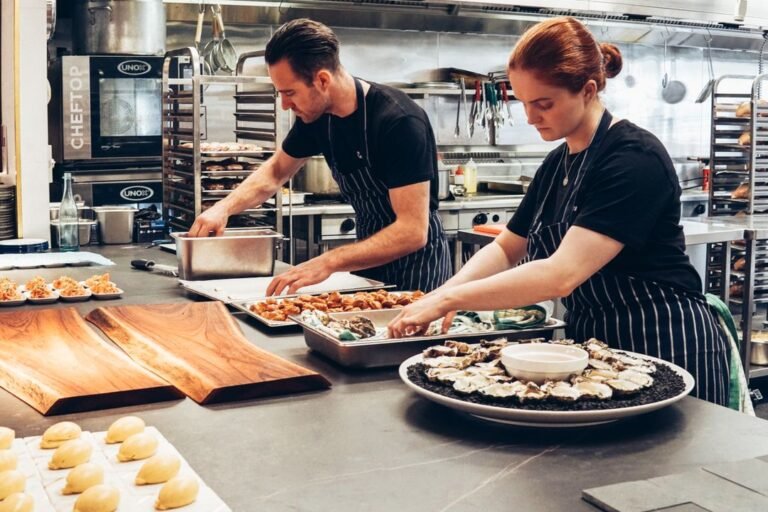
Most people who want to become a chef in India don’t fail because they lack passion. They stall because nobody gave them a clear map: which qualification actually matters to hotels, which institutes are worth the fees, and what the career progression looks like in real years and real rupees.
India’s hospitality market was valued at USD 24.36 billion in 2025 and is projected to reach USD 55.67 billion by 2031 at a 14.76% CAGR, according to Mordor Intelligence. The sector will need roughly 3 million additional skilled workers by 2028. The demand is real. But here’s the catch: the Tourism and Hospitality Skill Council (THSC) estimates that only 1% of the approximately 5.8 million young people interested in hospitality careers have received any formal training. That gap is your competitive edge, if you use it correctly.
This guide walks you through every stage: the brigade system, the right qualification for your goal, how to pick an accredited institute, what five-star hotels actually test in an interview, the career timeline with honest salary figures, and why vegetarian and Jain culinary specialisation is quietly becoming one of the smartest career moves in India’s food industry.
You can also browse Florence Academy’s full course catalogue if you want to compare programme options as you read.
By Chef Monila Surana, Florence Academy of World Cuisines
Key Takeaways
– India’s hospitality sector needs 3 million additional skilled workers by 2028, but only 1% of interested youth are formally trained: a clear advantage for qualified entrants (THSC, 2024)
– For hotel kitchen careers, a recognised diploma (1-2 years, NSDC/THSC accredited) is the minimum viable qualification; a certificate alone won’t open five-star doors
– Most chefs reach Executive Chef level after 10-15+ years; the Commis-to-Sous Chef arc alone takes 8-13 years
– Florence Academy’s 2-year Diploma in Food and Beverages carries NSDC, AHLEI, and THSC accreditation, the only triple-accredited programme in Ahmedabad
What Does the Chef Career Path in India Actually Look Like?
The THSC Skill Gap Study 2024 found India’s hospitality sector will need 3 million additional skilled workers by 2028, yet only 1 in 100 interested candidates has had formal training (THSC / MSDE, Sub-Sector-Wise Demand and Skill Gap Study, 2024). That isn’t a crisis for the sector alone. It’s the clearest possible signal that a formally trained candidate stands out from the moment they apply.
The 1% trained figure is striking enough to sit with for a moment. It means that in any group of 100 people who want to work in India’s hospitality kitchens, roughly 99 have no formal credential. Walk into a hotel HR department with a recognised diploma and accreditation from NSDC or THSC, and you’re not competing with the crowd. You’re in a different category entirely.
Professional kitchens in India run on the brigade system, a hierarchical structure that determines your title, your responsibilities, your station, and your pay. Understanding this hierarchy before you start training is not optional. It shapes every decision that follows.
The brigade structure: from entry to executive
The brigade runs from the bottom up. Most professional kitchens in India, certainly any five-star or fine dining kitchen, use this structure in some form.
Commis Chef is the entry level. Most diploma holders enter as Commis Grade 1, which is the highest Commis grade. Non-diploma entrants typically start at Grade 3, the lowest, and work upward from there. The salary difference is immediate: Grade 1 earns ₹15,000-25,000/month; Grade 3 earns roughly ₹10,000-15,000/month (Shiksha, Chef Salary in India, 2025).
Chef de Partie (CDP) is section head. You’re responsible for one section of the kitchen, running it independently during service. This is where real culinary technique gets tested daily.
Sous Chef is the second-in-command. You’re managing kitchen staff, overseeing multiple sections, and working directly with the Head Chef on menu planning. This is where the management dimension of the role becomes as important as cooking ability.
Head Chef and Executive Chef are the leadership tier. The Executive Chef oversees entire food and beverage operations, manages budgets, develops menus across properties, and, in large hotels, rarely cooks at the pass on a regular shift. It’s a general management role that happens to be kitchen-based.
Citation Capsule: The Tourism and Hospitality Skill Council’s 2024 Skill Gap Study found that India’s hospitality sector will require 3 million additional skilled workers by 2028. Despite this, only 1% of an estimated 5.8 million young people interested in hospitality careers have received any formal culinary training. For candidates who hold a recognised qualification, this gap creates a structural advantage that shows up from the first interview (THSC / MSDE, 2024).
What Qualification Do You Need to Become a Chef in India?
Here’s the direct answer: for a career in hotel kitchens, a recognised diploma is the minimum viable qualification. Not a short certificate. Not a YouTube-and-practice self-taught background. A diploma from an NSDC or THSC-affiliated institute is what gets you through the HR screening at ITC, Marriott, Hyatt, or any brand-name hotel group. India has 490+ culinary arts colleges, with 267 privately owned and 76 government-owned, plus 21 central IHMs funded directly by the Ministry of Tourism (Shiksha.com, Best Culinary Arts Colleges in India, 2024-2025). The range of options is wide. The quality is not.
The right qualification depends on what you want to do with it. Each path has a different time commitment, cost, and career outcome.
Certificate programmes (3-6 months)
These are skill-building tools, not career launchers for hotel kitchens. A certificate in basic cooking, bakery foundations, or a specific cuisine teaches practical technique. It’s genuinely useful for someone who wants to start a home bakery, add a skill to an existing hospitality job, or test their aptitude before committing to a longer programme.
Florence Academy’s Bakery Foundation Programme (6 months) sits in this category, and it’s designed explicitly for people who want structured, professional-grade training without a year-plus commitment.
What a certificate won’t do: satisfy the formal qualification filter that most five-star hotels apply. HR departments at major hotel groups in India are looking for NSDC or THSC affiliation on your credentials. A certificate alone doesn’t check that box.
Diploma programmes (1-2 years, NSDC/THSC recognised)
This is the standard track for anyone targeting hotel and restaurant kitchen careers. A recognised diploma, particularly one carrying NSDC certification, tells employers that you’ve been trained to a nationally verified standard. It’s why diploma holders enter at Commis Grade 1 rather than Grade 3.
The one-year Diploma in Artisanal Bakery and Patisserie at Florence Academy carries NSDC accreditation and is designed for candidates focused on the pastry and bakery track. The two-year Diploma in Food and Beverages is the comprehensive culinary programme, carrying triple accreditation from NSDC, AHLEI, and THSC.
Degree programmes (3-4 years, BHM)
A Bachelor of Hotel Management degree is the right choice if your goal is the management track: Food and Beverage Manager, General Manager, corporate chef roles, or the executive leadership tier of large hotel groups. The BHM curriculum covers kitchen training alongside hospitality management, finance, and operations. It takes longer and costs more. For candidates who want to run kitchens rather than just cook in them, at scale, it’s worth the investment. For candidates who want to cook professionally and build toward Executive Chef, a diploma is faster and equally respected by employers.
| Format | Duration | Best For | Outcome |
|---|---|---|---|
| Certificate | 3-6 months | Skill-building, home bakers, career testing | Entry-level skills, not a hotel HR filter pass |
| Diploma (NSDC/THSC) | 1-2 years | Hotel kitchen career, pastry specialisation | Commis Grade 1 entry, meets hotel HR requirements |
| Degree (BHM) | 3-4 years | Hotel management track, corporate chef roles | Management tier entry, higher starting pay |
How Do You Choose the Right Culinary Institute in India?
Choosing an institute is where most aspiring chefs make an expensive mistake. India has over 490 culinary colleges, but accreditation, faculty quality, and placement records vary enormously across that pool. The right criteria to apply aren’t about prestige or marketing, they’re about whether the institute’s output matches what employers actually hire.
Accreditation: what the labels actually mean
Not all accreditations carry equal weight with hotel HR departments. NSDC (National Skill Development Corporation) and THSC (Tourism and Hospitality Skill Council) are the two most employer-recognised credentials in India’s hospitality industry. THSC alone operates 243 affiliated training centres nationwide (THSC, 2024-2025). AHLEI (American Hotel and Lodging Educational Institute) is internationally recognised and particularly valued by international hotel brands operating in India.
An institute that carries all three: NSDC, AHLEI, and THSC, is covering every major accreditation touchpoint that hotel employers check. That combination is genuinely rare.
Faculty professional experience
Culinary education is only as good as the practitioners teaching it. Look for faculty who have worked in professional kitchens at the level you’re aiming for. A 2:1 student-faculty ratio is the standard worth benchmarking against. It determines how much direct, hands-on instruction each student receives per session.
What’s harder to find on a website but worth asking directly: has the faculty worked with the specific hotel groups that you want to join? A faculty member with years of ITC or Marriott kitchen experience understands the standards, language, and culture you’ll be walking into. That institutional knowledge comes through in teaching in ways that a purely academic curriculum cannot replicate.
Hands-on ratio and kitchen access
A culinary diploma where most class hours are spent in lecture rooms rather than commercial kitchens is a red flag. The benchmark is: does the institute run a working commercial kitchen that students train in daily? Are service conditions simulated? Can students train on the same equipment they’ll find in professional kitchens?
Placement record and employer relationships
Ask specifically, not generally. “Do you have placements?” is a useless question. “Which hotels specifically have hired your graduates in the last two intakes, and at what role?” is the question that tells you something real. Institutes with genuine placement relationships have hotel HR contacts who trust them to send prepared candidates.
Interested in Florence Academy’s accredited programmes? Explore Courses →
Citation Capsule: India’s culinary education landscape spans 490+ colleges, with 267 privately owned and 76 government-operated, plus 21 central IHMs under the Ministry of Tourism. THSC operates 243 affiliated training centres across the country. Against this backdrop, an institute that carries NSDC, AHLEI, and THSC accreditation simultaneously sits at the top of what Indian hotel employers recognise as credible culinary training (Shiksha.com, 2024-2025; THSC, 2024-2025).
What Skills Do Top Hotels and Restaurants in India Actually Hire For?
Most culinary programmes teach technique. Fewer teach the brigade culture, pressure management, and professional kitchen communication that hotels specifically test in interviews. The gap between a candidate who has trained in a serious culinary institute and one who hasn’t shows up immediately in a practical assessment, and it shows up in ways that have nothing to do with how well they can cook a particular dish.

Chef Monila Surana, who manages Florence Academy’s placement relationships with ITC Hotels and Marriott, observes a consistent pattern in what hotel kitchens test in a Commis Chef interview. The practical assessment isn’t just about knife skill or recipe execution. Hotel interviewers watch how candidates behave when a task changes mid-preparation, whether they ask the right questions before starting or assume, and whether they clean as they work without being reminded. These are brigade culture behaviours. A candidate who has trained in a structured kitchen environment where these habits are built over months has a genuine advantage over someone who has only cooked at home or in a casual kitchen setting, regardless of raw cooking ability.
Technical skills that hotels assess
Knife work is assessed at speed and consistency, not just accuracy. Mise en place discipline, the ability to have every component prepared, portioned, and in place before service begins, is close to non-negotiable at hotel level. Heat management across different cooking methods (braising, sauteing, roasting, stock production) shows range. Sauce and stock work is often used as a direct test of classical training. Baking fundamentals matter even in a culinary (non-pastry) role, because kitchen cross-training has become standard in many mid-size hotel properties.
Soft skills that actually determine hiring decisions
Time management under service pressure is different from time management in a relaxed setting. Hotels run on covers: 200 guests seated, first courses expected in under 12 minutes. A candidate who has trained in a programme that simulates service pressure understands what that means. One who hasn’t, often freezes or slows down under it.
Communication within the brigade is its own skill. In a professional kitchen, communication is clipped, specific, and timed. “Yes, Chef” is a confirmation, not a pleasantry. Knowing when to speak, what to say, and how to flag a problem without disrupting service flow is taught through kitchen culture, not written instruction.
Hygiene discipline, as a daily automatic habit rather than something applied when being watched, is also tested. Hotels at five-star level run regular food safety audits. A kitchen where staff treat hygiene as optional is a liability. Candidates who demonstrate automatic compliance, covering, labelling, temperature checking without prompting, are immediately valued.
How Long Does It Take to Become a Professional Chef in India?
According to Frontlines Media’s chef career pathway analysis, the typical progression from Commis to Chef de Partie takes 3-5 years, Chef de Partie to Sous Chef takes another 4-7 years, and most chefs reach Executive Chef level after 10-15+ years of consistent professional kitchen experience (Frontlines Media, Chef Culinary Career Pathways, 2024-2025). This isn’t a timeline you can compress dramatically by working harder. It reflects the reality that kitchen leadership is learned incrementally through exposure to different service environments, different menus, different teams, and different pressures.
Chef Career Timeline: Brigade Stages
India, 2026 · Source: Frontlines Media / Shiksha, 2025
| Role | Experience | Monthly Salary |
|---|---|---|
| Training / Diploma | Year 0–2 | — |
| Commis Chef | Year 1–4 | ₹15K–₹25K/mo |
| Chef de Partie | Year 4–8 | ₹25K–₹42K/mo |
| Sous Chef | Year 8–13 | ₹45K–₹90K/mo |
| Head Chef | Year 12–18 | ₹80K–₹1.8L/mo |
| Executive Chef | Year 15+ | ₹1.5L–₹4L+/mo |
What the chart above doesn’t capture is how much faster a diploma holder moves through the early stages. Without a formal qualification, a kitchen entrant typically spends 6-12 months at each of Grades 3 and 2 before being considered for Grade 1 work. A diploma holder starts at Grade 1. In compounding terms, that 12-18 month head start at entry level translates to roughly 18-24 months earlier arrival at Sous Chef salary range, where the real earning begins.
The career arc also depends on which kitchen you choose in the early years. A Commis Chef at a five-star hotel trains alongside senior professionals in a structured brigade with formal systems. A Commis at a standalone restaurant may develop hands-on range faster but without the formal mentorship structure. Neither path is wrong. But the five-star route in the first 4-6 years typically produces the CV that opens doors at Sous Chef and Head Chef level.
What Does Chef Salary Progression Look Like in India?
Freshers with a recognised culinary diploma start at around ₹2-3 LPA in India; Sous Chefs earn ₹45,000-90,000 per month; and Executive Chefs at five-star hotels take home ₹1.5-4 lakh or more each month, according to Shiksha’s 2025 chef salary analysis (Shiksha, Chef Salary in India, 2025). The range across the career arc is close to 30x. What drives movement through it is combination of time in role, employer quality, and whether you hold a credential that the hotel’s HR system actually recognises.
Chef Monthly Salary by Brigade Rank
India, 2026 · Source: Shiksha / Frontlines Media, 2025
| Kitchen Trainee No qualification |
|
₹10K–₹15K/mo | ||
| Commis Chef Diploma entry |
|
₹15K–₹25K/mo | ||
| Chef de Partie 2–4 years |
|
₹25K–₹42K/mo | ||
| Sous Chef 4–7 years |
|
₹45K–₹90K/mo | ||
| Head Chef 7–12 years |
|
₹80K–₹1.8L/mo | ||
| Executive Chef 12+ years |
|
₹1.5L–₹4L+/mo |
The salary numbers look linear on a chart but the progression is anything but. There’s a meaningful jump at every level, but the largest single leap, in both absolute rupees and in the nature of the role, happens at the Sous Chef transition. Below that line you’re a specialist. Above it you’re managing people and output. Hotels and restaurant groups compensate accordingly.
Service Charge: The Hidden Income Multiplier
One variable that online salary guides consistently undercount: service charge distributions at five-star properties. A Sous Chef at a five-star hotel may show a base of ₹50,000/month. But service charge distributions of ₹10,000-25,000/month on top of that are standard at properties running full occupancy. The true monthly take-home is materially higher than the listed figure.
Citation Capsule: In 2026, chef salary data from Shiksha showed that India’s brigade salary range spans from approximately ₹10,000/month for a kitchen trainee entry to ₹4,00,000+/month for an Executive Chef at a five-star property. Diploma holders at Commis level enter at ₹15,000-25,000/month, bypassing the lowest entry grades. The Sous Chef rank at ₹45,000-90,000/month represents the most significant income threshold in the professional kitchen career arc (Shiksha, 2025).
Is Vegetarian and Jain Culinary Specialisation a Smart Career Move?
India accounts for the world’s largest vegetarian eating population, with over 40% of the country’s 1.4 billion people following meat-free diets. India’s full-service restaurant market was valued at USD 37.93 billion in 2025 and is growing at 10.97% CAGR toward USD 70.82 billion by 2031 (Mordor Intelligence, India Full Service Restaurants Market, 2025). That growth is happening across all segments, but the vegetarian and Jain-compliant dining segment is particularly underserved at the professional level.
Most hotel and restaurant kitchens can produce standard vegetarian dishes. Very few can produce Jain-compliant fine dining at consistent quality. That gap represents a genuine hiring advantage for chefs who are trained for it.
Gujarat makes this specialisation especially valuable. Close to 25% of Gujarat’s population follows Jain dietary practices, which eliminate not just meat but onion, garlic, root vegetables, and certain other ingredients. Catering to that market at hotel and events level requires specific training, not adaptation of standard recipes. A chef who has trained in Jain culinary technique from the ground up is a fundamentally different hire than one who has been told to “make it Jain” on a standard menu.
The cloud kitchen opportunity compounds this further. India’s foodservice market stood at USD 114.40 billion in 2025 (Fortune Business Insights, India Foodservice Market, 2025).
Cloud kitchens focused on premium vegetarian and Jain-compliant delivery have relatively low competition at quality level and can price above the market average because the alternatives are scarce. A trained culinary professional who understands this cuisine from a technical standpoint, not just a cultural one, can build something viable without the overheads of a full restaurant.
Florence Academy is the only culinary institute in Ahmedabad that teaches 100% vegetarian and Jain-adapted technique across all its programmes, not as an elective module but as the core curriculum. For students planning to work in Gujarat’s hospitality sector or build a food business in this market, that’s a direct competitive advantage. You can learn about the faculty and curriculum approach or check the workshop schedule for shorter format programmes before committing to a full diploma.
Ready to Start Your Chef Career in India?
Becoming a professional chef in India in 2026 follows a clearer path than most candidates realise, once they understand the structure. The brigade system defines your entry point, your progression, and your salary at every stage. A recognised diploma, specifically one carrying NSDC or THSC accreditation, is the qualification that opens hotel kitchen doors. Short certificates build skill but won’t satisfy hotel HR requirements. A BHM degree is the right choice if your target is the management track, not the kitchen ladder.
The career arc is long: 10-15+ years to reach Executive Chef level is realistic and normal. But the income trajectory is genuinely strong, and the entry conditions right now are unusually favourable. India’s hospitality market is growing at close to 15% CAGR. The sector needs 3 million additional skilled workers by 2028. And only 1% of interested candidates are formally trained. Walk in with an accredited diploma and you’re not in the crowd. You’re in a category the market is actively looking for.
For candidates in Gujarat specifically, the additional layer of vegetarian and Jain culinary specialisation creates a professional identity that’s rare, commercially relevant, and difficult for generalist-trained chefs to replicate.
The next step is choosing the right programme for your timeline and goal. If you’re unsure where to start, the full course catalogue covers options from a 6-month foundation to a 2-year triple-accredited diploma.
Join 2,000+ students who’ve trained with expert chefs at Florence Academy, Ahmedabad.
Explore Courses at Florence Academy →
Chat with us on WhatsApp — we respond fast.
Phone: +91 6351665305 | +91 8320715588
Frequently Asked Questions
What qualifications do I need to become a chef in India?
For a hotel kitchen career, the minimum is a diploma from an NSDC or THSC-affiliated institute. India has 490+ culinary colleges, but only a fraction carry recognised national accreditation. Short certificates (3-6 months) build practical skill but won’t satisfy the formal qualification filter at five-star hotels. A BHM degree is the right route if your goal is the management track rather than the kitchen ladder. (Shiksha.com, 2024-2025)
Explore diploma programmes at Florence Academy
How long does it take to become a head chef in India?
Reaching Head Chef level in India typically takes 12-18 years of consistent professional kitchen experience. The standard progression runs: 1-4 years as Commis Chef, 4-8 years as Chef de Partie, 8-13 years as Sous Chef, then Head Chef. Diploma holders start higher in the Commis grade and can move through the early stages 18-24 months faster than non-diploma entrants. (Frontlines Media, 2024-2025)
What is the salary of a chef in India?
Chef salaries in India range from roughly ₹10,000/month for a kitchen trainee with no formal qualification to ₹4,00,000+/month for an Executive Chef at a five-star property. Diploma holders enter at ₹15,000-25,000/month at Commis level. Sous Chefs earn ₹45,000-90,000/month, and service charge distributions at five-star properties add ₹10,000-25,000/month on top of base salary at that level and above. (Shiksha, 2025)
Florence Academy’s diploma programmes cover this full salary arc from Commis entry to Executive Chef level
Is a culinary degree necessary to become a professional chef in India?
No. A recognised diploma (1-2 years, NSDC/THSC accredited) is the standard qualification for hotel kitchen careers in India, and most working professional chefs hold a diploma rather than a degree. A BHM degree is valuable for the management track, covering hospitality operations alongside kitchen training. For candidates whose goal is to cook professionally and build toward Executive Chef, a diploma is faster and equally respected by hotel employers across India.
Which is the best culinary institute in India for aspiring chefs?
The best institute for you depends on your goal, your location, and the specific accreditation your target employers recognise. Criteria that matter most: NSDC or THSC accreditation, faculty with direct professional kitchen experience at hotel level, a high hands-on training ratio, and a documented placement record with named employers. India’s Travel and Tourism sector supported 46.5 million jobs in 2024, accounting for 9.1% of national employment, and demand for trained chefs is rising consistently with it. (WTTC, 2025)
Learn about Florence Academy’s faculty, accreditation, and placement partners
About the Author
This guide was written by Chef Monila Surana (Managing Partner, 18 years of culinary education experience) at Florence Academy of World Cuisines. Learn more about the Florence Academy faculty →


