

You’ve probably stood in a kitchen wondering why your onion tempering smokes too fast, or why your eggless sponge collapses every time. Maybe you’ve watched enough cooking videos to feel confident, but when you actually try it, something’s off. That gap between watching and doing is exactly what a structured cooking class closes.
Ahmedabad has real options for beginners in 2026: one-day taster workshops, four-week short courses, six-month foundation programmes, and two-year diplomas. The challenge isn’t finding a class. It’s knowing which format actually fits where you are right now, and what you’ll get out of it.
This guide walks through every format, what you’ll learn on day one, how to choose between them, and why Ahmedabad is a particularly good city to start your culinary training.
By Chef Monila Surana, Florence Academy of World Cuisines
Key Takeaways
– Asia Pacific’s cooking class market hit USD 1.2 billion in 2024 and is growing at 11.2% CAGR through 2033, making this a strong time to invest in culinary training (IMARC Group, 2025)
– Four beginner-friendly formats exist in Ahmedabad: one-day workshops, short courses (1-4 weeks), 6-month foundation programmes, and 1-2 year diplomas
– Florence Academy’s curriculum is 100% vegetarian and Jain-adapted from day one, not as an optional add-on, which matters in the Gujarat market
– Complete beginners need zero prior experience to join most workshops and short courses
What Types of Cooking Classes Are Available for Beginners in Ahmedabad?
In 2024, Asia Pacific’s cooking class market reached USD 1.2 billion and is projected to grow at 11.2% CAGR through 2033, according to IMARC Group’s Cooking Class Market Report (IMARC Group, 2025). That growth is creating more structured training options at every commitment level, which means beginners in Ahmedabad now have genuine choices that didn’t exist five years ago.
The four main formats available to beginners today:
| Format | Duration | Best For | Approx. Cost | Florence Academy Option |
|---|---|---|---|---|
| One-day workshop | 1 day (4-6 hrs) | Hobbyists, total beginners, gift experiences | ₹1,500–₹4,000 | Florence Workshops: French desserts, croissants, eggless macarons, chocolates |
| Short course | 1-4 weeks | Serious hobbyists, home bakers starting to sell | ₹15,000–₹40,000 | Whipped Wonder: 4 weeks, 20-40 professional techniques |
| Foundation programme | 5-6 months | Career-changers, aspiring entrepreneurs | ₹60,000–₹1.2 lakh | Bakery Foundation Programme: 80-120+ recipes, eggless specialisation |
| Diploma | 1-2 years | Professional chefs, hotel/restaurant career path | ₹1.5–₹4 lakh+ | Artisanal Bakery and Patisserie Diploma (1 yr, NSDC) / Diploma in Food and Beverages (2 yr, NSDC + AHLEI + THSC) |
Each format serves a genuinely different purpose. A one-day workshop tells you whether you enjoy learning in a kitchen. A four-week short course teaches you enough to sell from home. A six-month foundation programme changes your skill level entirely. A diploma changes your career path.
Citation Capsule: In 2024, Asia Pacific’s cooking class market stood at USD 1.2 billion and is on track to grow at 11.2% CAGR through 2033, driven by urbanisation, rising aspirational income, and sustained demand in India’s hospitality sector. For first-time learners, this expanding market means more structured, beginner-oriented programme formats are available now than at any prior point (IMARC Group, Cooking Class Market Report, 2025).
What Will You Actually Learn in a Beginner Cooking Class?
Most beginners assume they’ll learn recipes. That’s partly true, but the more accurate answer is that you’ll learn techniques. Recipes change. Technique is permanent. A well-designed beginner cooking class in Ahmedabad will cover five core technical areas, regardless of whether it’s a one-day session or a six-month programme.
Knife Skills and Kitchen Confidence
Your first lesson in any serious cooking class will almost certainly involve a knife. Not because it’s glamorous, but because everything else depends on it. Uniform cuts affect cooking time. Sloppy chopping creates uneven heat absorption, which is why your vegetables end up half-burnt and half-raw.
You’ll learn the grip (pinch grip, not palm grip), the three fundamental cuts (julienne, brunoise, chiffonade), and how to move through different vegetables at consistent thickness. It takes one session to understand and about a month of practice to make it instinctive. Most beginners are surprised how quickly the confidence transfers to everything else they cook.
Heat Control and the Difference It Makes
Controlling heat is the single most underrated skill in home cooking. Too high and you burn your tempering; too low and your onions sweat into mush without browning properly. Neither gives you the flavour you want.
In a structured class, you’ll learn to read visual cues: the shimmer of hot oil before tempering, the sound of a proper sear, the colour stages of caramelised onion. These are things you can’t learn from a recipe. They require standing next to someone who knows what to look for and can point it out in real time.
Sauce Fundamentals and Flavour Building
A good sauce isn’t a finish. It’s the structure of the dish. Beginner classes typically introduce the mother sauce concept (whether Indian or French culinary tradition, the logic is the same), emulsification basics, and how acidity, fat, and salt interact to create balance.
This section is where most self-taught home cooks discover what they’ve been missing. Once you understand how fat carries flavour and how acid brightens a heavy sauce, you’ll cook differently from that point on.
Baking Basics: Measurement, Leavening, and Structure
Baking is chemistry in practice. Unlike cooking, you can’t adjust as you go. The flour ratio, the leavening agent, the fat percentage, and the resting time all determine the final result before the oven even opens.
Beginner baking classes cover gram-scale measurement (not cup measurement, which introduces too much variation), the role of different leavening agents (baking soda vs baking powder vs yeast), and how gluten development affects texture. This foundation makes every subsequent recipe easier to understand and adapt.

Eggless and Jain Techniques from Day One
This is where Florence Academy’s curriculum differs from most culinary institutes, including many well-regarded ones outside Gujarat. Eggless baking is not a replacement technique taught alongside the “original” egg-based version. At Florence Academy, eggless methods are the primary curriculum. Flax eggs, aquafaba, yoghurt, vinegar-and-baking-soda combinations, and commercial replacers all behave differently. Understanding when to use each one, and why, is a proper technical competency.
Most culinary institutes treat eggless baking as a substitute track, teaching it only in response to student requests or as an elective. Florence Academy builds it into core curriculum because the Gujarat client base requires it. A baker who can execute eggless cakes, croissants, and macarons to the same standard as their egg-based equivalents has a genuine commercial advantage in this market. That isn’t a curriculum choice made for marketing reasons. It reflects what the local food economy actually demands.
Citation Capsule: India’s bakery market was valued at USD 12.12 billion in 2025 and is projected to reach USD 30.04 billion by 2035 at 9.50% CAGR, according to Expert Market Research. The fastest-growing segment within that market is artisanal and specialty baked goods, including eggless and allergen-adapted products, which reflects a sustained consumer shift toward dietary-conscious buying (Expert Market Research, India Bakery Market Size, Share and Growth Rate 2035, May 2026).
Should You Start with a Workshop or Go Straight into a Longer Course?
Here’s a practical question that most beginners get wrong: they either undercommit (take a one-day workshop, enjoy it, then do nothing for six months) or overcommit (sign up for a six-month programme without knowing if they’ll sustain the interest). Both are costly mistakes, in different ways.
The right starting point depends on one thing: what you actually want to be doing in 12 months.
If your goal is a hobby. Start with a one-day workshop. Florence Academy’s workshop schedule includes sessions on French desserts, croissants, eggless macarons, and chocolates. A single session costs ₹1,500–₹4,000, teaches you one focused skill, and gives you an honest sense of whether structured kitchen learning suits you. If it does, you can move to a short course from there. If it doesn’t, you’ve spent ₹3,000 finding out, not ₹80,000.
If your goal is a home-based food business. Skip the one-day workshop and go straight to a short course. The Whipped Wonder 4-week course is designed for exactly this scenario. It covers 20-40 professional techniques, builds a sellable product portfolio, and gives you the technical grounding to price your products correctly, understand shelf life, and handle the volume demands of actual orders. A single workshop won’t give you that.
If your goal is a career change into professional cooking or baking. Start with the Bakery Foundation Programme. Six months, 80-120+ recipes, and a deep technical foundation across eggless, Jain, and international baking. This is the right entry point for someone serious about a career shift who isn’t yet ready to commit to a full diploma. After the Foundation programme, you’ll have a clear sense of whether the 1-year NSDC Diploma is your next step.
If you already know you want a professional chef career. Go directly to the Artisanal Bakery and Patisserie Diploma or the Diploma in Food and Beverages. These are accredited qualifications that open hotel and restaurant placement doors. Workshops and short courses won’t.
Ready to start? Browse Florence Academy Courses →
Why Is Ahmedabad One of the Best Places in India to Learn Vegetarian Cooking?
Around 4 in 10 people across India follow a completely meat-free diet, making India the global leader in meat-free eating (Vegconomist, reporting on Statista Consumer Insights, 2023-2024). In Gujarat, that figure is significantly higher, and the Jain community’s requirements add another layer of technical complexity: no root vegetables, no onion, no garlic, no potato. Cooking professionally within those constraints, while still producing food that genuinely tastes excellent, is a skill most culinary graduates haven’t been trained for.
That makes Ahmedabad an unusually strong place to learn culinary technique. The local food culture demands a higher standard of vegetarian and Jain cooking than most other Indian cities. You’ll learn these techniques not as edge cases, but as the core of the curriculum.
The commercial angle is real too. In 2025, India’s cloud kitchen market was valued at USD 1,236.5 million and is projected to reach USD 3,692.6 million by 2034 at 12.28% CAGR (IMARC Group, India Cloud Kitchen Market Size, Growth, Forecast 2026-34, 2025). A significant share of cloud kitchen growth in Gujarat is coming from vegetarian and Jain-adapted specialty menus. Learners who can cook at that standard have a practical head start when building a food business in this market.
India Food Market Opportunity for Culinary Graduates
Market sizes 2025–2026 · Sources: Future Market Insights, Expert Market Research, IMARC Group
| Culinary Tourism 2026 value |
|
$15.9 Billion | ||
| Bakery Market 2025 value |
|
$12.12 Billion | ||
| Cloud Kitchen 2025 value |
|
$1.24 Billion |
India’s food processing industry is projected to reach USD 535 billion by FY26-end, growing at 11% CAGR and supporting over 7 million jobs (IBEF, Food Processing Industry Report, November 2025). And in 2026, India’s culinary tourism market alone is valued at USD 15.9 billion, projected at 15.6% CAGR through 2036 (Future Market Insights, 2026). These aren’t abstract economic projections. They’re a map of where trained culinary professionals can build careers.
Ahmedabad sits at the centre of that opportunity. The city has a growing restaurant scene, a strong café culture, and an active home baker community, all built on a predominantly vegetarian base that rewards exactly the kind of training Florence Academy delivers.
Citation Capsule: In 2025, India’s cloud kitchen market was valued at USD 1,236.5 million and is projected to reach USD 3,692.6 million by 2034 at 12.28% CAGR. Gujarat’s vegetarian and Jain food preferences are shaping a distinct regional cloud kitchen segment, where operators specialising in plant-based and Jain-compliant menus are capturing disproportionate market share compared to generic multi-cuisine operators (IMARC Group, India Cloud Kitchen Market Size, Growth, Forecast 2026-34, 2025).
What Should a Beginner Bring to Their First Cooking Class?
First-day nerves are real. Most beginners arrive worried about something they’ll do wrong, when the actual preparation is pretty simple. Here’s what actually matters.
At Florence Academy, the first day of a beginner class starts with an orientation walk through the kitchen: equipment positions, safety protocols, how to read a recipe card the way a professional does (quantities first, method second, timing third). Students don’t touch a knife for the first 20 minutes. By the time they do, they’ve got context. First-timers consistently report that the structured introduction reduces anxiety significantly, because they know where everything is and what’s expected before the practical work begins.
What to Wear
Closed-toe shoes are essential. Open-toe sandals or slip-ons are a genuine safety risk around hot equipment and dropped knives. Beyond that, wear something you don’t mind getting flour or sauce on. Aprons are provided by the academy. Keep hair tied back tightly, not just loosely pulled back. Long loose hair near an open flame is a hazard, and instructors will ask you to retie it if it’s not secure.
What to Bring
A notebook and pen. You’ll learn things during the session that won’t be on the recipe card, technique observations, temperature cues, substitution notes, and you’ll want to write them down before you forget. Some students bring a phone for photos, which is generally fine, though always check with your instructor before the session starts.
Bring questions. Seriously. The most common mistake beginners make is staying quiet about something they don’t understand, then going home and trying to figure it out alone. You’re paying for access to experienced instructors. Use it.
What Not to Bring
Heavy jewellery. Rings, bracelets, and watches create hygiene issues and get in the way of dough work and knife technique. Most institutes ask you to remove them before the practical session begins. Don’t bring food from outside. You’ll eat what you make.
What to Expect on Day One
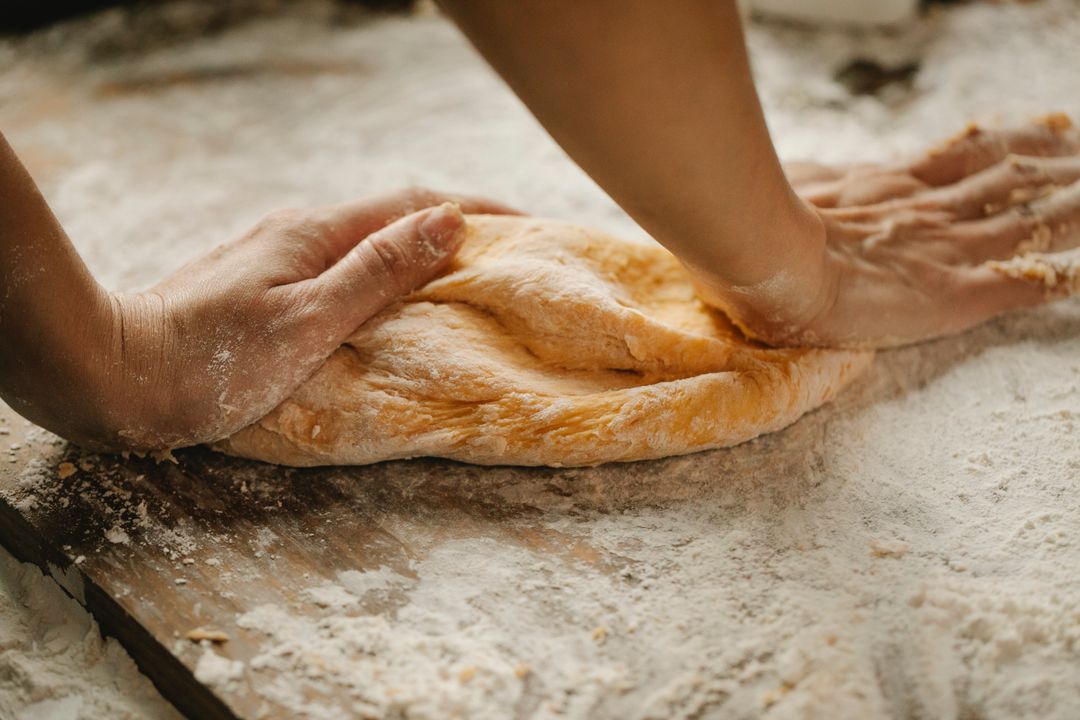
Expect to make something. Most beginner sessions at Florence Academy end with a completed product you can taste and, often, take home. The practical component starts within the first hour. You won’t spend the whole session watching. You’ll be at the counter, working through the technique yourself, with an instructor nearby to correct and guide.
Citation Capsule: In 2024, Asia Pacific’s cooking class market reached USD 1.2 billion and is growing at 11.2% CAGR through 2033 (IMARC Group, Cooking Class Market Report, 2025). At Florence Academy, every beginner session — from the first 3-hour workshop to the first day of a 6-month programme — puts students at the stove producing a completed dish. In our experience across 2,000+ students, learners who produce food in their first session report significantly higher motivation to continue than those who begin with theory-heavy orientations.
Which Florence Academy Programme Is Right for You as a Beginner in Ahmedabad?
Choosing the right programme isn’t complicated if you’re honest about your goal. Here’s a direct mapping:
| Your Goal | Best Florence Academy Programme | Duration | Key Outcomes |
|---|---|---|---|
| Try cooking without a big commitment | Florence Workshops | 1 day | 1 focused skill, completed product to take home |
| Start a home bakery or sell baked goods | Whipped Wonder | 4 weeks | 20-40 techniques, sellable product portfolio |
| Develop serious baking skills for a business or career pivot | Bakery Foundation Programme | 6 months | 80-120+ recipes, eggless and Jain specialisation, completion certificate |
| Enter the hospitality industry as a baker or pastry chef | Artisanal Bakery and Patisserie Diploma | 1 year | 350+ recipes, NSDC certification, placement support |
| Build a full professional chef career | Diploma in Food and Beverages | 2 years | NSDC + AHLEI + THSC, broad culinary scope, F&B management |
A word on the diploma decision. If you’re at the point of considering a 1-year or 2-year diploma, don’t underestimate what the NSDC certification does for your starting salary. Certified graduates from recognised institutes typically enter hotel kitchens at Commis Grade 1 (₹15,000–₹18,000/month), which skips the two lowest entry grades that non-certified peers must work through. That salary difference, ₹3,000–₹5,000 per month from the first month, typically covers the fee premium of an accredited diploma within six months of employment.
Not sure which programme fits your specific situation? The Florence Academy admissions team will walk you through the decision. Most questions get answered within a few hours.
Citation Capsule: India’s bakery market was valued at USD 12.12 billion in 2025 and is forecast to reach USD 30.04 billion by 2035 at 9.50% CAGR. This sustained growth creates consistent demand for trained bakers, particularly those with eggless and Jain specialisations, across home-based, artisanal, and hospitality-sector food businesses in India (Expert Market Research, India Bakery Market Size, Share and Growth Rate 2035, May 2026).
Ready to Cook? Here’s Where to Begin
The biggest barrier for most beginners isn’t skill. It’s the decision paralysis that comes from not knowing which format or programme is the right starting point. This guide should have cut through most of that.
If you’re a complete beginner in Ahmedabad in 2026, you have four clearly structured pathways: a one-day workshop to test the water, a four-week short course to build a sellable skill, a six-month foundation programme to pivot seriously, and a diploma track to build a professional career. Each one serves a different goal. None of them require prior experience.
Ahmedabad’s vegetarian food culture, growing cloud kitchen economy, and strong culinary tourism sector mean that the skills you build here translate directly into commercial opportunity. The fact that Florence Academy’s curriculum covers eggless and Jain techniques as a core rather than an elective makes it particularly well-matched to the Gujarat market.
The best time to start is before you feel ready. Most graduates say that in hindsight.
Join 2,000+ students who’ve trained with expert chefs at Florence Academy, Ahmedabad.
Explore Courses at Florence Academy →
Chat with us on WhatsApp — we respond fast.
Phone: +91 6351665305 | +91 8320715588
Frequently Asked Questions
Do I need any cooking experience to join a cooking class in Ahmedabad?
No prior experience is needed for workshops or most short courses. In 2024, Asia Pacific’s cooking class market reached USD 1.2 billion and is growing at 11.2% CAGR through 2033, with beginner-friendly formats driving the largest share of new enrolments (IMARC Group, 2025). Florence Academy’s beginner sessions start from zero. You’ll be making something from scratch by the end of your first session.
What is the best cooking class in Ahmedabad for complete beginners?
For complete beginners, the choice comes down to your goal. A one-day Florence Academy workshop is the lowest-commitment entry point. The Whipped Wonder 4-week short course is the best option if you want to build a sellable skill quickly. The Bakery Foundation Programme suits those ready for a serious six-month commitment with 80-120+ recipes across eggless and Jain baking.
How much do cooking classes in Ahmedabad cost?
One-day workshops typically run ₹1,500–₹4,000. Short courses (1-4 weeks) range from ₹15,000–₹40,000. Six-month foundation programmes cost roughly ₹60,000–₹1.2 lakh. Diploma programmes range from ₹1.5–₹4 lakh+, though the NSDC certification that comes with a recognised diploma often recoups the premium within six months of starting work. For exact current fees, visit florenceawc.com/courses/ or call +91 6351665305.
Can I learn baking specifically in Ahmedabad?
Yes, and Ahmedabad has particularly strong options for baking-focused training. India’s bakery market was valued at USD 12.12 billion in 2025 and is projected to reach USD 30.04 billion by 2035 (Expert Market Research, May 2026). Florence Academy’s baking-specific options include the Whipped Wonder 4-week course, the 6-month Bakery Foundation Programme, and the 1-year NSDC-recognised Diploma in Artisanal Bakery and Patisserie.
Are there cooking classes for vegetarian and Jain cuisine in Ahmedabad?
Florence Academy’s entire curriculum is 100% vegetarian and Jain-adapted, across all programmes. Around 4 in 10 people in India follow a meat-free diet, making India the global leader in vegetarian eating (Statista Consumer Insights, 2023-2024). In Gujarat, that proportion is higher still. Eggless baking, Jain-compliant dessert production, and root-vegetable-free cooking are core curriculum, not electives. No other culinary institute in Ahmedabad approaches this at the same depth.
About the Author
Chef Monila Surana is the Managing Partner and lead culinary educator at Florence Academy of World Cuisines, Ahmedabad — an NSDC Skill India and AHLEI-certified culinary institute. With 18 years of professional culinary education experience, she leads curriculum design across Florence Academy’s 100% vegetarian and Jain-speciality programmes, including all beginner-facing courses from taster workshops through to 2-year diplomas. Florence Academy’s teaching team brings 48+ years of combined professional culinary experience — including Chef Hina Gautam (30+ years, founder of JustCook culinary institute, cooking show personality and competition judge). Florence Academy has trained 2,000+ students with placement partnerships at ITC Hotels and Marriott. View Chef Monila’s full profile →


