

Gujarat hosts an estimated 2–3 lakh weddings every year. Every single one of those celebrations is now expected to feature a cake. Not the token sponge from a local bakery, but a multi-tiered, Instagram-worthy custom creation that competes for attention alongside the wedding lehenga. The shift from traditional mithai towers to European-style tiered cakes at sangeet nights, engagement ceremonies, and receptions is real, fast, and not slowing down.
India’s wedding industry is valued at $50 billion (IBEF, 2024). Custom wedding cakes are one of its fastest-growing sub-categories. And Gujarat, with one of India’s highest per-capita wedding spends, is an especially strong market for skilled cake entrepreneurs. This post covers the full picture: market size, equipment investment, pricing formulas, and how to land your first 10 clients.
how to start a home bakery business →
Key Takeaways
– Gujarat has 2–3 lakh weddings per year, making it one of India’s strongest markets for custom wedding cakes.
– Start-up equipment investment runs ₹80,000–₹1.5 lakh; adequate refrigeration is the most critical (and most skipped) item.
– Wedding cakes are priced per serving (₹350–₹600 per portion) plus a design premium — target a 40–50% profit margin.
– Your first 10 clients come from portfolio work, Instagram location tags, and one strong wedding planner relationship.
– India’s wedding industry is valued at $50 billion (IBEF, 2024); custom cake is among its fastest-growing segments.
How Big Is the Wedding Cake Market in Gujarat?
Gujarat’s wedding market is substantial. India’s wedding industry is valued at $50 billion (IBEF, 2024), and Gujarat consistently ranks among the top states for per-capita wedding spend, driven by strong family culture and a tradition of hosting large celebrations. Custom cakes have moved from optional to expected at premium events.
Average wedding cake orders in Ahmedabad currently range from ₹8,000 to ₹35,000 for 2- to 4-tiered cakes. High-end custom work — hand-painted tiers, full fondant coverage, fresh or sugar florals — commands ₹40,000 to ₹1.5 lakh per order. The Indian bakery market is projected to grow at 8.5% annually through 2027 (Expert Market Research), and wedding cakes are driving a significant share of that growth in urban Gujarat.
What does that mean for monthly volume? At full capacity, a solo wedding cake specialist doing 8–12 cakes per month can generate ₹1–4 lakh in revenue. That’s not a part-time hobby. That’s a real business, and the barrier to entry is lower than most people assume.
- Average wedding cake price by tier type (Basic / Standard / Premium) in Ahmedabad
- Market pricing data, 2025
Source: Florence Academy
What Equipment Do You Need to Start a Wedding Cake Business?
The right equipment makes the difference between a product that converts browsers into buyers and one that falls apart at the venue. For a Phase 1 setup (₹80,000–₹1.5 lakh), you need: a double-rack OTG or convection oven, a 5-litre stand mixer, a turntable, fondant smoothers, cake drums in multiple sizes, tiered separator systems, a full piping bag set, offset spatulas in two or three sizes, and a set of silicone moulds for decorative elements.

Phase 2: Scaling Up (₹2–4 Lakh)
When you’re consistently hitting 6–8 orders per month, Phase 2 equipment becomes worth the investment. A commercial convection oven lets you run two batches simultaneously. A blast chiller is the single most important upgrade for Gujarat-based bakers.
Here’s why the blast chiller matters so much. Buttercream starts losing structure at 28°C. Fondant sweats and slips above 30°C. Gujarat summers regularly push 40–45°C. Without active refrigeration, you’re fighting the climate on every single order.
Florence Academy’s Cake Engineering graduates who launched wedding cake businesses spent an average of ₹1.1 lakh on initial equipment. The single most skipped investment — which caused the most quality failures — was adequate refrigeration. Bakers who skipped the blast chiller or large refrigerator reported the most client complaints and rework costs in their first year.
A Note on Eggless Formulas
Gujarat’s predominantly vegetarian and Jain client base expects eggless cakes. All standard wedding cake formats — vanilla sponge, chocolate, red velvet, lemon — have reliable eggless versions using yoghurt, condensed milk, or flaxseed meal as binders. This is not a limitation. It’s a selling point in Gujarat’s market.
How Do You Price Wedding Cakes Correctly?
Correct pricing is the single biggest skill gap for new wedding cake entrepreneurs. Most undercharge significantly and burn out within 12 months. The right model is per-serving pricing: ₹350–₹600 per portion, multiplied by the number of portions, plus a design premium on top.
Design tiers work as follows. A basic cake (fresh flowers, simple buttercream icing) sits at the lower end of the per-serving range. A standard cake (fondant coverage, moderate detail work) adds 20–30% above base. A premium cake (hand-painted tiers, sugar flowers, multi-tier with internal structural support) adds 50–80% above base, plus an explicit design fee.
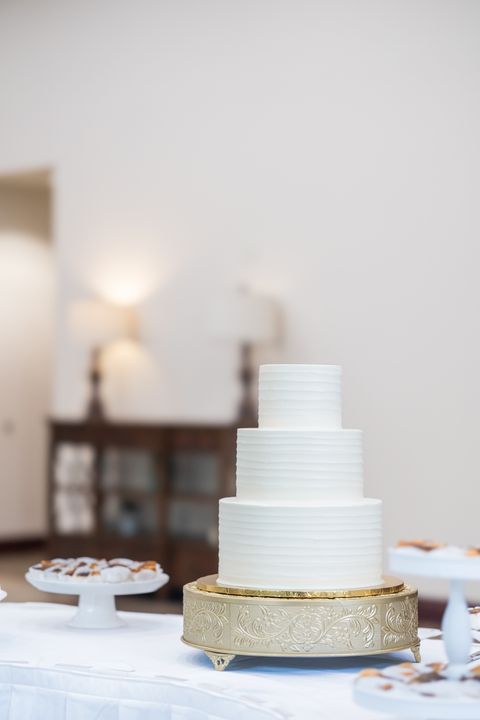
The Quote Formula
Use this structure for every quote: cost of materials + minimum 6 hours of labour per tier at your hourly rate + refrigeration overhead + delivery charge + profit margin. Target a 40–50% margin on wedding cakes. Clients at this price point expect premium, and the market supports it.
Always take a 50% deposit at the time of booking. Collect the remaining 50% no later than 24 hours before delivery. Set a clear cancellation policy: the deposit is non-refundable if cancelled within 30 days of the event. Put this in writing before any work begins.
: Chef Monila recounts one early graduate who priced a 3-tiered fondant cake at ₹4,000. She spent 14 hours on it, including decorations, and lost money on both material and time. The correct market price for that cake was ₹18,000–₹22,000. The lesson wasn’t about greed — it was about respecting the skill involved and charging what the market actually pays for quality work.
What About Deposits and Cancellations?
Cancellations within two weeks of a wedding are costly. You’ve already bought ingredients, blocked your schedule, and turned away other orders. A non-refundable deposit isn’t aggressive — it’s standard industry practice. Most clients who are serious about their wedding won’t balk at it.
FSSAI registration for home bakers →
Ready to learn from expert chefs? Explore Courses at Florence Academy →
How Do You Get Your First 10 Wedding Cake Clients in Gujarat?
The first 10 clients are the hardest to get and the most important for building your reputation. The path isn’t a single strategy — it’s a sequence of five steps, each building on the last. Most bakers who struggle skip step one and wonder why steps two through five don’t work.
Step 1: Build a real portfolio first. Make 3–5 cakes for family or close friends at cost price, not free and not at full price. Charge something, even ₹1,500–₹2,000, so the recipient values it. Photograph everything. These images are your entire marketing asset for the first six months.
Step 2: Build Instagram with location intelligence. Tag every post with Ahmedabad and Gujarat location tags. Use wedding-specific hashtags consistently. Post progress videos and process reels, not just the finished cake. Potential clients want to see your hands at work. It builds trust faster than a polished final shot.
Step 3: Partner with wedding photographers. Photographers are at every wedding. They see the cake table. They refer vendors constantly. A single photographer who likes your work can send you 10 clients in a year.

Step 4: Get listed where brides search. JustDial, IndiaMart, and Ahmedabad-based wedding Facebook groups are where real buying decisions happen in Gujarat. A complete profile with photos, pricing range, and response time matters more than follower count.
Step 5: Do one bridal fair or wedding expo. Many cities in Gujarat host annual bridal fairs. One showcase cake at a well-attended expo puts your work in front of 200–500 potential clients and dozens of wedding planners simultaneously.
: Wedding planners in Ahmedabad typically maintain a short list of 3–5 trusted vendors per service category. Once you’re inside that circle, they bring repeat orders without you doing any marketing. Getting one serious wedding planner as a referring partner is worth more than 20 Instagram posts. Most new bakers ignore planners entirely and focus only on direct-to-bride marketing. That’s a missed opportunity.
home baker to bakery owner roadmap →
| Channel | Lead Volume | Est. Conversion Rate | Notes |
|---|---|---|---|
| Wedding planners / event coordinators | Medium | 35–45% | Highest quality; pre-sold on premium |
| Photographer referrals | Low-medium | 30–40% | Budget-ready; trust from photo collaboration |
| Instagram (organic content) | High | 8–15% | Volume play; needs consistent portfolio posting |
| JustDial / Google Business | High | 5–10% | Price-sensitive enquiries; needs strong reviews |
| Bridal fairs / exhibitions | Medium | 12–20% | Good for new entrants to build visibility |
Source: Florence Academy Wedding Cake Business course; estimated conversion data
Do You Need a Licence to Sell Wedding Cakes in Gujarat?
Yes — and it’s simpler than most people think. For annual turnover below ₹12 lakh, FSSAI Basic Registration is sufficient. This applies to home-based operations and lets you sell directly to customers. Basic Registration costs ₹100 and is valid for one to five years.
Once your turnover crosses ₹12 lakh, you move to FSSAI State Licence territory. This requires a more detailed application and inspection, but it’s entirely manageable. The key rule: you cannot sell food commercially without at least Basic Registration, regardless of whether you’re operating from a home kitchen or a rented commercial space.
If you’re operating from home, check your local municipal by-laws. Some housing societies have restrictions on commercial activity. Clarify this before you scale up.
FSSAI registration guide for home bakers →
Frequently Asked Questions
How much can you earn from wedding cakes per month in Gujarat?
A home-based wedding cake business running 8–12 orders per month can generate ₹1–4 lakh in monthly revenue. At the premium end (custom fondant or hand-painted cakes priced ₹25,000–₹80,000 each), even 4–5 orders per month reaches that range. Most Gujarat-based wedding cake entrepreneurs report hitting ₹40,000–₹80,000 per month within their first year of consistent operation, according to market feedback from active bakers in Ahmedabad.
diploma in food and beverages for scaling a food business →
Do you need a commercial kitchen to make wedding cakes?
Not at first. FSSAI Basic Registration allows home kitchen operations for turnover below ₹12 lakh per year (FSSAI). However, adequate refrigeration is non-negotiable in Gujarat’s climate — buttercream and fondant fail above 28–30°C. Once you exceed 8–10 cakes per month, renting commercial kitchen space becomes more practical than running multiple home-oven batches.
What skills do you need to make professional wedding cakes?
The four core skills are: smooth crumb-free buttercream coating, fondant application without creases or air bubbles, tiered cake assembly with internal dowel support, and sugar flower or fondant decoration. Each skill is learnable with structured practice. The Cake Engineering course at Florence Academy covers all of these with hands-on multi-tiered construction practice.
How do you handle delivery of tiered wedding cakes?
Transport each tier in a separate box, kept refrigerated until the last possible moment. Never stack assembled tiers during transport. Arrive at the venue at least 90 minutes early and assemble on-site, bringing separator rods, a turntable, and a smoothing tool for any touch-ups. Charge ₹500–₹1,500 for delivery and on-site assembly. Underselling this step is a common mistake — the assembly window is high-stakes and your time has real value.
Starting Your Wedding Cake Business: The Short Version
Gujarat’s wedding season creates consistent, high-value demand that isn’t going anywhere. The shift toward custom, tiered, Instagram-worthy cakes is a structural change in how families celebrate, not a passing trend. The Indian bakery market’s 8.5% annual growth rate (Expert Market Research) confirms what Ahmedabad bakers are already seeing on the ground.
The path is clear. Start with the right equipment, price your work correctly from day one, and build your first portfolio before you need clients. One wedding planner relationship can anchor your order book for years.
The skills behind a professional-quality wedding cake are teachable. The business model is proven. What it requires is structured training, disciplined pricing, and the confidence to charge what good work is worth.
Cake Engineering course details →
Have questions? Chat with us on WhatsApp — we respond fast.


