
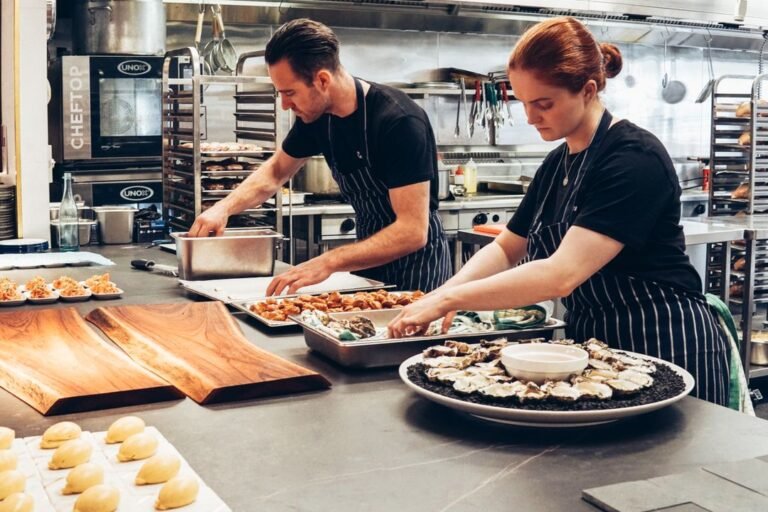
Thousands of home bakers across Gujarat are doing the same thing: posting reels, collecting WhatsApp orders, and selling cakes out of their home kitchen. India’s bakery industry crossed ₹8,000 crore in 2024 and is growing at roughly 9% annually (Expert Market Research, 2024). The opportunity is real. But most home bakers never make it past the side-income stage. The reason isn’t skill. Most are already good enough bakers. What’s missing is a clear sequence: the six steps between a home kitchen and a registered, profitable bakery, taken in the right order. This post lays out that roadmap.
how to start a home bakery in Gujarat →
Key Takeaways
– A Gujarat home bakery can be started legally for ₹15,000–₹40,000 in equipment and ₹100/year for FSSAI Basic Registration.
– India’s bakery market is growing at ~9% annually, making 2025 an strong entry window (Expert Market Research, 2024).
– The six steps to formalise: master your product, get FSSAI, fix your pricing, build distribution, register the business, then scale.
– Most home bakers underprice because they skip labour cost in their formula.
– Build 200+ regular customers on Instagram and WhatsApp before investing in a physical shop.
What Does It Actually Cost to Open a Home Bakery in Gujarat?
Starting a home bakery in Gujarat costs far less than most people assume. Industry estimates put Gujarat’s active home bakery operators at 15,000+ as of 2025 (industry estimates, 2025), which means competition is real but so is the market. A basic home kitchen setup costs ₹15,000–₹40,000, covering an oven, stand mixer, storage containers, and initial packaging.
Here’s how costs scale across three business phases:
| Phase | Timeline | Investment | Focus |
|---|---|---|---|
| Phase 1 — Start | 0–3 months | ₹15,000–₹30,000 | Basic equipment (OTG, hand mixer, tins), FSSAI basic registration |
| Phase 2 — Grow | 3–12 months | ₹30,000–₹80,000 | Stand mixer, more mould sets, packaging materials, branding |
| Phase 3 — Scale | 12+ months | ₹80,000–₹2,00,000 | Commercial oven, display freezer, commissary or rented kitchen |
Source: FSSAI, AMC, Florence Academy industry estimates
| Phase 1: Home Kitchen | Phase 2: Commercial Rental Kitchen | Phase 3: Dedicated Shop | |
|---|---|---|---|
| Setup Cost | ₹15,000–₹40,000 | ₹5,000–₹15,000 (fit-out) | ₹80,000–₹1.5 lakh |
| Monthly Rent | Nil | ₹20,000–₹50,000 | ₹25,000–₹80,000 |
| FSSAI Licence | Basic: ₹100/year | State: ₹2,000/year | State: ₹2,000/year |
| Capacity (orders/month) | 30–80 | 100–300 | 300+ |
| Best For | Testing demand | Scaling without commitment | Established demand |
FSSAI Basic Registration costs ₹100 per year and covers home bakers with annual turnover under ₹12 lakh. Once you cross that threshold, you move to FSSAI State Registration at ₹2,000 per year. Both are applied for online at FOSCOS.
The jump from Phase 1 to Phase 2 is where most home bakers make their biggest mistake. They rent commercial kitchen space before they have consistent order volume to justify the cost. Phase 2 only makes sense when your home kitchen is genuinely at capacity for at least two consecutive months.

What Are the 6 Steps From Home Baker to Registered Business?
The most common reason home bakery businesses stall is doing these steps out of order. Registering a business before you have reliable customers, or scaling before your pricing covers costs, creates problems that are hard to undo. Follow this sequence.
complete FSSAI registration guide →
Step 1: Master Your Signature Product
Before you build a business, narrow your product range. Pick three to five hero products you can make consistently at volume. Inconsistency at scale kills reputation faster than bad marketing.
A smaller menu also makes pricing, costing, and operations much simpler. Specialisation signals expertise. “The best eggless chocolate truffle cake in Ahmedabad” is a more powerful positioning statement than “we make everything.” Customers refer specific products, not general bakers.
Step 2: Formalise Your FSSAI Registration
You cannot legally sell food in India without FSSAI registration. This is not optional. FSSAI Basic Registration is simple: apply online at foscos.fssai.gov.in, pay ₹100, and you typically receive your certificate within five to seven working days.
Basic registration covers turnover under ₹12 lakh per year. It’s the right starting point for most new home bakers. Think of it as the foundation everything else is built on. Without it, a single customer complaint can shut you down entirely.
Step 3: Set Up Your Pricing Structure
Most home bakers underprice because they calculate cost of ingredients and then guess what feels reasonable. That approach doesn’t build a business. The correct minimum formula is: material cost multiplied by three gives you your floor price. If your product has a premium angle, such as wedding cakes or elaborate custom orders, add another 20% on top.
We cover the full pricing formula in a dedicated section below. Don’t skip it.
Step 4: Build Your Instagram and WhatsApp Distribution First
Don’t open a physical shop before you have 200 or more regular customers buying from you digitally. Instagram Reels and WhatsApp broadcast lists are free. A shop lease is not. Proving demand on digital before committing to physical space is the single best risk-reduction move available to a home baker.
Document everything you post. Track which products get the most saves, shares, and DMs. That data tells you what your market actually wants before you spend money scaling the wrong thing.
Step 5: Register Your Business Under Udyam/MSME
Udyam registration is free, takes about 15 minutes online, and gives you access to benefits most home bakers don’t know they’re leaving on the table: government-backed business loans at lower interest rates, bulk ingredient accounts with distributors, and a formal business identity that helps with corporate and event orders.
Florence Academy’s food business graduates who tracked their revenue in Year 1 reported average monthly earnings of ₹45,000–₹80,000 within 12 months of starting, specifically for those who followed the pricing and distribution framework outlined here (Florence Academy internal data, 2025). The pattern was consistent: students who completed Steps 3 and 4 before moving to Step 5 earned more in Year 1 than those who registered first and figured out sales later.
Step 6: Scale Systematically
Hire one helper before you burn out, not after. Most home bakers wait until they’re overwhelmed, then make rushed hiring decisions. Before you bring anyone in, write down every recipe with exact weights, temperatures, and timings. Your recipes exist in your head right now. They need to exist on paper before someone else can execute them.
Chef Monila Surana recalls one of our graduates who came to Florence Academy with a ₹2,000 monthly side income from selling cookies to neighbours. She spent three months mastering five signature products, got her FSSAI Basic Registration, and built a WhatsApp group of over 300 regular customers before she registered her business under Udyam. Eighteen months later, she was running a ₹1.2 lakh per month custom cake business – exclusively through pre-orders, no shop. She did Steps 4 and 5 before Step 6. That sequence made the difference.
How Do You Price Baked Goods to Actually Make a Profit?
Underpricing is the most common reason home bakeries fail to become real businesses. Most home bakers charge what they think customers will pay, not what the product costs to make at a sustainable margin. The Indian home food business segment sees high drop-off rates precisely because operators treat pricing as a feelings exercise rather than a calculation (Expert Market Research, 2024).
Here’s the correct pricing formula:
Total Cost = Material Cost + Labour Cost + Overhead
Minimum Selling Price = Total Cost / (1 – target margin)
For a target margin of 35%, divide your total cost by 0.65.
The Formula in Practice: Custom 2-Layer Eggless Cake
| Cost Component | Calculation | Amount |
|---|---|---|
| Materials (flour, butter, sugar, fondant, decorations) | Actual cost | ₹350 |
| Labour (6 hours × ₹150/hr) | Your time has value | ₹900 |
| Overhead (electricity, packaging, tool amortisation) | Estimated per order | ₹100 |
| Total Cost | ₹1,350 | |
| Minimum Price (35% margin) | ₹1,350 / 0.65 | ₹2,077 |
| Premium Price (wedding/custom tier) | Add 20% premium | ₹2,492 |
The labour rate is the variable almost every home baker skips. When you charge ₹800 for a cake that took six hours to make, you’re paying yourself ₹133 per hour before costs. That’s not a business. It’s unpaid work with extra steps. The moment you properly account for your time, your prices will feel “expensive” to you. That feeling is correct. Your product is worth what it actually costs to produce – and customers who won’t pay that are not your customers.
A practical starting point: set your hourly labour rate at ₹150–₹200 per hour. Revise it upward every six months as your skills and reputation grow. Document the time each product actually takes, not what you wish it took.
- “Where Home Bakers Lose Margin”
- labour cost omitted vs. overhead underestimated vs. material wastage
Source: Florence Academy internal observation
What Licences and Registrations Does a Gujarat Home Bakery Need?
A Gujarat home bakery needs at minimum one licence to operate legally, and most growing businesses will need three to four within their first two years. The good news: most registrations are free or very low cost, and several can be done entirely online.
Here’s the full checklist:
| Licence/Registration | Required When | Cost | Where to Apply |
|---|---|---|---|
| FSSAI Basic Registration | From Day 1 of selling food | ₹100/year | foscos.fssai.gov.in |
| FSSAI State Licence | Turnover exceeds ₹12 lakh/year | ₹2,000/year | foscos.fssai.gov.in |
| Udyam/MSME Registration | Recommended from Day 1 | Free | udyamregistration.gov.in |
| GST Registration | Turnover exceeds ₹20 lakh/year | Free | GST portal |
| Shop & Establishment Licence | If you have a physical shop | ₹500–₹2,000 | Labour Commissioner, Gujarat |
| AMC Trade Licence | Commercial premises in Ahmedabad | ₹1,000–₹5,000 | Ahmedabad Municipal Corporation |
Most home bakers only need FSSAI Basic and Udyam at the start. GST, Shop & Establishment, and AMC Trade Licence become relevant as you scale to a commercial operation. Don’t over-register early, but do keep track of when each threshold applies to you.
Ready to learn from expert chefs? Explore Courses at Florence Academy

Frequently Asked Questions
Can I run a bakery from my home kitchen legally in Gujarat?
Yes. FSSAI Basic Registration (₹100/year at foscos.fssai.gov.in) makes your home kitchen legally compliant for food sales under ₹12 lakh annual turnover. Your kitchen must meet basic hygiene standards: clean surfaces, pest control in place, and no cross-contamination with household storage. Once turnover crosses ₹12 lakh, upgrade to FSSAI State Licence.
detailed FSSAI guide for home bakers →
How long does FSSAI registration take?
FSSAI Basic Registration is typically issued within five to seven working days of submitting your online application at foscos.fssai.gov.in. State Licence takes longer, usually 30–60 days, and may require a physical kitchen inspection. Start your Basic Registration before you take your first paid order, not after.
Do I need a separate bank account for my home bakery?
Not legally required at the home baker stage, but strongly recommended from Day 1. A separate current account keeps business and personal finances clean, simplifies annual tax filing, and signals professionalism to corporate or event clients. Once you have Udyam registration or GST, a business account becomes practically necessary for invoice-matching and compliance.
How does Florence Academy help home bakers start a business?
Florence Academy’s Bakery Foundation Course and Diploma in Food and Beverages both include dedicated food business modules covering FSSAI registration, product costing, packaging strategy, and Instagram distribution. Graduates from the 2,000+ student community have launched home bakeries within six to twelve months of completing the program.
The Path Is Clearer Than It Looks
The gap between selling cakes on WhatsApp and running a registered bakery business isn’t as wide as it feels. It’s six steps. What makes those steps hard isn’t complexity – it’s doing them out of order. Get your FSSAI registration sorted before you worry about scaling. Fix your pricing before you take on more orders. Build your customer base digitally before you commit to a lease.
India’s bakery market is growing fast, and Gujarat has a large, underserved appetite for quality home-baked products. The home bakers who turn that opportunity into a sustainable income are the ones who treat the business side with the same care they bring to their baking.
Start with Step 1. Master three products. Then move to Step 2.
full home bakery startup guide →
Have questions? Chat with us on WhatsApp – we respond fast.


