

If you’re making idli or dosa at home in Ahmedabad, your batter isn’t just soaked, ground, and left to sit — it’s a live fermentation, run by wild bacteria and yeast that arrive naturally on the rice and urad dal. Traditional batter ferments for 18-30 hours through a natural yeast-lactic process (Brazilian Journal of Microbiology, 2014). Get the science wrong, and you’ll get a flat, gummy idli or a dosa that refuses to turn crisp. Get it right, and the same batter produces both.
Indian regional cuisines you can learn to cook in Ahmedabad →
Key Takeaways
– Idli-dosa batter ferments naturally over 18-30 hours through wild lactic acid bacteria and yeast, no starter culture required (Brazilian Journal of Microbiology, 2014).
– The ideal fermentation temperature is 25-30°C — batter rises fastest and most reliably in this range (Amrita Vishwa Vidyapeetham, 2018).
– A 2:1 rice-to-urad-dal ratio is the standard starting point; the dal contributes most of the batter’s leavening power.
– Carbon dioxide from bacterial fermentation gets trapped in the batter’s mucilaginous texture, which is what makes it rise.
– Ahmedabad’s dry winter climate slows fermentation compared to South India’s steadier warmth — the same recipe needs different timing here.
What Actually Happens During Fermentation?
Fermentation in idli-dosa batter is a two-organism process: lactic acid bacteria and wild yeast work together, with bacteria doing most of the early work. Leuconostoc mesenteroides and Streptococcus faecalis are considered essential for both leavening the batter and producing the acid that gives it its tang (Brazilian Journal of Microbiology, 2014).
Here’s the sequence. The bacteria multiply first, lowering the batter’s pH. That drop in acidity creates the right conditions for yeast to activate — mainly Saccharomyces cerevisiae (baker’s yeast) and related species. The yeast then adds flavour compounds and enzymes that help break down starch (Brazilian Journal of Microbiology, 2014). Neither organism does this job alone. It’s a relay, not a race.
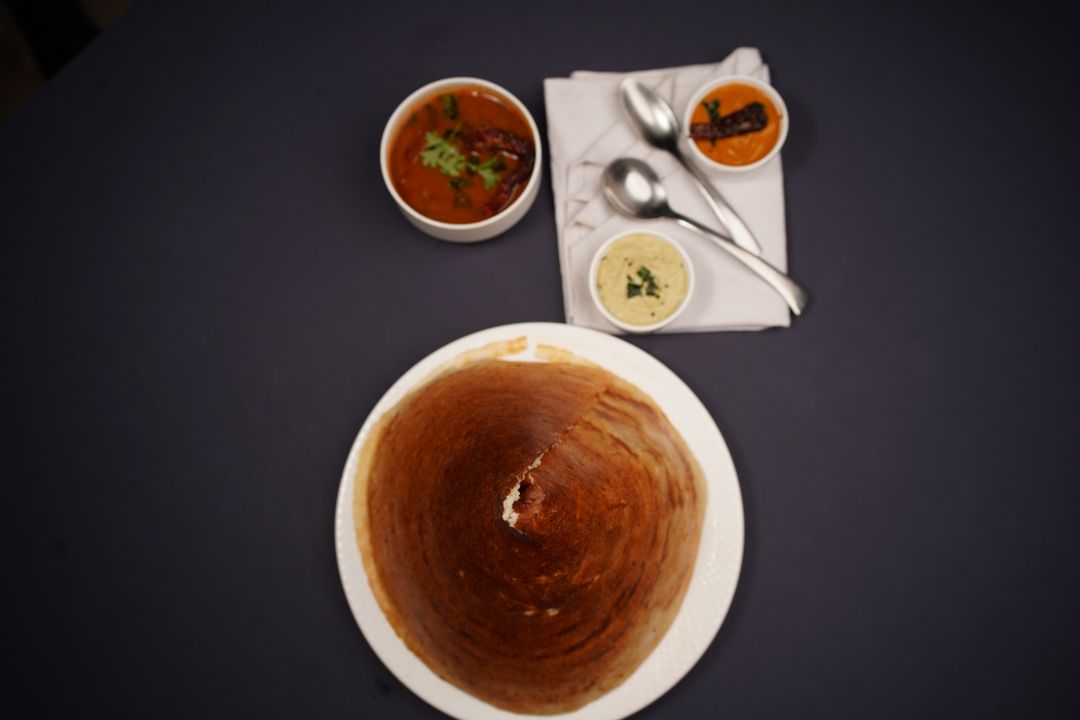
Most home cooks assume fermentation is just “the batter getting sour.” It’s really the bacteria stage finishing and the yeast stage taking over — the smell changes from flat and starchy to faintly alcoholic and tangy at exactly that handoff point. Learning to recognise that smell shift is more reliable than watching the clock.
Why Does the Batter Rise at All?
Batter rises because carbon dioxide, produced by the fermenting bacteria, gets physically trapped inside the batter rather than escaping. The mucilaginous property of the batter helps to trap the carbon dioxide evolved during fermentation, which results in leavening (Amrita Vishwa Vidyapeetham, Chemistry of Dosa, 2018).
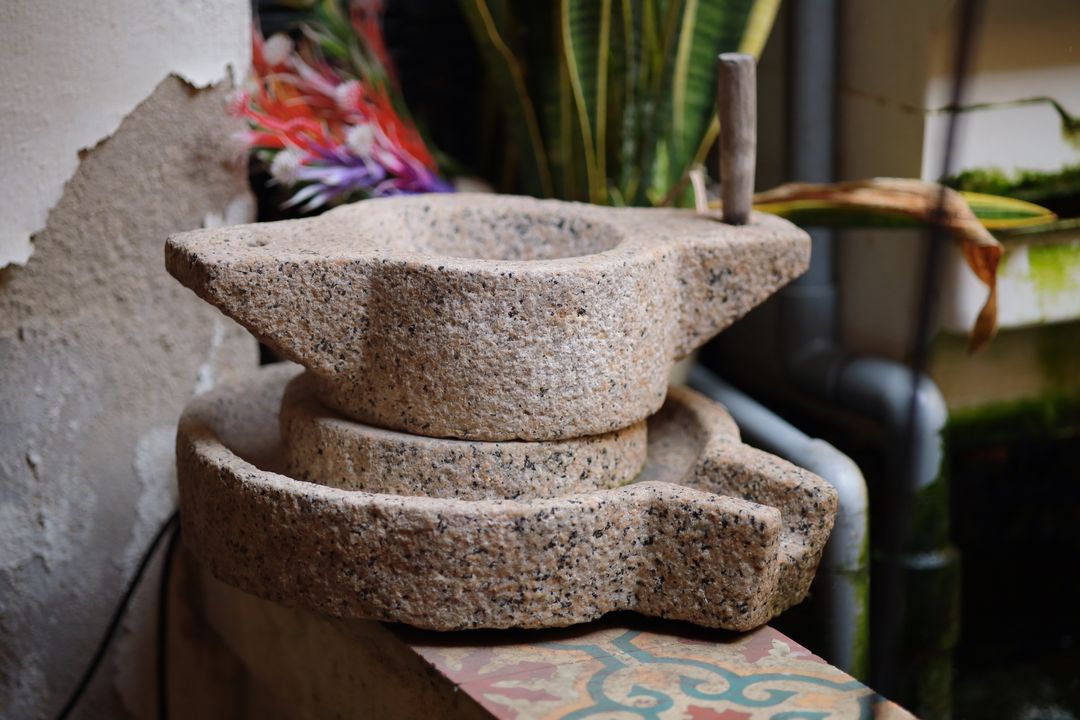
This is why texture matters as much as time. If you grind your batter too smooth, with no body to hold gas bubbles, it can ferment perfectly on a microbial level and still come out flat. The CO2 simply bubbles out instead of staying trapped. Traditional wet-grinding on a stone grinder preserves more of this gas-holding structure than a high-speed blender does.
| Fermentation Stage | What’s Happening | Visible Sign |
|---|---|---|
| Hours 0-6 | Bacteria multiply, pH drops | Little visible change |
| Hours 6-14 | Yeast activates, CO2 builds | Batter starts to rise, small bubbles |
| Hours 14-24 | Peak fermentation | Batter doubles, smells tangy |
| Beyond 24-30 hrs | Over-fermentation risk | Batter deflates slightly, smell turns sharply sour |
Timing varies significantly with ambient temperature — see the climate section below.
Urad dal (split black gram) does more of this work than the rice does. Its protein and mucilage content is what gives the batter its gas-trapping structure. That’s why a batter with too little dal, relative to rice, tends to ferment on schedule but still turn out dense.
how to start a home bakery business in Gujarat →
What’s the Right Rice-to-Urad-Dal Ratio?
A 2:1 rice-to-urad-dal ratio is the standard starting proportion for idli-dosa batter, though the exact ratio shifts depending on what you’re making (Amrita Vishwa Vidyapeetham, 2018). Idli batter typically leans slightly more toward dal for a softer, spongier crumb, while dosa batter leans more toward rice for a thinner, crisper result.
Salt plays a quieter but important role here too. It controls fermentation speed by slowing yeast activity while giving salt-tolerant lactic acid bacteria a competitive advantage over less desirable organisms — which is part of why traditional recipes add salt before fermentation, not after.
What we see in class: Students who add salt after fermentation instead of before consistently report faster, less controlled souring — the batter tips into over-fermentation before they’re ready to cook it. Salting early isn’t just tradition; it’s a genuine brake on the process.
Getting this ratio right matters more than most home cooks realise, because it’s the single biggest lever for texture — more than fermentation time, and more than grinding technique.
what is NSDC certification and why it matters for chef jobs →
How Does Ahmedabad’s Climate Change Fermentation Time?
If you live in Ahmedabad, your kitchen’s winter temperature (average 15-36°C, November to February) sits well below the 25-30°C range that microorganisms need to ferment idli-dosa batter efficiently (Amrita Vishwa Vidyapeetham, 2018). That gap is the reason a recipe that works reliably in Chennai or Bengaluru can flatly fail in your Ahmedabad kitchen during cooler months, through no fault of your own.
South India’s climate stays close to that ideal fermentation range for most of the year, which is part of why the technique developed there in the first place. Your Ahmedabad summer heat (peaking above 40°C) actually overshoots the ideal range. That speeds fermentation up to the point of risking over-souring if you leave it unwatched. Winter undershoots it instead. Neither extreme is what the traditional 18-30 hour window assumes.
Chef Monila Surana notes that in Florence Academy’s teaching kitchen, winter batches routinely need 6-8 extra hours of fermentation compared to the same recipe run in September’s warm, humid post-monsoon conditions — a seasonal adjustment most printed recipes never mention, because they were written somewhere the climate barely changes.
You can close that temperature gap in a Gujarat winter without specialised equipment: try a warm spot near a gas stove pilot light, an oven with just the bulb on, or a covered container inside a closed kitchen cabinet.
12 root vegetable substitutes for Jain cooking — a related technique-adaptation guide →
What Goes Wrong — and How to Fix It
Most idli-dosa batter failures trace back to one of four causes: wrong temperature, wrong ratio, wrong grind texture, or timing mismatched to the season. It’s rarely bad luck or a bad batch of dal. You can usually diagnose which one is at fault just from how your finished batter looks and smells.
- Your batter didn’t rise at all. Check temperature first — batter left in a cold kitchen (below 20°C) can sit for 30 hours and barely move. Check your dal ratio second, since too little urad dal removes most of the batter’s gas-trapping structure regardless of fermentation time.
- Your batter turned too sour. This is over-fermentation, almost always caused by warm weather plus leaving the batter out too long after it already peaked. Once your batter has doubled and smells pleasantly tangy rather than sharp, refrigerate it immediately to slow the bacteria down.
- Your dosa won’t turn crisp. Under-fermented batter holds too much moisture and not enough acid-driven starch breakdown, which keeps dosas soft instead of crisp. Batter that’s fermented correctly should spread thin and set within seconds of hitting a hot tawa.
- Your idli is dense and gummy instead of light. This is almost always under-fermentation — insufficient CO2 built up before steaming. Over-fine grinding is the second most common cause, since it can destroy the batter’s natural gas-holding structure.
Ready to learn from expert chefs? Explore Courses at Florence Academy →
Frequently Asked Questions
Why does idli-dosa batter not rise?
Usually one of three causes: the batter is too cold (fermentation slows sharply below 20°C), too much salt was added before fermentation started, or the rice-to-urad-dal ratio was off. Urad dal contributes most of the leavening power, so too little of it produces a flat, dense batter regardless of fermentation time.
Why does my dosa batter turn too sour?
Over-fermentation. Lactic acid bacteria keep producing acid after the batter has already risen fully, especially in warm weather above 30°C. Refrigerate the batter once it has doubled and smells pleasantly tangy rather than sharply sour — this halts further acid production.
What is the correct rice to urad dal ratio for idli and dosa?
A 2:1 rice-to-urad-dal ratio is the standard starting point for a balanced batter, though idli batter often uses slightly more dal (closer to 3:1 rice) for a softer texture, while dosa batter leans higher in rice for crispness. The dal’s protein and starch trap fermentation gas, so it controls rise more than the rice does.
cooking classes in Ahmedabad for beginners →
How does Ahmedabad’s climate affect dosa batter fermentation time?
Ahmedabad’s dry winter (average 15-36°C, Nov-Feb) slows fermentation significantly compared to South India’s steadier tropical warmth, often needing 16-20 hours instead of 8-12. In the warmer, humid months, Ahmedabad’s climate is close enough to the 25-30°C ideal that fermentation speeds up and needs closer watching.
Why is my idli dense and gummy instead of light and fluffy?
Under-fermented batter is the most common cause — the batter hasn’t produced enough carbon dioxide to aerate properly before steaming. Over-grinding the rice into an overly fine paste, or skipping the traditional wet-grinding texture, can also compact the batter and trap less gas.
Conclusion
Idli and dosa batter rewards understanding over guesswork. The bacteria and yeast doing the work don’t care about tradition — they care about temperature, ratio, and time, in that order. Once you know what each one controls, a batter that failed in December can succeed in September with the exact same recipe, just adjusted for the season.
Ahmedabad’s climate makes this more relevant here than in a printed recipe written for Chennai’s steadier warmth. The fix isn’t a different recipe. It’s reading the batter itself — its smell, its rise, its texture — instead of a fixed number of hours.
If you’re building a broader base in Indian regional cooking, understanding fermentation science is the same skill that unlocks Gujarati dhokla, handvo, and a dozen other techniques across the country’s cuisines.
Have questions? Chat with us on WhatsApp — we respond fast.
About the Author
This guide was written by Chef Monila Surana (Managing Partner, 18 years of culinary education experience) at Florence Academy of World Cuisines. Learn more about the Florence Academy faculty →


