

67.1% of Indian children aged 6–59 months have anaemia — and that number has risen 8.5 percentage points since the last national survey (NFHS-5, BMC Public Health, Springer, 2024, retrieved June 2026). This isn’t a statistic from rural or underprivileged households alone. It shows up in Ahmedabad flats and Gujarat towns — and it points to a wider child nutrition crisis affecting home-cooked meals every single day.
The problem isn’t that parents don’t care. The problem is that most of us weren’t taught which foods actually deliver the nutrients children need at each stage of growth. A bowl of dal every evening feels responsible — and it is — but one dal isn’t enough to cover iron, calcium, zinc, and protein as requirements escalate from toddlerhood through teen years.
This guide gives you a chef-approved, 100% vegetarian and Jain-friendly meal framework for every age group. You’ll know exactly what to prioritise, what to put in the tiffin box, and which common cooking habits to fix. To build deeper vegetarian cooking skills alongside this knowledge, Florence Academy’s Culinary Foundation Program teaches practical technique from first principles.
Key Takeaways
– 67.1% of Indian children under 5 had anaemia in the NFHS-5 survey — an 8.5-point rise from the previous cycle (BMC Public Health, Springer, 2024)
– 93.4% of Indian school-age children have inadequate calcium intake; 86.5% are iron-deficient (PMC/NIH, 2023)
– ICMR-NIN 2020 RDAs show protein, calcium, and iron requirements nearly quadruple between ages 1 and 18
– Structured vegetarian and Jain-friendly meals at each age stage can meet all RDA targets without supplements
Why Are Indian Children Falling Short on Child Nutrition?
India is facing a double burden: 35.5% of under-5 children are stunted, 19.3% are wasted, and 32.1% are underweight, yet childhood overweight has simultaneously risen 127% between NFHS-3 and NFHS-5 (NFHS-5, IDR Online, 2021, retrieved June 2026). Undernutrition and excess weight are growing at the same time, in the same country, sometimes in the same household.
The processed food shift is a major driver. Ultra-processed food consumption in India surged from USD 900 million in 2006 to USD 37.9 billion in 2019 — a 33%-plus annual growth rate (UNICEF India, 2024, retrieved June 2026). Unhealthy diets now account for 56% of India’s total disease burden. That’s not a distant public health number. It’s a direct result of the packaged biscuit your child’s school canteen sells, and the instant noodles that replaced Saturday lunch.
The diet diversity gap makes it worse. Only 28% of Indians consume all five recommended food groups regularly, while 38% consume fried snacks and processed foods on a regular basis (IFPRI, Down To Earth, 2024, retrieved June 2026). For children specifically, poor food variety means entire micronutrient categories go unmet for months at a time.
The good news: every single RDA target for Indian children — set by ICMR-NIN in 2020 — is achievable on a fully vegetarian and Jain-compatible diet. You don’t need supplements if the cooking is right.
Citation Capsule: A 2021 analysis of NFHS-5 data found that 35.5% of Indian children under 5 are stunted, 19.3% are wasted, and 32.1% are underweight — making India responsible for roughly one-third of all stunted children globally (approximately 40.6 million). Simultaneously, childhood overweight in the under-5 group rose 127% from NFHS-3 to NFHS-5, reflecting a double burden of malnutrition affecting the same population. (NFHS-5 / IDR Online, 2021)
To understand the science behind vegetarian nutrition more deeply, Florence Academy’s Nutrition and Dietetics course covers macro and micronutrient requirements specifically for Indian diets.
What Do Toddlers (1–3 Years) Need to Eat Every Day?
ICMR-NIN’s 2020 guidelines set daily targets for toddlers at 12.5g protein, 500mg calcium, and 8mg iron. These requirements are fully achievable on a vegetarian diet — even a Jain one — if you build meals around the right ingredients from this age.
The Best Vegetarian Foods for Toddlers
Moong dal is your foundation. It’s easy to digest, mild in flavour, and delivers around 7g of protein per 100g cooked portion. Pair it with rice or roti and you cover both the protein and the calorie target in one bowl.
Ragi is non-negotiable for calcium. A single 40g serving of ragi flour delivers roughly 140mg of calcium — more than any other plant grain available in India. Ragi porridge with jaggery and a few drops of ghee is one of the most nutritious meals you can give a 2-year-old.
For iron, don’t rely on spinach alone. Horse gram (kulthi), methi leaves, dried dates, and garden cress seeds (halim) are all highly bioavailable iron sources available in Gujarat’s local markets. Add a squeeze of lemon juice whenever you serve these — vitamin C dramatically improves non-haem iron absorption.
Jain note: Root vegetables (potato, carrot, beetroot, sweet potato) are restricted in Jain practice. Replace them with raw banana, plantain, banana stem, and yam. Raw banana is an excellent starchy base for toddlers — steam and mash it exactly as you would sweet potato.
4 Toddler Meal Ideas (Vegetarian and Jain-friendly)
Breakfast: Ragi porridge with jaggery, a pinch of cardamom, and half a mashed banana. Rich in calcium, iron, and natural sugars for energy. Suitable from 10 months onwards.
Lunch: Soft moong dal khichdi with ghee. Add finely chopped lauki (bottle gourd) for fibre. This is one of the most digestive-friendly complete meals for toddlers.
Snack: Small pieces of steamed raw banana or plantain mashed with a little coconut milk. Easy to finger-eat, Jain-safe, and calorie-dense.
Dinner: Small portion of paneer (non-Jain) or soft tofu mashed into a mild tomato-free gravy made with coconut cream. Paneer provides around 11g protein per 40g — significant for a toddler’s daily target.
Warning Signs of Deficiency in Toddlers
Watch for persistent paleness of gums and inner eyelids (iron deficiency), delayed walking or weak grip (calcium/vitamin D), and poor weight gain despite regular feeding (protein shortfall). These signs at 1–3 years warrant a paediatrician visit and a dietary review, not just more food.
From Chef Monila Surana’s child nutrition curriculum at Florence Academy: “Parents in Gujarat often tell me their toddler only eats roti and dal. That combination isn’t wrong — it’s incomplete. Add ragi flour to your roti dough at a 30% blend, and you’ve tripled the calcium content without changing the taste. One small change, measurable impact.”
Florence Academy’s Child Nutrition and Cooking course gives parents a practical, age-specific cooking framework built around Indian ingredients.
How Do You Feed Preschoolers (4–6 Years) to Build Healthy Habits Early?
This is the age when food habits form. ICMR-NIN raises the targets: 16.7g protein, 600mg calcium, and 13mg iron per day. It’s also the age when packaged snack habits start — and once set, they’re genuinely hard to reverse.
The 38%/28% divide is real here. Only 28% of Indian households regularly serve all five food groups, while 38% serve fried snacks and processed foods daily (IFPRI, Down To Earth, 2024). Preschool years are the window to shape the default. What you normalise now is what your child reaches for at 12.
Breakfast Matters More Than You Think
In 2023, researchers studying breakfast habits and school performance found that students who ate breakfast regularly showed good learning concentration in 69.2% of cases, compared to poor concentration in most breakfast-skippers (Journal of Population Therapeutics, 2023, retrieved June 2026). For a 5-year-old heading to nursery school in Ahmedabad, a proper breakfast isn’t a nicety. It’s cognitive preparation.
A good 4–6 year breakfast hits protein, complex carbohydrate, and calcium together. Try this combination: moong dal or besan chilla (1–2 small pancakes) with green chutney and a small glass of warm milk or fortified ragi milk. Chilla is savoury, filling, and takes under 10 minutes.
4 Preschooler Meal Ideas
Breakfast: Besan chilla with finely chopped capsicum and coriander. One 30g chilla delivers roughly 5g protein. Serve with coconut chutney for extra fat.
Lunch: Small bowl of rajma or chana dal (well-cooked, soft) with roti and a simple cucumber raita. Rajma gives 8.7g protein per 100g and is rich in iron. Avoid too much spice but don’t cook it bland — preschoolers are building flavour preference right now.
Snack: Sprouted moong chaat with rock salt and lemon. Sprouting increases the bioavailability of iron and zinc by up to 50%. It’s a 10-minute prep with near-zero cost. A brilliant tiffin option for preschool.
Dinner: Soft khichdi with moong dal, rice, and a teaspoon of ghee. Add one vegetable — lauki, turai, or raw banana for Jain families. Khichdi is a complete protein when dal-rice ratios are balanced.
Preschool Tiffin Box Ideas
Keep tiffin simple: two items maximum, no saucy dishes that leak. Strong choices include mini ragi rotis with homemade peanut butter (check for allergies), sprouted moong, or tiny portions of dhokla made from fermented rice-lentil batter. Fermented foods improve gut bacteria, which directly aids micronutrient absorption — a genuine advantage over packed biscuits.
For structured guidance on cooking nutritious meals for young children, the Child Nutrition and Cooking course at Florence Academy covers toddler-to-teen nutrition with practical hands-on sessions.
School-Age Nutrition (7–12 Years): How Do You Fuel Growth and Learning?
A cross-sectional study published in PMC/NIH found that among Indian school-age children, calcium intake is inadequate in 93.4%, iron in 86.5%, zinc in 84.0%, and vitamin A in 96.0% — with blood tests confirming iron deficiency in 49.4% and vitamin D deficiency in 39.7% (PMC/NIH, 2023, retrieved June 2026). These are confirmed clinical findings. Most school-age children in India are running on nutritional deficits that affect focus, growth, and immunity.
The ICMR-NIN 2020 RDA for this age group rises sharply: 29.5g protein, 750mg calcium, and 21mg iron per day. That’s more than double the toddler protein requirement. And it needs to be met on a schedule around school, homework, and activity — which is where the tiffin box becomes your most powerful nutritional tool.
What Does a Nutritious School Tiffin Look Like?
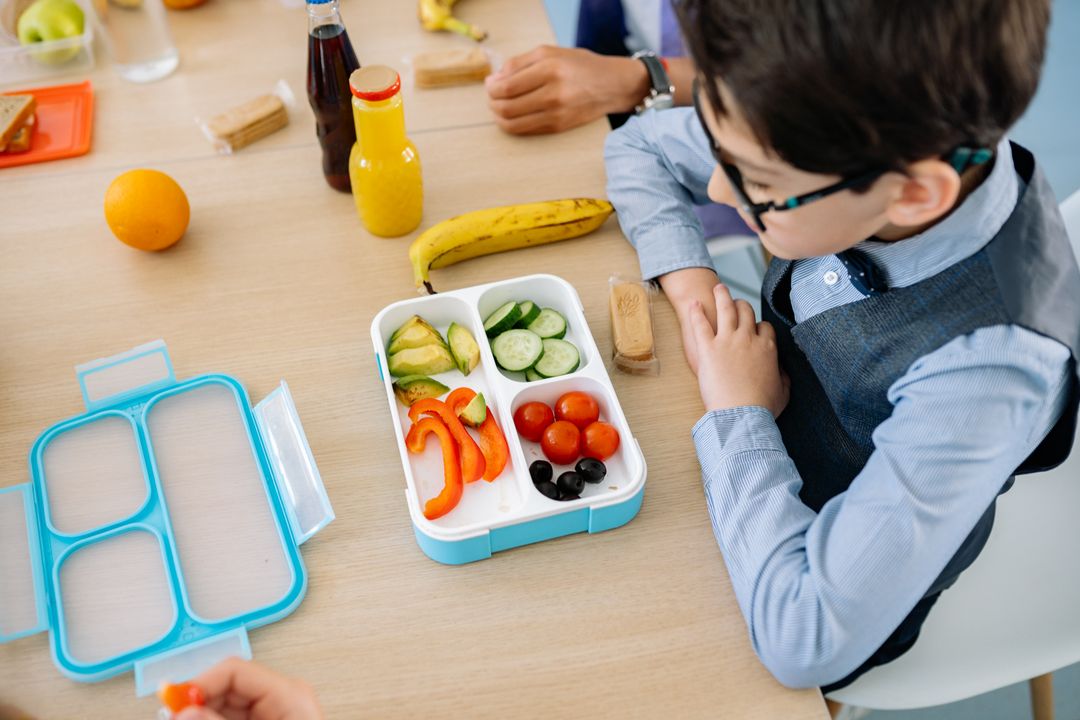
The target is: one complex carbohydrate, one protein source, one calcium-rich item, and one fresh fruit or vegetable. That’s four components. They don’t all need to be separate dishes.
Tiffin Idea 1: Moong dal stuffed paratha (protein + carb) + small portion of sesame-til chutney (calcium). Simple. Filling. No reheating needed.
Tiffin Idea 2: Rajma rice (protein + carb) in a small steel container + one banana. Rajma rice is stable, travels well, and delivers 10–12g protein per 150g portion.
Tiffin Idea 3: Paneer bhurji (non-Jain) or mashed tofu bhurji (Jain-safe) wrapped in a multigrain roti. The tofu version delivers comparable calcium to paneer when made with calcium-set tofu.
Tiffin Idea 4: Chana sundal (boiled chickpeas with mustard, curry leaves, and coconut) in a small container + a few walnuts. Chickpeas deliver iron and zinc; walnuts deliver omega-3s for brain function.
The Micronutrient Gap in This Age Group
The calcium shortfall is the most under-discussed crisis in Indian school nutrition. Milk helps — but it’s not the only path. Ragi, sesame (til), amaranth, and fortified soy milk each deliver significant calcium per serving. If your child dislikes milk, don’t panic. Build calcium from ragi rotis, til ladoo, and rajgira (amaranth) porridge. These are all readily available across Gujarat.
Malnutrition at this stage is directly linked to cognitive outcomes. Research from WFP confirms that malnutrition reduces brain cell production and impairs cell communication, contributing to lower IQ, slower language development, and reduced motor skills (WFP USA, 2024, retrieved June 2026). School meals linked to better nutrition showed a 9% increase in school enrolment, 12% for girls. The tiffin box has consequences beyond hunger.
Ready to cook smarter for your family? Explore the Child Nutrition and Cooking Course at Florence Academy →
Top Vegetarian Protein, Calcium, and Iron Sources at a Glance
Use this table to plan varied, nutrient-dense meals. All values are per 100g raw/dry weight. All ingredients listed are Jain-safe unless marked.
| Ingredient | Protein (g) | Calcium (mg) | Iron (mg) | Jain-Safe |
|---|---|---|---|---|
| Ragi (finger millet) | 7.3 | 344 | 3.9 | Yes |
| Sesame seeds (til) | 17.7 | 975 | 14.6 | Yes |
| Rajma (kidney beans) | 22.9 | 143 | 6.4 | Yes |
| Moong dal (split) | 24.0 | 124 | 4.4 | Yes |
| Horse gram (kulthi) | 22.0 | 287 | 6.7 | Yes |
| Makhana (lotus seeds) | 9.7 | 60 | 1.4 | Yes |
| Paneer | 18.3 | 480 | 0.2 | No (dairy — Jain-permissible for some) |
| Soya chunks (dry) | 52.4 | 350 | 10.4 | Yes |
Source: ICMR-NIN Nutritive Value of Indian Foods. Rotate across at least 4–5 of these per week for broad micronutrient coverage.
The Florence Academy Nutrition and Dietetics course teaches the science behind these RDA targets and how to apply them in everyday Indian cooking.
Teen Nutrition (13–18 Years): Why Is This the Most Demanding Stage?
Adolescence is the single most nutritionally demanding period of human life outside of pregnancy. ICMR-NIN 2020 sets the peak targets: 47–55g protein daily, 1,050mg calcium, 28mg iron for boys and 32mg for girls. A teenage girl’s iron requirement is four times that of a toddler. Meeting it on a vegetarian diet requires planning — it doesn’t happen by default.
The obesity side of the problem is accelerating just as fast. India is projected to have 27 million obese children aged 5–19 by 2030 — 11% of the global burden (UNICEF India, 2024, retrieved June 2026). Ultra-processed food consumption among adolescents is a direct driver. A structured school nutrition programme in India reduced daily ultra-processed food consumption by over 1,000 calories among adolescents over just six months (PGIMER study, Outlook India, 2025, retrieved June 2026). That kind of reduction is achievable at home too — but it requires intentional meal planning.
Jain-Safe Iron Sources for Teens
Iron deficiency is most common in teenage girls, especially after menstruation begins. Jain families have strong options here: sesame seeds (til) deliver 14.55mg iron per 100g — among the highest of any plant food. Horse gram (kulthi dal), lotus seeds (makhana), and dried fenugreek seeds are all root-vegetable-free and iron-rich. Add them into your teen’s diet through sesame-based chutneys, makhana trail mix, and methi thepla.
Florence Academy’s classroom observation: In our child nutrition programme, we consistently find that Jain-family parents are most worried about iron for their teenage daughters. Til chutney on roti, makhana dry-roasted in ghee, and sprouted horse gram salad are three preparation methods that deliver measurable iron without any root vegetables. None of them feels like a sacrifice. All of them taste excellent.
4 Chef-Approved Teen Meal Ideas
Breakfast: Multigrain paratha made with wheat, ragi, and soyabean flour blend (1:1:0.5 ratio) with dahi on the side. This combination delivers 15–18g protein and 200mg+ calcium in one meal.
Lunch: Rajma-rice with a kachumber salad (cucumber, tomato if non-Jain, or raw papaya for Jain families). Rajma rice is one of the highest-protein vegetarian lunch options available in an Indian kitchen. A 200g portion delivers 14–16g protein.
Snack: Makhana roasted in ghee with rock salt and turmeric. 30g makhana delivers 4g protein, 60mg calcium, and 1.4mg iron. It’s a 5-minute prep and significantly more nutritious than any packaged chip.
Dinner: Soya chunk or tofu stir-fry with capsicum and cumin, served with bajra or jowar roti. Soya chunks deliver 52g protein per 100g dry weight — the highest of any vegetarian protein source. Even a 30g serving per meal moves the needle significantly on daily protein.
Helping Teens Understand Why Food Choices Matter
Teenagers are far more receptive to nutrition information when it connects to things they care about: energy for sport, clear skin, concentration for exams. Don’t frame nutrition as a health obligation. Frame it as performance support. That framing works.
Citation Capsule: A PGIMER-led structured nutrition education programme in India reduced daily ultra-processed food intake among adolescents by over 1,000 calories across a six-month period. The intervention involved guided meal planning, school-based sessions, and active family participation. The study, reported by Outlook India in 2025, suggests that structured education rather than restriction is the most effective tool for reducing adolescent junk food consumption. (PGIMER study, Outlook India, 2025)
Florence Academy’s Kids Culinary Fiesta workshop is a hands-on programme where teens learn to cook nutritious meals themselves — a far more effective approach than simply telling them what to eat.
What Are the 5 Most Common Nutrition Mistakes Indian Parents Make?
Most child nutrition problems in Indian households don’t come from ignorance — they come from specific, repeatable habits that look fine on the surface but create consistent shortfalls. Here are the five most common ones, with direct fixes.
Mistake 1: Skipping Breakfast (or Replacing It with Biscuits)
As established in the preschooler section, students who eat breakfast regularly show good learning concentration in 69.2% of cases — skipping it, or replacing it with glucose biscuits, produces a short sugar spike followed by concentration dropping before 10am. Fix: prepare chilla batter or ragi porridge the night before and cook it in five minutes the next morning. Speed isn’t a valid excuse here.
Mistake 2: Replacing Dal-Chawal with Packaged Noodles
Instant noodles deliver simple carbohydrates, sodium, and essentially no micronutrients. They’re genuinely displacing nutritious meals in Indian school tiffins. The fix isn’t to ban them entirely. It’s to make dal-based tiffins fast and appealing — rajma rice in a wide-mouth thermos flask travels hot and stays appetising for four hours.
Mistake 3: Relying on One Type of Dal for All Iron
Toor dal is the most common dal in Gujarati households. It contains roughly 1.5mg iron per 100g cooked portion. That’s one-fifth of a toddler’s daily iron target per serving. You need variety: moong delivers a different amino acid profile, rajma delivers substantially more iron, horse gram is exceptionally high. Rotating three to four dals per week is the easiest single upgrade to a child’s diet.
Mistake 4: Assuming Milk Covers All Calcium
One 200ml glass of cow’s milk delivers roughly 240mg calcium. A 7-year-old needs 750mg. If milk is the only calcium source, you’re hitting 32% of the target per glass. Add ragi (ragi roti, ragi porridge), sesame seeds in chutneys and til ladoos, and rajgira (amaranth). These are all calcium-dense foods with long histories in Gujarati cooking.
Mistake 5: Teen Girls Restricting Food to Stay Thin
Social media body image pressure in Indian cities is leading teenage girls to restrict meals in ways that cause iron, calcium, and B12 shortfalls during the most nutritionally critical stage of their lives. If your daughter is eating half-portions consistently, the conversation isn’t about food policing. It’s about explaining what restricting calcium at 15 does to bone density at 35 — concretely and honestly.
Florence Academy’s Child Nutrition and Cooking course addresses each of these common mistakes with practical, chef-tested meal solutions rooted in Indian ingredients.
Frequently Asked Questions
What is the best vegetarian protein source for a 3-year-old Indian child?
Moong dal is the best starting point for toddlers — it’s easy to digest, mild in flavour, and delivers around 7g of protein per 100g cooked portion. Unlike heavier legumes such as rajma or chana, moong is unlikely to cause digestive discomfort at this age.
As your child approaches 3 years, introduce paneer (non-Jain) for its high protein density — roughly 11g per 40g serving. For Jain families, calcium-set tofu provides a comparable protein and calcium profile. Beyond legumes, blending ragi and soyabean flour into roti dough at a 70:30 ratio adds protein across every meal without the child noticing any taste change. Sprouted moong is excellent from age 2 — sprouting increases bioavailability and adds vitamin C, which improves iron absorption from the same meal.
How can I meet calcium requirements for my child without dairy?
Ragi is the most effective non-dairy calcium source available in India, delivering approximately 344mg of calcium per 100g dry flour — more per gram than most commercially available dairy products. For a 7-year-old needing 750mg daily, two ragi-based items per day cover 400–500mg without any milk.
Sesame seeds (til) are the second most calcium-dense plant food in Indian kitchens, offering around 975mg per 100g. A tablespoon of til chutney as a regular condiment adds 100–120mg calcium to any meal with minimal effort. For complete daily coverage, combine ragi, til, and rajgira (amaranth) in rotation. Rajgira ladoo — a traditional Gujarati sweet — provides both calcium and iron. Fortified soy milk is a practical supplement for teens who avoid dairy altogether.
What should I pack in my school-age child’s tiffin box every day?
Aim for four components in two containers: one protein source, one complex carbohydrate, one calcium-rich item, and one fresh fruit or vegetable. This structure ensures sustained concentration and energy throughout the school day, not just the first two hours.
Strong combinations that travel well: moong dal stuffed paratha with a small container of sesame-til chutney (protein + carb + calcium); rajma rice in a wide-mouth thermos with a banana (protein + carb + fruit); chana sundal with walnuts and a small piece of jaggery (protein + iron + healthy fat). Avoid saucy dishes that leak or go cold badly. Fermented options — dhokla made from rice-lentil batter — travel well and improve gut microbiome health, which directly increases micronutrient absorption. That’s a genuine nutritional advantage over any packaged snack.
My teen refuses to eat dal and sabzi — what are high-nutrition alternatives?
Restructure the format rather than changing the food itself. The goal is to deliver the same nutrients in a presentation your teen actually wants to eat.
Rajma wraps in multigrain roti with a lime-and-herb dressing function exactly like a burrito — the legumes are still there, the format is entirely different. Chana chaat with lemon, rock salt, and pomegranate seeds is a snack, not a sabzi, but delivers significant iron and protein. Makhana trail mix roasted in ghee with turmeric is an excellent substitute for packaged chips and takes three minutes to prepare. For meals, soya chunk stir-fry in a flatbread sandwich or moong dal chilla served as savoury pancakes with dipping chutney shifts the entire framing. The nutrients are identical to a traditional plate — the experience of eating them is not.
Are Jain children at higher nutritional risk because they avoid root vegetables?
Not inherently — but Jain dietary practice requires more intentional planning to cover nutrients root vegetables typically provide, particularly vitamin A, potassium, and certain forms of iron.
The key substitutions are well-established within Gujarati cooking and require no exotic ingredients. Raw banana and plantain replace sweet potato and potato for starch and potassium. Lotus seeds (makhana) are iron-rich and calcium-dense — more so than most root vegetables per gram. Banana stem delivers iron and fibre comparable to beetroot. Amaranth and ragi cover the mineral gaps that would otherwise come from tubers.
The practical risk for Jain families isn’t nutritional inadequacy — it’s repetition. If the same three or four Jain-safe foods rotate daily without variety, micronutrient breadth suffers. The solution is intentional rotation across makhana, banana stem, raw banana, lotus seeds, and amaranth. With these in regular rotation, a Jain child’s nutritional profile matches or exceeds that of children who eat root vegetables.
Building Your Child Nutrition Foundation: One Meal at a Time
There’s no single superfood that solves a child’s nutritional gaps. It’s the accumulation of daily, consistent, well-planned meals — a ragi porridge at breakfast, a rotating dal at lunch, a makhana snack at 4pm, and a calcium-rich roti at dinner. Those choices stack up over years into the bone density, the immune function, and the concentration levels your child walks into adulthood with.
The statistics in this guide aren’t there to alarm you. They’re there to show that even well-intentioned home cooking in Gujarat and across India is leaving consistent gaps in iron, calcium, and zinc. You can close those gaps on a fully vegetarian and Jain-safe diet. The tools are already in your kitchen.
If you want to build these skills properly — to understand the nutritional science behind every ingredient and turn that knowledge into consistently good meals — explore Florence Academy’s Child Nutrition and Cooking Course, designed specifically for Indian parents and homemakers who want chef-level knowledge applied to family feeding.
Have questions about our courses? Chat with us on WhatsApp — we respond fast.
About the Author
Chef Monila Surana is the Managing Partner and lead culinary educator at Florence Academy of World Cuisines, Ahmedabad — an NSDC Skill India and AHLEI-certified culinary institute. With 18 years of professional culinary education experience, she leads curriculum design across Florence Academy’s 100% vegetarian and Jain-speciality programmes, including the Child Nutrition and Cooking course. Florence Academy has trained 2,000+ students, with placement partnerships at ITC Hotels and Marriott. View Chef Monila’s full profile →


