
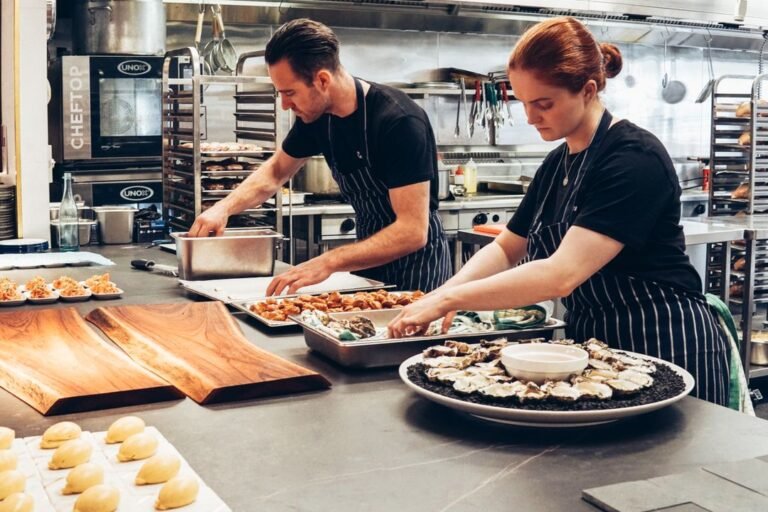
One kitchen. Five brands. Five separate listings on Swiggy and Zomato, each with its own name, menu, and photography, all cooked by the same team in the same space. This isn’t a loophole. It’s the multi-brand cloud kitchen model, and it’s how some of India’s fastest-growing food companies actually operate.
This guide covers what the multi-brand model actually is and why operators use it. It also covers how many brands a single kitchen can realistically run, and the menu-overlap mistake that sinks most first attempts. If you already have a cloud kitchen running, or you’re setting one up, this is the next layer of strategy on top of it. See our full cloud kitchen setup guide →
Key Takeaways
– India’s cloud kitchen market reached USD 1.24 billion in 2025, projected to reach USD 3.69 billion by 2034 (IMARC Group, India Cloud Kitchen Market Report, 2025)
– Rebel Foods, India’s largest multi-brand operator, runs more than 450 cloud kitchens across brands like Faasos, Behrouz Biryani, and Oven Story (Verdict Food Service, 2025)
– Each brand should target a different craving, meal type, or price point. Overlapping menus is the single most common reason multi-brand kitchens underperform
– Shared ingredients (sauces, proteins, spice bases) across brands cut food cost without customers ever noticing the overlap
– Most operators start with 2 to 3 brands and add more once the first ones are profitable, not all at once

What Is a Multi-Brand Cloud Kitchen?
A multi-brand cloud kitchen runs several distinct virtual restaurant brands from one physical kitchen. Each brand gets its own name, logo, menu, and listing on Swiggy and Zomato. A customer ordering from “brand A” and a customer ordering from “brand B” may never realize both orders came out of the same stove.
Rebel Foods is India’s clearest example of this model at scale. The company runs more than 450 cloud kitchens, hosting brands like Faasos, Behrouz Biryani, and Oven Story Pizza, each targeting a different craving (Verdict Food Service, 2025). As Rebel Foods CEO Ankush Grover put it: “We are not a brand. We are a platform that hosts multiple brands.” One kitchen might cook rolls under one brand name, biryani under another, and pizza under a third. All of it comes from the same equipment and staff.
The logic is straightforward once you see it. Every delivery app listing is a separate storefront with its own search ranking, ratings, and visibility. Running five listings instead of one gives a single kitchen five separate chances to appear in a search.
Citation Capsule: India’s cloud kitchen market reached USD 1.24 billion in 2025 and is projected to reach USD 3.69 billion by 2034 (IMARC Group, 2025). The report identifies the multi-brand model, exemplified by Rebel Foods’ portfolio of brands run from shared kitchen infrastructure, as a significant driver of that growth.
Why Do Operators Run Multiple Brands From One Kitchen?
The economics are the real driver. Rent, equipment, and core kitchen staff are largely fixed costs whether you run one brand or five. Spreading those costs across multiple revenue streams improves your margin on each one.
Delivery app visibility is the second reason, and it matters just as much. Swiggy and Zomato rank listings by relevance, ratings, and delivery speed, not by which kitchen they come from. A kitchen with five well-differentiated brands can occupy five separate spots in a customer’s search results instead of competing for just one.
At Florence Academy, we’ve seen students complete our Culinary Foundation Programme and go on to run two or three brands from one rented kitchen in Ahmedabad. Some do it within their first year. The ones who succeed treat each brand as its own business with its own menu identity, not as a copy-paste exercise with a different logo. Explore the Culinary Foundation Programme →

Ready to build the kitchen skills a multi-brand operation depends on? Explore Courses at Florence Academy →
How Many Virtual Brands Should One Kitchen Run?
There’s no fixed number, but discipline matters more than ambition here. Most successful operators start with 2 to 3 brands and only add more once the first ones are consistently profitable. Some large operators eventually run 8 to 10 brands from a single location, but that scale comes after years of menu engineering, not on day one.
The mistake that sinks most first attempts is launching several brands with nearly identical menus. Two brands both selling generic North Indian curries confuse Swiggy and Zomato’s ranking algorithms and confuse customers too. Worse, they cannibalize each other’s orders instead of capturing new demand.
Each brand should target something genuinely different: a different craving, a different meal occasion, or a different price point. One brand for quick lunch thalis, one for late-night snacking, one for healthy bowls, and one for desserts. That gives a kitchen four real reasons to show up in four different searches, not four versions of the same one.
Here’s what most new operators miss: differentiation doesn’t require different ingredients. Smart menu design lets brands share core inputs, sauces, gravies, proteins, and spice bases, while presenting completely different final dishes. The kitchen buys and preps once. The customer sees four distinct restaurants.

Citation Capsule: Menu overlap between virtual brands run from the same kitchen is the leading cause of underperformance in the multi-brand cloud kitchen model. Each brand should target a distinct craving, meal occasion, or price point, while sharing core ingredients behind the scenes to keep food costs controlled without customers noticing the overlap.
What Are the Risks of Running Multiple Brands From One Kitchen?
Quality consistency is the first risk, and it compounds with every brand you add. A kitchen team stretched across five different menus during a dinner rush is more likely to make mistakes than one focused on a single menu. Ratings drop quickly on delivery apps, and a bad rating on one brand doesn’t hurt the others, but the kitchen behind all of them still suffers operationally.
Licensing and compliance also scale with brand count. Your FSSAI registration covers the kitchen as a business entity. Each brand typically still needs its own listing setup and documentation, and sometimes its own GST-linked bank details, depending on how you structure ownership. Get this wrong and you risk delays or suspensions across every brand at once, not just the one with the issue.
Real estate and equipment limits are the final constraint. A single four-burner kitchen genuinely cannot support ten actively-promoted brands during peak hours, regardless of how well the menus are engineered. Match your brand count to your kitchen’s real physical throughput, not to how many listings you’d like to have.
Have questions about running a food business or which Florence Academy programme fits your goals? Chat with us on WhatsApp — we respond fast.
Frequently Asked Questions
What is a multi-brand cloud kitchen?
A multi-brand cloud kitchen runs several distinct virtual restaurant brands, each with its own name, menu, and delivery app listing, from a single physical kitchen. Rebel Foods runs over 450 such kitchens across brands like Faasos, Behrouz Biryani, and Oven Story Pizza, and is India’s best-known example of the model at scale.
Why do cloud kitchens run multiple brands instead of just one?
Rent, equipment, and core staff costs are largely fixed regardless of brand count, so spreading them across multiple revenue streams improves margins. Each brand also gets its own listing on Swiggy and Zomato, giving one kitchen multiple chances to appear in search results instead of competing for just one spot.
How many virtual brands can one kitchen realistically run?
Most operators start with 2 to 3 brands and add more only once those are profitable. Some large operators eventually run 8 to 10 brands from one location, but that scale comes after years of menu engineering. The real limit is your kitchen’s physical throughput during peak hours, not how many listings you’d like to have.
What’s the biggest mistake in running a multi-brand cloud kitchen?
Launching brands with overlapping menus. Two brands both selling similar curries confuse delivery app ranking algorithms and cannibalize each other’s orders instead of capturing new demand. Each brand should target a distinct craving, meal occasion, or price point, even while sharing core ingredients behind the scenes.
Does Florence Academy teach the skills needed to run a multi-brand cloud kitchen?
Yes. Florence Academy’s Culinary Foundation Programme builds the menu development, batch cooking, and kitchen management skills that multi-brand operations depend on. Several graduates have gone on to run multiple food brands from a single rented kitchen space in Ahmedabad. Explore the Culinary Foundation Programme →
The Bottom Line
Running multiple virtual brands from one kitchen isn’t a trick. It’s a genuine strategy for maximizing the return on a fixed kitchen investment, and it’s how some of India’s largest food companies actually scale. The model only works when each brand earns its own place on the menu instead of duplicating what another brand already offers.
India’s cloud kitchen market, worth USD 1.24 billion in 2025 and still growing (IMARC Group, 2025), has room for operators who get this right. Start with two or three genuinely different brands, get each one profitable, and expand from there.
Join 2,000+ students who’ve trained with expert chefs at Florence Academy, Ahmedabad.
Explore Courses at Florence Academy →
Phone: +91 6351665305 | +91 8320715588


