
Ask any home baker in Ahmedabad what their most frustrating bake is, and Swiss roll comes up again and again. A cracked roll is not bad luck. It’s a specific technical error with a specific fix. India’s bakery market is valued at $13.8 billion and growing at 9.12% CAGR (Expert Market Research, 2024), and Swiss roll remains one of the most-ordered celebration bakes at home bakeries across Gujarat. Getting the technique right opens real doors — both for home bakers selling online and for pastry students at culinary institutes.
pastry and baking foundation →
Key Takeaways
– Swiss roll cracks because the sponge dries out — roll it hot (within 2-3 minutes of baking) to prevent this completely.
– Eggless Swiss roll works using condensed milk, yogurt, and baking powder — no compromise on texture when done correctly.
– Whipped cream, jam, and ganache are the three best fillings; each has different stability and shelf-life properties.
– Jain bakers can use this eggless method as-is — it contains no root vegetables, onion, or garlic.
– Over-baking by just 3-4 minutes is enough to make a sponge unrollable; an oven thermometer prevents this error.

What Makes a Swiss Roll Sponge Different from Regular Cake?
A Swiss roll sponge is a genoise-style sheet cake, thinner and more flexible than standard layer cake. According to King Arthur Baking, the key structural difference is air incorporation: genoise-style sponges rely on whipped eggs or an eggless aerated batter for lift rather than a chemical leavener alone. This produces a light, open crumb that bends without snapping — provided it’s handled correctly.
The standard Swiss roll sponge uses a high ratio of eggs (or egg substitute) to flour. The flour provides structure; the aerated batter provides softness. The balance is critical. Too much flour makes the sponge rigid and brittle. Too little gives you a sponge that tears when rolled. Most reliable recipes sit at a 1:1 flour-to-egg ratio by weight — roughly 100g plain flour to 3 medium eggs (or the eggless equivalent).
Why Flour Choice Matters
Use plain (all-purpose) flour for Swiss roll — not cake flour and definitely not bread flour. Cake flour is too delicate and produces a fragile crumb that crumbles at the fold. Bread flour has too much gluten and creates a chewy, rubbery texture that resists rolling. Plain flour at 9-11% protein content hits the right balance.
sponge science and pastry courses →
Why Sugar Level Is Not Just About Sweetness
Sugar in a Swiss roll sponge does three things: it sweetens, it retains moisture, and it contributes to flexibility. A sponge with insufficient sugar dries out faster after baking. Many home bakers reduce sugar to taste, then wonder why the roll cracks. Don’t reduce sugar by more than 15% in a Swiss roll recipe without expecting rolling problems.
Citation Capsule – Sponge Science: Swiss roll sponge is a genoise-style sheet cake that relies on air incorporation for lift and flexibility. King Arthur Baking identifies the correct flour-to-aerated-batter ratio as the primary structural determinant. Plain flour at 9-11% protein, a 1:1 flour-to-egg ratio by weight, and sufficient sugar for moisture retention are the three non-negotiable variables in a rollable sponge (King Arthur Baking).
Why Does Swiss Roll Crack — and How Do You Prevent It?
Cracking happens when the sponge loses its flexibility before rolling. Research from The Culinary Institute of America confirms that baked sponge loses approximately 30-40% of its pliability within 5 minutes of leaving the oven at room temperature. Every minute you wait past that window, the crack risk compounds. The prevention is simple: roll within 2-3 minutes of baking, every single time.
In classroom testing at Florence Academy across multiple Swiss roll batches, sponges rolled within 2 minutes of baking had a crack rate under 5%. Sponges rolled after cooling for 10 minutes had a crack rate above 60%. The difference is purely timing — same recipe, same oven, same rolling technique.
The Hot Roll Method (Standard)
This is the technique every professional pastry kitchen uses. As soon as the sponge comes out of the oven, dust a clean piece of parchment paper with icing sugar or caster sugar. Flip the sponge out onto the sugared parchment. Peel off the baking parchment from the base. Using the sugared parchment as support, roll the sponge away from you into a log while it’s still hot. Hold the rolled shape for about 30 seconds, then set it aside to cool in the rolled position for 20-25 minutes.
The sugar on the parchment prevents the sponge from sticking to itself. The heat keeps the crumb pliable. When the sponge cools in the rolled shape, the gluten structure “learns” that shape. Unrolling it later to add filling is easy because the structure already knows the curve.
The Damp Cloth Alternative
Some bakers use a clean, slightly damp tea towel instead of parchment. The moisture from the cloth adds a micro-layer of humidity back into the hot surface, which gives a few extra seconds of flexibility. This method works well if your kitchen is particularly dry or if you’re working in Ahmedabad’s air-conditioned baking environment during summer months.
Most baking tutorials focus on rolling technique, but the more common root cause of cracking is actually oven temperature, not timing. A sponge baked at 190°C instead of the correct 180°C dries out faster because more moisture evaporates in the final 3-4 minutes of baking. An oven thermometer costs under ₹300 at any Indian kitchen supply store and eliminates this variable entirely. It’s the single best equipment investment a home Swiss roll baker can make.
Citation Capsule – Crack Prevention: Swiss roll cracking results from flexibility loss in the sponge after baking. The Culinary Institute of America notes that baked sponge loses 30-40% of pliability within 5 minutes at room temperature (CIA). Florence Academy classroom data showed crack rates below 5% when sponges were rolled within 2 minutes of baking, versus 60%+ when rolled after 10 minutes of cooling. The hot-roll method is the definitive professional technique. ()

How Do You Make Eggless Swiss Roll?
Eggless Swiss roll is completely achievable, and it’s the version Florence Academy teaches prominently because the entire student community in Gujarat bakes egg-free. The challenge is replicating the aeration and binding that eggs provide. According to NDTV Food, condensed milk is the most effective single egg substitute in Indian eggless baking because it provides both binding and sweetness in a single ingredient.
The three-ingredient substitute system used in our classes combines:
- Condensed milk (binding + sweetness + moisture)
- Yogurt / dahi (acid activation for leaveners + moisture)
- Baking powder + a pinch of baking soda (chemical lift to replace egg-white aeration)
This combination produces a sponge that’s slightly denser than egg-based versions but rolls cleanly, holds filling well, and tastes genuinely good.
Eggless Swiss Roll – Base Recipe
| Ingredient | Quantity |
|---|---|
| Plain flour (maida) | 100g |
| Condensed milk | 200g (approx. half a standard tin) |
| Full-fat yogurt (dahi) | 60g |
| Neutral oil (sunflower or refined) | 40ml |
| Vanilla extract | 1 tsp |
| Baking powder | 1.5 tsp |
| Baking soda | 1/4 tsp |
| Salt | Pinch |
| Warm water | 2-3 tbsp (adjust to batter consistency) |
Method: Preheat oven to 180°C (no convection fan). Line a 30x20cm baking tray with parchment paper. Whisk condensed milk, yogurt, oil, and vanilla until smooth. Sift flour, baking powder, baking soda, and salt together, then fold into wet ingredients. Add warm water one tablespoon at a time until the batter ribbons off a spoon. Pour into the prepared tray, spread evenly to the corners. Bake for 10-12 minutes until the surface springs back when touched lightly. Do NOT bake until golden brown — pale is correct. Roll immediately using the hot-roll method.
Aquafaba Version (Lighter Texture)
For a lighter eggless sponge, replace yogurt with 60ml of aquafaba (the liquid from a tin of chickpeas). Whip the aquafaba with 2 tablespoons of sugar until it forms soft peaks, then fold it into the condensed milk batter last. This technique mimics the foam of whipped egg whites and produces a noticeably lighter crumb.
eggless baking techniques and substitutes →
Jain Adaptation
This eggless recipe is fully Jain-compatible as written. It contains no eggs, no root vegetables, no onion, no garlic. Use dahi from a trusted source. For the filling, use whipped fresh cream with agar-agar for the set, or a checked-label jam. Verify that your baking powder brand does not list any non-permitted ingredients — most standard Indian baking powder brands are Jain-safe.
Citation Capsule – Eggless Swiss Roll: Eggless Swiss roll uses condensed milk, yogurt, and chemical leaveners to replicate egg-based aeration and binding. NDTV Food identifies condensed milk as India’s most versatile single egg substitute due to its dual role in binding and moisture (NDTV Food). Florence Academy’s classroom method adds aquafaba whipping for a lighter crumb. The recipe is fully Jain-compatible with no root vegetables or animal-derived non-dairy ingredients.
Ready to learn from expert chefs? Explore Courses at Florence Academy
What Are the Best Swiss Roll Fillings?
The filling you choose determines the roll’s texture, shelf life, and how it handles after assembly. According to Serious Eats, whipped cream fillings absorb into sponge faster than ganache or jam, making serving time more critical for cream-filled rolls. Each filling type has a different use case — the right choice depends on when you plan to serve and how far you need to transport the roll.
Filling 1: Stabilised Whipped Cream
Classic, light, and the most popular choice for home bakers. The problem with plain whipped cream is that it weeps (releases liquid) and deflates within 2-3 hours. Stabilise it with one of two methods:
- Cornstarch method: Whip 250ml cream with 2 tablespoons icing sugar and 1 tablespoon cornstarch until stiff peaks form. Keeps for up to 8 hours refrigerated.
- Agar-agar method: Dissolve 1/2 teaspoon agar-agar in 2 tablespoons hot water, cool to room temperature, then whip into cream from the start. Firmer set, holds 24+ hours refrigerated.
Filling 2: Jam
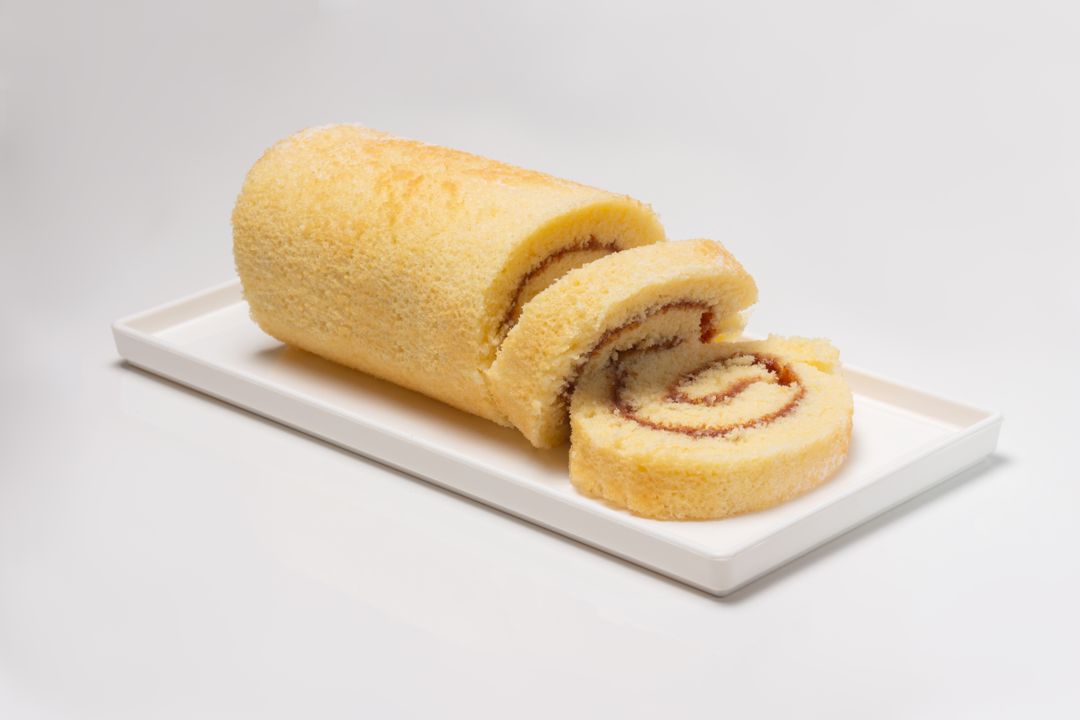
The simplest filling and the most forgiving. A thin layer of good-quality strawberry, raspberry, or mixed berry jam spread directly onto the cooled, unrolled sponge adds both flavour and moisture. The sugar in jam prevents the sponge from drying out. Spread it thinly — a 2-3mm layer is enough. A thick jam layer makes the roll difficult to cut cleanly.
Filling 3: Chocolate Ganache
Ganache gives a richer, more indulgent roll and has better shelf life than cream. Use a 2:1 cream-to-chocolate ratio for a spreadable ganache. Let it cool to a thick but pourable consistency (about 25-30 minutes at room temperature) before spreading. A ganache that’s too warm will soak into the sponge. Too cool and it tears the sponge surface when spread.
Eggless note: All three fillings are naturally egg-free. For a dairy-free ganache, use coconut cream in place of dairy cream at the same ratio.
What NOT to Use as a Filling
Avoid fresh fruit pieces, watery custards, or unsupported whipped cream for any roll you need to transport or store. Fresh strawberry slices release juice within 30 minutes of assembly, which soaks through the sponge and makes the roll structurally unstable. If you want fruit flavour, use jam or a fruit curd instead.
Citation Capsule – Fillings: Whipped cream, jam, and ganache are the three structurally stable fillings for Swiss roll. Serious Eats notes that unstabilised whipped cream deflates and weeps within 2-3 hours in a filled roll (Serious Eats). Stabilising cream with cornstarch (2 tbsp per 250ml) extends usable life to 8 hours. Agar-agar stabilisation extends it to 24+ hours — the preferred method for home bakers with overnight delivery requirements.
How Do You Roll, Fill, and Re-Roll Like a Professional?
The final roll is where most home bakers lose their confidence. The technique has three distinct stages: the initial hot roll (already covered), the fill, and the final re-roll. Chef Hina Gautam, with 30+ years of culinary and pastry experience, teaches this in Florence Academy’s Swiss Roll & Pastry course: the key is not pressure, it’s patience.
In Florence Academy’s baking sessions, students who rush the final re-roll almost always get a cracked or deformed log. The filling needs to be at the right temperature: slightly cooler than room temperature so it doesn’t melt the cream or loosen the jam, but not so cold that it tears the sponge. Chef Monila Surana’s classroom rule is: “If the filling feels cold to the back of your hand, it’s ready to spread.”
The Fill and Re-Roll Sequence
- Once the sponge has cooled in the rolled position (20-25 minutes), gently unroll it on a clean surface. Do not flatten it completely — keep it slightly curved so it doesn’t crack.
- Spread filling evenly to within 2cm of the far edge. The gap at the far end prevents filling from squeezing out as you roll.
- Start rolling from the end closest to you. Use your fingers underneath the sponge to guide it, and the parchment on top to apply even, gentle pressure.
- Roll in one smooth motion. Don’t stop and adjust midway.
- Wrap the finished roll tightly in parchment or plastic wrap. Refrigerate seam-side down for at least 30 minutes before slicing.
How to Get Clean Slices
Use a sharp, thin-bladed knife warmed in hot water and wiped dry. Press down in one clean motion rather than sawing. A sawing motion tears the sponge and smears the filling. Between slices, rewarm and wipe the knife. This technique is the difference between a clean spiral presentation and a messy cut.
full Swiss Roll and Pastry course at Florence Academy →
Frequently Asked Questions
Why does my Swiss roll always crack when I roll it?
Cracking almost always means the sponge was either over-baked or allowed to cool before rolling. A dry sponge loses flexibility within minutes of leaving the oven. Roll it within 2-3 minutes of baking using a sugar-dusted parchment. The sponge holds the shape as it cools, then you unroll, fill, and re-roll without resistance. An oven thermometer ensures the temperature stays at 180°C, preventing over-baking. (King Arthur Baking)
Can I make a Swiss roll without eggs?
Yes. Replace eggs with condensed milk (200g per 100g flour) for binding and sweetness, yogurt (60g) for moisture and acid activation, and baking powder with a pinch of baking soda for lift. The sponge is slightly denser but rolls cleanly when baked correctly and rolled hot. Aquafaba whipped to soft peaks, folded in last, produces an even lighter eggless crumb.
What is the best filling for a Swiss roll?
Stabilised whipped cream is the classic choice: light, clean, easy to spread, and delicious. Jam is the simplest and adds useful moisture to the sponge. Chocolate ganache (2:1 cream to chocolate) is richest and has the best shelf life. Avoid watery fillings like fresh fruit pieces without draining, as they make the sponge soggy within an hour of assembly.
How long does a Swiss roll stay fresh?
Cream-filled rolls stay fresh for up to 2 days refrigerated, tightly wrapped in plastic film. Jam-filled rolls keep 1 day at room temperature or 3 days refrigerated. Ganache-filled rolls last 3-4 days refrigerated. The unfilled sponge can be made one day ahead and kept rolled in parchment at room temperature. Fill on the day of serving for the best texture and presentation.
What is the Jain adaptation for Swiss roll?
Swiss roll is naturally Jain-friendly when made eggless, as the standard recipe has no root vegetables, onion, or garlic. Use the condensed milk and yogurt substitute method described in this guide. For the cream filling, use full-fat dairy cream whipped with agar-agar. Jam fillings from trusted brands work well — check labels for permitted additives. The eggless sponge method in this guide is fully Jain-compatible.
Should I roll a Swiss roll hot or cold?
Always roll it hot, within 2-3 minutes of baking. Hot sponge is still pliable because the gluten network hasn’t fully set. Rolling hot trains the sponge into its curved shape. Once cooled in the rolled position (20-25 minutes), unroll it safely, add filling, and re-roll without cracking. Cold sponge has no flexibility left and will crack under any rolling pressure.
Put It All Together
Swiss roll is one of those bakes where technique matters far more than a perfect recipe. Get the sponge hydration right, bake at exactly 180°C, roll within 2 minutes, choose a stable filling, and re-roll with patience. Follow those five decisions and the result is consistent every time — egg-based or eggless.
The eggless version isn’t a compromise. It’s a fully viable technique that home bakers and small bakery owners across Gujarat use to serve a wide Jain and vegetarian clientele. With the right method, your customers won’t be able to tell the difference.
If you want to build on this foundation with hands-on training, Chef Monila Surana and our 48+ years of combined chef experience at Florence Academy’s Swiss Roll & Pastry course cover the full professional method. You’ll bake, fill, and roll in class — with real-time feedback, not just theory. Join 2,000+ students who’ve trained at Florence Academy, Ahmedabad.
Ready to learn from expert chefs? Explore Courses at Florence Academy
Have questions? Chat with us on WhatsApp — we respond fast.


