
India’s home bakery market is growing fast. The country’s bakery sector was valued at USD 13.8 billion in 2024 and is expanding at 9.12% CAGR (IBEF, 2024). Thousands of home bakers across India, including Gujarat and Ahmedabad, are launching bakery businesses every year. And the most common question they ask before starting? “What equipment do I actually need?”
The answer is simpler and cheaper than most people expect. You don’t need a professional kitchen. You don’t need an expensive stand mixer on day one. This guide breaks down the exact home bakery equipment you need to start baking for customers in India, what to skip for now, and how to keep your total starter kit under ₹15,000.
If you’re still in the planning phase, our guide on FSSAI registration for home bakers in Gujarat covers the legal side of starting your food business before your first sale.
Key Takeaways
– India’s bakery market grows at 9.12% CAGR — home bakers are entering at exactly the right time (IBEF, 2024)
– A complete home bakery starter kit costs ₹11,000–₹14,500 in India
– An OTG oven is better than a convection microwave for baking — choose 25–30 litres
– A ₹1,500 hand mixer handles 80% of home-scale recipes; skip the stand mixer until you’re at 15+ orders per week
– FSSAI Basic Registration (₹100/year) is legally required before your first sale
What Equipment Do You Actually Need to Start a Home Bakery?
Most aspiring home bakers in India overspend before their first order. India’s baking equipment market is filled with expensive options that look professional but add no value at the home-scale stage. A focused starter kit, covering the real must-haves, costs between ₹11,000 and ₹14,500 and handles everything from birthday cakes to cookie boxes (Florence Academy practicals data, 2026). The key is knowing which three categories to buy first: your oven, your mixer, and your pans.
This guide divides all equipment into three tiers:
- Must-haves: Non-negotiable for your first order
- Nice-to-haves: Add in month 2 or 3 as orders grow
- Skip for now: Genuinely unnecessary at the home scale
Start with the must-haves. Everything else can wait until your bakery is already earning.
Which Oven Is Best for Home Baking in India?
The oven is the single most important purchase for a home baker. A good OTG (Oven Toaster Griller) priced between ₹3,500 and ₹7,000 gives better, more consistent baking results than a convection microwave in the same price range (Consumer VOICE India, 2025). OTGs heat from both top and bottom heating elements simultaneously, which is exactly what bread, cakes, and cookies need for even browning.
OTG vs Convection Microwave: The Clear Answer
Convection microwaves are designed for reheating and quick cooking. They can bake, but they struggle with even heat distribution at lower temperatures. OTGs, by contrast, are built specifically for baking. The bottom element sets the rise; the top element sets the crust. That’s the combination every baker needs.
The BIS (Bureau of Indian Standards) mandates IS 302-2-6 safety certification for OTGs sold in India. Look for an ISI mark on the packaging before buying. Several brands sold online skip this, so verify before you purchase.
For a starting home baker, the ideal OTG is 25 to 30 litres. This size fits a standard 9-inch round pan, a muffin tray, and a loaf pan. A 20-litre OTG is too small for batch baking. Anything over 40 litres is overkill until you’re running a high-volume operation.
Recommended price range: ₹3,500–₹7,000 for a reliable 25–30 litre OTG from brands like Bajaj, Morphy Richards, or Usha.
Citation Capsule: India’s bakery sector reached USD 13.8 billion in 2024 and is growing at 9.12% CAGR, with home-based food businesses accounting for a rising share of that growth (IBEF, 2024). For a home baker in India starting on a budget, a 25–30 litre OTG priced between ₹3,500 and ₹7,000 is the recommended entry-point oven. OTGs carry BIS IS 302-2-6 safety certification requirements — always verify the ISI mark before purchase (Consumer VOICE India, 2025). A convection microwave can bake, but its uneven heat distribution makes it a poor substitute for a dedicated OTG when baking cakes, breads, and pastries at home.
Do You Need a Stand Mixer, or Will a Hand Mixer Do?
This is where most beginner home bakers overspend, and by a wide margin. A stand mixer costs ₹12,000–₹35,000. A quality hand mixer costs ₹800–₹2,000. For a business producing fewer than 15 orders per week, the hand mixer handles virtually everything the stand mixer does. That’s the honest truth, and it’s worth hearing before you open your wallet.
From our experience at Florence Academy, a ₹1,500 hand mixer handles 80% of home-scale recipes: sponge cakes, butter cakes, whipped cream, buttercream frosting, cookie doughs, and brownie batters. The stand mixer only becomes a genuine necessity when you’re mixing heavy bread doughs repeatedly or running a high-volume production schedule. Most home bakers who buy a stand mixer in their first month find themselves using it for tasks the hand mixer would have done just as well.
When to Buy a Hand Mixer
Buy it from day one. Look for a 5-speed hand mixer with beater attachments and a whisk. At ₹1,200–₹1,800, brands like Philips and Bajaj give you more than enough power for standard batters and frostings. The motor on a quality hand mixer lasts several years at home-bakery production volumes.
When to Upgrade to a Stand Mixer
Consider upgrading when you’re consistently producing 20+ orders per week, mixing dense doughs for breads or croissants, and finding that hand mixing is a physical strain. At that point, a KitchenAid or a Bosch MUM is a sound investment. Not before.
What Baking Pans Do You Actually Need?
Baking pans are inexpensive and critically important. The wrong pan size produces uneven bakes; the right combination covers 90% of customer orders. Start with these three shapes, in this priority order.
The Three Essential Pan Shapes
1. Round cake pan, 8-inch (buy two): Almost every celebration cake order needs a layered round cake. Two identical pans let you bake two layers simultaneously, which halves your production time. Price: ₹200–₹350 per pan for aluminium; ₹350–₹600 for non-stick.
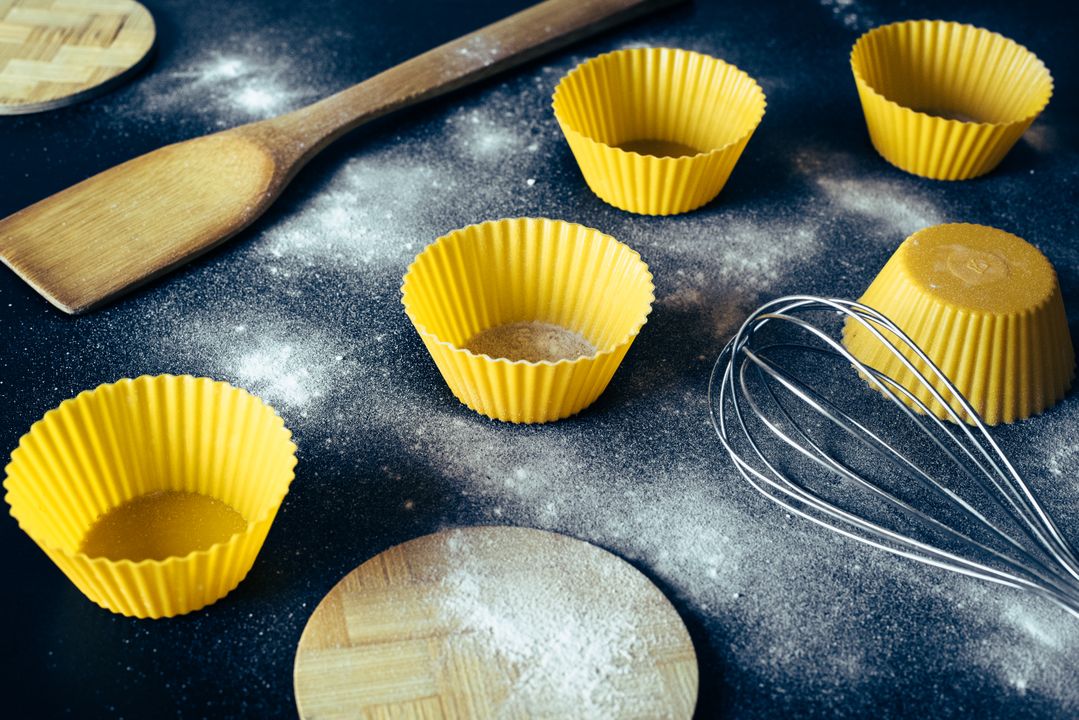
2. Standard muffin tray (12-cup): Cupcakes and muffins are consistently high-margin, high-demand products for home bakers in India. A 12-cup tray produces a batch in one go. Use paper liners to skip the greasing step entirely. Price: ₹250–₹450.
3. Loaf pan (9×5 inch): Essential for banana bread, pound cakes, and date-nut cakes — products that sell reliably in the gifting category. Price: ₹150–₹300.
Skip the bundt pan, the springform pan, and the silicone bakeware set for now. Those come later, when your product range expands. Start with round, muffin, loaf.

Why Measuring Tools Matter More Than Most Bakers Admit
Baking is chemistry. A 10% variation in flour weight can mean the difference between a cake that rises and one that sinks. India’s home bakers who switch from volume measuring (cups and spoons) to weight measuring (digital scale) report significantly more consistent results across batches. A digital kitchen scale priced at ₹400–₹700 is, arguably, the highest-return purchase in your entire starter kit.
Digital Scale vs Measuring Cups
A digital scale is non-negotiable. Buy it before your first recipe. Measure every dry ingredient by weight, not volume. Flour compacts differently depending on how it’s scooped. Sugar packs differently based on humidity. A scale removes that variability entirely.
Measuring cups and spoons still have a place: liquids like milk, oil, and vanilla extract are easier to measure by volume. A basic set costs ₹150–₹300 and lasts for years.
Citation Capsule: Baking measurement accuracy directly affects product consistency, which is the primary factor determining repeat customer rates for home bakers. A digital kitchen scale (₹400–₹700 in India) provides gram-level precision that volume-based measuring cups cannot replicate — particularly critical for flour, sugar, and butter in cakes and cookies. At Florence Academy’s Bakery Foundation Program, students who transitioned from cup measures to digital scales during training consistently produced more uniform results across their first 10 recipe practicals. Instructors cite measurement accuracy as the most common root cause of home-baker product inconsistency, ahead of oven calibration or ingredient quality.
- Equipment priority score vs cost
- have items ranked by impact
- cost ratio
- Florence Academy practicals data 2026
Source: Florence Academy
Which Small Tools Are Worth Buying from Day One?
Several inexpensive tools make a big difference to your finished product and production speed. These aren’t glamorous, but skipping them is a false economy.
Cooling Rack (₹200–₹400)
A cooling rack is cheap and genuinely critical. Cakes and cookies need airflow under them as they cool. Leaving baked goods on a solid surface traps moisture at the base, making the bottom soggy and shortening shelf life. A standard wire rack handles everything from cupcake trays to loaf cakes. Buy one immediately.
Parchment Paper and Silicone Baking Mat
Parchment paper prevents sticking, makes pan cleanup trivial, and costs very little. A 50-sheet roll costs ₹150–₹250. A reusable silicone baking mat (₹350–₹500) is a cost-effective alternative for cookies and flat items, as it pays for itself within a few baking sessions. Both are worth having.
Mixing Bowls (Set of 3)
You need at least three mixing bowls: one large for batters, one medium for frostings, one small for melted butter or eggs. Stainless steel bowls are durable, inexpensive, and easy to clean. A set of three costs ₹400–₹700. Avoid plastic bowls for whipping cream — they retain fat residue that prevents cream from whipping properly.
Piping Bags and Nozzles
A piping set, specifically a set of reusable bags with 6–8 standard nozzles, costs ₹400–₹700. The most-used nozzles are the round tip (for writing and dots), the star tip (for rosettes and shells), and the flat petal tip (for roses). You don’t need 50 nozzles to start. Six covers every standard decoration request.

The ₹15,000 Home Bakery Starter Kit: Full Cost Breakdown
Here’s exactly what a complete, functional starter kit looks like, priced at Indian market rates for June 2026.
| Equipment | Category | Budget Option | Mid-Range | Recommended Budget |
|---|---|---|---|---|
| OTG Oven (25–30 L) | Must-have | ₹3,500 | ₹6,500 | ₹5,000 |
| Hand Mixer (5-speed) | Must-have | ₹800 | ₹2,000 | ₹1,500 |
| Round Cake Pans x2 (8-inch) | Must-have | ₹400 | ₹900 | ₹700 |
| Muffin Tray (12-cup) | Must-have | ₹250 | ₹500 | ₹400 |
| Loaf Pan (9×5 inch) | Must-have | ₹150 | ₹350 | ₹250 |
| Digital Kitchen Scale | Must-have | ₹400 | ₹800 | ₹500 |
| Measuring Cups and Spoons | Must-have | ₹150 | ₹350 | ₹250 |
| Stainless Steel Mixing Bowls (set of 3) | Must-have | ₹400 | ₹800 | ₹600 |
| Cooling Rack | Must-have | ₹200 | ₹450 | ₹300 |
| Parchment Paper (50-sheet roll) | Must-have | ₹150 | ₹300 | ₹200 |
| Silicone Baking Mat | Must-have | ₹300 | ₹600 | ₹450 |
| Piping Bags and Nozzles Set | Must-have | ₹400 | ₹800 | ₹600 |
| Total | ₹7,000 | ₹14,350 | ₹10,750 |
Notes:
– Budget prices reflect entry-level brands from Amazon.in and local kitchenware stores in Ahmedabad and major Indian cities (June 2026).
– Mid-range prices reflect reliable brands like Bajaj, Philips, Prestige, and Wonderchef.
– Recommended budget sits between the two: buy mid-range for your oven and hand mixer (the two items you’ll use every session), and budget for pans and smaller tools.
– A stand mixer is not in this list. Add it in month 4 or 5 once orders justify the cost.
The total recommended spend is ₹10,750, leaving a buffer within the ₹15,000 limit for pantry staples (flour, butter, sugar, vanilla, cocoa) before your first batch.
Ready to learn from expert chefs? Explore Courses at Florence Academy →
What Are the “Nice-to-Have” Items for Month 2 or 3?
Once your home bakery is generating consistent orders, these additions improve your speed, product range, and presentation quality.
Offset Spatula (₹200–₹400)
An offset spatula applies frosting smoothly and evenly to layered cakes. It’s the tool that makes the difference between a home-looking finish and a professional one. Buy a small (6-inch) and a large (9-inch) version when you’re ready.
Turntable (₹600–₹1,500)
A rotating cake turntable makes frosting, smoothing, and decorating a layered cake dramatically easier. It’s not essential for muffins or brownies, but for celebration cakes, it pays off quickly. Aluminium versions are more stable than plastic.
Kitchen Thermometer (₹400–₹800)
An instant-read kitchen thermometer removes the guesswork from chocolate tempering, candy making, and bread internal temperature checks. You don’t need it on day one, but it becomes a regular tool once your product range expands beyond simple cakes.
Springform Pan (8-inch) (₹350–₹600)
A springform pan is essential for cheesecakes and mousse cakes — both strong sellers in the gifting and celebration categories. Add this once cheesecake is on your product menu.
What Should You Skip for Now?
Some equipment is genuinely unnecessary at the home-bakery startup stage. These are the items that take up counter space and budget without adding value until you’re operating at a much higher volume.
Stand mixer: As discussed, wait until you’re at 15–20+ orders per week. A ₹1,500 hand mixer does the job.
Fondant smoother and rolling board set: Fondant-covered cakes are time-intensive and require significant practice. They’re not ideal for your first product range. Focus on buttercream finishes, which are faster, more forgiving, and currently more popular with Indian customers.
Commercial-grade baking sheet pans (full size): A full-size commercial sheet pan doesn’t fit in a standard home OTG. Standard half-size or quarter-size pans work fine.
Candy thermometer, probe thermometer, and refractometer: These are for advanced confectionery and bread work. Useful eventually. Not on day one.
Multi-tier cooling rack: You don’t need five tiers of cooling capacity until you’re baking 10+ dozen cookies per session. One standard two-tier cooling rack is sufficient to start.
Chef Monila Surana, Managing Partner at Florence Academy with 18 years of culinary education experience, has one clear answer when students ask what she’d buy first if starting a home bakery from scratch today:
“The OTG oven, without hesitation. I’ve seen students spend ₹15,000 on a stand mixer before they’ve baked their tenth cake, and the results are no better than what a hand mixer would have produced. But I’ve also seen students try to make do without a proper oven — using a stovetop or a microwave — and they simply can’t achieve the texture, the rise, or the crust that customers expect and pay for. The oven is the machine you bake in. Everything else is just tools that help you prepare. Get the oven right first, then build the rest of your kit around it one piece at a time.”
A Note on Food Safety Before You Sell
Buying equipment is step one. Being legally allowed to sell is step two. Under the Food Safety and Standards Act 2006, every home baker selling food in India, whether via WhatsApp, Instagram, or delivery apps, must hold a valid FSSAI registration (FSSAI, 2026). As of April 2026, the Basic Registration threshold covers home bakers earning up to ₹1.5 crore annually. The registration costs ₹100 per year and takes approximately 7 working days online.
Don’t skip this step. Swiggy and Zomato require a valid FSSAI number before onboarding any seller. Many B2B buyers (corporates, event planners) ask for it too. And operating without registration carries penalties of up to ₹5 lakh under the FSS Act.
For the complete step-by-step process, read our FSSAI registration guide for Gujarat home bakers.
Frequently Asked Questions
What is the minimum equipment to start a home bakery in India?
The absolute minimum is an OTG oven (₹3,500–₹7,000), a hand mixer (₹800–₹2,000), one round pan and one muffin tray (₹400–₹900), a digital kitchen scale (₹400–₹700), and parchment paper. This core set costs under ₹10,000 and handles 80% of standard home bakery recipes. You can add cooling racks, piping bags, and more pans in the weeks that follow.
How to get first home bakery customers →
OTG or convection microwave — which is better for home baking in India?
An OTG is better for baking. OTGs heat from top and bottom simultaneously, giving even browning and proper rise on cakes and breads. Convection microwaves are better for reheating and quick cooking. For a home baker, a 25–30 litre OTG priced between ₹3,500 and ₹7,000 is the right starting choice. Always check for the BIS ISI mark before buying (Consumer VOICE India, 2025).
Do I need a stand mixer to start a home bakery?
No. A ₹1,500 hand mixer handles 80% of home-scale recipes: sponge cakes, butter cakes, whipped cream, buttercream frosting, and cookies. A stand mixer is worth buying once you’re consistently producing 15–20+ orders per week and mixing heavy bread or croissant doughs. Starting with a hand mixer saves ₹10,000–₹20,000 in upfront costs. Reinvest those savings into better ingredients and packaging instead.
How much does it cost to set up a home bakery in India?
A complete, functional starter kit costs ₹10,750 at mid-range prices (June 2026 rates). This covers an OTG, hand mixer, three pan types, a digital scale, measuring tools, mixing bowls, a cooling rack, parchment paper, a silicone mat, and piping bags. Staying under ₹15,000 is realistic and leaves room for pantry staples before your first batch.
Do home bakers in India need FSSAI registration?
Yes. Under the Food Safety and Standards Act 2006, selling food without FSSAI registration is a legal violation, regardless of channel. As of April 2026, Basic Registration covers home bakers with annual turnover up to ₹1.5 crore, costs ₹100/year, and takes about 7 working days via foscos.fssai.gov.in (FSSAI, 2026). Read our complete FSSAI guide for Gujarat home bakers.
You’re Closer to Starting Than You Think
A home bakery doesn’t require a ₹50,000 setup. It requires the right ₹10,000–₹15,000 setup: a solid OTG, a reliable hand mixer, the three essential pan shapes, and the small tools that keep your production consistent. That’s it.
Buy the oven first. Then the hand mixer. Then the pans and scale. Take one order. Bake it well. Deliver it well. Everything else, including the stand mixer, the turntable, and the springform pan, can follow once your bakery is already earning.
When you’re ready to bake at a professional level and turn your home bakery into a scalable business, structured training makes the difference. The Bakery Foundation Program at Florence Academy covers 150+ recipes, professional technique, and the food business skills to grow consistently — all in a 100% vegetarian and Jain-adapted curriculum built for Gujarat’s market.
Have questions? Chat with us on WhatsApp — we respond fast.


