

When you eat at a traditional Gujarati restaurant in Ahmedabad and notice there’s no onion in the dal, no garlic in the sabzi, and no root vegetables in the thali — that’s not an oversight. That’s centuries of Jain dietary philosophy embedded so deeply into the local food culture that it’s become invisible. Restaurants don’t label it “Jain.” It’s simply how the food is made.
According to Pew Research Center’s face-to-face survey of 29,999 respondents across 26 Indian states, 92% of Jains in India identify as vegetarian — the highest rate of any religious group in the country. Approximately 67% additionally abstain from root vegetables such as garlic and onions (Pew Research Center, July 2021). In Gujarat, where Jains make up a significant and economically influential share of the population, these practices have shaped not just what people eat but how an entire state cooks.
This is that story — how a set of religious dietary principles became one of India’s most innovative culinary traditions.
Key Takeaways
– 92% of Jains in India are vegetarian; 67% additionally avoid root vegetables including onion and garlic (Pew Research Center, 2021, n=29,999)
– Jain dietary philosophy (ahimsa — non-violence toward all living things) shapes what ingredients can be used, when food can be eaten, and how cooking happens
– Jain food culture has influenced all of Gujarat’s food — most traditional Gujarati restaurants default to no-onion, no-garlic cooking as standard practice
– Florence Academy teaches Jain cooking techniques as a core part of its vegetarian culinary curriculum
What Is Jain Food Philosophy?
Jain dietary practice is rooted in a single Sanskrit word: ahimsa — non-violence. Jain World maintains an extensive online documentation of Jain philosophy, dietary practice, and community observance across the Indian diaspora. Jainism holds that all living beings possess consciousness, and that causing harm to any being generates negative karmic consequences. Food choices, therefore, are not primarily about health or culture — they’re about minimising harm.
This extends further than most people realise. Jain dietary rules don’t just prohibit meat. They prohibit any food that involves significant harm to living beings, including:
- Root vegetables — because uprooting destroys the entire plant and harms microorganisms living in and around the root
- Multi-seeded vegetables — in stricter practice, because they contain many potential lives (eggplant, for example, is avoided by strict Jains)
- Night-time eating — traditionally prohibited because artificial light attracts insects that may enter food unintentionally
- Honey — because its production involves harm to bees
- Certain leafy vegetables during specific periods — to avoid consuming insects that may be living among the leaves
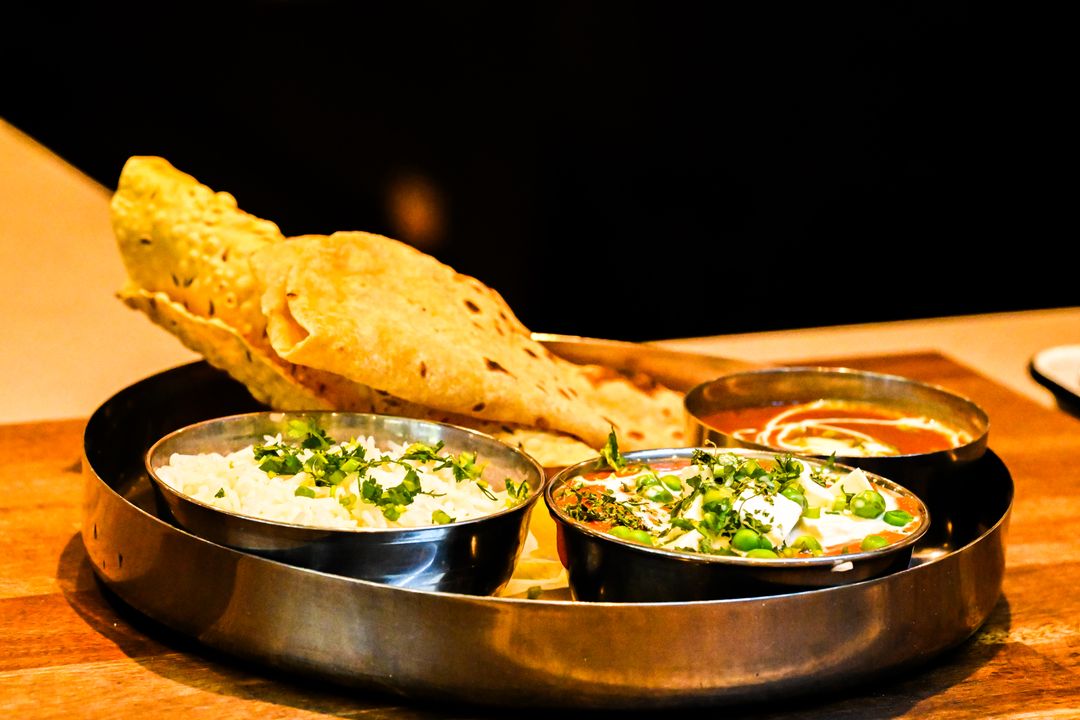
At Florence Academy, we teach Jain cooking not as a restriction system but as an ingredient logic system. The question is never “what can’t we use?” but “what do we use instead?” Once students understand that Jain cooking forces creativity in flavour-building without the crutch of onion and garlic, they consistently produce more technically interesting food — because they have to work harder to build depth.
Citation Capsule — Jain Dietary Practice
According to Pew Research Center’s 2021 survey of 29,999 respondents across 26 Indian states, 92% of Jains in India identify as vegetarian — the highest rate of any religious group in the country. Approximately 67% additionally abstain from consuming root vegetables such as garlic and onions. These figures reflect the depth of dietary observance within India’s Jain community, and help explain the profound influence of Jain food culture on Gujarat’s state cuisine. (Pew Research Center, July 2021)
How Did Jain Philosophy Shape Gujarati Cuisine?
The Jain influence on Gujarati food works through substitution and amplification. When you remove onion, garlic, and root vegetables from a cuisine, you don’t simplify it — you force it in a different direction. Gujarati cooking responded by:
Amplifying aromatic seeds. Without garlic and onion as flavour foundations, Gujarati cooking relies heavily on mustard seeds, cumin, fenugreek seeds, carom seeds (ajwain), asafoetida (hing), and fresh green chillies to build aromatic complexity. Hing (asafoetida) deserves particular attention — it provides the pungent, sulphurous depth that onion and garlic provide in other cuisines, and it’s permitted in most Jain practice.
Deepening sour and sweet notes. Tamarind, raw mango (kachri and amchur), kokum, and jaggery appear more prominently in Gujarati food than in most other Indian regional cuisines. These provide complexity in the absence of the umami-adjacent depth that alliums provide.
Fermenting. Dhokla, khaman, handvo, and several other Gujarat staples are fermented dishes. Fermentation builds flavour complexity and depth — a technique that naturally flourished in a cuisine working without certain flavour shortcuts.
Celebrating above-ground vegetables. Turai (ridge gourd), dudhi (bottle gourd), valor (flat beans), and surti papdi (field beans) are the workhorses of Gujarati-Jain cooking. These vegetables, elevated by skilled spicing and cooking technique, produce dishes of remarkable flavour from what most cuisines treat as background ingredients.
How Does the Jain Food Calendar Shape What You Eat Through the Year?
Jain dietary practice isn’t static — it intensifies and relaxes according to the religious calendar, and this rhythm has shaped Ahmedabad’s food culture at a commercial level.
Paryushana (August–September): The most sacred Jain festival, observed for 8 days (Shvetambara) or 10 days (Digambara). Gujarat Tourism recognises Paryushana as one of the state’s most significant cultural events, with Ahmedabad’s food culture visibly shifting during the observance period. During this period, many Jains observe full fasting or strict penance eating. Restaurants and dhabas across Ahmedabad typically remove non-Jain menu items entirely during Paryushana. The city’s food supply chain adjusts — leafy vegetables, eggplant, and certain other restricted items see reduced sales.
Monsoon period (generally June–August): Strict Jain observers avoid eating raw leafy vegetables during monsoon because rainwater encourages insects and microorganisms to live in and around leaves. This seasonal restriction has made cooked vegetable dishes (sabzis) and dal-based preparations the default Gujarati monsoon menu.
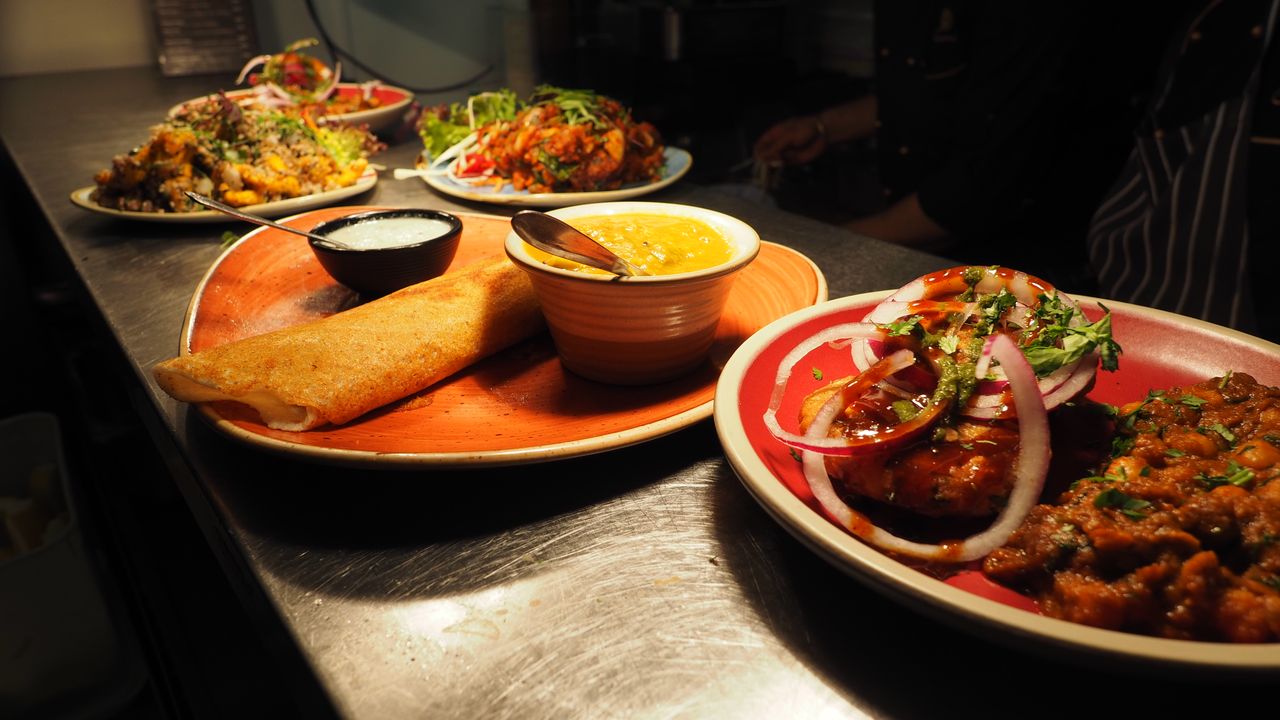
Daily rhythm: The tradition of no eating after sunset has practically shaped Ahmedabad’s restaurant hours and dinner culture. Many traditional Gujarati families still eat their main evening meal before dark, particularly during winter when sunset comes earlier.
Cooking Jain food at Florence Academy has produced one of our most consistent observations: students who master Jain cooking techniques become better all-round cooks. The discipline of building flavour without alliums — using hing, mustard seeds, green chilli, and ginger as the aromatic base — develops a sensitivity to spice layering that carries into every other cuisine they cook.
What Does Jain Cooking Look Like in Practice?
The hing-based tarka: The Jain substitute for the onion-garlic base. Heat ghee or oil, add mustard seeds (allow to splutter), add asafoetida (hing), dried red chilli, and fresh green chilli. This combination produces a pungent, aromatic base that works as the foundation for dal, sabzi, and rice dishes.
Ginger and green chilli as primary aromatics: In Jain cooking, fresh ginger and green chillies carry much of the flavour work that onion and garlic handle in non-Jain Indian cooking. They’re used in larger quantities and earlier in the cooking process.
Raw mango as souring agent: Amchur (dried mango powder) and fresh raw mango (kachcha keri) appear throughout Jain Gujarati cooking as souring agents. They provide the sharp, sour brightness that tamarind provides but with a distinctive fruity top note.
Jain substitutes for root vegetables:
| Restricted ingredient | Common Jain substitute |
|---|---|
| Onion | Cucumber (fresh), raw mango (pickled), spring onion greens (leaves only, no bulb) |
| Garlic | Hing (asafoetida) — use sparingly, as it’s pungent |
| Potato | Soaked raw banana, raw jackfruit, raw plantain, boiled chana |
| Carrot | Pumpkin, bottle gourd |
Ready to learn Jain cooking techniques with hands-on guidance? Explore Courses at Florence Academy →
Jain Food Beyond Gujarat: Its Influence on Indian Cuisine
Jain communities have traditionally been traders and business people — and wherever they settled across India, their food preferences influenced local restaurant cultures. Mumbai’s restaurant menus have a “Jain” column as standard. Rajasthan’s dal-baati-churma tradition echoes Jain principles in its minimal use of alliums. Even Indian restaurant menus internationally now regularly include a “Jain” option alongside vegetarian and vegan choices.
This spread happened not through religious conversion but through commerce. When Jain merchants settled in a city, they supported restaurants that could feed them. Those restaurants then became profitable and influential enough to shape the broader food culture.
In Ahmedabad today, the Jain influence is so total that many non-Jain Gujaratis cook without onion and garlic not for religious reasons but because that’s simply how Gujarati food is made. The philosophy has become the technique.
Frequently Asked Questions
What vegetables do Jains not eat?
Jain dietary practice avoids all root vegetables — onion, garlic, potato, carrot, radish, turnip, beetroot, and tubers like yam. The reason is ahimsa: uprooting these plants destroys the entire organism including microorganisms in the root system. Above-ground vegetables (tomato, leafy greens, ridge gourd, bottle gourd, peas, beans) are generally permitted.
Why do Jains not eat after sunset?
Traditionally, Jains avoid eating after sunset because artificial light attracts insects, which may accidentally enter food and be consumed, violating ahimsa (non-violence). The practice also aligns with Ayurvedic digestion principles — heavier meals earlier in the day support better sleep and digestion.
What is Paryushana and how does it affect Jain food?
Paryushana is the most sacred Jain festival (observed August–September), during which many Jains observe strict penance fasting — some for the entire 8–10 days on water alone, others on specific permitted foods. During this period, restaurants in Ahmedabad typically drop non-Jain menu items and the city’s food culture shifts significantly toward pure Jain cooking.
What is the difference between Jain food and vegetarian food?
Vegetarian food avoids meat, poultry, seafood, and sometimes eggs. Jain food goes further — it additionally excludes all root vegetables (onion, garlic, potato, carrot, etc.) and in stricter practice, eggplant, certain leafy vegetables, and multi-seeded fruits. Jain cooking is a strict subset of vegetarian cooking with its own ingredient logic and substitution vocabulary.
Can I learn Jain cooking at a culinary school in Ahmedabad?
Yes. Florence Academy teaches Jain cooking techniques as part of its culinary curriculum — including Jain-adapted versions of classical recipes, substitution techniques for restricted ingredients, and the philosophical context behind the dietary practice. All Florence Academy courses are 100% vegetarian, and Jain adaptations are standard across the curriculum.
Cook with Philosophy
Jain food culture is one of India’s most underappreciated culinary systems — not because it restricts, but because of what those restrictions produced. A cuisine built on ahimsa developed techniques of remarkable creativity: deep flavour without alliums, complex dishes from above-ground vegetables, and a fermentation tradition that pre-dates most modern food trends.
Understanding Jain food means understanding Gujarat. And understanding Gujarat means understanding one of India’s most distinctive, proudest culinary identities.
Join 2,000+ students who’ve trained with expert chefs at Florence Academy, Ahmedabad.
Explore Courses at Florence Academy →
Chat with us on WhatsApp — we respond fast.
See also: Gujarat’s Vegetarian Food Heritage: Why It Leads India | Top 15 Must-Try Street Foods in Ahmedabad | Cooking Classes in Ahmedabad for Beginners


