

Most food writing treats Gujarat’s vegetarian tradition as a constraint — a list of things people don’t eat. That framing misses the point entirely. Gujarat’s cuisine is not the product of absence. It is the product of 2,000 years of deliberate philosophical thinking about food, carried through royal edicts, devotional practice, and trading communities who spread it across the world before the term “global cuisine” existed.
According to the National Family Health Survey (NFHS-5, 2019–21), approximately 61% of women and 50% of men in Gujarat never consume non-vegetarian food — compared to a national average of just 23% of women and 15% of men across India. That isn’t a regional quirk. It’s a civilisational statement. And it has produced a culinary tradition so internally sophisticated that chefs and nutritionists around the world are only now beginning to understand it fully.
This is the story of how Gujarat became India’s food capital — not despite its vegetarian heritage, but because of it.
By Chef Hina Gautam, Food Consultant and Culinary Educator, Florence Academy of World Cuisines — 30+ years in professional culinary education, former cooking show personality and competition judge, founder of JustCook culinary institute.
Key Takeaways
– ~61% of Gujarat women and ~50% of men never eat meat, more than double India’s national average (NFHS-5, 2019–21)
– Gujarat controls 57.9% of India’s total cumin production — the spice that defines the flavour of Indian cooking globally (SilOrganic / Spices Board of India, 2025)
– Gujarat’s vegetarian tradition is the product of 2,000 years of Jain philosophy, a 12th-century royal ban on animal slaughter, and Vaishnava devotional cooking
– India’s plant-based food market is valued at USD 1.62 billion in 2024, growing at 10–11.5% CAGR — and Gujarat is at the centre of it
The Numbers Most Food Writers Ignore
The NFHS-5 data from 2019–21, analysed by The Print, retrieved May 2026, shows Gujarat’s vegetarian rates are among the highest of any Indian state by significant margin. Nationally, only about 20–28% of Indians consistently follow a vegetarian diet. In Gujarat, the figure consistently sits above 50% across both genders.
This matters commercially as well as culturally. In 2024, India’s plant-based food market was valued at USD 1.62 billion and is projected to reach USD 3.82–4.81 billion by 2033–34 at a 10–11.5% CAGR, according to IMARC Group’s India Vegan Food Market Report, retrieved May 2026. One market research estimate puts the global Gujarati thali restaurant market at USD 1.2 billion in 2024, forecast to reach USD 2.8 billion by 2033 at a 9.6% CAGR, with vegetarian thalis accounting for over 70% of market share (MarketIntelo, August 2025 — directional estimate).
Worth noting: The Gujarati thali has its own global market category — USD 1.2 billion in 2024 — well before most food writers have thought to frame Gujarat’s cuisine as a commercial asset rather than a cultural footnote.
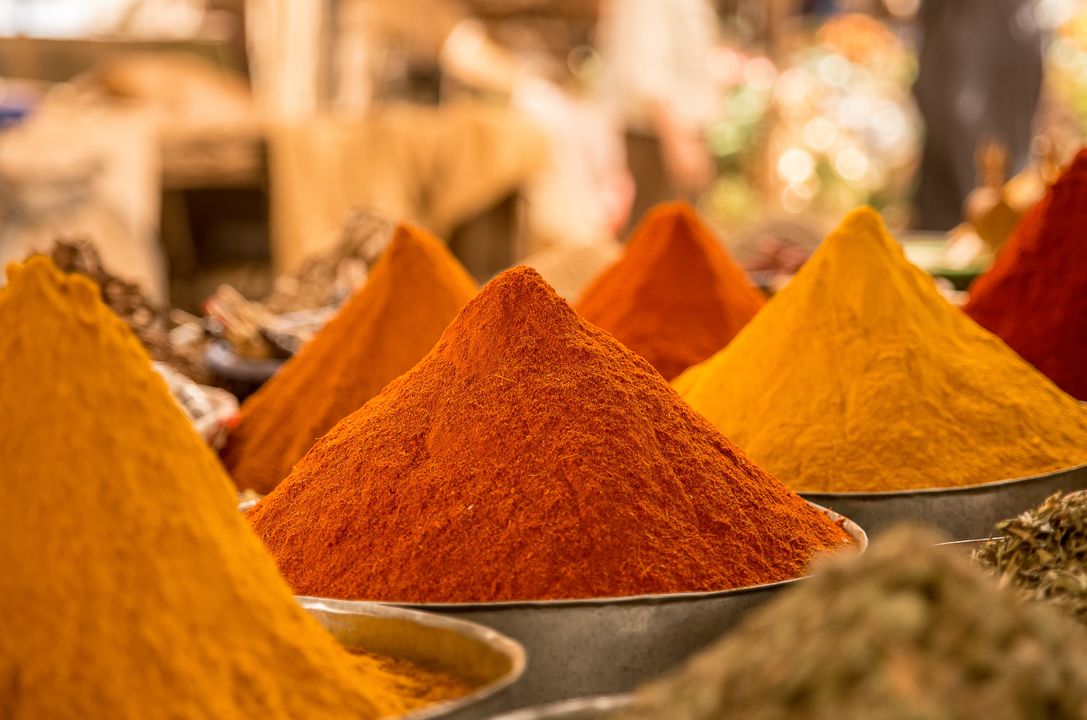
And then there is the spice dimension. Gujarat controls 57.9% of India’s total cumin production, yielding approximately 420,000 tonnes annually, according to SilOrganic’s analysis of Spices Board of India data, 2025. When you taste what most people call “Indian food” — that distinctive warm, earthy, nutty baseline — you are largely tasting Gujarat.
Citation Capsule: According to the National Family Health Survey (NFHS-5, 2019–21), approximately 61% of Gujarat women and 50% of Gujarat men never consume non-vegetarian food — more than double India’s national averages of 23% and 15% respectively. Combined with Gujarat controlling 57.9% of India’s cumin production and holding the largest share of food processing investment nationally (IBEF, 2025), the data establishes Gujarat not merely as India’s most vegetarian state, but as the structural centre of India’s food economy.
Gujarat also holds the largest share of total investments in India’s food processing sector, according to the India Brand Equity Foundation (IBEF) Gujarat State Profile, 2025. This isn’t coincidence. A population that invests deeply in vegetarian cuisine naturally builds deep infrastructure around producing, processing, and distributing vegetarian ingredients.
How Did Gujarat Become India’s Vegetarian Heartland?
Gujarat’s vegetarian culture didn’t emerge from geography or poverty of options. It was built, deliberately, through two parallel philosophical movements that ran for centuries before they merged into a single culinary identity.
The Jain philosophical thread is the older of the two. The teachings of Mahavira, formulated in the 6th century BCE in what is now Bihar and Uttar Pradesh, found their most lasting institutional home in western India. The Jain principle of ahimsa — non-harm to all living beings — extended to food: no meat, no fish, no eggs, and in its stricter interpretations, no root vegetables whose harvest requires killing the entire plant.
The most decisive institutional moment came in the 12th century CE. King Kumarapala of the Chaulukya dynasty, converted to Jainism by the monk-scholar Hemachandra, issued a royal edict legally prohibiting the slaughter of animals across his kingdom. This was not a personal dietary choice. It was a law, backed by the full authority of one of Gujarat’s most powerful dynasties.
The Kumarapala edict is one of the most consequential moments in the history of Indian food culture — and it is virtually unknown outside culinary history circles. In the food writing research behind this post, not a single mainstream article mentioned it. At Florence Academy, we teach this moment as the turning point that transformed Jain dietary philosophy from personal practice into the enforced social norm of an entire region.
The Vaishnava devotional thread reinforced this from the 15th century onward. Vallabhacharya’s Pushti Marga tradition, centred on devotion to Lord Krishna and the ritual offering of food (prasad) to the deity, created a second, independent cultural pillar for vegetarian practice. Vaishnava cuisine emphasised freshness, sattvic ingredients (those that promote clarity and lightness of mind), and elaborate preparation as an act of devotion. The result: a second rich tradition of vegetarian cooking operating simultaneously, producing different techniques and different flavour profiles within the same state.
When Jain and Vaishnava culinary traditions overlapped in Gujarat’s merchant communities — the Baniya and Marwari trading families who shaped so much of India’s commercial history — the result was a cuisine built for sophistication, not survival.
Citation Capsule: Gujarat’s vegetarian food culture was shaped by two converging philosophical movements: the Jain principle of ahimsa (non-harm), which took deepest institutional root in western India from the 6th century BCE onward, and the Vaishnava Pushti Marga devotional tradition from the 15th century. The decisive institutional moment was King Kumarapala’s 12th-century royal edict legally prohibiting animal slaughter across his Chaulukya kingdom — transforming personal religious practice into a regional social norm that persists in Gujarat’s food culture to this day.
Why Jain Philosophy Made Gujarat’s Cuisine Better, Not Simpler
Here is where the conventional food writing narrative completely fails. The usual story is that Jain restrictions — no root vegetables, no onion, no garlic — limited what Gujarati cooks could do. The actual story is the opposite.
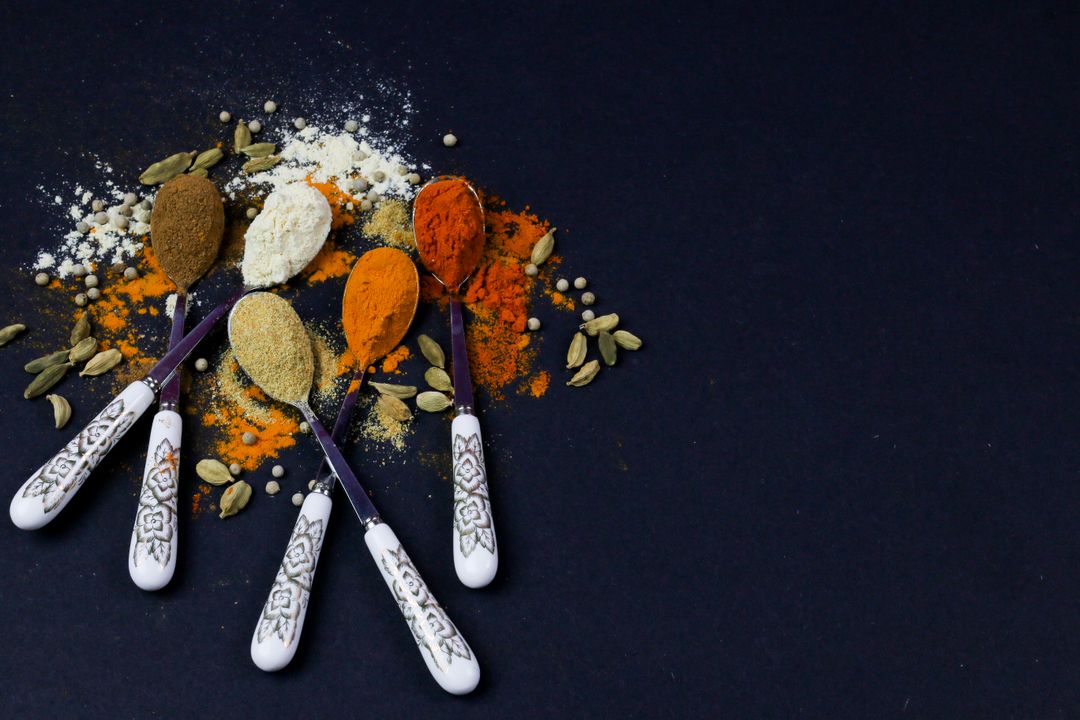
When onion and garlic — the most powerful aromatic shortcuts in most of the world’s cuisines — are removed from the cook’s toolkit, something interesting happens. The cook is forced to build complexity from other sources. Asafoetida (hing) replaces the pungency of garlic with a different, more complex sulphuric sharpness. Cumin, mustard seeds, and fenugreek become the flavour architecture rather than the background. The tempering technique — vagharnu in Gujarati — where whole spices are bloomed in hot oil before any other ingredient is added, becomes not just a method but a philosophy of flavour extraction.
The prohibition on root vegetables produced a parallel innovation. Raw plantain, bottle gourd, ridge gourd, and cluster beans were developed into centrepiece dishes in a cuisine where they could have been afterthoughts. Undhiyu, Gujarat’s winter slow-cook mixed vegetable dish, is a direct response to the Jain restriction on harvesting root vegetables in winter — when the risk of killing underground organisms is higher. What began as a religious constraint became one of the most technically demanding and distinctive dishes in Indian cuisine.
Chef Hina Gautam: In 30 years of culinary education, I’ve never worked with a cuisine that demonstrates so clearly how constraints generate creativity. Every time I teach Jain cooking at Florence Academy, students who arrive expecting simplicity leave having encountered something more structurally demanding than most French classical techniques. The absence of garlic and onion doesn’t simplify the cuisine — it forces you to think harder about flavour.
This is the insight that most food writing misses: restriction is not the enemy of sophistication. For Gujarati cooks, it was the engine of it.
You can learn the full range of these techniques hands-on in Florence Academy’s culinary foundation programme — where Jain-adapted cooking forms a core module, not an optional add-on.
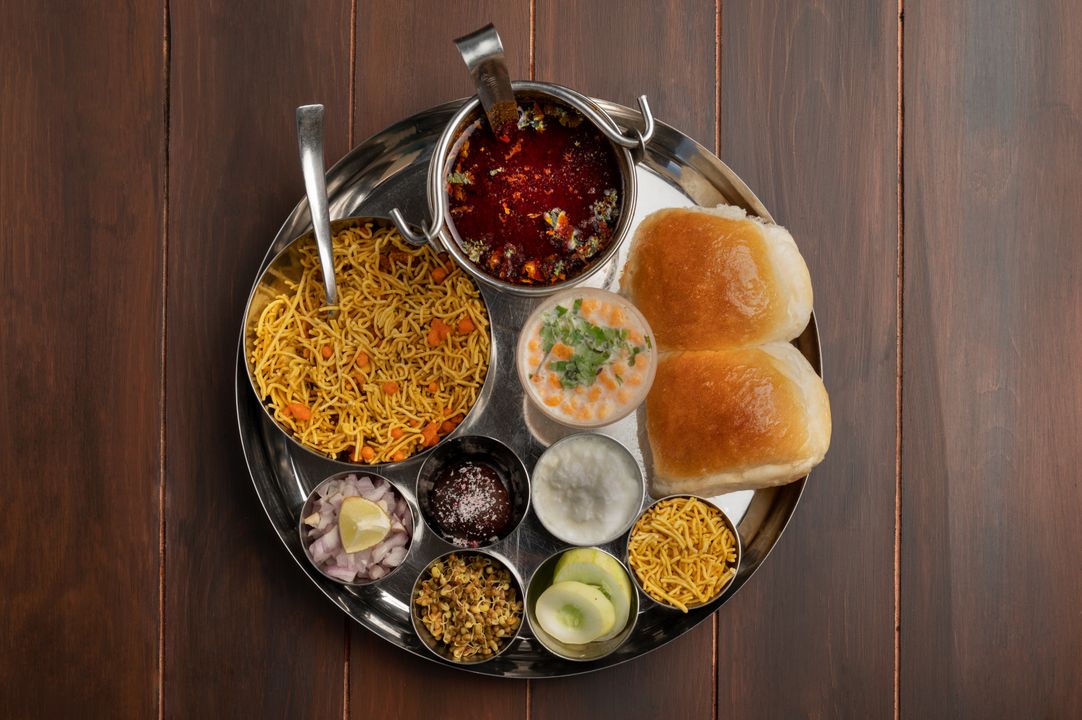
The Gujarati Thali: A 3,000-Year Nutrition System in One Plate
A Gujarati thali is not a collection of dishes. It is an application of shadrasa — the Ayurvedic principle of six tastes — engineered into a single meal.
The six tastes are: sweet (meetha), salty (namkeen), sour (khatta), pungent (teekha), bitter (kadwa), and astringent (kasaila). Ayurvedic nutritional philosophy holds that a complete meal should contain all six, because each taste corresponds to different metabolic functions and nutritional profiles. The Gujarati thali is designed to deliver all six simultaneously — the sweetness in the dal, the sourness from the kadhi, the bitterness from methi-based vegetables, the astringency from certain dals and raw onion substitutes in Jain versions.
The structure is also designed for the climate. Gujarat’s heat demands light, easily digestible proteins — hence the dominance of lentils, buttermilk (chaas), and fermented foods like dhokla and khandvi. The prominent use of yoghurt-based preparations has a thermoregulating function. The seasonal flexibility of the thali — swapping summer vegetables for winter ones, adjusting spice intensity by temperature — is a 3,000-year-old adaptive nutrition system that modern food science is only now validating.
Citation Capsule: The Gujarati thali is one of the most nutritionally complete single-meal formats in Indian culinary tradition. Its structure applies the Ayurvedic shadrasa principle — balancing all six tastes (sweet, salty, sour, pungent, bitter, astringent) within one meal — a design logic derived from classical medical philosophy. The global Gujarati thali restaurant market was valued at USD 1.2 billion in 2024, with vegetarian thalis accounting for over 70% of market share (MarketIntelo, August 2025).
Florence Academy’s Culinary Foundation Programme covers these Jain cooking methods — including root vegetable substitutions and vagharnu tempering technique — as a core module.
Gujarat’s Spice DNA: Why Indian Food Tastes Like Indian Food
You cannot understand Gujarat’s contribution to Indian food culture without understanding cumin. Gujarat produces 57.9% of India’s total cumin — the spice that defines the baseline flavour of Indian cooking worldwide. This is not a minor agricultural statistic. It means that the primary flavour architecture of what billions of people globally identify as “Indian food” is, disproportionately, a Gujarati product.
The state’s spice dominance extends beyond cumin. Gujarat’s position as India’s largest food processing investment destination (IBEF, 2025) means that much of the spice cleaning, grinding, and blending infrastructure serving India’s national and export market sits in Gujarat.
Citation Capsule: As of 2025, Gujarat controls 57.9% of India’s total cumin production — approximately 420,000 tonnes annually — making it the primary source of the spice that defines Indian food’s global flavour identity (SilOrganic / Spices Board of India, 2025). The state also holds the largest share of India’s food processing investment nationally (IBEF, 2025), meaning that Gujarat’s influence on what the world tastes as “Indian food” operates at both the agricultural and industrial level. When Indian food is exported globally — in the form of packaged spices, ready-to-cook pastes, or diaspora restaurant cooking — it frequently passes through Gujarat’s processing chain.
The Amul dairy cooperative model, now an institution that as of 2025 produces 17.28 million metric tonnes of milk annually and contributes 7.49% of India’s total milk output (IBEF Gujarat, 2025), is another Gujarati food innovation with national reach. The same cooperative philosophy that powered Amul — quality control, farmer ownership, regional scale — has influenced India’s dairy sector far beyond Gujarat’s borders.
What Gujarat’s Food Heritage Means for Ahmedabad Today
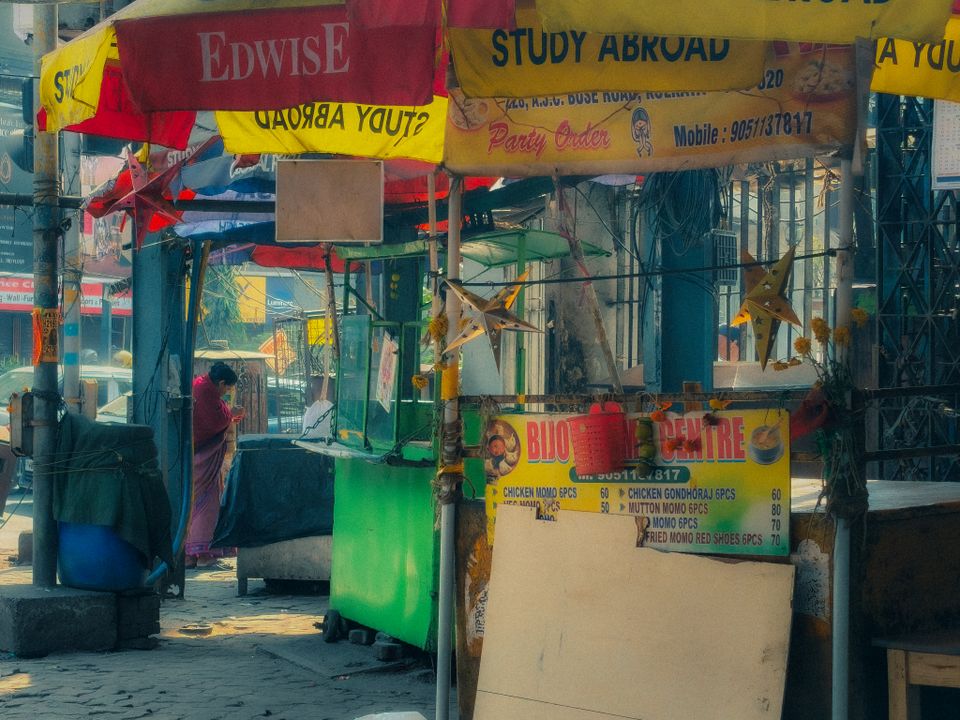
Ahmedabad’s food scene in 2026 is the live expression of everything described above. The city has its own food grammar — fafda-jalebi for breakfast is not a regional quirk but a culinary tradition so established that you can set your calendar by it. The concentration of Jain sweet shops, the dominance of vegetarian-only restaurants even in upscale dining areas, the seasonal variation of street food around Navratri and Uttarayan — all of these are the visible layer of a 2,000-year tradition still operating daily.
For anyone who wants to build a food career in Gujarat, this heritage is not background knowledge. It’s professional infrastructure. Hotel groups like ITC and Marriott — both active recruiters from Florence Academy’s placement network — increasingly value chefs who understand Jain cooking, vegetarian menu engineering, and the cuisine of one of India’s most commercially significant food markets.
Our finding: At Florence Academy, students who understand the philosophical and historical roots of Gujarati vegetarian cooking consistently perform better in hotel placement interviews. Hiring managers at five-star properties in Gujarat don’t just want someone who can execute a recipe — they want someone who understands why the cuisine works the way it does. Cultural literacy has become a measurable career differentiator.
India’s food and agri exports crossed USD 49 billion in FY 2024–25, with the food processing sector contributing approximately 13% of India’s total merchandise exports (IBEF, 2025). Gujarat’s position at the centre of that processing infrastructure means that culinary careers rooted in this state’s food traditions have reach that extends far beyond Ahmedabad’s borders.
Ready to build a career rooted in one of India’s richest culinary traditions? Explore Courses at Florence Academy →
Frequently Asked Questions
Why is Gujarat so much more vegetarian than the rest of India?
Gujarat’s vegetarian rates — roughly 50–61% across genders, compared to India’s 15–23% national average (NFHS-5, 2019–21) — are the result of two converging historical forces. First, Jainism’s ahimsa principle took deepest institutional root in Gujarat, reinforced by King Kumarapala’s 12th-century legal prohibition on animal slaughter. Second, the Vaishnava Pushti Marga tradition, centred on devotional cooking, created a second independent cultural pillar for vegetarianism. Both traditions were carried forward by Gujarat’s dominant merchant communities.
What makes Gujarati cuisine different from other Indian vegetarian cuisines?
Gujarati cuisine is distinctive for its balance of six tastes (shadrasa) in a single meal, its heavy reliance on fermented and lentil-based proteins, and its spice architecture built around cumin, mustard, asafoetida, and fenugreek — necessitated by the Jain prohibition on garlic and onion. This makes it structurally more complex than most other vegetarian traditions in India. The tempering technique (vagharnu), where whole spices are bloomed in hot fat, is a signature method that defines the cuisine’s flavour profile.
What is Jain food and how is it different from regular vegetarian food?
Jain food goes further than standard vegetarianism. It excludes not just meat, fish, and eggs, but also root vegetables — onion, garlic, potato, carrot, beet, and others harvested by uprooting the whole plant. The reasoning is ahimsa: pulling up a root kills the entire organism, including the micro-organisms in the soil disturbed by the harvest. Jain cooking at its strictest also excludes certain vegetables picked at night (when insects may be harmed) and tubers that grow as clusters. Florence Academy’s culinary programmes include dedicated Jain-adapted recipes across all core modules.
Is Gujarati vegetarian food healthy?
By most contemporary nutritional measures, yes. The Gujarati diet is high in plant protein from lentils and legumes, rich in fermented foods (dhokla, khandvi, chaas) that support gut health, and built around seasonal vegetables. The shadrasa six-taste principle maps closely to modern nutritional diversity recommendations. The main caveat is sugar: traditional Gujarati cooking uses significantly more sugar than other Indian regional cuisines — especially in vegetables and lentil dishes — which requires attention for people managing blood sugar levels.
How can I learn Gujarati and Jain cooking in Ahmedabad?
Florence Academy of World Cuisines, located in Ahmedabad, teaches Gujarati vegetarian and Jain-adapted cooking as part of its core culinary programmes. The Culinary Foundation Programme (6 months) and the 2-year Diploma in Food and Beverages both include dedicated modules on regional Indian cuisine, Jain cooking techniques, and vegetarian menu design. The academy has trained 2,000+ students since founding. Chat with us on WhatsApp to check current batch dates.
Gujarat’s Food Heritage Is the Future, Not the Past
Gujarat’s vegetarian tradition is not a relic preserved in amber. It is one of the world’s most internally sophisticated culinary systems, built over 2,000 years of philosophical intention, adapted by restriction into innovation, and now sitting at the centre of a global conversation about sustainable, plant-based eating that the world is only beginning to have.
The culinary careers built in Ahmedabad in 2026 — in hotel kitchens, home bakeries, cloud kitchens, and café menus — are built on top of this heritage whether their owners know it or not. Understanding where your food culture comes from is not academic interest. It’s the foundation of cooking with authority.
Join 2,000+ students who’ve trained with expert chefs at Florence Academy, Ahmedabad. Explore Courses →
Have questions? Chat with us on WhatsApp — we respond fast.
Call us at +91 6351665305 | +91 8320715588


