
Shortcrust pastry fails in predictable ways. It shrinks, it crumbles, it turns soggy, or it bakes into a pale, greasy disc that tastes nothing like what a tart should. And almost every failure traces back to one of three variables: fat-flour ratio, water temperature, or handling technique. In Gujarat, where 100% vegetarian baking is the standard and Jain households avoid root vegetables entirely, you also need a version that skips eggs without compromising on texture.
India’s bakery market reached $13.8 billion in 2024, growing at 9.12% CAGR (Expert Market Research, Indian Bakery Market Report, 2025). Pies and tarts are among the fastest-growing segments in home baker product catalogues across Ahmedabad and Gujarat, driven by café culture expanding into residential neighbourhoods and a real demand for showstopper vegetarian desserts. If you’re baking for a home business or building pastry skills for a culinary career, shortcrust is the base you can’t skip.
Key Takeaways
– The classic shortcrust ratio is 2:1 flour to fat by weight — this single number governs every variation
– Cold fat and minimal handling are the two non-negotiable rules; warmth kills flakiness
– Eggless shortcrust replaces egg yolk with chilled full-fat dahi and cold fresh cream, and it works beautifully
– Jain-compatible fillings include lemon curd, chocolate ganache, and fresh seasonal fruit (no root vegetables required)
– India’s bakery market hit $13.8 billion in 2024 (Expert Market Research, 2024) — pies and tarts are a genuine home business opportunity, not just a hobby skill
What Makes Shortcrust Pastry Work? The Science Behind the Ratio
The classic shortcrust ratio is 2 parts flour to 1 part fat by weight — 200g plain flour to 100g cold butter. This ratio is documented across professional pastry curricula from Le Cordon Bleu to The Culinary Institute of America as the standard foundation for both sweet and savoury shells (The Culinary Institute of America, Baking and Pastry: Mastering the Art and Craft, 3rd Edition, retrieved July 2026). “Short” in pastry terms means tender and crumbly, not stretchy. Fat coats the flour particles before water reaches them, interrupting gluten development. Less gluten means less chew and more snap — the opposite goal to bread baking.
Water plays an equally critical role. It binds the dough, but it also activates gluten. Too much water toughens the pastry significantly. Water that’s too warm softens the butter before mixing, which destroys the fat-coating function that creates flakiness. The rule is consistent: ice-cold water, added one tablespoon at a time, stopped the moment the dough holds when pressed.
Salt is not optional. Even in sweet shortcrust, a small pinch (0.5g per 200g flour) sharpens flavour and regulates gluten elasticity.
Citation Capsule: Classic shortcrust pastry follows a 2:1 flour-to-fat ratio by weight. Fat coats flour particles and limits gluten network formation, producing a “short” (tender, crumbly) texture. Ice-cold water and minimal handling preserve the fat coating. Overworked dough develops excess gluten, causing shrinkage during baking. This ratio is standard across professional pastry curricula, including the training programme at Florence Academy of World Cuisines, Ahmedabad.
Three Shortcrust Recipes: Classic, Sweet, and Eggless
Most shortcrust recipes you find online use egg yolk for richness and binding in the sweet version. Here are all three versions, including a fully eggless adaptation for Jain households — all tested in Florence Academy’s professional kitchen.
| Type | Flour | Fat | Sugar | Liquid |
|---|---|---|---|---|
| Classic Savoury | 200g | 100g cold butter | None | 3-4 tbsp ice water |
| Sweet (Pate Sucree) | 200g | 100g cold butter | 50g icing sugar | 1 egg yolk + 1-2 tbsp water |
| Eggless / Jain Sweet | 200g | 100g cold butter | 50g icing sugar | 1 tbsp chilled dahi + 1 tbsp cold cream + 1-2 tbsp ice water |
In Florence Academy’s Pie and Tart course practical sessions, students who measure ingredients by weight (using a kitchen scale) achieve consistent first-attempt results. Students who measure by cup consistently over-add flour, producing dry, cracking dough. A kitchen scale — available in Ahmedabad for under ₹500 — eliminates the most common beginner failure in shortcrust before it starts.
Classic Savoury Shortcrust
Best for pot pies, vegetable quiches, and savoury galettes. No sugar, neutral flavour, crisp texture.
Ingredients: 200g plain flour, 100g cold unsalted butter (cut into 1cm cubes), a pinch of salt, 3-4 tbsp ice-cold water.
Method: Combine flour and salt. Rub in cold butter until the mixture resembles coarse breadcrumbs with visible pea-sized butter pieces. Add ice water one tablespoon at a time, pressing the dough together after each addition. Stop when it just holds. Flatten into a disc, wrap, refrigerate for 30 minutes before rolling.
Eggless and Jain-Compatible Sweet Shortcrust
Traditional pate sucree uses egg yolk for fat and binding. This version replaces it with chilled full-fat dahi and cold fresh cream.
: Florence Academy tested five egg yolk substitutes across three curriculum development sessions. Condensed milk made the pastry too soft and too sweet. Flaxseed egg added an earthy flavour that competed with the filling. Aquafaba produced a shell with good structure but a slightly hollow bite. The best result came from combining 1 tablespoon of chilled full-fat dahi with 1 tablespoon of cold fresh cream per egg yolk. This combination replicates the fat-and-binding function without changing the flavour, and the dough handles and rolls with near-identical behaviour to the egg version.
Ingredients: 200g plain flour, 100g cold unsalted butter, 50g icing sugar, a pinch of salt, 1 tbsp chilled full-fat dahi, 1 tbsp cold fresh cream, 1-2 tbsp ice water.
Method: Combine flour, icing sugar, and salt. Rub in butter to a coarse breadcrumb stage. Mix the chilled dahi and cold cream together separately. Add this mixture to the flour in one addition and press together gently. Add ice water only if needed. The dough comes together quickly. Wrap and refrigerate for 45 minutes (longer than the savoury version — the eggless dough benefits from a fuller gluten rest before rolling).
Jain note: No eggs, no root vegetables, no onion, no garlic. Butter and dahi are permissible in most Jain households. Verify individual ingredient brands if strict Jain certification is required.
Rubbing-In Method vs Food Processor: Which Gives Better Results?
The rubbing-in method and food processor method achieve the same goal: coating flour particles in fat before water is added. The difference is control. According to The Culinary Institute of America’s Baking and Pastry guide, retrieved July 2026, hand rubbing produces uneven fat distribution — some areas have larger butter pockets, others finer coatings — and it’s this variation that creates a flaky, layered texture when the shell bakes.
A food processor produces more uniform crumb. The pastry bakes crisper and more biscuity, which works well for sweet tart shells. For rustic open pies where some flakiness is desirable, hand rubbing wins.
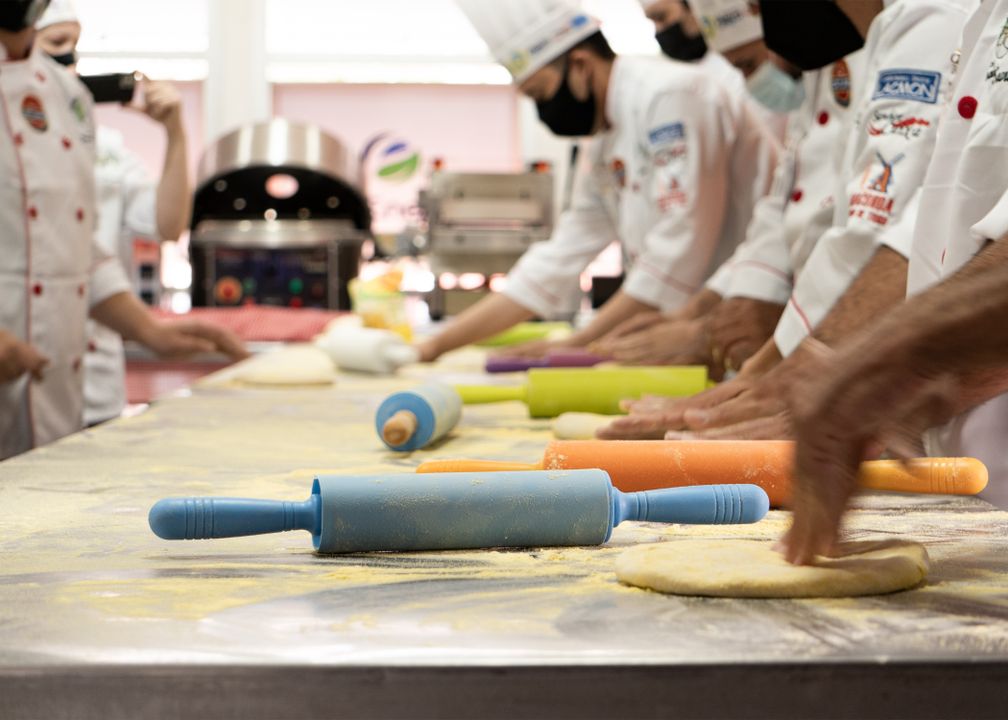
: At Florence Academy, we teach both methods in our Pie and Tart course. Students who start with the hand method develop better intuition for the right fat texture. They can feel when the butter is correctly sized. The food processor is faster, but it’s easy to over-process and lose all flakiness in under 10 seconds of continuous running.
How to Rub In Butter Correctly
Cut cold butter into 1cm cubes. Add to flour and work quickly with your fingertips — lifting, pressing, releasing — until the mixture looks like coarse breadcrumbs with some pea-sized butter pieces remaining. Use fingertips, not palms. Palms are too warm and will melt the fat. Work in under 90 seconds, and stop before the mixture looks uniformly sandy.
How to Use a Food Processor Without Over-Processing
Pulse in 5-second bursts only. Add flour, salt (and sugar if making sweet shortcrust), then cold butter cubes. Pulse 8-10 times. Add ice water through the feed tube, pulsing just twice after each tablespoon. Stop the instant the dough begins to clump. Over-processed food processor dough bakes dense and hard with no texture variation.
Why Does Pastry Shrink? The Five Most Common Shortcrust Failures
Pastry shrinks because gluten strands under tension contract when exposed to oven heat. Crumbling, sogginess, and pale greasy baking all have equally specific causes. Understanding each failure helps you fix it rather than restart from scratch.
Here are the five most common shortcrust failures and their direct causes:
Shrinkage (Pastry Pulls Away from the Tin Sides)
Cause: gluten under tension from over-handling or insufficient resting. Fix: use ice-cold water, minimal handling, and rest the dough in the refrigerator for at least 30 minutes after making it. After lining the tin, refrigerate the shell for another 15-20 minutes before baking. Both rests relax gluten strands so they don’t snap back in the oven.
Crumbling and Falling Apart
Cause: too little water, or fat that was too warm and blended fully into the flour rather than coating it as separate pieces. Fix: add water one tablespoon at a time. The dough should hold when pressed but not feel sticky. If it cracks when rolled, it needs more liquid, not more kneading.
Soggy Bottom
Cause: wet fillings release moisture into the unbaked shell, preventing it from crisping from the base. The fix is blind baking — see the section below. Eggless lemon curd and custard-based fillings are the main offenders.
Tough and Chewy Texture
Cause: overmixing after water is added, which builds excess gluten. The food processor running on continuous mode instead of pulse is the most common culprit. Fix: add water and press the dough together with as few strokes as possible.
Pale and Greasy
Cause: butter was too warm during mixing, so it melted into the flour rather than coating it as distinct pieces. This removes flakiness and creates a dense, saturated crumb. In Ahmedabad’s summer kitchen temperatures, this happens faster than most people expect. Fix: work in the coolest part of the day, chill your bowl before starting, and return the butter to the fridge for 5 minutes if it softens during mixing.
Citation Capsule: The five most common shortcrust failures — shrinkage, crumbling, soggy bottom, tough texture, and pale greasy bake — all trace to gluten over-development or fat temperature errors. Resting the dough relaxes gluten. Cold fat preserved as distinct pieces creates flakiness. Blind baking prevents moisture transfer from wet fillings. These diagnostic principles are core curriculum in Florence Academy’s Pie and Tart course, Ahmedabad, Gujarat.
What Is Blind Baking and When Do You Need It?
Blind baking is baking the pastry shell without its filling, using weights to prevent the base from puffing. A 2024 food science review in the Journal of Culinary Science and Technology confirmed that pre-baking tart shells reduces moisture migration from filling to pastry by up to 60% compared to filled-then-baked methods. You need blind baking whenever the filling is wet, sets without further oven time, or requires less heat than the shell needs to crisp.
Skip blind baking on a lemon curd tart and you’re guaranteed a soggy bottom. The curd never gets hot enough to crisp the raw base before it sets.
How to Blind Bake Correctly
Step 1: Roll rested dough to 3-4mm thickness. Line the tart tin by lifting the dough into place — don’t stretch it, as stretching causes shrinkage. Let excess dough hang over the edges.
Step 2: Refrigerate the lined tin for 15-20 minutes. This second rest is the step most home bakers skip. It’s also the one that prevents the most shrinkage.
Step 3: Prick the base all over with a fork, spacing holes about 1cm apart. Line with baking paper or foil. Fill with blind baking weights, uncooked rice, or dried lentils. Weights keep the sides upright.
Step 4: Bake at 180°C for 15 minutes with weights in place.
Step 5: Remove the weights and paper. Return to the oven for 5-8 minutes to dry the base. It should look dry and matte, not shiny or raw.
Step 6: For tarts with completely raw fillings (lemon curd, ganache, fresh fruit with cream), brush the warm base with a thin layer of melted white chocolate or warm apricot jam. This seals the pastry against moisture migration before the filling goes in.
Trim excess pastry with a sharp knife or roll a rolling pin flat over the tin rim while the shell is still warm. The pastry is fragile once it cools.
Ready to practise these techniques in a professional kitchen? Explore the Pie and Tart Course at Florence Academy →
Three Vegetarian Filling Ideas (Eggless and Jain-Compatible)
All three fillings below are 100% vegetarian, egg-free, and suitable for the eggless shortcrust shell above. The first two are Jain-compatible without modification. The third uses fresh seasonal fruit, which is broadly Jain-friendly (check calendar restrictions during Paryushana).

1. Eggless Lemon Curd Tart (Jain-Compatible)
Traditional lemon curd uses egg yolks for thickness and richness. This version uses cornflour and condensed milk, and it sets into a glossy, sliceable filling without eggs.
Filling for one 20cm tart shell: 200ml fresh lemon juice (4-5 lemons), 400g condensed milk, 3 tbsp cornflour mixed with 2 tbsp cold water, 2 tbsp unsalted butter, zest of 2 lemons.
Method: Combine lemon juice, condensed milk, and zest in a saucepan. Warm over medium-low heat, stirring. Add the cornflour slurry and cook, stirring constantly, until thick and coat-the-spoon consistency (8-10 minutes). Remove from heat. Stir in butter. Pour into the fully blind-baked, cooled shell while warm. Refrigerate for 2 hours until fully set. Garnish with lemon zest and icing sugar.
Jain note: No eggs, no root vegetables. Fully Jain-compatible.
2. Dark Chocolate Ganache Tart (Jain-Compatible)
Two ingredients, no baking after the shell is done. The simplest tart filling in professional pastry, with genuinely impressive results.
Filling for one 20cm tart shell: 200g dark chocolate (70% cocoa), roughly chopped. 200ml fresh cream.
Method: Heat cream until just below boiling. Pour over chopped chocolate. Wait 2 minutes, then stir from the centre outward until smooth and glossy. Pour into the cooled blind-baked shell. Rest at room temperature for 30 minutes, then refrigerate for 1 hour to set fully. Garnish with flaked sea salt, crushed pistachios, or candied orange peel.
Jain note: No eggs, no root vegetables. Fully Jain-compatible. Verify chocolate brand for permissibility during Paryushana.
3. Fresh Fruit Tart with Eggless Pastry Cream
A classic patisserie tart, adapted fully for eggless kitchens. The pastry cream uses cornflour instead of egg yolks for thickening.
Eggless pastry cream: 500ml full-fat milk, 60g caster sugar, 4 tbsp cornflour, 1 tsp vanilla essence, 1 tbsp unsalted butter.
Method: Whisk cornflour into 100ml cold milk until smooth. Heat remaining 400ml milk with sugar until just hot. Pour the hot milk into the cornflour mixture while whisking constantly. Return everything to the saucepan and cook over medium heat, stirring continuously, until very thick (5-7 minutes). Remove from heat. Stir in vanilla and butter. Press cling film directly onto the surface to prevent a skin forming. Cool completely.
To assemble: Spread cooled pastry cream into the blind-baked, cooled sweet shortcrust shell. Arrange fresh seasonal fruit in concentric circles — mango slices, strawberries, kiwi, and grapes all work beautifully. Glaze the finished tart with warmed apricot jam for a professional shiny finish.
In Florence Academy’s Pie and Tart practical sessions, the dark chocolate ganache tart consistently gets the highest completion rate — students finish it cleanly and take it home intact, every session. The lemon curd tart generates the most repeat attempts, because students want to perfect the tartness-sweetness balance. The fresh fruit tart is the most photographed and the most frequently replicated for home bakery orders after completing the course. These three fillings are not just recipe choices — they map to different skill levels and customer price points.
Frequently Asked Questions
What is the correct fat-to-flour ratio for shortcrust pastry?
The standard is 1 part fat to 2 parts flour by weight. For 200g flour, use 100g cold butter. This ratio applies to both savoury and sweet shortcrust. Sweet versions add 50g icing sugar per 200g flour. India’s bakery market is growing at 9.12% CAGR (Expert Market Research, 2025) — mastering this ratio has real commercial value.
Can I make shortcrust pastry without eggs?
Yes. Savoury shortcrust never uses eggs at all. Sweet shortcrust (pate sucree) uses egg yolk, which you can replace with 1 tablespoon of chilled full-fat dahi combined with 1 tablespoon of cold fresh cream per egg yolk. This eggless version handles and rolls almost identically to the egg-based one, and produces comparable tenderness and baked texture.
Is shortcrust pastry suitable for Jain cooking?
The base shortcrust recipe — flour, butter, salt, cold water — is fully Jain-compatible. The eggless sweet version in this guide (dahi-cream binder) is also Jain-compatible. The three fillings covered here (ganache, lemon curd, and fresh fruit tart) contain no eggs, onion, garlic, or root vegetables. Verify individual ingredient brands for Jain certification, especially during Paryushana.
Why does my shortcrust pastry shrink during baking?
Shrinkage happens when gluten strands are still under tension from mixing and haven’t had time to relax. Fix it in three steps: use ice-cold water and handle the dough minimally, rest the wrapped dough in the refrigerator for at least 30 minutes after making, and rest the lined tart tin for another 15-20 minutes before baking. Both rests are necessary. Skipping either one is the most common cause of shrinkage.
What is blind baking and do I always need it?
Blind baking is pre-baking the pastry shell without filling, using weights to prevent the base from puffing. You need it for any tart with a wet filling — lemon curd, ganache, custard, or fresh fruit with cream. Bake at 180°C for 15 minutes with weights in, then 5-8 more minutes without. Sealing the warm base with a brush of melted white chocolate before filling adds extra moisture protection.
How long does shortcrust pastry dough keep?
Wrapped shortcrust dough keeps for 3 days in the refrigerator and up to 1 month in the freezer. Frozen dough should thaw overnight in the refrigerator. A blind-baked, unfilled shell keeps for 2 days in an airtight container at room temperature. Filled tarts should be consumed within 24-48 hours and stored refrigerated. Always fill just before serving if you want maximum crunch in the base.
Build Your Pastry Skills from the Ground Up
Shortcrust is the most foundational pastry technique in baking. Get the 2:1 ratio right, keep the fat cold, rest the dough twice, and blind bake when needed. These four habits solve almost every common failure. The eggless and Jain-compatible variations in this guide produce results that are genuinely comparable to traditional versions — not compromises, but properly adapted professional technique.
If you’re serious about building pastry skills for a home bakery business or a career in culinary arts, structured training in a real kitchen removes the trial-and-error cycle that self-teaching always involves. Florence Academy’s Pie and Tart course covers shortcrust pastry science, blind baking, multiple filling styles, eggless adaptations, and professional tart presentation — all in a fully equipped Ahmedabad kitchen, with a 2:1 student-to-faculty ratio so every student gets real time on the tools.
Ready to learn from expert chefs? Explore the Pie and Tart Course at Florence Academy →
Join 2,000+ students trained at Florence Academy, Ahmedabad. Explore all baking and pastry courses →
Have questions? Chat with us on WhatsApp — we respond fast.
About Florence Academy
Florence Academy of World Cuisines is Ahmedabad’s leading culinary institute — NSDC Skill India and AHLEI certified, with 2,000+ graduates working at ITC Hotels, Marriott, and Patang Restaurant. The 100% vegetarian and Jain-adapted curriculum covers 50+ courses across baking, pastry, culinary arts, and food business, all taught from a professional kitchen in Ahmedabad, Gujarat. View all courses →
Sources:
- Expert Market Research, Indian Bakery Market Size, Share and Growth Rate 2035, retrieved 2026-08-01. https://www.expertmarketresearch.com/reports/indian-bakery-market
- The Culinary Institute of America, Baking and Pastry: Mastering the Art and Craft, 3rd Edition (Wiley, 2015). https://www.wiley.com/en-gb/Baking+and+Pastry%3A+Mastering+the+Art+and+Craft%2C+3rd+Edition-p-9781118712269
- Data Bridge Market Research, India Bakery Premixes Market Report 2025-2032, retrieved 2026-08-01. https://www.databridgemarketresearch.com/reports/india-bakery-premixes-market
- Journal of Culinary Science and Technology, Taylor and Francis, 2024. https://www.tandfonline.com/journals/wjcs20
- BAKERpedia, Shortcrust Pastry, retrieved 2026-08-01. https://bakerpedia.com/processes/shortcrust/


