
Walk into any café in Ahmedabad today and the mocktail menu is longer than the food menu. That’s not a coincidence. In 2025, India’s non-alcoholic beverages market is valued at USD 34.71 billion and growing at nearly 8% every year, according to IMARC Group’s India Non-Alcoholic Beverages Market Report, retrieved May 2026. In 2024, restaurants across India expanded their mocktail menus by 233% over just four years, according to Datassential, cited in SociallyIn, retrieved May 2026. What were once afterthoughts at the drinks counter are now the headline.
The good news? Most café-style mocktails are straightforward to make once you understand three core techniques. The presentation, the layering, the garnishing — these aren’t secrets reserved for trained bartenders. They’re learnable skills. This guide gives you 8 café-quality mocktail recipes, the three professional techniques behind every great drink, and the simple equipment you need — most of which you likely already own.
By Chef Monila Surana, Managing Partner, Florence Academy of World Cuisines — 18 years in culinary education, NSDC and AHLEI certified, lead instructor for Florence Academy’s beverage and café menu programmes.
Key Takeaways
– In 2025, India’s non-alcoholic beverages market is worth USD 34.71 billion, growing at 7.94% CAGR (IMARC Group, 2025)
– Mocktail menu presence at Indian restaurants grew 233% in four years (Datassential, 2024)
– All 8 recipes here are 100% vegetarian, Jain-friendly, and use ingredients available at any Ahmedabad grocery store
– Equipment cost: under ₹700 for everything you need to make professional-quality drinks at home
Why Café-Style Mocktails Matter More Than You Think
In 2025, India’s café and bars market is valued at USD 18.83 billion and is set to reach USD 31.47 billion by 2031 at an 8.92% CAGR — with the café segment specifically growing at 11.15%, the fastest of any food category in the country, according to Mordor Intelligence, India Cafes and Bars Market Report, retrieved May 2026. This growth isn’t being driven by alcohol. It’s driven by younger, health-aware consumers in cities like Ahmedabad who want sophisticated, flavourful experiences without compromise.
A 2024–2025 Veylinx consumer study found that 52% of Gen Z and millennials are actively participating in the sober-curious movement, and 46% of drinkers are reducing alcohol consumption. Of those cutting back, 52% are substituting with non-alcoholic alternatives, according to SociallyIn’s Mocktail Industry report, retrieved May 2026. In Gujarat — a predominantly vegetarian state with a deep Jain tradition — this shift has been accelerating for years. Cafés across Ahmedabad have responded with dedicated mocktail menus featuring seasonal fruits, local ingredients, and Instagram-worthy presentations.
The fastest-growing segment of India’s café sector isn’t food — it’s non-alcoholic beverages. For anyone considering a home beverage business or a café venture in Gujarat, the timing has never been more favourable.
Understanding how to make these drinks at a professional standard isn’t a hobby skill anymore. It’s a marketable one — and it starts with the right technique.

Citation Capsule: According to the Mordor Intelligence India Cafes and Bars Market Report (2025), India’s café segment is growing at 11.15% CAGR — the fastest of any food category — with market value projected to rise from USD 18.83 billion in 2025 to USD 31.47 billion by 2031. A separate 2024 Datassential analysis found that mocktail menu presence at Indian restaurants grew 233% over four years, confirming that non-alcoholic beverages have moved from a niche offering to a core commercial category in Indian foodservice.
Explore Florence Academy’s Café Menu Course if you want to go deeper into full beverage programme design.
What Tools Do You Actually Need for Café-Quality Mocktails?
Before jumping into recipes, let’s talk equipment. Professional mocktail-making doesn’t require a fully stocked bar. These five tools cover every recipe in this guide.
1. A cocktail shaker or wide-mouth mason jar with a tight lid — For shaking recipes that need rapid chilling and aeration. A mason jar works perfectly and costs nothing extra.
2. A muddler — A wooden pestle-style tool for crushing mint, citrus, or berries to release their oils and flavour. A wooden spoon works in a pinch, but a muddler is worth the ₹150–200 investment.
3. A fine-mesh strainer or sieve — Keeps pulp and ice shards out of the finished glass for a clean, professional pour.
4. A long bar spoon or chopstick — For the layering technique (explained in the next section). The back of a long spoon is how professionals create colour gradients in the glass.
5. A jigger or small measuring cup — Precision matters in drink-making. A 30ml/60ml jigger costs under ₹100 and removes the guesswork from every recipe.
Total investment for all five items from any kitchen supply store in Ahmedabad: ₹400–700.
Which 3 Techniques Separate a Café-Quality Drink from an Ordinary One?
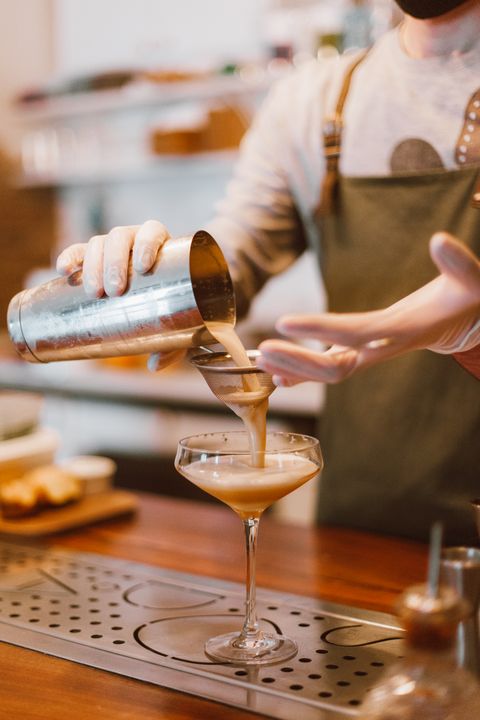
The gap between a home mocktail and a café-quality one is almost never the recipe. It’s the technique. Master these three methods and every drink in this guide will look and taste like it came off a professional menu.
Muddling — Releasing Flavour Without Bruising
Muddling means pressing herbs and citrus against the bottom of the glass with firm, downward pressure — not grinding. When you grind mint, you release bitter chlorophyll. When you muddle with steady downward presses, you release fragrant essential oils. Three to five firm presses is enough for fresh mint leaves. Four to six presses for citrus wedges. Never muddle basil — it turns black and bitter under pressure.
Layering — Creating the Colour Gradient
The colour gradient you see in café-style mocktails is created by floating less-dense liquids on top of denser ones. Density depends on sugar content: syrups and fruit juices sink; soda water and tonic float. Fill the glass with the denser base first, add ice, then pour the lighter liquid slowly over the back of a bar spoon held just above the ice surface. The spoon breaks the pour and preserves the layers. Pour too fast and it blends immediately.
Simple Syrup — The Professional’s Secret Ingredient
Most home cooks add plain sugar and wonder why their drink tastes sharp. Cafés use simple syrup: a 1:1 sugar-to-water mixture heated until fully dissolved, then cooled. It integrates into cold drinks instantly and evenly. You can also infuse it — heat the syrup with rose petals, fresh ginger, cardamom pods, or lemongrass for 5 minutes — and build a layered flavour base in under 10 minutes.
At Florence Academy, we find that students who learn simple syrup technique first dramatically improve the balance of every drink they make — even something as basic as lemonade. It’s the single highest-leverage skill in the beverage module.
You can also explore our full Mocktail & Milkshake course for structured, hands-on training in professional beverage techniques.
The 8 Café-Quality Mocktail Recipes

All eight recipes below are vegetarian and Jain-friendly. Every ingredient is available at any grocery store in Ahmedabad. Each recipe serves one glass.
| Recipe | Key Technique | Prep Time | Jain-Friendly | Difficulty |
|---|---|---|---|---|
| Virgin Mojito | Muddling | 3 min | Yes | Beginner |
| Watermelon Mint Cooler | Muddling + blending | 5 min | Yes | Beginner |
| Blue Lagoon Mocktail | Layering | 3 min | Yes | Beginner |
| Mango Jaljeera Spritzer | Shaking + rimming | 5 min | Yes | Intermediate |
| Kokum & Rose Cooler | Stirring + layering | 3 min | Yes | Beginner |
| Lemon Iced Tea Fizz | Layering | 5 min | Yes | Intermediate |
| Virgin Piña Colada | Blending | 5 min | Yes | Beginner |
| Rose Lychee Lemonade | Muddling + shaking | 5 min | Yes | Intermediate |
1. Virgin Mojito
You’ll need: 8 fresh mint leaves · 1 lime (quartered) · 1 tbsp simple syrup · 100ml soda water · ice
Method: Muddle mint and two lime wedges in the glass with 4–5 firm downward presses. Fill with ice. Add simple syrup. Pour soda water slowly down the inside wall of the glass. Squeeze a fresh lime wedge over the top. Garnish with a mint sprig.
Technique in use: Muddling. This single step is what separates a Virgin Mojito from a lime soda — get the muddling right and the mint aroma hits before you even taste the drink.
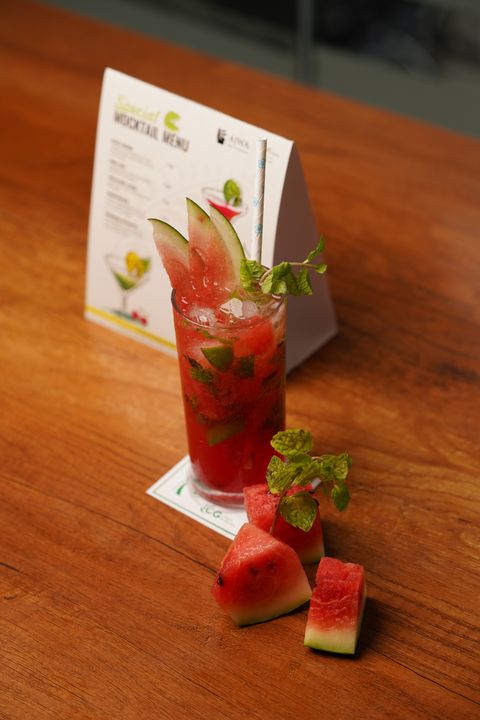
2. Watermelon Mint Cooler
You’ll need: 200g fresh watermelon (cubed, seeds removed) · 5 mint leaves · 1 tbsp lime juice · 1 tsp simple syrup · pinch of black salt (sendha namak for Jain cooks) · ice
Method: Blend watermelon to juice, then strain through a fine sieve. Muddle mint in the serving glass. Add ice, pour in the watermelon juice, then add lime juice and simple syrup. Stir gently once. Garnish with a thin watermelon slice and mint sprig.
Why it works: Black salt (sendha namak) is the distinctive touch that makes this an Indian café-style drink rather than a generic fruit mocktail. It adds a mineral depth that balances the sweetness.
3. Blue Lagoon Mocktail
You’ll need: 60ml non-alcoholic blue curacao syrup · 60ml fresh lemon juice · 100ml lemon-lime soda · ice
Method: Add ice to a clear highball glass. Pour blue curacao syrup over the ice. Slowly pour lemon juice next. Top with soda. Do not stir — let the colour gradient develop naturally on its own. Garnish with a lemon wheel on the rim.
Technique in use: Layering. The visual impact of this drink is the point — resist the urge to stir. The gradient from deep blue to pale yellow is what makes it feel café-special.
4. Mango Jaljeera Spritzer
You’ll need: 100ml raw mango juice (kachi kairi, fresh or bottled) · 30ml jaljeera water · 60ml soda water · chaat masala for rimming · crushed ice
Method: Wet the rim of your serving glass and dip into chaat masala. In a shaker, combine mango juice and jaljeera water with ice. Shake for 10 seconds. Strain into the rimmed glass over crushed ice. Top slowly with soda. Garnish with a thin slice of raw mango and a pinch of black salt.
Technique in use: Shaking + rimming. The chaat masala rim is a street food touch elevated to a café presentation — and it’s completely Jain-friendly.
This recipe was refined during Florence Academy’s beverage development module. The combination of raw mango juice and jaljeera consistently registers as the most “instantly Ahmedabad” mocktail in student taste tests — a recognition signal that matters enormously if you’re building a local beverage brand.
5. Kokum & Rose Cooler
You’ll need: 40ml kokum concentrate · 20ml rose syrup · 100ml cold water · 60ml soda water · ice · dried rose petals to garnish
Method: Mix kokum concentrate and rose syrup in the glass. Add cold water and stir until combined. Add ice. Top with soda water poured over the back of a spoon to preserve the fizz. Garnish with dried rose petals.
Why this matters for Gujarat: Kokum is indigenous to India’s western coast and deeply familiar in Gujarati cuisine — used in sol kadhi, chutneys, and cooling summer drinks. This recipe takes a traditional flavour and frames it in a contemporary café presentation. If you’re building a home beverage business in Ahmedabad, drinks with a built-in local identity like this have a natural advantage over imported flavour profiles. Florence Academy’s Lassi & Faluda course covers the full range of traditional Indian cold drinks using exactly this approach.
6. Lemon Iced Tea Fizz
You’ll need: 200ml strong-brewed and fully cooled black tea (2 tea bags) · 30ml fresh lemon juice · 1 tbsp honey or simple syrup · 60ml soda water · ice · lemon wheel to garnish
Method: Brew black tea strong and cool completely (warm tea will melt your ice and dilute the drink). Fill the glass with ice. Combine tea, lemon juice, and syrup in a shaker and shake briefly. Pour over ice. Top with soda using the layering technique. Garnish with a lemon wheel.
Technique in use: Layering. Pouring the soda over the back of a spoon at the finish gives a carbonated top layer that slowly settles into the tea below — exactly what café menus charge ₹200–250 for in Ahmedabad.
Learn the full range of iced tea and coffee techniques at Florence Academy
7. Virgin Piña Colada
You’ll need: 100ml full-fat coconut cream · 150ml fresh pineapple juice · 1 tsp lime juice · 1 tsp simple syrup · crushed ice
Method: Add all ingredients to a blender with crushed ice. Blend until completely smooth and frothy. Pour into a chilled wide-mouth glass immediately. Garnish with a pineapple wedge and serve at once — the texture separates quickly if the drink sits.
Note for Jain cooks: Coconut cream is made from coconut flesh, not a root vegetable, and is fully Jain-compatible. Check labels on commercial products to confirm no additives or emulsifiers.
8. Rose Lychee Lemonade
You’ll need: 6 canned lychees (drained) · 30ml rose syrup · 60ml fresh lemon juice · 150ml soda water · ice · dried rose bud and 2 whole lychees on a pick to garnish
Method: Add 4 lychees to a shaker and muddle with 3–4 firm presses. Add rose syrup, lemon juice, and ice. Shake vigorously for 8 seconds. Strain into a glass over fresh ice. Top with soda. Garnish with 2 whole lychees on a cocktail pick and a dried rose bud.
Technique in use: Muddling + shaking. The lychee muddling step releases a floral sweetness that rose syrup alone doesn’t achieve. This is among the most-ordered drinks at Ahmedabad cafés through summer — and one of the simplest to replicate at home.
Why Does Presentation Make or Break a Mocktail?
A great mocktail is 90% recipe and technique. The final 10% is what makes someone photograph it. Café-level presentation comes down to three things.
Glass selection: Serve layered drinks in clear highball or stemless wine glasses — the gradient needs to be visible. Serve blended drinks like piña colada in wide-mouth glasses or mason jars. Serve stirred drinks in rocks glasses.
Garnish rules: Garnishes should be edible or clearly decorative. A lemon wheel on the rim, a mint sprig, a cocktail pick with fruit — these signal care. Always add the garnish last, after the drink is fully poured, so it stays fresh.
Chill your glass: Run cold water over the glass for 30 seconds before pouring, or keep glasses in the freezer for 10 minutes. A chilled glass keeps your drink colder longer and creates surface condensation — a visual cue that signals freshness before the first sip.
At Florence Academy, we teach students that presentation is a language. The same drink in a warm glass versus a chilled glass with a fresh garnish reads entirely differently to the person drinking it — even before they taste it.
Ready to learn from expert chefs? Explore Courses at Florence Academy →
Can You Turn This Into a Business?
In 2026, the global ready-to-drink mocktails market is valued at USD 6.54 billion, forecast to reach USD 13.61 billion by 2032 at a 9.60% CAGR (Data Bridge Market Research, Global RTD Mocktails Market, retrieved May 2026). India is expected to post the highest regional growth rate in the RTD mocktails category. In 2025, Storyboard18 reported that 60% of urban Indian millennials check beverage labels for sugar and health content, and this audience actively seeks premium non-alcoholic options at social occasions.
Citation Capsule: According to Data Bridge Market Research (2024), the global RTD mocktails market is valued at USD 6.54 billion and is forecast to reach USD 13.61 billion by 2032 at a 9.60% CAGR, with India projected to post the highest regional growth rate. A 2025 Storyboard18 industry analysis found that 60% of India’s urban millennial consumers actively check beverage labels, signalling strong demand for premium, health-aware non-alcoholic drinks in the Indian foodservice market.
For a home entrepreneur in Ahmedabad, the numbers are practical. A single serving of any drink in this guide costs ₹40–80 in raw ingredients. Café retail price for the same drink: ₹180–350. If you’re catering a home gathering, office event, or small wedding, a mocktail station with four to six signature drinks can command ₹150–250 per head easily. At a 30-person event, that’s ₹4,500–7,500 from beverages alone — and your ingredients cost under ₹2,400.
The skill gap between a good home drink and a paid-service beverage is presentation and consistency. That’s exactly what structured beverage training addresses.
Join 2,000+ students who’ve trained with expert chefs at Florence Academy, Ahmedabad. Chat with us on WhatsApp — we respond fast.
Frequently Asked Questions
What equipment do I need to make café-quality mocktails at home?
You need five items: a shaker or mason jar, a muddler, a fine-mesh strainer, a long spoon, and a measuring jigger. All five are available at kitchen supply stores in Ahmedabad for a combined ₹400–700. The techniques — muddling, layering, and simple syrup — are what create the café-quality result, not expensive equipment.
Are all mocktails in this guide Jain-friendly?
Yes. All eight recipes use ingredients that are fully Jain-compatible: no root vegetables (onion, garlic, potato, carrot) are used in any recipe. The Watermelon Cooler and the Mango Jaljeera Spritzer both use sendha namak (rock salt) rather than regular sea salt, which is traditionally preferred during Paryushana and fasting periods.
What is simple syrup and how do I make it at home?
Simple syrup is a 1:1 mixture of sugar and water, heated gently until the sugar fully dissolves, then cooled before use. Combine 100g sugar and 100ml water in a small saucepan over medium heat. Stir until the sugar dissolves — approximately 2–3 minutes. Do not boil. Cool and store in a sealed bottle in the fridge for up to two weeks. It integrates into cold drinks instantly, unlike granulated sugar.
How can I make my mocktails look more professional?
Three changes make the biggest visual difference: use a clear glass so colours and layers are visible; add a fresh garnish last (mint sprig, citrus wheel, or fruit on a pick); and chill your glass before pouring. These steps cost nothing but produce a result that looks intentional and café-ready. Consistent glassware and a clean, uncluttered serving surface do the rest.
Which Florence Academy course covers mocktail and beverage making?
Florence Academy’s Mocktail & Milkshake Course covers professional beverage techniques hands-on, including layering, muddling, garnishing, and menu design. The Iced Teas & Coffee Course covers cold brews, iced lattes, and flavoured tea bases. Both are available as short courses with flexible scheduling. Chat with us on WhatsApp to check current batch dates.
Can I start a home mocktail business in Ahmedabad with these skills?
Yes — and the market supports it. India’s non-alcoholic beverages sector is growing at nearly 8% annually, and Ahmedabad’s event and catering market is active year-round. A home mocktail business with a focused menu of 6–8 signature drinks, good presentation, and consistent quality can serve corporate events, home parties, and weddings. For a structured path from skill to business, Florence Academy’s Food Business programmes cover costing, packaging, and client acquisition alongside culinary technique.
Making Your First Café-Quality Mocktail Tonight
The eight recipes in this guide cover everything from classic international formats to Indian-origin drinks rooted in Gujarat’s food culture. Start with the Virgin Mojito or the Watermelon Mint Cooler — both require no specialised equipment and are ready in under five minutes. Once you’ve mastered the three core techniques (muddling, layering, simple syrup), every other recipe in this guide is a variation on the same foundation.
The beverage sector in India is growing fast, and the skills that produce a great drink at home are the same skills that build a professional menu. If you want to go further — whether you’re opening a café, running a home catering business, or building a beverage brand — Florence Academy’s hands-on programmes in Ahmedabad give you the structured training to move from hobbyist to professional.
Ready to learn from expert chefs? Explore Courses at Florence Academy →
Have questions? Chat with us on WhatsApp — we respond fast.
Call us at +91 6351665305 | +91 8320715588


